Préparation du rapport

Chargement des informations et références disponibles

Connexion au corpus archéologique…

Collecte des archives antiques

Aller au contenu principal
Karakhanid Echoes of the Tian Shan
Profil culturel

Karakhanid Echoes of the Tian Shan

Medieval steppe lives at the crossroads of Silk Road trade and shifting genetic threads

800 CE - 1100 CE
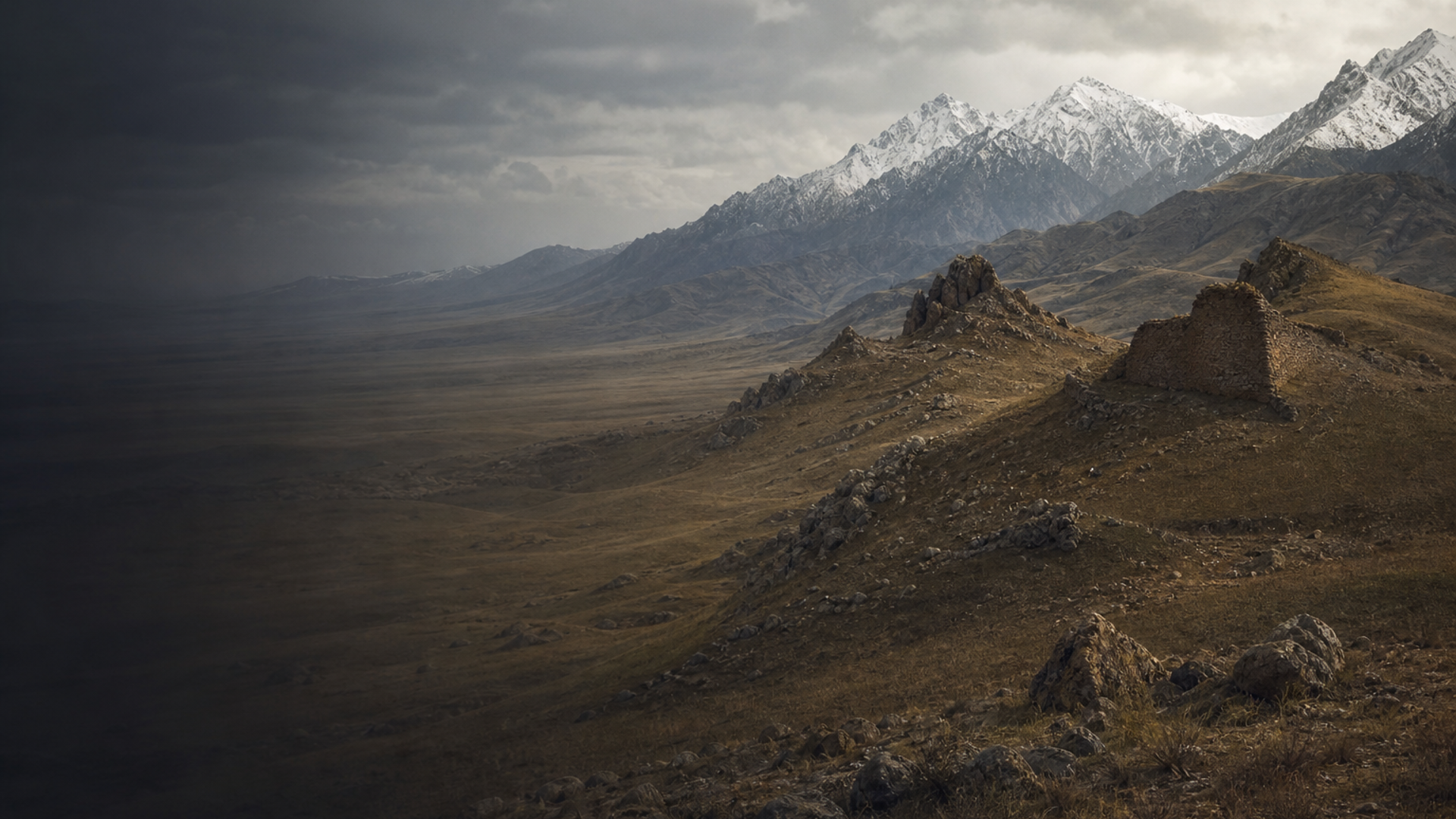
Tian Shan, Central Steppe (Butakty, Kazakhstan)
Faites défiler pour commencer
Chapitre I

Le récit

Comprendre la culture Karakhanid Echoes of the Tian Shan

Archaeology and ancient DNA from three Karakhanid-era burials (800–1100 CE) in the Tian Shan and Central Steppe (Butakty, Kazakhstan) hint at a multilingual, mobile world shaped by Silk Road networks. Small sample size makes genetic conclusions preliminary.

Time Period

800–1100 CE

Region

Tian Shan, Central Steppe (Butakty, Kazakhstan)

Common Y-DNA

J (observed in 1 of 3 samples)

Common mtDNA

A (observed in 1 of 3 samples)

Chapitre II

Chronologie

Moments clés de l'histoire de cette culture

840 CE

Emergence of Karakhanid polities

Regional Turkic polities consolidate power in Transoxiana and the Tian Shan, setting the stage for Karakhanid political identity.

940 CE

Expansion of Islamic influence

Material culture and historical sources indicate growing Islamic religious and cultural influence across Karakhanid territories in the 10th century.

1000 CE

Height of Karakhanid connectivity

Cities and steppe networks link Silk Road trade routes, enabling flows of people and goods through Tian Shan corridors.

Chapitre III

Origins & Emergence

The Karakhanid era (roughly 9th–11th centuries CE) unfolded across the high ridges of the Tian Shan and the broad Central Steppe. Archaeological layers at rural burial sites such as Butakty, Kazakhstan, sit within landscapes long threaded by Silk Road routes that linked Central Asian oases, Sogdian merchants, and nomadic confederations. Material culture at Karakhanid urban centers—coins, imported ceramics, and caravan-era architecture—speaks to political consolidation and transregional exchange, while rural cemeteries record pastoral lifeways and local traditions.

Limited evidence suggests Karakhanid societies were ethnically and linguistically diverse: historical sources identify a Turkic ruling identity, but the archaeological record preserves traces of Iranian, Sogdian, and steppe nomadic connections. Ancient DNA from three burials dated to 800–1100 CE offers a first glimpse into this complexity, though the sample size is too small for firm demographic models. Archaeological data indicates continuity of steppe mortuary practices alongside new urban and Islamic cultural influences emerging in the 10th century, suggesting that emergence of Karakhanid identity was a layered, interacting process rather than a single population replacement.

  • Karakhanid era: ca. 800–1100 CE across Tian Shan and Central Steppe
  • Sites include rural burials at Butakty, near Silk Road corridors
  • Archaeology suggests mixed mobility: pastoral and caravan-linked economies
Chapitre IV

Daily Life & Society

Life in Karakhanid-era Kazakhstan unfolded between yurts and caravanserai, mountain pastures and bustling bazaars. Archaeological traces—animal bones, iron tools, and trade goods found at regional sites—suggest seasonal pastoralism combined with participation in long-distance trade. Small settlements and temporary camps attested in the Central Steppe point to a society that balanced mobility with emergent urban centers where artisans, merchants, and administrators gathered.

Religious and cultural horizons were shifting: archaeological data indicates growing Islamic influence in the 10th–11th centuries alongside older burial customs. Grave goods vary from modest personal items to imported objects, reflecting individual life histories shaped by movement and exchange. At Butakty and similar cemeteries, skeletal remains and burial orientation provide clues to diet, workload, and community organization, but preservation and sample limits mean many daily practices remain only partly illuminated.

Material culture, mobility, and trade combined to create a cinematic landscape of seasonal flocks, caravans threading mountain passes, and towns that negotiated multiple cultural traditions.

  • Economy combined pastoral mobility with Silk Road trade contacts
  • Burials and material culture show blended traditions and changing religious influences
Chapitre V

Genetic Profile

Three Karakhanid-period individuals from Butakty and nearby Tian Shan contexts were analyzed for uniparental markers. Results are highly preliminary due to the very small sample (n = 3): one Y-chromosome haplogroup J and one mitochondrial haplogroup A were observed among these samples. Haplogroup J is more commonly associated with western and southwestern Asian populations (including Iranian and Near Eastern lineages), while mtDNA A is typically found in eastern Eurasia and among indigenous Siberian and Central Asian maternal lineages.

Taken together, this pattern is suggestive of admixture or movement between western and eastern Eurasian gene pools—compatible with archaeological impressions of Silk Road connectivity and the multiethnic composition of Karakhanid polities. However, because only three genomes contributed to these haplogroup calls, it is not possible to estimate proportions of ancestry, timing of admixture, or social patterns (for example, whether certain lineages were associated with elites or migrants). Future wider sampling could clarify whether the J and A signals reflect rare migrants, long-term local admixture, or broader demographic trends in the medieval Central Steppe.

Archaeology and genetics together point to a landscape of mobility and mixture; but current genetic evidence should be read as provisional.

  • Very small sample (n = 3): findings are preliminary and non-representative
  • Y-J (west/ southwest Asian affinity) and mtDNA A (east Eurasian affinity) suggest east–west admixture
Chapitre VI

Legacy & Modern Connections

The Karakhanid period helped shape the medieval cultural map of Central Asia: Turkic political structures, expanding Islam, and sustained Silk Road exchange left both material and intangible legacies. Genetic glimpses from Butakty hint that the region's people were already a tapestry of western and eastern Eurasian ancestries by the 9th–11th centuries. Modern populations of Kazakhstan and neighboring regions carry complex mixtures shaped by centuries of migrations; some genetic threads visible in medieval burials may persist in today's gene pool, but linking specific modern groups to a handful of ancient samples requires caution.

Archaeological narratives and expanding aDNA datasets together offer a cinematic view: mountain passes alive with caravans, settlements absorbing new ideas, and communities whose bodies recorded stories of connection. Enlarging the sample size and integrating genome-wide data will be essential to move from evocative possibility to robust historical inference.

  • Karakhanid-era admixture likely contributed to the genetic diversity of modern Central Asian peoples
  • Broader sampling is needed to tie medieval signals to present-day populations confidently
Propulsé par l'IA

Assistant IA

Posez des questions sur la culture Karakhanid Echoes of the Tian Shan

Assistant IA par DNAGENICS

Débloquer cette fonction
Posez des questions sur la culture Karakhanid Echoes of the Tian Shan. L'assistant IA peut expliquer les résultats génétiques, le contexte historique, les preuves archéologiques et les liens génétiques avec les populations actuelles, dans les limites de l'interprétation.
Exemple d'analyse IA

La culture Karakhanid Echoes of the Tian Shan représente un chapitre fascinant de l'histoire humaine…

L'analyse génétique met en évidence des similarités avec des populations antérieures et des signes d'adaptations propres. Les échantillons d'ADN ancien éclairent les schémas migratoires et les liens entre populations, avec des limites qui dépendent de l'étude et du contexte archéologique.

Il s'agit d'un aperçu de l'analyse IA. Accédez à l'assistant complet pour explorer :

  • Composition et similarité génétique
  • Schémas migratoires et origines
  • Vie quotidienne et pratiques culturelles
  • Contexte génétique actuel

Explorez d'autres cultures antiques

Découvrez les récits de civilisations issues du monde antique