Préparation du rapport

Chargement des informations et références disponibles

Connexion au corpus archéologique…

Collecte des archives antiques

Aller au contenu principal
Khentii Xiongnu: Echoes on the Steppe
Profil culturel

Khentii Xiongnu: Echoes on the Steppe

A provisional portrait of three individuals from Khentii (200 BCE–100 CE), where archaeology meets ancient DNA

200 BCE - 100 CE
Khentii Province, Mongolia
Faites défiler pour commencer
Chapitre I

Le récit

Comprendre la culture Khentii Xiongnu: Echoes on the Steppe

Archaeological remains from Khentii, Mongolia (200 BCE–100 CE) provide a preliminary genetic snapshot of Xiongnu-period communities. Three samples from Khanan Uul and Jargalantyn sites carry Y-haplogroup C and mtDNA lineages C, M, F, suggesting steppe continuity and diverse maternal ancestry.

Time Period

200 BCE – 100 CE

Region

Khentii Province, Mongolia

Common Y-DNA

C (observed: 1/3)

Common mtDNA

C, M, F (each observed: 1/3)

Chapitre II

Chronologie

Moments clés de l'histoire de cette culture

100 BCE

Xiongnu influence in Khentii

Archaeological evidence indicates Khentii sites were part of Xiongnu-period networks, dating to roughly 200 BCE–100 CE.

Chapitre III

Origins & Emergence

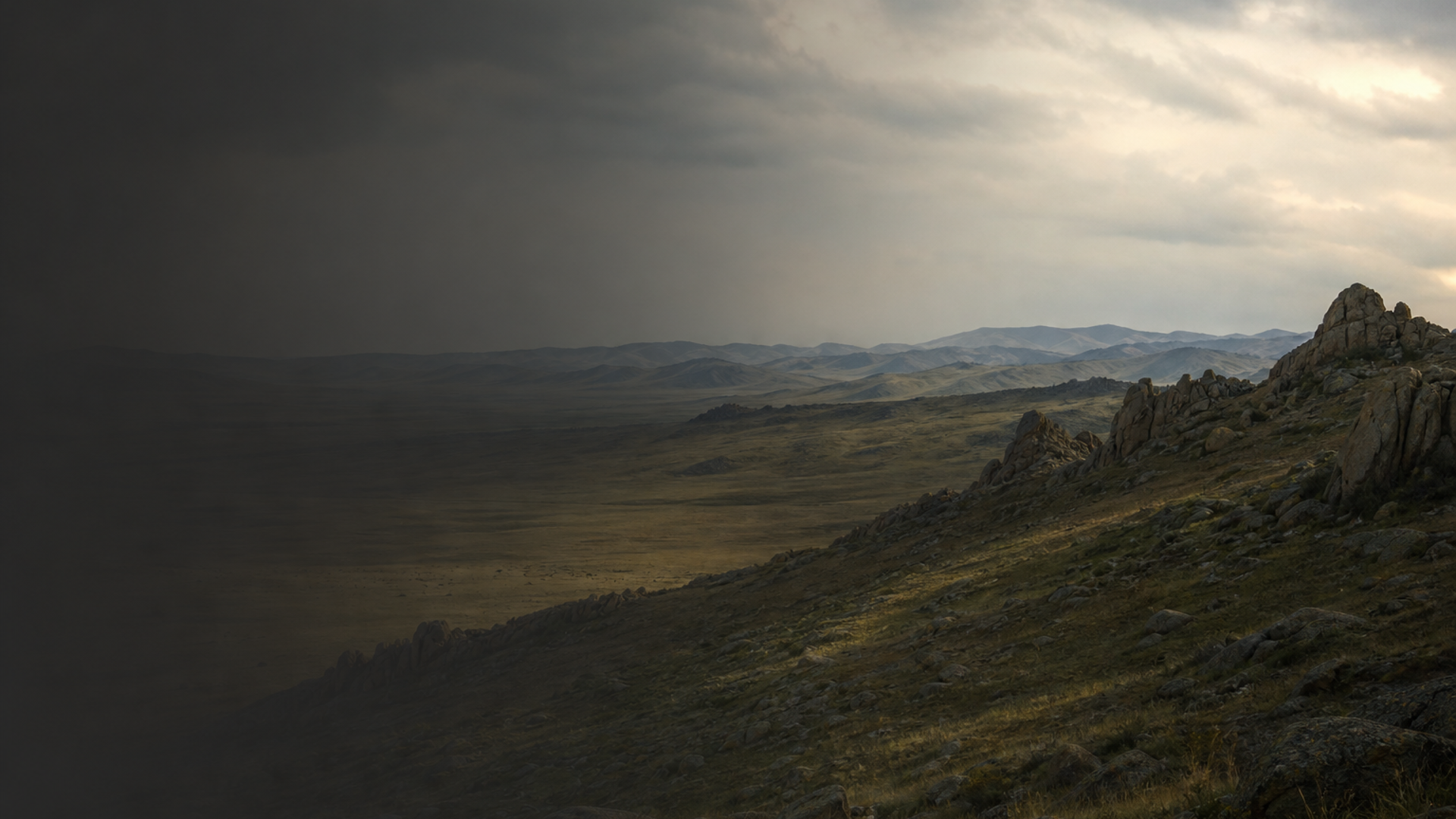
Across the windswept ridges of Khentii Province, burial features and surface finds hint at communities woven into the rising Xiongnu polities of the late first millennium BCE. Archaeological data indicates use of both inhumation and ritual deposition in places such as Khanan Uul and Jargalantyn Am, sites that produced the three genetic samples discussed here. Material culture from the region—weaponry fragments, horse gear, and ceramic forms—aligns with broader Xiongnu-period assemblages recorded in eastern Mongolia, suggesting integration into transregional networks of mobility and exchange.

Genetically, the small dataset (n = 3) offers only a tentative window. One male carries Y-haplogroup C, a lineage commonly associated with northern and eastern Eurasian pastoral populations, while maternal lineages include C, M, and F, reflecting diverse maternal ancestries across East Eurasia. Limited evidence suggests continuity with local steppe populations, but the tiny sample size prevents firm conclusions about migration, elite formation, or demographic change during the Xiongnu ascendancy. Archaeological context—grave goods, placement, and associated radiocarbon dates—remains essential to interpret how these individuals related to the wider social landscape. Future sampling across more graves and loci is required to transform these evocative glimpses into a coherent narrative of emergence in the Khentii heartland.

  • Sites: Khanan Uul; Jargalantyn Am (Jargalantyn Khondii/Hundhii), Khentii, Mongolia
  • Material culture consistent with Xiongnu-period assemblages (200 BCE–100 CE)
  • Genetic evidence is preliminary due to small sample count (n = 3)
Chapitre IV

Daily Life & Society

Archaeological sediments and finds from Khentii evoke a landscape of mounted herders, seasonal camps, and ritualized burial practice. Horse tack fragments and trampled midden deposits recovered near Khanan Uul suggest an economy organized around pastoral mobility: horses, sheep, and goats shaped movement, diet, and social ties. Graves often contain small assemblages—ornamented belts, bone tools, and occasional iron implements—that signal status differences without grand monumental architecture.

Social life on the Khentii steppe likely balanced kin-based camps with looser confederations of alliance and tribute. Archaeological indicators such as varied grave goods and localized burial styles imply a tapestry of households and lineages rather than a uniform polity. Osteological evidence from comparable Xiongnu contexts shows varied diets and workloads; similarly, the Khentii individuals may represent different social roles—riders, herders, or craft specialists—but current remains are too few for confident reconstruction. Limited isotopic and aDNA sampling could in future reveal patterns of mobility, breastfeeding and weaning, and seasonality that shaped daily existence in this frontier landscape.

  • Material remains point to a pastoral, horse-centered economy
  • Burial variability suggests social diversity rather than a single hierarchical system
Chapitre V

Genetic Profile

The ancient DNA derived from three individuals excavated in Khentii (dated broadly between 200 BCE and 100 CE) yields a compact but informative set of uniparental markers. Y-chromosome analysis identifies haplogroup C in one male individual; this lineage is frequently observed in northern and eastern Eurasian populations and is consistent with male-mediated continuity on the steppe. Mitochondrial genomes fall into three distinct haplogroups—C, M, and F—reflecting maternal diversity typical of East Eurasia during the late Iron Age.

These uniparental results align with archaeological expectations of demographic diversity within Xiongnu-period communities. However, because autosomal genome-wide data are limited (sample count = 3) and uniparental markers represent single-line inheritance, inferences about population structure, admixture, or migration must remain cautious. Limited evidence suggests these individuals fit within the broader genetic mosaic reported for Xiongnu-era populations—where eastern Eurasian ancestries predominate but contacts across the steppe introduced heterogeneity. Any robust model of ancestry, elite formation, or sex-biased migration in Khentii will require larger sample sizes and genome-wide data paired with direct stratigraphic and radiocarbon context. Until then, these three genomes are valuable pilot data: evocative, but provisional.

  • Y-haplogroup: C observed (1/3); suggests linkage to northern/eastern Eurasian paternal lineages
  • mtDNA: C, M, F (each 1/3); indicates maternal diversity common in East Eurasia
Chapitre VI

Legacy & Modern Connections

The Khentii individuals stand as fragile echoes of a turbulent era when nomadic polities reshaped Eurasian connections. Archaeological continuity in the region and the presence of haplogroup C resonate with genetic patterns still detectable in modern populations across Mongolia and neighboring regions, but direct lines of descent cannot be assumed from three samples alone. Limited evidence cautions against equating these individuals with modern ethnic identities; instead, they illuminate the deep-time threads—mobility, exchange, and assimilation—that contributed to the genetic and cultural tapestry of the steppe.

As research expands, integrating more ancient genomes from Xiongnu cemeteries with material culture studies will clarify how Khentii communities participated in transregional networks. For now, these genomes offer a cinematic, scientifically grounded glimpse: human lives lived in open landscapes, tied to horses and herds, whose biological legacies ripple faintly into the present.

  • Preliminary links between Khentii genomes and broader Mongolian genetic continuity
  • Larger, contextualized samples needed to trace direct ancestry to modern populations
Propulsé par l'IA

Assistant IA

Posez des questions sur la culture Khentii Xiongnu: Echoes on the Steppe

Assistant IA par DNAGENICS

Débloquer cette fonction
Posez des questions sur la culture Khentii Xiongnu: Echoes on the Steppe. L'assistant IA peut expliquer les résultats génétiques, le contexte historique, les preuves archéologiques et les liens génétiques avec les populations actuelles, dans les limites de l'interprétation.
Exemple d'analyse IA

La culture Khentii Xiongnu: Echoes on the Steppe représente un chapitre fascinant de l'histoire humaine…

L'analyse génétique met en évidence des similarités avec des populations antérieures et des signes d'adaptations propres. Les échantillons d'ADN ancien éclairent les schémas migratoires et les liens entre populations, avec des limites qui dépendent de l'étude et du contexte archéologique.

Il s'agit d'un aperçu de l'analyse IA. Accédez à l'assistant complet pour explorer :

  • Composition et similarité génétique
  • Schémas migratoires et origines
  • Vie quotidienne et pratiques culturelles
  • Contexte génétique actuel

Explorez d'autres cultures antiques

Découvrez les récits de civilisations issues du monde antique