Préparation du rapport

Chargement des informations et références disponibles

Connexion au corpus archéologique…

Collecte des archives antiques

Aller au contenu principal
Krems‑Wachtberg Hunter‑Gatherer, c.29k BCE
Profil culturel

Krems‑Wachtberg Hunter‑Gatherer, c.29k BCE

A lone Upper Paleolithic voice from the Danube corridor, preserved in bone and DNA

29500 CE - 28500 BCE
Krems‑Wachtberg, Lower Austria (Central Europe)
Faites défiler pour commencer
Chapitre I

Le récit

Comprendre la culture Krems‑Wachtberg Hunter‑Gatherer, c.29k BCE

Archaeogenetic and archaeological evidence from Krems‑Wachtberg (Austria) captures a single Upper Paleolithic individual (c.29,500–28,500 BCE) with Y‑haplogroup I and mtDNA U5*. Limited samples make conclusions preliminary, but they fit broader patterns of European Pleistocene hunter‑gatherers.

Time Period

29500–28500 BCE

Region

Krems‑Wachtberg, Lower Austria (Central Europe)

Common Y-DNA

I (observed: 1)

Common mtDNA

U5* (observed: 1)

Chapitre II

Chronologie

Moments clés de l'histoire de cette culture

29000 BCE

Occupation at Krems‑Wachtberg (WA3)

Archaeological and aDNA evidence indicate human presence at Krems‑Wachtberg around 29,000 years ago; genetic sample shows Y‑I and mtDNA U5*. Conclusions are preliminary due to single sample.

Chapitre III

Origins & Emergence

The radiocarbon window c.29,500–28,500 BCE places the Krems‑Wachtberg individual in the cold, dynamic landscape of the European Upper Paleolithic. Archaeological data indicates human groups repeatedly used river corridors such as the Danube as mobility routes and resource zones. At Krems‑Wachtberg (site WA3), stratigraphic contexts dated to this interval align with broad Upper Paleolithic technologies known across central Europe.

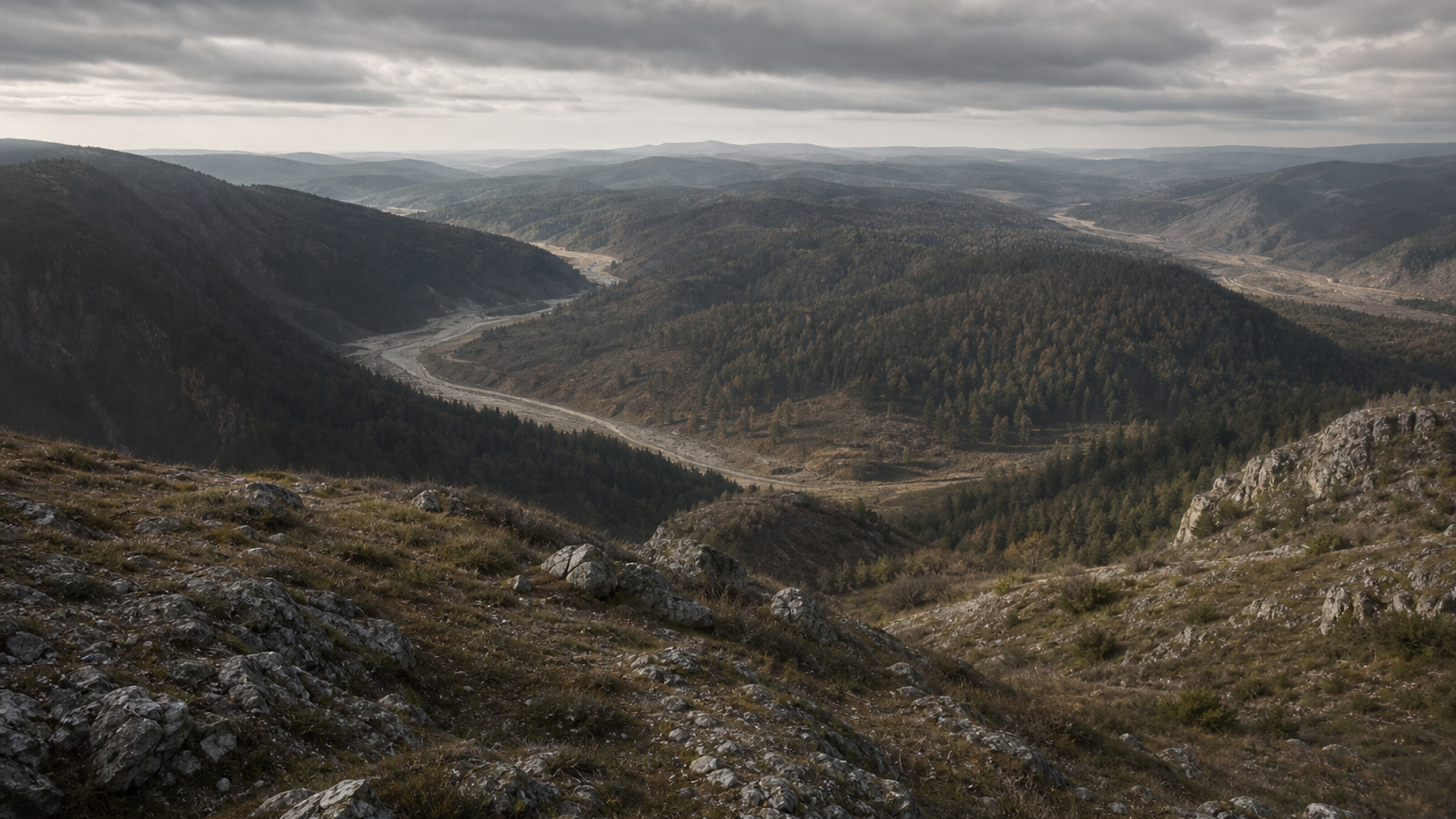
Cinematic winter skies and steppe‑tundra plains would have framed daily life: hunters tracking reindeer, horse, and other Pleistocene fauna; skilled flintknappers producing blade‑based toolkits; and small social networks exchanging raw materials and ideas. Limited evidence from the site itself constrains how widely representative this single individual was—regional parallels suggest a mosaic of local traditions rather than a uniform culture.

From a genetic viewpoint, this occupation sits before the large demographic shifts that characterize the later Pleistocene and Holocene. The presence of haplogroups typical of European hunter‑gatherers hints at long‑standing lineages in the region, but with only one sample the population structure, migration episodes, and interactions remain preliminary and must be tested against broader datasets.

  • Occupied during the Upper Paleolithic (c.29.5–28.5 kya)
  • Located on the Danube corridor at Krems‑Wachtberg (Austria)
  • Regional archaeological parallels suggest mobile hunting and lithic craft traditions
Chapitre IV

Daily Life & Society

Archaeological evidence for Upper Paleolithic communities in central Europe paints a picture of mobile hunter‑gatherer bands balancing mobility with repeated use of rich riverine camps. Faunal remains in comparable sites across the region indicate reliance on cold‑adapted game and seasonal resource scheduling. At Krems‑Wachtberg, site context and toolkit morphology point toward specialized lithic production suited to hunting and hide processing.

Social groups were likely small—dozens rather than hundreds—organized around kin networks and seasonal aggregation events. Material culture would include composite tools, personal ornaments regionally shared, and organic technologies that rarely preserve archaeologically. Artistic expression is a hallmark of the Upper Paleolithic across Europe, but archaeological data from WA3 are limited; therefore, asserting symbolic practices at this specific locality remains conjectural.

Landscape use emphasized strategic placement: camps near raw material sources and rivers for mobility and communication. The cinematic impression is of small, well‑adapted groups moving across a cold but resourceful landscape, tied together by exchange and shared technological repertoires. Yet, because the genetic dataset from Krems‑Wachtberg is a single individual, reconstructions of social organization and diversity must remain cautious.

  • Mobile hunter‑gatherer lifeways focused on river corridors
  • Small social groups with seasonal aggregation and raw material exchange
Chapitre V

Genetic Profile

The ancient DNA record from Krems‑Wachtberg (sample count = 1) reveals a male carrying Y‑chromosome haplogroup I and mitochondrial haplogroup U5*. Both lineages are well‑known in Pleistocene and Mesolithic Europe: U5 is among the oldest mtDNA clades associated with European hunter‑gatherers, and haplogroup I appears recurrently in Upper Paleolithic and Mesolithic contexts. This concordance between uniparental markers is consistent with a hunter‑gatherer ancestry signal in the Danube region during the Late Pleistocene.

Important caveats follow from the sample size. With only one genome, population‑level inferences—such as diversity, sex ratios, or substructure—are speculative. Uniparental markers track single lines of descent and can misrepresent broader ancestry if used alone. Ideally, autosomal genome data from multiple individuals would clarify genetic affinities to contemporaneous groups across central and eastern Europe and test hypotheses about isolation versus connectivity.

Nevertheless, when placed within larger ancient DNA surveys, the Krems‑Wachtberg evidence contributes a data point supporting the persistence of U5‑bearing maternal lineages and I‑line paternal lineages in Upper Paleolithic Europe. Limited evidence suggests continuity of some genetic elements into later hunter‑gatherer populations, though subsequent Neolithic and Bronze Age migrations substantially reshaped European genetic landscapes.

  • Uniparental markers: Y‑haplogroup I; mtDNA U5* (single individual)
  • Sample size is limited—population conclusions are preliminary
Chapitre VI

Legacy & Modern Connections

The genetic echoes of Upper Paleolithic hunter‑gatherers persist in modern Europe at low to moderate frequencies. mtDNA U5 and Y‑haplogroup I survive into contemporary populations, marking lineages that trace deep Pleistocene roots. However, these hunter‑gatherer signatures were diluted and reshaped by later major demographic events—the Neolithic expansion of farming groups and Bronze Age steppe influxes—that reconfigured ancestry across the continent.

Archaeologically, sites like Krems‑Wachtberg are critical waypoints in the long story of human occupation in the Danube valley, informing how people adapted to Pleistocene environments and how cultural practices spread. For ancestry testing, the Krems‑Wachtberg individual is a vivid, if solitary, window into a human presence nearly 30,000 years ago: evocative evidence that some lineages witnessed the end of the last Ice Age and the beginnings of later cultural transitions. Given the single sample, any direct ties to modern populations must be framed as provisional and contextualized within larger datasets.

  • U5 and haplogroup I persist in modern European genetic pools at low frequencies
  • Krems‑Wachtberg provides a provisional Pleistocene genetic link pending more samples
Propulsé par l'IA

Assistant IA

Posez des questions sur la culture Krems‑Wachtberg Hunter‑Gatherer, c.29k BCE

Assistant IA par DNAGENICS

Débloquer cette fonction
Posez des questions sur la culture Krems‑Wachtberg Hunter‑Gatherer, c.29k BCE. L'assistant IA peut expliquer les résultats génétiques, le contexte historique, les preuves archéologiques et les liens génétiques avec les populations actuelles, dans les limites de l'interprétation.
Exemple d'analyse IA

La culture Krems‑Wachtberg Hunter‑Gatherer, c.29k BCE représente un chapitre fascinant de l'histoire humaine…

L'analyse génétique met en évidence des similarités avec des populations antérieures et des signes d'adaptations propres. Les échantillons d'ADN ancien éclairent les schémas migratoires et les liens entre populations, avec des limites qui dépendent de l'étude et du contexte archéologique.

Il s'agit d'un aperçu de l'analyse IA. Accédez à l'assistant complet pour explorer :

  • Composition et similarité génétique
  • Schémas migratoires et origines
  • Vie quotidienne et pratiques culturelles
  • Contexte génétique actuel

Explorez d'autres cultures antiques

Découvrez les récits de civilisations issues du monde antique