Préparation du rapport

Chargement des informations et références disponibles

Connexion au corpus archéologique…

Collecte des archives antiques

Aller au contenu principal
Kuokesuxi Early Iron Age: Yili Echoes
Profil culturel

Kuokesuxi Early Iron Age: Yili Echoes

Maternal lineages at Kuokesuxi (538–24 BCE) reveal east–west echoes in Xinjiang's Iron Age

538 CE - 24 BCE
Xinjiang, China (Yili Region, Tekesi County)
Faites défiler pour commencer
Chapitre I

Le récit

Comprendre la culture Kuokesuxi Early Iron Age: Yili Echoes

Archaeogenetic study of seven individuals from Kuokesuxi (Tekesi County, Yili, Xinjiang) dated 538–24 BCE. mtDNA shows mixed West and East Eurasian maternal lineages (T, J, U vs. C, D). Limited sample size means conclusions remain preliminary.

Time Period

538–24 BCE (Early Iron Age)

Region

Xinjiang, China (Yili Region, Tekesi County)

Common Y-DNA

Not reported / limited data (no dominant Y-haplogroup identified)

Common mtDNA

T (2), C (1), D (1), J (1), U (1)

Chapitre II

Chronologie

Moments clés de l'histoire de cette culture

538 BCE

Oldest dated individual from Kuokesuxi

Radiocarbon and contextual dating place the earliest sampled burial at Kuokesuxi around 538 BCE, marking the Early Iron Age occupation represented in the genetic dataset.

Chapitre III

Origins & Emergence

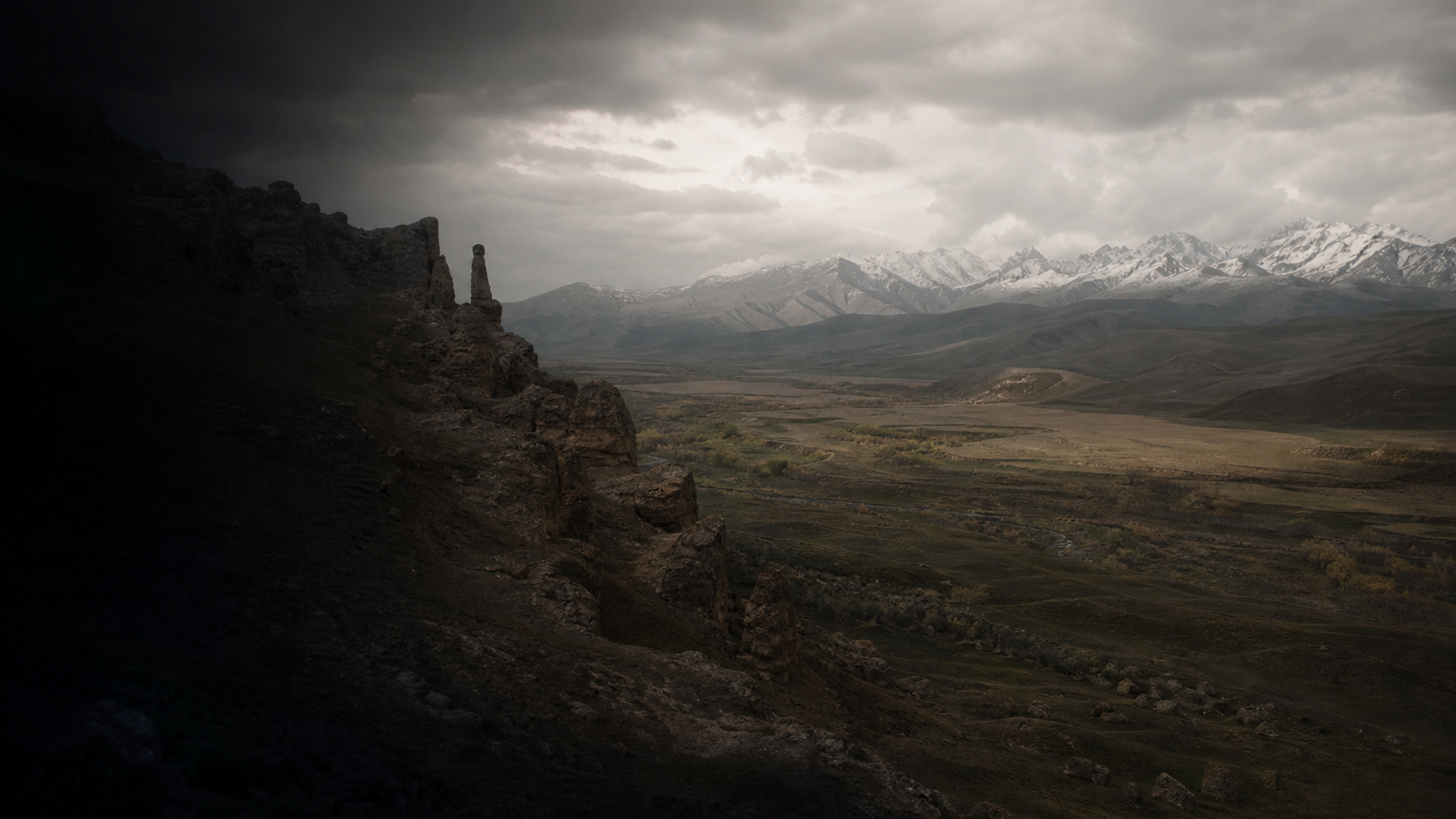
The Kuokesuxi assemblage sits on the wind‑scoured plateau and river terraces of the Yili Valley in Xinjiang, at a crossroads between the Central Asian steppe and the agricultural oases of eastern Central Asia. Archaeological excavations at Kuokesuxi (Tekesi County) have yielded Early Iron Age burials and material traces dated by radiocarbon and associated context to roughly 538–24 BCE. These dates place Kuokesuxi within a period of intensified mobility, exchange, and technological change across Eurasia.

Archaeological data indicate a community engaged with both local traditions and broader networks; grave features and portable items reflect regional Iron Age practices rather than a single intrusive culture. Limited evidence suggests connections—economic and cultural—to neighboring steppe groups and oasis populations, but the precise mechanisms of contact (trade, marriage, migration) require more data to resolve.

Genetic samples from Kuokesuxi, though few, can illuminate these processes by tracing biological connections across landscapes. With only seven genomes available, any reconstruction of origins is necessarily cautious: the population history implied by the site seems to be one of admixture and interaction, but the small sample set means hypotheses remain preliminary pending larger-scale sampling.

  • Site: Kuokesuxi, Tekesi County, Yili Region, Xinjiang
  • Date range: 538–24 BCE (Early Iron Age)
  • Evidence of regional interaction and mixed origins
Chapitre IV

Daily Life & Society

The human story at Kuokesuxi is best read through the interplay of landscape, material culture, and burial practice. Archaeological excavations document inhumations and associated artifacts that reflect everyday and ritual life in the Early Iron Age Yili Valley. People here lived where riverine corridors met mountain passes—routes that funneled goods, ideas, and people between the steppe and inner Asia.

Material culture from nearby Early Iron Age sites in Xinjiang suggests a mixed economy: pastoral herding adapted to seasonal movement, complemented by horticulture and trade of crafted goods. At Kuokesuxi, the funerary contexts imply social distinctions expressed through grave assemblages and spatial organization, though detailed social hierarchies remain elusive without broader regional comparison.

Cinematically, imagine a caravansary of voices: horse tack creaking, pottery stacked for market, and threads of metalwork glinting in low sun. Yet scientifically we must state limits: artifacts at Kuokesuxi can be associated with broader cultural currents but cannot alone delineate ethnicity or language. Combined archaeological and genetic perspectives offer a richer narrative—one where daily life emerges from both material practice and biological heritage.

  • Economy likely mixed: pastoralism, horticulture, trade
  • Burial variation hints at social differentiation
Chapitre V

Genetic Profile

Seven genetic samples from Kuokesuxi provide a first molecular glimpse into the population biology of this Early Iron Age community. The mitochondrial DNA assemblage includes haplogroups T (2 individuals), C (1), D (1), J (1), and U (1). This mix contains lineages typical of both West Eurasian (T, J, U) and East Eurasian (C, D) maternal ancestries, suggesting maternal genetic inputs from multiple directions.

No dominant Y‑DNA haplogroup is reported in the available dataset, either because Y-chromosome results were not preserved, not recovered, or were too heterogeneous to point to a single male lineage. The presence of both West and East Eurasian mtDNA markers aligns with models of Xinjiang as a genetic contact zone during the 1st millennium BCE, where steppe pastoralists, western agro-pastoral groups, and eastern communities met and exchanged genes.

Crucially, with only seven genomes, conclusions are tentative. Small sample sizes can easily over- or under-represent lineages present in the broader community. Therefore, while the mtDNA mix at Kuokesuxi is evocative of admixture and connectivity, it must be treated as preliminary evidence. Future broader sampling and genome-wide analyses will be necessary to quantify ancestry proportions, sex-biased mobility, and relationships to contemporaneous populations across the Tarim, Ili, and steppe regions.

  • mtDNA shows both West (T, J, U) and East Eurasian (C, D) maternal lineages
  • Small sample size (7) makes genetic conclusions preliminary
Chapitre VI

Legacy & Modern Connections

Kuokesuxi occupies a strategic place in the long story of Xinjiang: a hinge between East and West where people, goods, and genes passed through for millennia. The mixed maternal lineages recorded at Kuokesuxi echo later genetic patterns across the region, where populations frequently show blended East and West Eurasian ancestry.

However, the direct continuity between Kuokesuxi individuals and any modern group cannot be asserted from this dataset alone. Limited samples and a lack of extensive Y‑chromosome or genome‑wide data mean that connections to contemporary Xinjiang populations are suggestive rather than definitive. Nevertheless, these early Iron Age genomes enrich our picture of the deep human tapestry of the Yili Valley and underscore the value of integrating archaeology with ancient DNA to trace how local communities contributed to Eurasia’s genetic mosaic.

  • Reflects early Eurasian admixture patterns in Xinjiang
  • Direct ties to modern populations remain tentative pending more data
Propulsé par l'IA

Assistant IA

Posez des questions sur la culture Kuokesuxi Early Iron Age: Yili Echoes

Assistant IA par DNAGENICS

Débloquer cette fonction
Posez des questions sur la culture Kuokesuxi Early Iron Age: Yili Echoes. L'assistant IA peut expliquer les résultats génétiques, le contexte historique, les preuves archéologiques et les liens génétiques avec les populations actuelles, dans les limites de l'interprétation.

Exemple d'analyse IA

La culture Kuokesuxi Early Iron Age: Yili Echoes représente un chapitre fascinant de l'histoire humaine…

L'analyse génétique met en évidence des similarités avec des populations antérieures et des signes d'adaptations propres. Les échantillons d'ADN ancien éclairent les schémas migratoires et les liens entre populations, avec des limites qui dépendent de l'étude et du contexte archéologique.

Il s'agit d'un aperçu de l'analyse IA. Accédez à l'assistant complet pour explorer :

  • Composition et similarité génétique
  • Schémas migratoires et origines
  • Vie quotidienne et pratiques culturelles
  • Contexte génétique actuel

Explorez d'autres cultures antiques

Découvrez les récits de civilisations issues du monde antique