Préparation du rapport

Chargement des informations et références disponibles

Connexion au corpus archéologique…

Collecte des archives antiques

Aller au contenu principal
Levanluhta B: Voices from a Watered Grave
Profil culturel

Levanluhta B: Voices from a Watered Grave

Three Iron Age individuals from Isokyro whose maternal DNA hints at mixed northern ancestries; interpretations remain tentative.

300 CE - 800 CE
Isokyro, Levanluhta, Finland
Faites défiler pour commencer
Chapitre I

Le récit

Comprendre la culture Levanluhta B: Voices from a Watered Grave

Human remains from the Levanluhta spring (Isokyro, Finland; 300–800 CE) yield three mtDNA profiles (K x2, U x1). Archaeology and genetics together suggest layered hunter‑gatherer and Neolithic farmer ancestries in Iron Age coastal Finland, but small sample size limits firm conclusions.

Time Period

300–800 CE (Iron Age)

Region

Isokyro, Levanluhta, Finland

Common Y-DNA

No Y-DNA reported / not recovered

Common mtDNA

K (2), U (1)

Chapitre II

Chronologie

Moments clés de l'histoire de cette culture

2500 BCE

Deep prehistory: Mesolithic–Neolithic interactions

Early hunter‑gatherers and incoming Neolithic farmers create genetic layers that later Iron Age populations bear in mixed maternal lineages.

Chapitre III

Origins & Emergence

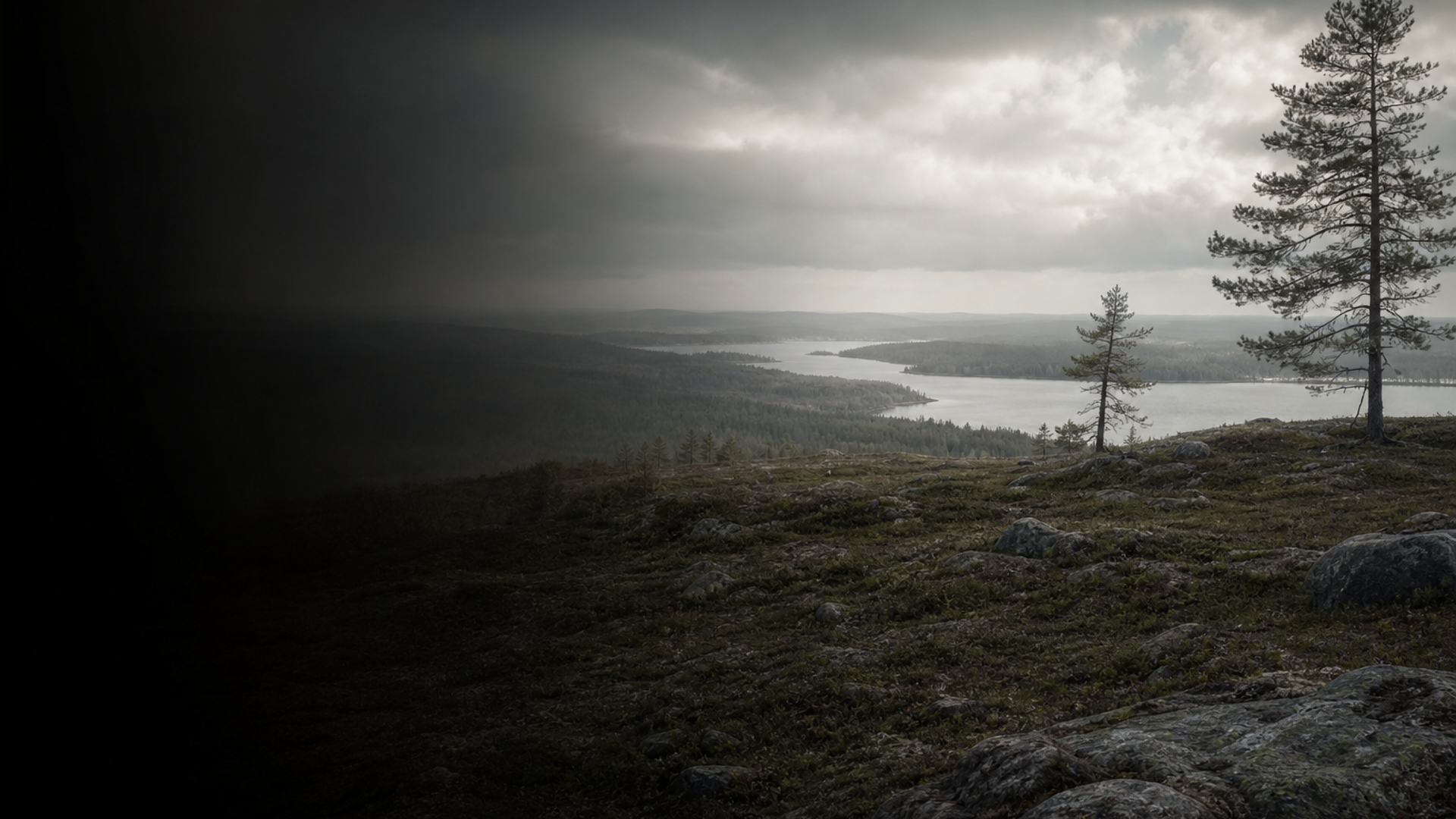
At the damp, reedy edge of the Levanluhta spring in Isokyro, skeletal remains lie as mute witnesses to ritual and landscape use between roughly 300 and 800 CE. Archaeological data indicates that Levanluhta functioned as a watery burial or votive deposit during the Finnish Iron Age; the broad category “Levanluhta B” groups materials and contexts that share this chronology and depositional signature.

The site sits on the coastal plain of western Finland where shifting shorelines and wetland deposits preserve organic material rarely seen in more acidic upland soils. Limited evidence suggests repeated use of the spring for deposition of human remains over centuries, a practice visible at other north European watery contexts. The archaeological record for Levanluhta B includes fragmented bone assemblages and occasional associated Iron Age artifacts, but preservation and disturbance mean many behavioral details are ambiguous.

From an archaeological perspective, Levanluhta B represents a local manifestation of broader Iron Age practices in northern Fennoscandia: communities negotiating marine resources, ritual landscapes, and long-distance contacts. Genetic data from the small sample set provides a complementary, if preliminary, thread to trace possible ancestral inputs and mobility across this watery horizon.

  • Levanluhta spring (Isokyro) used ca. 300–800 CE
  • Site preserves watery burial/votive depositional context
  • Evidence is fragmentary; interpretations remain cautious
Chapitre IV

Daily Life & Society

The people connected to Levanluhta B lived in a world of shorelines and wetlands, where fishing, fowling, and seasonal movement shaped lifeways. Archaeological data indicates exploitation of marine and freshwater resources and the use of iron tools typical of Iron Age societies in western Finland. Settlement evidence in the wider region suggests small, mobile communities with connections to inland and coastal networks.

Ritual deposition in springs hints at complex cosmologies attuned to liminal places: water as boundary, memory, and offering. Limited evidence suggests that social identities could be expressed through burial choices rather than large monumental burials. The depositional context at Levanluhta—human remains placed in a watery setting—may reflect collective practices, conflict aftermaths, or specialized rites; current data cannot decisively favor one explanation.

Material culture from contemporary sites in the region shows trade links with the Baltic and Scandinavian zones, indicating that everyday life combined local subsistence with wider exchange. In sum, daily life around Levanluhta B likely blended intimate knowledge of northern resources with participation in broader Iron Age social and economic networks.

  • Economy centered on fishing, hunting, and local resource use
  • Wetland deposition points to ritual or socially regulated practices
Chapitre V

Genetic Profile

Three Levanluhta B individuals produced mitochondrial DNA results: two carrying haplogroup K and one carrying haplogroup U. These maternal lineages have different prehistoric associations in Europe—haplogroup K is often linked to Neolithic farmer ancestry, while U (particularly U5 and related branches) is frequently observed among Mesolithic hunter‑gatherer populations—so their co‑occurrence in a small Iron Age assemblage suggests layered maternal ancestries in western Finland.

Crucially, the sample count is very small (n=3). Because of this limited dataset, any demographic inferences must be framed as preliminary. Archaeological data combined with these mtDNA signals can suggest admixture between lineages with deep northern hunter‑gatherer roots and those arriving with Neolithic expansions, but do not quantify proportions or timing. No Y‑chromosome haplogroups are reported for these samples, so paternal-line continuity and male-mediated migration patterns remain unknown for Levanluhta B.

These mtDNA results align with broader patterns in northern Europe where mixed maternal ancestries persist into the Iron Age. Future sampling and genome‑wide data would be needed to test models of continuity, mobility, and the local social dynamics that produced watery depositions at Levanluhta.

  • mtDNA: K (2 samples) and U (1 sample) — suggests mixed maternal ancestry
  • Sample size (n=3) is small; conclusions are preliminary
Chapitre VI

Legacy & Modern Connections

Levanluhta B occupies an evocative place in the story of northern Finland: a watery archive where ritual practice, landscape change, and human lives converge. Genetically, the presence of both K and U maternal lineages echoes the long, interwoven histories of Mesolithic hunter‑gatherers and incoming Neolithic-derived groups in Fennoscandia and northern Europe. Archaeological data indicates local cultural continuity alongside broader connections, but the tiny genetic sample means these links are suggestive rather than definitive.

For modern ancestry seekers, Levanluhta B offers a reminder that maternal lineages in Finland carry multiple deep roots. Connecting a present-day mtDNA match to Levanluhta should be done with caution: shared haplogroups indicate ancestry within broad maternal clades, not specific identities or direct descent without stronger genomic evidence.

As ancient DNA sampling expands, sites like Levanluhta will help clarify how ritual landscapes and population histories entwined along the northern coasts.

  • mtDNA mix reflects long-term layering of maternal ancestries in Finland
  • Small sample size cautions against direct ancestry claims
Propulsé par l'IA

Assistant IA

Posez des questions sur la culture Levanluhta B: Voices from a Watered Grave

Assistant IA par DNAGENICS

Débloquer cette fonction
Posez des questions sur la culture Levanluhta B: Voices from a Watered Grave. L'assistant IA peut expliquer les résultats génétiques, le contexte historique, les preuves archéologiques et les liens génétiques avec les populations actuelles, dans les limites de l'interprétation.
Exemple d'analyse IA

La culture Levanluhta B: Voices from a Watered Grave représente un chapitre fascinant de l'histoire humaine…

L'analyse génétique met en évidence des similarités avec des populations antérieures et des signes d'adaptations propres. Les échantillons d'ADN ancien éclairent les schémas migratoires et les liens entre populations, avec des limites qui dépendent de l'étude et du contexte archéologique.

Il s'agit d'un aperçu de l'analyse IA. Accédez à l'assistant complet pour explorer :

  • Composition et similarité génétique
  • Schémas migratoires et origines
  • Vie quotidienne et pratiques culturelles
  • Contexte génétique actuel

Explorez d'autres cultures antiques

Découvrez les récits de civilisations issues du monde antique