Préparation du rapport

Chargement des informations et références disponibles

Connexion au corpus archéologique…

Collecte des archives antiques

Aller au contenu principal
Liebenau Saxons: Early Medieval Voices
Profil culturel

Liebenau Saxons: Early Medieval Voices

Four skeletal samples from Lower Saxony illuminate Saxon lifeways and ancestry, with caution given limited data

300 CE - 500 CE
Lower Saxony, Germany
Faites défiler pour commencer
Chapitre I

Le récit

Comprendre la culture Liebenau Saxons: Early Medieval Voices

Skeletal remains dated 300–500 CE from Liebenau (Lower Saxony) offer a tentative window into Saxon Early Medieval communities. Archaeology and preliminary aDNA (n=4) suggest northern European lineages, local continuity, and complex interaction during the Migration Period.

Time Period

300–500 CE

Region

Lower Saxony, Germany

Common Y-DNA

I (observed in 1/4 samples)

Common mtDNA

Undetermined (limited data)

Chapitre II

Chronologie

Moments clés de l'histoire de cette culture

300 CE

Early Saxon horizon begins

Regional patterns of settlement and material culture coalesce in northern Germany amid Late Antiquity transformations.

400 CE

Liebenau burials dated

Skeletal remains from Liebenau are dated within this century, situating them in the core Migration Period phase.

500 CE

Saxon social consolidation

By the 6th century, Saxon identities are more visible in historical sources and regional settlement patterns.

Chapitre III

Origins & Emergence

The Liebenau assemblage sits in the shadowy decades of the Migration Period, when tribal identities and settlement patterns in northern Germany were reshaped. Archaeological data indicates activity at Liebenau (Lower Saxony) between roughly 300 and 500 CE, a time when groups later described as Saxons were consolidating rural settlements, practicing mixed agriculture, and engaging in long-distance contacts across the North Sea and continental Europe. The material footprint for this site is fragmentary in published summaries, but the radiocarbon and stratigraphic context align these remains with early Saxon cultural horizons.

Genetically, the few samples from Liebenau should be viewed as an opening frame rather than a final portrait. Limited evidence suggests presence of Y-haplogroup I in one of four individuals — a lineage with deep roots in northern and central Europe. This could reflect local continuity of male lines from Late Antiquity into the Early Medieval era, or it might represent one thread among many in a mosaic of incoming and resident people. Archaeological signals of continuity and change — such as persistent local pottery traditions alongside new burial practices elsewhere in the region — are consistent with a story of gradual social reconfiguration rather than wholesale population replacement. Ongoing excavation and larger aDNA datasets will be required to move from suggestion to robust model.

  • Dates: 300–500 CE, Liebenau (Lower Saxony, Germany)
  • Context: Early Saxon cultural horizon during Migration Period
  • Interpretation: Suggests local continuity but based on limited evidence
Chapitre IV

Daily Life & Society

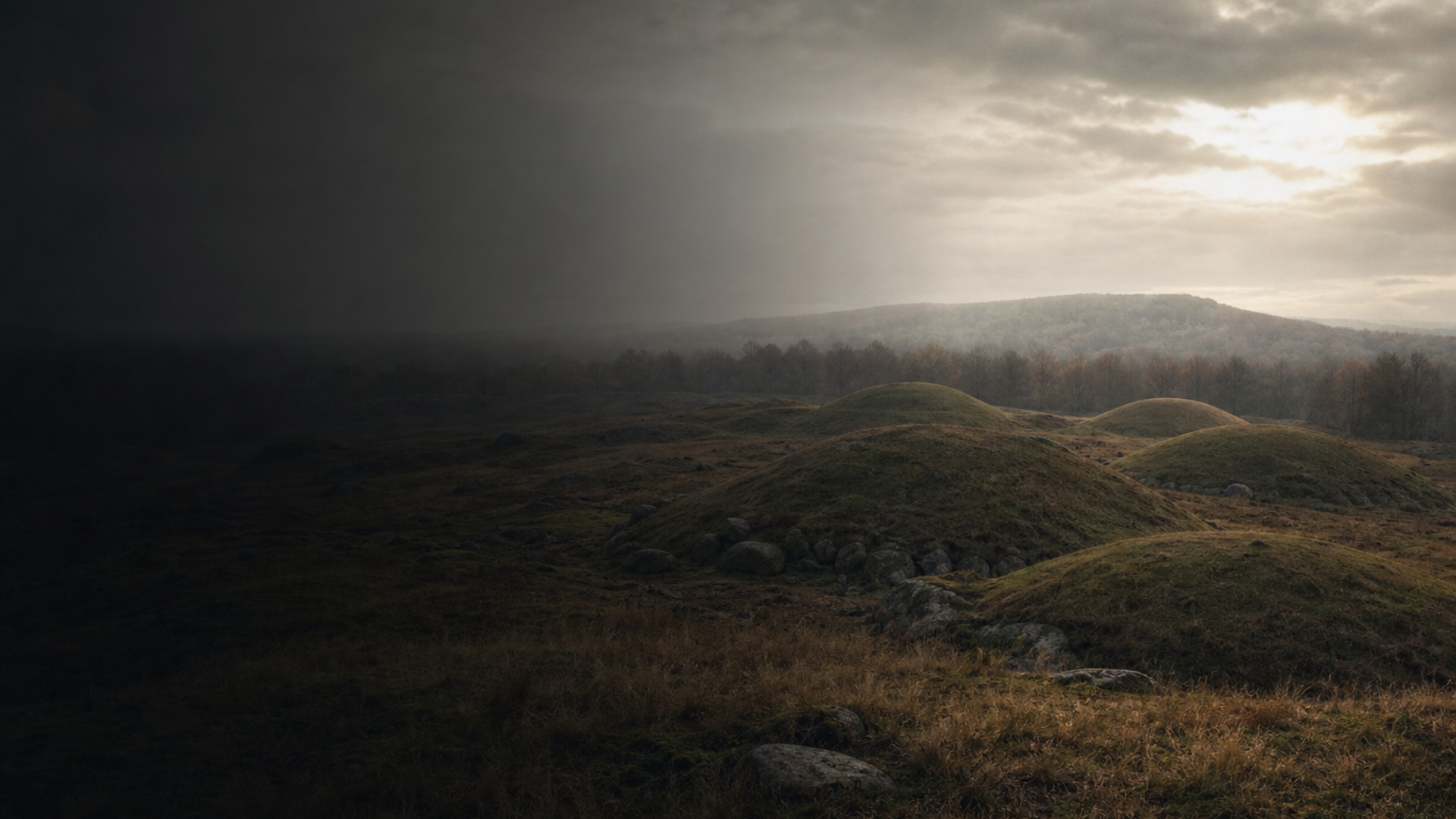
Imagine a low-lying landscape of river meadows and oak groves around Liebenau, where hearth smoke and animal pens punctuate a quiet farming routine. Archaeological indicators for Saxon Early Medieval communities in Lower Saxony typically include small farmsteads, cereal agriculture, animal husbandry, and craft working in wood and leather. Although the Liebenau skeletal sample set is small and excavation reports vary in detail, the broader regional record documents seasonal rhythms anchored to mixed farming and local exchange.

Social life would have been organized around kin networks and household compounds rather than large urban centers. Burial practices in this part of northern Germany display variability — inhumation graves, occasional grave goods, and orientation choices that reflect local custom and connections to wider Germanic practices. The material world—tools, combs, and dress-fittings—speaks to daily routines and personal identities more than rigid ethnic labels. For Liebenau, the human remains provide a biological complement to fragments of the cultural record: isotopic and osteological analyses can reveal diet, mobility, and health, helping to turn evocative landscapes into testable life histories, but such analyses remain preliminary for this small sample.

  • Economy: Mixed farming and animal husbandry typical for the region
  • Social organization: Household- and kin-centered communities
Chapitre V

Genetic Profile

The Liebenau genetic dataset currently comprises four individuals dated to 300–500 CE. One Y-chromosome was assigned to haplogroup I, a patrilineage commonly found across northern and central Europe from the Mesolithic onward and observed in many later medieval and modern northern European populations. This presence is compatible with persistence of local male lineages into the Early Medieval period, but with only one Y-haplogroup observation and no compiled mtDNA frequencies, conclusions must remain cautious.

Genome-wide and maternal-line data are either limited or unpublished for these four individuals. Without broader comparative sampling from contemporary sites in Lower Saxony and across the North Sea region, it is premature to infer patterns of large-scale migration, replacement, or admixture specific to Liebenau. Archaeogenetic studies elsewhere in northern Europe show that Migration Period populations were often mixtures of local descendants of Iron Age groups and newcomers from neighboring regions. Therefore, the preliminary Liebenau profile may reflect local ancestry components typical of northern Germany, with potential contributions from wider Migration Period movements. Any strong claims about population structure, sex-biased mobility, or cultural-genetic correlation at Liebenau await larger sample sizes and higher-resolution analyses. Given n=4 (<10), findings are exploratory and should guide targeted future sampling.

  • Observed Y-DNA: Haplogroup I in 1 of 4 samples — suggests northern European continuity
  • Sample size caveat: n=4 is small; interpretations are preliminary
Chapitre VI

Legacy & Modern Connections

Liebenau's human remains offer a cinematic hint of continuity between ancient landscapes and modern populations in northern Germany. Genetic signals like haplogroup I, when corroborated by larger datasets, can trace threads of male-line continuity stretching from Late Antiquity into current populations of Lower Saxony and surrounding regions. Archaeology and aDNA together emphasize that modern genetic variation often reflects long-standing local roots interwoven with episodes of movement and cultural change.

However, because the Liebenau dataset is tiny, linking these individuals directly to modern groups would be speculative. The true legacy of Liebenau is methodological: small, well-contextualized samples remind us that combining careful excavation, osteology, isotopes, and expanded aDNA sampling produces the most reliable reconstructions of identity, mobility, and community across the Early Medieval world.

  • Potential link: Haplogroup I may indicate long-term northern European ancestry
  • Caveat: Small sample size prevents direct attribution to modern populations
Propulsé par l'IA

Assistant IA

Posez des questions sur la culture Liebenau Saxons: Early Medieval Voices

Assistant IA par DNAGENICS

Débloquer cette fonction
Posez des questions sur la culture Liebenau Saxons: Early Medieval Voices. L'assistant IA peut expliquer les résultats génétiques, le contexte historique, les preuves archéologiques et les liens génétiques avec les populations actuelles, dans les limites de l'interprétation.
Exemple d'analyse IA

La culture Liebenau Saxons: Early Medieval Voices représente un chapitre fascinant de l'histoire humaine…

L'analyse génétique met en évidence des similarités avec des populations antérieures et des signes d'adaptations propres. Les échantillons d'ADN ancien éclairent les schémas migratoires et les liens entre populations, avec des limites qui dépendent de l'étude et du contexte archéologique.

Il s'agit d'un aperçu de l'analyse IA. Accédez à l'assistant complet pour explorer :

  • Composition et similarité génétique
  • Schémas migratoires et origines
  • Vie quotidienne et pratiques culturelles
  • Contexte génétique actuel

Explorez d'autres cultures antiques

Découvrez les récits de civilisations issues du monde antique