Préparation du rapport

Chargement des informations et références disponibles

Connexion au corpus archéologique…

Collecte des archives antiques

Aller au contenu principal
Long Island Ceramic Islanders
Profil culturel

Long Island Ceramic Islanders

Ceramic-period communities of Long Island (885–1390 CE) revealed through archaeology and DNA

885 CE - 1390 CE
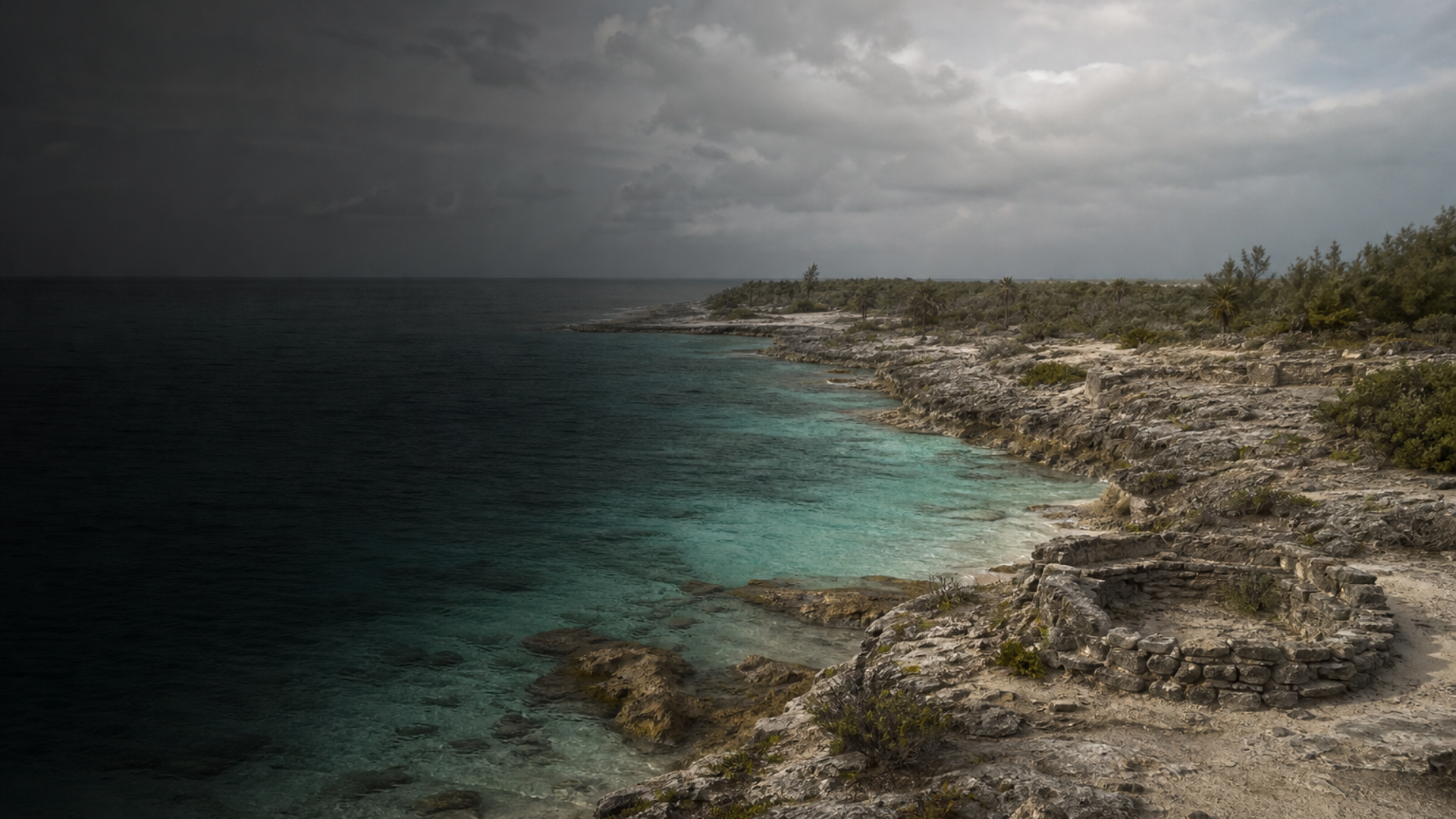
Long Island, Bahamas
Faites défiler pour commencer
Chapitre I

Le récit

Comprendre la culture Long Island Ceramic Islanders

Archaeological and genomic glimpses from Long Island, Bahamas (Rolling Heads, Clarence Town) illuminate ceramic-period islanders dated 885–1390 CE. Four ancient genomes suggest Indigenous American maternal and paternal lineages, but small sample size makes conclusions preliminary.

Time Period

885–1390 CE

Region

Long Island, Bahamas

Common Y-DNA

Q (1 of 4)

Common mtDNA

B2e (2), C (1), C1b (1)

Chapitre II

Chronologie

Moments clés de l'histoire de cette culture

885 CE

Earliest dated Long Island sample

One of the ancient genomes from Long Island is dated to 885 CE, anchoring local ceramic-period activity before European arrival.

Chapitre III

Origins & Emergence

The Bahamas LongIsl_Ceramic assemblage sits within the broader Caribbean Ceramic tradition — a cascade of pottery-making, horticultural peoples who transformed island lifeways. Archaeological data indicates that by the first millennium CE ceramic-using communities were present throughout the northern Caribbean; the Long Island samples date to 885–1390 CE, a late ceramic-phase horizon before European contact.

Excavations at the Rolling Heads site near Clarence Town on Long Island reveal stratified deposits of pottery sherds, shell middens, and hearth features that anchor these people in coastal lifeways. Ceramic styles and manufacturing techniques point to long-distance connections across the Bahamas and into the Greater Antilles: vessel forms, temper, and decorative motifs reflect regional networks of craft knowledge rather than isolation.

Limited evidence suggests these islanders emerged from earlier lowland South American and Greater Antillean ceramic traditions that spread Arawakan languages and integrated new subsistence strategies — especially root-crop horticulture and intensified marine foraging. However, the precise timing, routes, and cultural identities remain debated: ceramic typology provides a relative framework, while radiocarbon dates from Long Island constrain chronology. The archaeological picture is vivid but incomplete, and genetic data (see below) are essential to testing models of migration and interaction.

  • Dates: 885–1390 CE from Long Island sites (Rolling Heads, Clarence Town)
  • Material culture links to broader Caribbean Ceramic traditions
  • Archaeological data indicate maritime networks and shared ceramic technologies
Chapitre IV

Daily Life & Society

Life on Long Island would have been framed by the sea: fishermen and shellfish gatherers left dense middens whose layered shells and fish bone trace seasonal harvests. Pottery vessels — cooking pots, bowls, and storage jars — appear in domestic contexts and hint at household economies organized around communal food preparation, starch-rich foods (likely manioc/cassava and tubers), and marine resources.

Archaeological features at Rolling Heads and Clarence Town include postholes and hearths that suggest compact hamlets of wooden structures, while grave contexts (where preserved) provide glimpses of social practice. Tools of shell, bone, and stone reflect daily crafts: net weights, fishhooks, and ground-stone implements for plant processing. Trade and movement between islands are visible in portable artifacts and ceramic stylistic echoes, implying seasonal or permanent inter-island voyages in dugout canoes.

Social life was likely flexible and responsive to environmental rhythms: kin-based households anchored settlements, while broader ritual and exchange networks connected Long Island to the wider Caribbean world. Yet archaeological preservation is uneven, and many aspects of social hierarchy, belief, and language remain inferential rather than certain.

  • Coastal subsistence: fishing, shellfish, and horticulture
  • Domestic pottery, hearths, and small hamlet settlement patterns
Chapitre V

Genetic Profile

Four ancient genomes from Long Island (Rolling Heads, Clarence Town) provide the first direct biological window into Bahamas_LongIsl_Ceramic people. These samples date between 885 and 1390 CE, all predating European contact. The small sample size (n=4) requires cautious interpretation: patterns are suggestive but preliminary.

Paternal lineage: one sample carries haplogroup Q, a lineage widely associated with Indigenous American populations across North and South America. This is consistent with a Native American paternal ancestry for at least part of the community.

Maternal lineages: mitochondrial DNA shows B2e in two individuals and C (including C1b) in two others. Haplogroups B2 and C1b are well-documented Indigenous American maternal lineages; the subclade B2e is relatively specific and may reflect regional maternal continuity within the Caribbean or adjoining mainland sources. The presence of multiple maternal haplogroups suggests diverse maternal ancestries within a small community.

These genetic signals align with archaeological expectations of a Caribbean population derived from mainland South American and Greater Antillean sources (Arawakan-related dispersals are a working model). Importantly, the low number of samples (<10) means that observed haplogroup frequencies cannot be extrapolated to the entire prehistoric population of Long Island. Future sampling across more sites and time slices is essential to resolve population structure, sex-biased migration, and continuity with later or modern groups.

  • Small dataset (n=4): conclusions are preliminary
  • Y-DNA Q and mtDNA B2e/C/C1b indicate Indigenous American ancestry consistent with Caribbean dispersals
Chapitre VI

Legacy & Modern Connections

The human story embedded in Long Island's ceramic deposits connects past islanders to a wider Caribbean narrative of movement, craft, and adaptation. Genetically, the ancient haplogroups recovered reflect Indigenous American ancestries that contributed to the pre-contact Caribbean gene pool. However, the post-1492 centuries brought dramatic demographic change to the Bahamas; modern Bahamian populations carry complex mixtures of African, European, and Indigenous legacies. Detecting direct genetic continuity between these four ancient individuals and present-day people requires broader ancient sampling and careful modeling of admixture.

Archaeology and aDNA together sharpen questions about cultural survival and memory: which material practices persisted, which were transformed, and how descendant communities remember ancestral landscapes. Ethical collaboration with local communities and transparent sharing of results are essential. As more genomes and site data accumulate, the fragile thread from Rolling Heads and Clarence Town may be woven into a richer tapestry that honors both scientific curiosity and living heritage.

  • Ancient DNA hints at Indigenous contributions to pre-contact Bahamian ancestry
  • Modern connections are complex due to post-contact demographic shifts; more data needed
Propulsé par l'IA

Assistant IA

Posez des questions sur la culture Long Island Ceramic Islanders

Assistant IA par DNAGENICS

Débloquer cette fonction
Posez des questions sur la culture Long Island Ceramic Islanders. L'assistant IA peut expliquer les résultats génétiques, le contexte historique, les preuves archéologiques et les liens génétiques avec les populations actuelles, dans les limites de l'interprétation.
Exemple d'analyse IA

La culture Long Island Ceramic Islanders représente un chapitre fascinant de l'histoire humaine…

L'analyse génétique met en évidence des similarités avec des populations antérieures et des signes d'adaptations propres. Les échantillons d'ADN ancien éclairent les schémas migratoires et les liens entre populations, avec des limites qui dépendent de l'étude et du contexte archéologique.

Il s'agit d'un aperçu de l'analyse IA. Accédez à l'assistant complet pour explorer :

  • Composition et similarité génétique
  • Schémas migratoires et origines
  • Vie quotidienne et pratiques culturelles
  • Contexte génétique actuel

Explorez d'autres cultures antiques

Découvrez les récits de civilisations issues du monde antique