Préparation du rapport

Chargement des informations et références disponibles

Connexion au corpus archéologique…

Collecte des archives antiques

Aller au contenu principal
Los Rieles — 12,000 Years Ago
Profil culturel

Los Rieles — 12,000 Years Ago

A Late Pleistocene coastal forager from Los Vilos with early American genetics

10420 CE - 9450 BCE
Coquimbo, Chile (Los Vilos — Los Rieles)
Faites défiler pour commencer
Chapitre I

Le récit

Comprendre la culture Los Rieles — 12,000 Years Ago

Archaeological and genetic evidence from Los Rieles (Coquimbo, Chile) documents a single Early Holocene individual (10420–9450 BCE) with Y-haplogroup Q and mtDNA C. Limited samples make genetic inferences preliminary but suggest links to early American founder lineages.

Time Period

10420–9450 BCE (Late Pleistocene–Early Holocene)

Region

Coquimbo, Chile (Los Vilos — Los Rieles)

Common Y-DNA

Q (1 sample)

Common mtDNA

C (1 sample)

Chapitre II

Chronologie

Moments clés de l'histoire de cette culture

10420 BCE

Occupation at Los Rieles

Radiocarbon and context place human presence at Los Rieles around 10420–9450 BCE, representing coastal adaptation during the Pleistocene–Holocene transition.

Chapitre III

Origins & Emergence

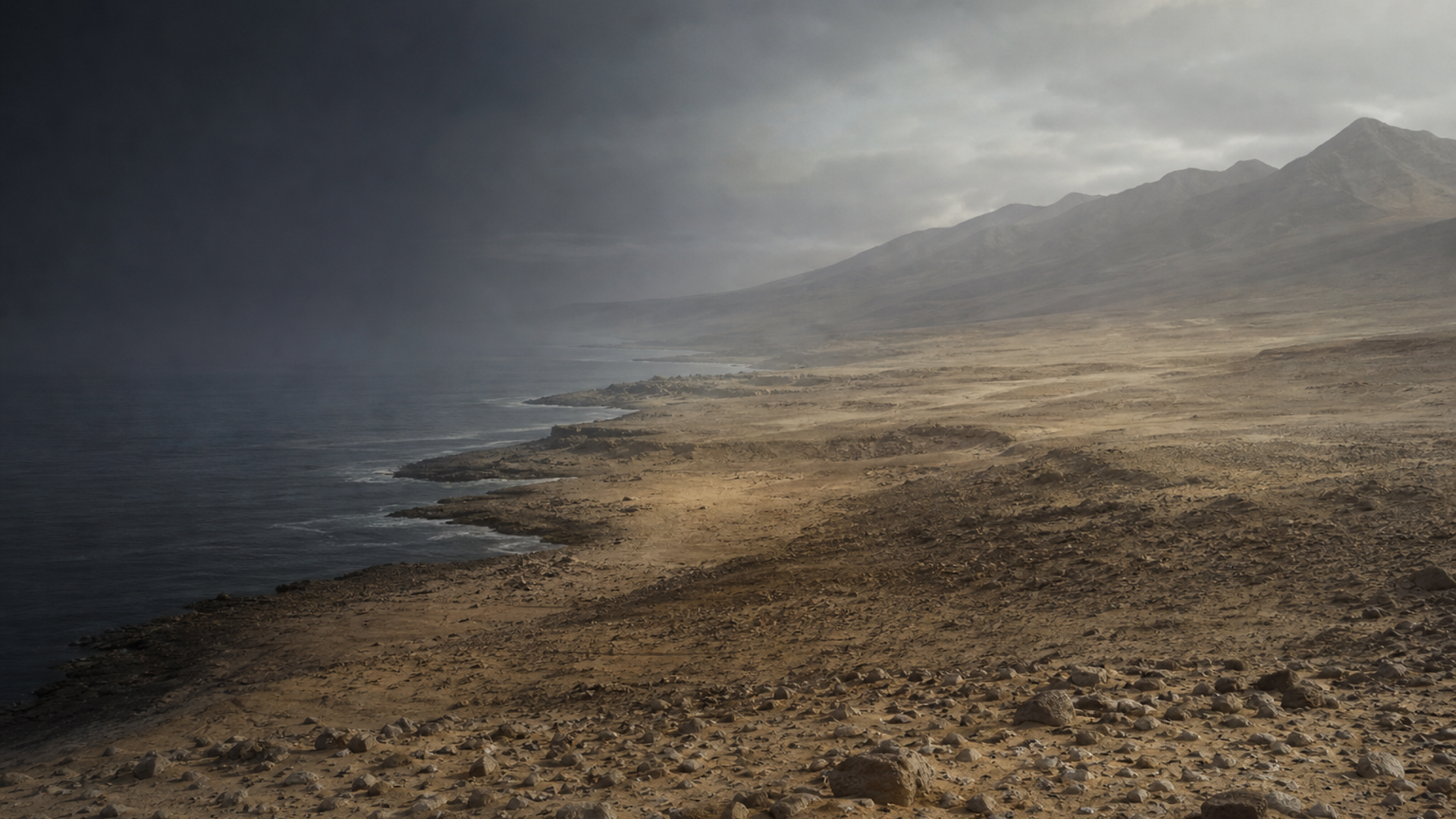
At the threshold between the Late Pleistocene and the warming Early Holocene, the Los Rieles locality in the coastal Coquimbo region (Los Vilos, Chile) preserves human presence dated between ca. 10420 and 9450 BCE. Archaeological data indicates episodic occupation of the shoreline and adjacent terraces during a time of rising seas and shifting coastal resources. The site sits within a broader landscape where early South American settlement was adapting to newly available marine and terrestrial niches.

The material record at contemporaneous Chilean sites suggests mobile forager groups with flexible subsistence strategies. Limited evidence from Los Rieles—combined with the single genetic sample—points toward people who were part of the early colonization arc of South America. While the long view places these inhabitants among the continent’s earliest known coastal or near-coastal populations, the picture remains fragmentary. Geology, sea-level change, and sparse depositional contexts mean that many early sites are partially eroded or submerged, so archaeological visibility is uneven.

Overall, Los Rieles captures a moment of human expansion and environmental adaptation. The data hint at connections to broader Pleistocene migrations into South America, but low sample numbers require caution: interpretations of cultural origins and population movements are provisional and best tested as more sites and genomes are analyzed.

  • Occupation dated ca. 10420–9450 BCE at Los Rieles, Coquimbo, Chile
  • Evidence consistent with Late Pleistocene–Early Holocene coastal foraging
  • Interpretations are provisional due to sparse and erosional site contexts
Chapitre IV

Daily Life & Society

Imagine a shoreline of wind-polished pebbles and tidal pools: families moving between rocky coves and inland plant patches, harvesting shellfish, fish, and seasonally available plants. Archaeological data from the Coquimbo coast indicate lithic technology suited to a mobile foraging economy—flakes, scrapers and pointed tools—though preservation biases mean organic gear (wooden hooks, nets, basketry) rarely survives.

Social groups at Los Rieles were likely small, kin-based bands tied to local resource cycles. The coastal setting would have encouraged repeated short-term camps and foraging rounds, with people transporting curated stone tools and food residues across the landscape. Seasonal rounds may also have included forays up river valleys to access freshwater resources and game. Symbolic life—ritual deposits, mortuary behavior—remains poorly documented for this site; the single genetic individual provides a rare window into the living community but cannot reconstruct social complexity on its own.

Archaeological horizons in nearby regions record shell middens and hearth features elsewhere, suggesting shared coastal lifeways. At Los Rieles the interplay of sea-level rise and shifting shorelines affected site location and occupational intensity, leaving a cinematic yet fragmentary record of everyday survival at the dawn of the Holocene.

  • Mobile coastal foraging with lithic toolkits adapted for multiple tasks
  • Small, kin-based groups following seasonal resource rounds
Chapitre V

Genetic Profile

The Los Rieles assemblage currently includes a single genome-quality individual dated to between 10420 and 9450 BCE. This individual carries Y-chromosome haplogroup Q and mitochondrial haplogroup C—lineages commonly observed among early and modern Native American populations. Such markers are consistent with an ancestry ultimately derived from Beringian and Siberian source populations that contributed to the initial peopling of the Americas.

Because only one sample is available, any broader population-level inference is preliminary. Limited-sample caution is essential: while haplogroups Q and C fit expectations for early South American individuals, they do not alone define fine-scale relationships, migration routes, or demographic events. Genomic affinities beyond uniparental markers (autosomal ancestry components linking Los Rieles to other early South American individuals or to proposed coastal migration scenarios) require larger comparative datasets.

Nonetheless, the genetic signal supports continuity of foundational Native American lineages along the Pacific coast during the terminal Pleistocene. When integrated with archaeology, this single genome dovetails with models where early settlers carried Beringian-derived ancestry southward, while local adaptation and genetic drift produced regional diversity. Future samples from Los Rieles and neighboring sites will be necessary to confirm patterns and to resolve whether coastal populations formed distinct genetic clusters or were part of more continuous inland–coastal gene flow.

  • Single individual carries Y-haplogroup Q and mt-haplogroup C
  • Findings consistent with Beringian-derived early American ancestry but preliminary
Chapitre VI

Legacy & Modern Connections

The deep-time signals from Los Rieles resonate with living Indigenous lineages across the Americas. Y-haplogroup Q and mtDNA C are part of the genetic tapestry that underpins many Native American populations today, offering a tangible link across millennia. Yet genetic continuity is complex: later migrations, population bottlenecks, and regional differentiation have reshaped descendant communities.

For contemporary populations in Chile and the wider southern cone, Los Rieles represents an ancestral chapter—one of many—that contributes to long-term regional histories. Archaeogenetic data like this illuminate broad threads of ancestry, but because the dataset here is limited to one individual, claims about direct lineage to present-day groups must be made cautiously. In museums and educational settings, Los Rieles can be presented as a cinematic touchstone for human resilience at the dawn of the Holocene, while also underscoring the need for respectful collaboration with Indigenous communities and for more extensive sampling to refine the story.

  • Uniparental markers link Los Rieles to founding Native American lineages
  • Direct continuity to modern groups remains uncertain given the single sample
Propulsé par l'IA

Assistant IA

Posez des questions sur la culture Los Rieles — 12,000 Years Ago

Assistant IA par DNAGENICS

Débloquer cette fonction
Posez des questions sur la culture Los Rieles — 12,000 Years Ago. L'assistant IA peut expliquer les résultats génétiques, le contexte historique, les preuves archéologiques et les liens génétiques avec les populations actuelles, dans les limites de l'interprétation.
Exemple d'analyse IA

La culture Los Rieles — 12,000 Years Ago représente un chapitre fascinant de l'histoire humaine…

L'analyse génétique met en évidence des similarités avec des populations antérieures et des signes d'adaptations propres. Les échantillons d'ADN ancien éclairent les schémas migratoires et les liens entre populations, avec des limites qui dépendent de l'étude et du contexte archéologique.

Il s'agit d'un aperçu de l'analyse IA. Accédez à l'assistant complet pour explorer :

  • Composition et similarité génétique
  • Schémas migratoires et origines
  • Vie quotidienne et pratiques culturelles
  • Contexte génétique actuel

Explorez d'autres cultures antiques

Découvrez les récits de civilisations issues du monde antique