Préparation du rapport

Chargement des informations et références disponibles

Connexion au corpus archéologique…

Collecte des archives antiques

Aller au contenu principal
Lucier Ancestors: Ontario Genomes
Profil culturel

Lucier Ancestors: Ontario Genomes

Ancient DNA from Lucier, Southwestern Ontario traces maternal continuity and complex paternal signals

2914 BCE - 1637 CE
Lucier, Southwestern Ontario, Canada
Faites défiler pour commencer
Chapitre I

Le récit

Comprendre la culture Lucier Ancestors: Ontario Genomes

Genomes from nine individuals (2914 BCE–1637 CE) at Lucier, Southwestern Ontario, reveal dominant maternal C-lineages and a single Q Y-haplogroup. Archaeology and aDNA together suggest long-term local ancestry with caution: small sample size and broad Y calls limit firm conclusions.

Time Period

2914 BCE – 1637 CE

Region

Lucier, Southwestern Ontario, Canada

Common Y-DNA

Q, BT, IJK (broad calls)

Common mtDNA

C (dominant), A2i, X

Chapitre II

Chronologie

Moments clés de l'histoire de cette culture

2500 BCE

Early occupations in the Great Lakes region

Archaeological evidence indicates seasonal camps and mobile lifeways along river corridors in southwestern Ontario, precursors to later territorial patterns.

Chapitre III

Origins & Emergence

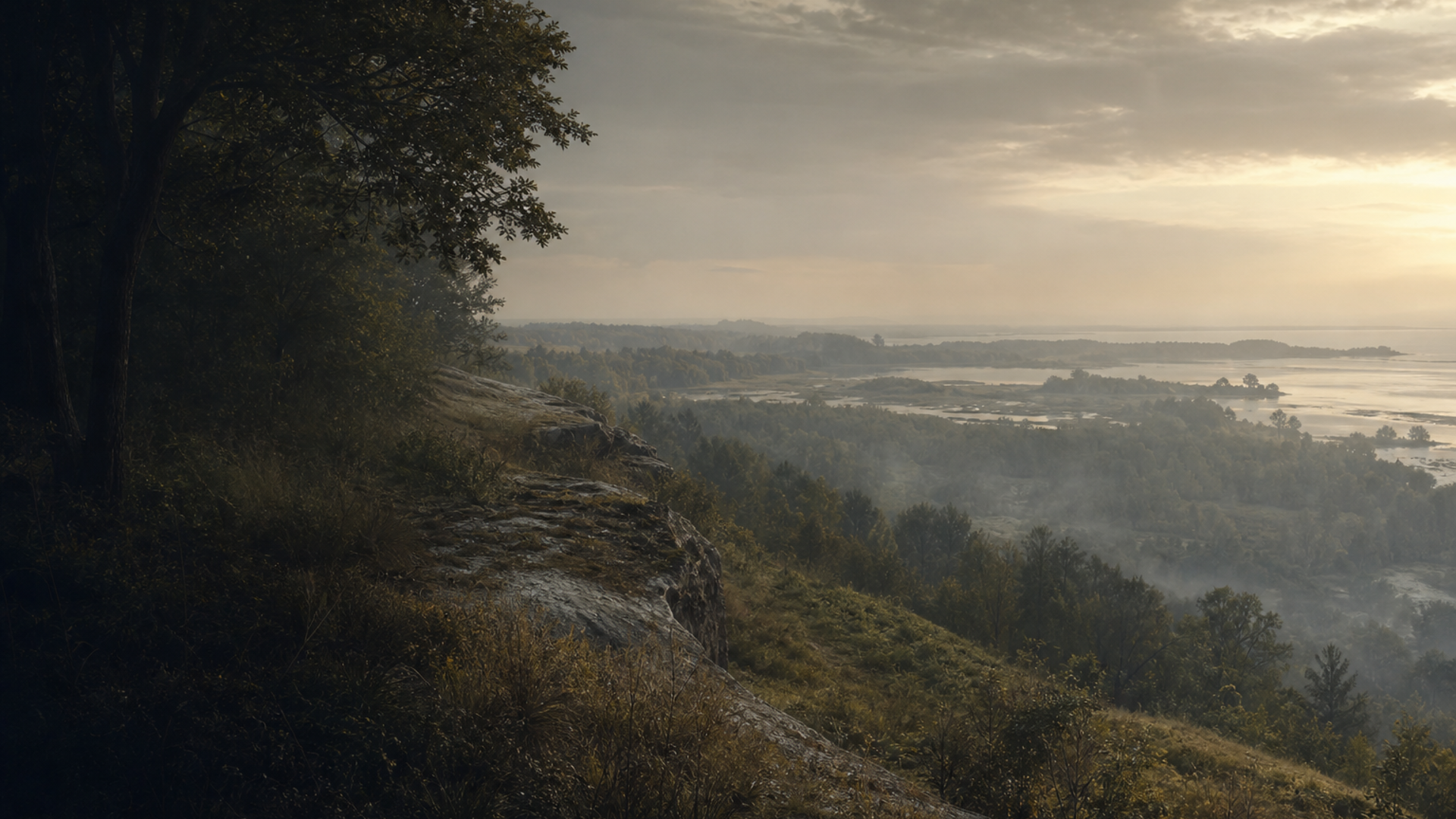
The Lucier assemblage occupies a long temporal span (ca. 2914 BCE to 1637 CE) in southwestern Ontario, a landscape of river corridors, glacial deposits and rich seasonal resources. Archaeological data indicates repeated human presence across millennia rather than a single, sudden migration event. Material traces at Lucier align with regional small-tool and mobile hunter-gatherer traditions; related cultural horizons include elements tied to the Arctic Small Tool Tradition in broader northern contexts, though direct links are tentative.

Genetic data from nine individuals provide a window into ancestry but must be read cautiously. The predominance of mtDNA haplogroup C suggests deep maternal continuity in this part of the Great Lakes region. The presence of A2i and X maternal lineages complements that pattern, reflecting haplotypes that are today found among Indigenous North American populations. Paternal signals are less resolved: one individual carries Y-haplogroup Q, a lineage widely observed in Native American paternal histories, while other Y calls (BT, IJK) are broad and may reflect low-resolution assignment or gaps in coverage.

Limited evidence suggests long-term local descent with episodes of contact and mobility. With only nine samples, any narrative of population change or migration must remain provisional and framed by archaeological context and strict uncertainty.

  • Long occupation span: ca. 2914 BCE–1637 CE
  • Maternal continuity indicated by dominant mtDNA C
  • Paternal data are broad; Q present but other Y calls are tentative
Chapitre IV

Daily Life & Society

Archaeological traces from southwestern Ontario paint a cinematic picture of seasonal rounds: families and small groups exploiting rivers, wetlands and woodlands for fish, migratory birds, and terrestrial game. Stone tool scatters, ephemeral hearths and organic remnants in similar regional sites indicate a focus on mobility, diversified subsistence, and intimate knowledge of local ecologies. At Lucier, stratigraphic assemblages suggest recurring campsite activities rather than dense, long-term sedentism.

Social organization inferred from material culture tends toward flexible band structures, with kin networks organizing resource sharing and seasonal aggregation. Craft specialization appears limited but skilled: flaked stone tools, bone implements and evidence for hide and plant processing reflect technological responses to a variable environment. Burial practices and mortuary variability at comparable sites show both localized traditions and individual variation, hinting at fluid social identities over time.

Archaeological data indicates continuity in land use strategies across centuries, while episodic technological and stylistic shifts likely reflect intergroup contact and resource-driven adaptations. Genetics adds texture to this portrait by anchoring lineages in place, but the small sample count tempers broad social reconstructions.

  • Seasonal mobility and riverine resource use
  • Flexible kin-based social groups and pragmatic toolkits
Chapitre V

Genetic Profile

The Lucier genetic dataset (n = 9) offers a preliminary but evocative view of ancestry in southwestern Ontario. Mitochondrial DNA is dominated by haplogroup C (6/9), with two individuals assigned to A2i and one to X. These maternal lineages are well-attested in ancient and modern Indigenous populations of North America and suggest multi-millennial matrilineal continuity in the region. Across the dated span (~2914 BCE to 1637 CE), mtDNA continuity is consistent with local persistence of maternal lineages.

Y-chromosome results are more ambiguous. One individual carries haplogroup Q, a lineage frequently associated with Native American paternal ancestry. The other two Y calls are reported as BT and IJK — broad, basal clades that do not provide fine-scale paternal resolution. Such broad calls can arise from low-coverage data, poor preservation, or genuine ancestral diversity; contamination and analytical limits must be considered. Because the male sample size is small and some haplogroup assignments are broad, interpretations about paternal continuity, replacement, or contact are tentative.

Overall, the aDNA points toward maternal continuity with episodic paternal variability or methodological uncertainty. Additional high-coverage genomes and expanded sampling are essential before drawing firm demographic models.

  • mtDNA dominated by C; A2i and X also present
  • Y-DNA: Q detected; BT and IJK are broad calls—interpret cautiously
Chapitre VI

Legacy & Modern Connections

The Lucier genetic and archaeological traces resonate with living landscapes and descendant communities across southern Ontario. The persistence of maternal haplogroups tied to Indigenous North American lineages indicates biological threads that can complement, but never replace, oral histories and cultural continuities. Archaeological data indicates long-term land use and knowledge systems that have shaped regional ecology and human relationships with it.

Researchers must emphasize collaboration, cultural sensitivity and transparency: small sample sizes (n = 9) mean conclusions are provisional, and genetics is one line of evidence among many. Future work informed by community partnership, expanded sampling, and improved genomic resolution will better clarify population dynamics while respecting Indigenous stewardship of ancestral remains and data.

  • Genomic signals align with Indigenous maternal lineages in North America
  • Small sample size and ethical collaboration mandate cautious interpretation
Propulsé par l'IA

Assistant IA

Posez des questions sur la culture Lucier Ancestors: Ontario Genomes

Assistant IA par DNAGENICS

Débloquer cette fonction
Posez des questions sur la culture Lucier Ancestors: Ontario Genomes. L'assistant IA peut expliquer les résultats génétiques, le contexte historique, les preuves archéologiques et les liens génétiques avec les populations actuelles, dans les limites de l'interprétation.
Exemple d'analyse IA

La culture Lucier Ancestors: Ontario Genomes représente un chapitre fascinant de l'histoire humaine…

L'analyse génétique met en évidence des similarités avec des populations antérieures et des signes d'adaptations propres. Les échantillons d'ADN ancien éclairent les schémas migratoires et les liens entre populations, avec des limites qui dépendent de l'étude et du contexte archéologique.

Il s'agit d'un aperçu de l'analyse IA. Accédez à l'assistant complet pour explorer :

  • Composition et similarité génétique
  • Schémas migratoires et origines
  • Vie quotidienne et pratiques culturelles
  • Contexte génétique actuel

Explorez d'autres cultures antiques

Découvrez les récits de civilisations issues du monde antique