Préparation du rapport

Chargement des informations et références disponibles

Connexion au corpus archéologique…

Collecte des archives antiques

Aller au contenu principal
Lukurmata: Tiwanaku of the Altiplano
Profil culturel

Lukurmata: Tiwanaku of the Altiplano

Archaeology and ancient DNA from Lukurmata illuminate centuries of Tiwanaku life on the Bolivian highlands.

211 CE - 1620 CE
Lukurmata, Bolivian Altiplano
Faites défiler pour commencer
Chapitre I

Le récit

Comprendre la culture Lukurmata: Tiwanaku of the Altiplano

Archaeological and genetic evidence from four Lukurmata individuals (211–1620 CE) reveal Tiwanaku-era occupation in Bolivia. Y-DNA Q and mtDNA B2/C1b suggest Indigenous Andean ancestry; small sample size makes conclusions preliminary.

Time Period

211–1620 CE

Region

Lukurmata, Bolivian Altiplano

Common Y-DNA

Q (2 of 4)

Common mtDNA

B2 (3 of 4), C1b (1 of 4)

Chapitre II

Chronologie

Moments clés de l'histoire de cette culture

200 CE

Early Tiwanaku influence at Lukurmata

Archaeological indicators suggest Lukurmata engages with emerging Tiwanaku networks in the first centuries CE.

500 CE

Tiwanaku apogee and regional integration

Regional centers around Lake Titicaca display peak monumentality and exchange, affecting Lukurmata's material culture.

1000 CE

Regional transformations after Tiwanaku decline

Political reorganization across the altiplano follows Tiwanaku fragmentation, with local communities adapting.

1540 CE

Spanish contact begins in the highlands

Colonial incursions bring demographic and social disruptions to the Bolivian highlands.

1620 CE

Latest dated Lukurmata genetic sample

One genetic sample from Lukurmata dates to the early colonial period, offering insight into continuity.

Chapitre III

Origins & Emergence

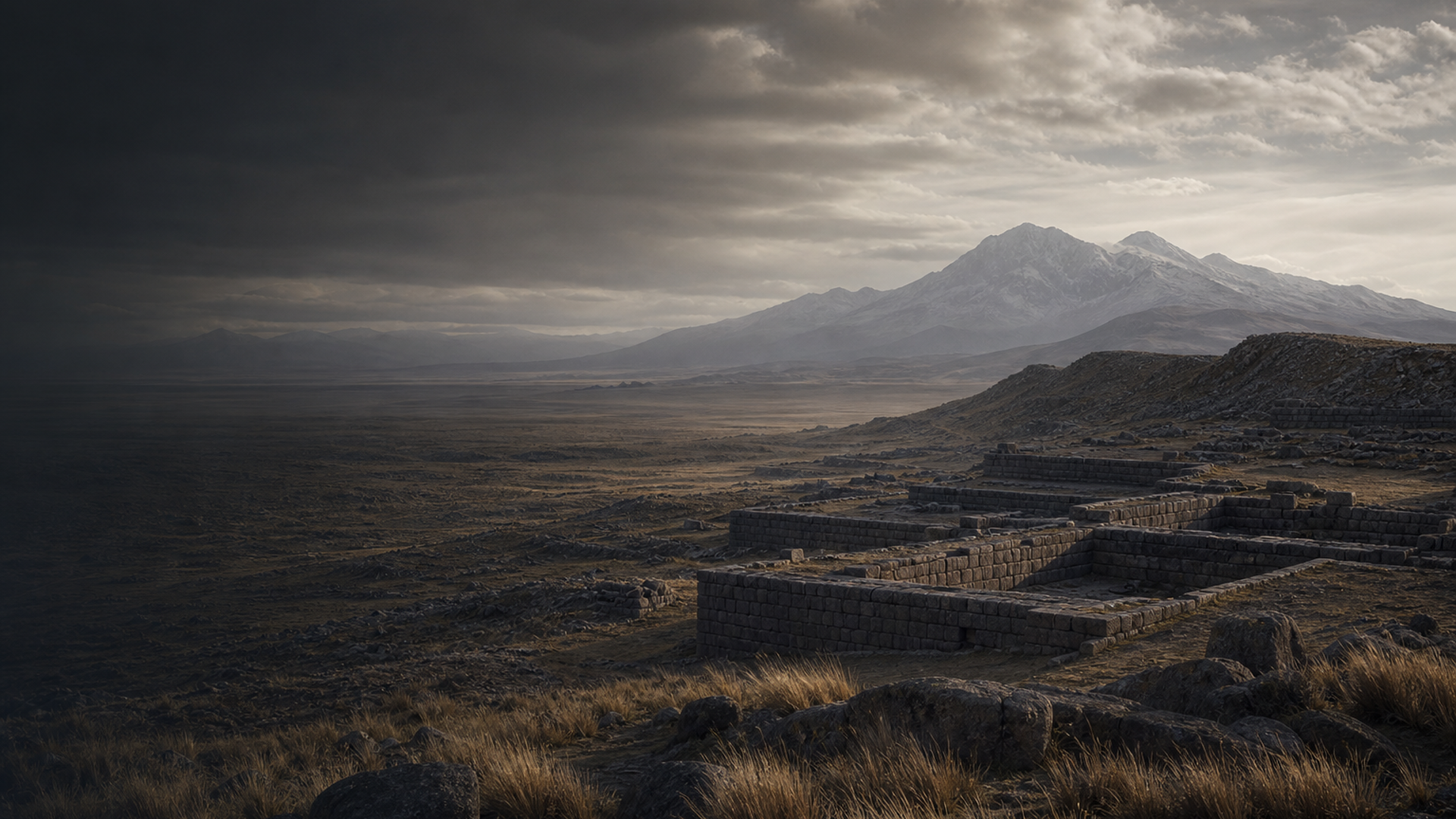
Lukurmata sits on the windswept altiplano near Lake Titicaca, a landscape that became central to the rise of the Tiwanaku phenomenon. Archaeological data indicates human presence at Lukurmata spanning many centuries, and the site's material culture — ceramics, stone architecture, and burial contexts — bears hallmarks of Tiwanaku interaction and local adaptation. The radiocarbon-calibrated range for the genetic samples (211–1620 CE) spans the formative, apogee, and post-empire phases of Tiwanaku influence: early local communities may have been absorbed into broader ritual and economic networks during the first millennium CE, while later layers show continuity and change under colonial pressures.

Limited evidence suggests Lukurmata functioned as a regional center connected to raised-field agriculture and camelid herding typical of the Lake Titicaca basin. Monumental Tiwanaku-style traits are present in nearby centers, but Lukurmata's own archaeological footprint appears more modest and locally inflected. Because only four ancient individuals have associated genomes, reconstructions of population movement or replacement remain provisional. The genetic dates, when combined with stratigraphy and pottery sequences from Lukurmata and neighboring sites, point toward long-term occupation with episodes of external influence rather than wholesale population turnover.

  • Site: Lukurmata, Bolivian Altiplano (near Lake Titicaca)
  • Time span: samples dated 211–1620 CE across Tiwanaku phases
  • Evidence suggests continuity with episodic Tiwanaku influence
Chapitre IV

Daily Life & Society

Archaeology paints a textured picture of daily life at Lukurmata: fields sculpted into the high plain, corrals for camelids, pottery vessels for storage and feasting, and burials that reflect both household and communal practices. Archaeological data indicates a mixed agropastoral economy — tuber and grain cultivation supported by engineered soils and irrigation, together with llama herding — which anchored communities through climatic fluctuation.

Material culture recovered near Lukurmata includes standard Tiwanaku ceramic styles alongside locally made wares, suggesting cultural exchange and local production coexisted. Funerary contexts reveal variation: some individuals show elaborate grave goods and bundled interments, while others have simpler burials, pointing to social differentiation. Trade routes across the altiplano carried raw materials and ideas; obsidian and pressed-metal objects found regionally attest to long-distance exchange. Ethnohistoric analogy and zooarchaeological remains suggest ritualized use of camelids and plants in both subsistence and ceremonial spheres.

However, many interpretations rest on limited excavation areas and small sample counts. The human stories implied by pottery shards and bones are compelling but incomplete; every new test or trench can alter the narrative of how Lukurmata’s inhabitants lived, worked, and related to Tiwanaku power.

  • Mixed agropastoral economy with raised fields and llama herding
  • Material culture shows both Tiwanaku influence and local traditions
Chapitre V

Genetic Profile

The genetic dataset from Lukurmata comprises four individuals dated between 211 and 1620 CE — a very small sample that limits broad inferences but offers valuable windows into ancestry. Two male-associated samples carry Y-chromosome haplogroup Q, a lineage widely distributed among Indigenous peoples of the Americas and common in Andean populations. Mitochondrial results show three individuals with haplogroup B2 and one with C1b, both maternal lineages long-established in South America and frequently observed in highland Andean contexts.

These results are consistent with archaeological expectations of predominantly Indigenous Andean ancestry at Lukurmata through the Tiwanaku period and into the colonial era. Limited evidence suggests genetic continuity rather than replacement: the presence of canonical Native American haplogroups across a wide time range implies local descent persisted through social and political changes. That said, the late end of the sample range (1620 CE) overlaps early colonial centuries when European and African admixture elsewhere in the Andes increased; with only four samples, we cannot robustly document the timing or extent of such admixture at Lukurmata.

Population-genetic comparisons with larger Tiwanaku and altiplano datasets would help clarify whether Lukurmata reflects a typical highland profile or a locally distinct community. For now, conclusions must be framed as preliminary and hypothesis-generating.

  • Y-DNA: Q common to Indigenous American populations (2 of 4 samples)
  • mtDNA: B2 predominant (3), C1b present (1); suggests Andean maternal continuity
Chapitre VI

Legacy & Modern Connections

The echoes of Lukurmata resonate in the living cultures of the Bolivian altiplano. Linguistic, agricultural, and ritual practices among modern Aymara and Quechua-speaking communities preserve continuities with the Tiwanaku world: terraced fields, llama pastoralism, and ceremonial cycles that map to the highland seasons. Archaeological and genetic lines converge to suggest that many descendants of Tiwanaku-era communities remained on the landscape, passing on knowledge and genes despite centuries of change.

Caution is necessary: with only four ancient genomes, the picture of genetic continuity is suggestive rather than definitive. Still, the concordance of Indigenous Y and mtDNA haplogroups with archaeological signs of long-term occupation supports a narrative of resilience. Lukurmata’s material traces—pottery, architecture, burial rites—combined with DNA evidence offer museum visitors a cinematic yet scientifically grounded story: of people rooted to place, adaptable to highland life, and woven into the broader tapestry of Andean history.

  • Cultural practices in the modern altiplano likely retain Tiwanaku-era continuities
  • Genetic signals suggest persistence of Indigenous ancestry, but data remain limited
Propulsé par l'IA

Assistant IA

Posez des questions sur la culture Lukurmata: Tiwanaku of the Altiplano

Assistant IA par DNAGENICS

Débloquer cette fonction
Posez des questions sur la culture Lukurmata: Tiwanaku of the Altiplano. L'assistant IA peut expliquer les résultats génétiques, le contexte historique, les preuves archéologiques et les liens génétiques avec les populations actuelles, dans les limites de l'interprétation.
Exemple d'analyse IA

La culture Lukurmata: Tiwanaku of the Altiplano représente un chapitre fascinant de l'histoire humaine…

L'analyse génétique met en évidence des similarités avec des populations antérieures et des signes d'adaptations propres. Les échantillons d'ADN ancien éclairent les schémas migratoires et les liens entre populations, avec des limites qui dépendent de l'étude et du contexte archéologique.

Il s'agit d'un aperçu de l'analyse IA. Accédez à l'assistant complet pour explorer :

  • Composition et similarité génétique
  • Schémas migratoires et origines
  • Vie quotidienne et pratiques culturelles
  • Contexte génétique actuel

Explorez d'autres cultures antiques

Découvrez les récits de civilisations issues du monde antique