Préparation du rapport

Chargement des informations et références disponibles

Connexion au corpus archéologique…

Collecte des archives antiques

Aller au contenu principal
Majaky Usatove Ensemble
Profil culturel

Majaky Usatove Ensemble

Coastal Eneolithic lifeways at Majaky (Odessa) seen through archaeology and ancient DNA

4446 CE - 3652 BCE
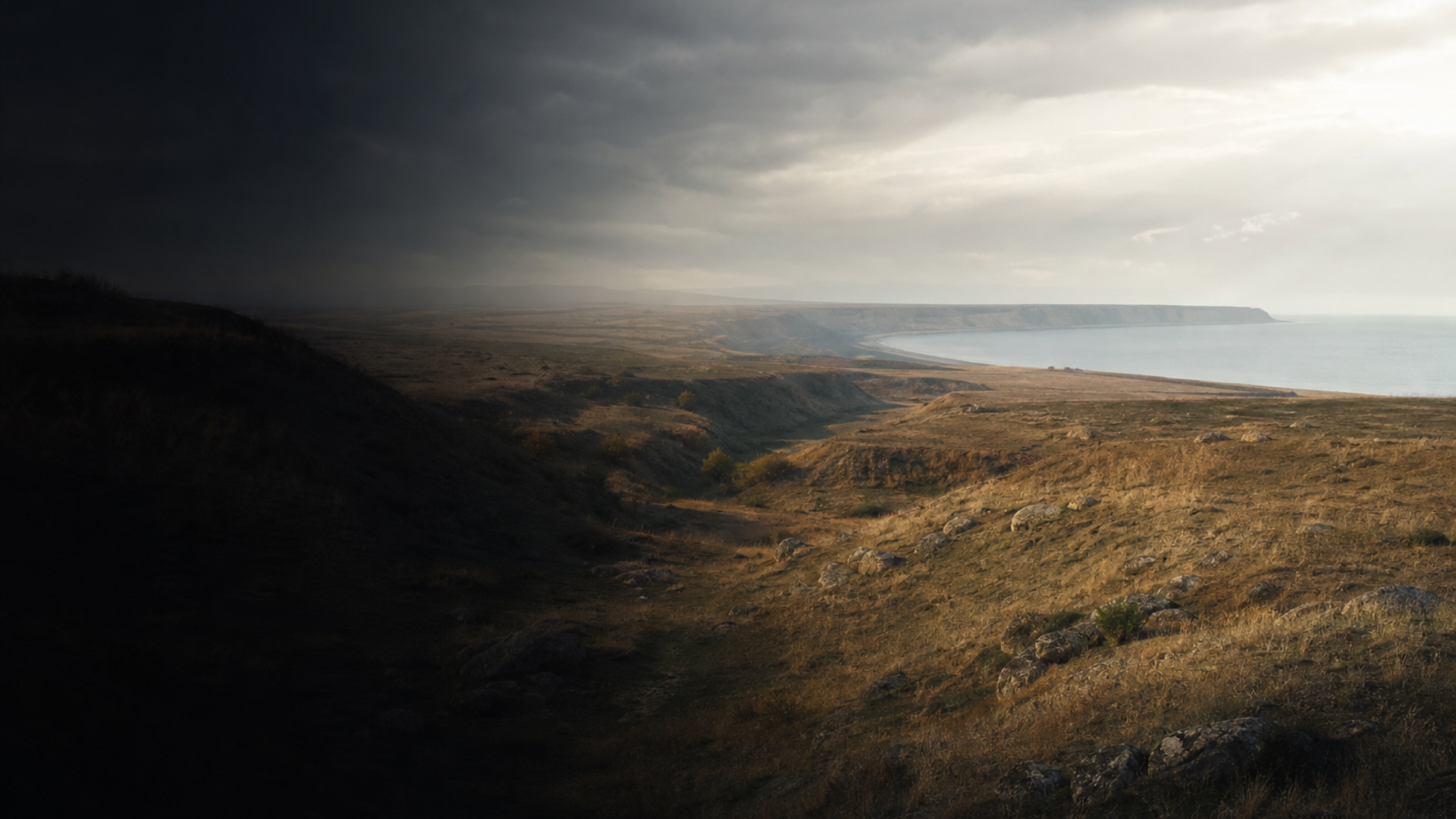
Majaky, Odessa Oblast, Ukraine (Black Sea coast)
Faites défiler pour commencer
Chapitre I

Le récit

Comprendre la culture Majaky Usatove Ensemble

Archaeological and genetic evidence from six Eneolithic individuals (4446–3652 BCE) at Majaky, Odesa Oblast, illuminate the Usatove cultural horizon on the northwestern Black Sea coast. Limited samples suggest a mosaic of local Neolithic maternal lineages and mixed paternal signals. Conclusions remain preliminary.

Time Period

4446–3652 BCE

Region

Majaky, Odessa Oblast, Ukraine (Black Sea coast)

Common Y-DNA

G, R

Common mtDNA

I (x2), U (x2), H5, I5

Chapitre II

Chronologie

Moments clés de l'histoire de cette culture

4446 BCE

Earliest dated Majaky individual

One of the oldest radiocarbon dates from Majaky (c. 4446 BCE) anchors these Usatove-associated burials at the late Eneolithic Black Sea coast.

Chapitre III

Origins & Emergence

The Majaky assemblage sits within the broader Usatove cultural horizon, a late Eneolithic (Chalcolithic) expression along the northwestern shores of the Black Sea. Radiocarbon dates from human remains in this dataset span roughly 4446–3652 BCE, anchoring these individuals within a period of intensified coastal exchange and social elaboration. Archaeological data indicates connections to regional pottery styles, maritime subsistence, and burial practices found elsewhere in the Usatove complex: flat graves, occasional rich grave goods, and a mixture of local agrarian and pastoral economies.

Cinematic as the shoreline may sound, the material record is fragmentary: excavation at Majaky (Odesa District) has revealed pottery and burial contexts that suggest a community entangled in both inland and maritime networks. Limited evidence suggests Usatove populations participated in long-distance exchange across the northwestern Black Sea, perhaps linking steppe, forest-steppe, and Balkan cultural spheres. However, the archaeological picture is complex: variation in burial treatment and artifact assemblages hints at social differentiation and evolving identities rather than a single uniform culture.

Because these interpretations rely on a modest archaeological record at Majaky and a small genetic sample (six individuals), models for origin and contact must remain cautious. Archaeological data indicates dynamic local development within wider Eneolithic transformations, but the precise sources and directions of influence require more data to resolve.

  • Radiocarbon span: 4446–3652 BCE at Majaky (Odessa Oblast)
  • Material culture aligns with Usatove coastal-sphere traditions
  • Evidence points to both local development and long-distance exchange
Chapitre IV

Daily Life & Society

At the human scale, Majaky’s inhabitants inhabited a landscape of brackish lagoons, river mouths, and fertile plains. Archaeological data indicates mixed subsistence: domesticated cereals and livestock combined with fishing and seasonal exploitation of marine resources. Pottery forms and toolkits recovered in the region suggest household craft, food processing, and possibly seafaring or riverine transport technologies that facilitated mobility and trade.

Burial contexts at Majaky reveal variability: some interments are simple and modest, others include more elaborate treatment, implying social differentiation within a small community. Grave goods, where preserved, often include ceramic vessels and personal ornaments that signal social ties and identities expressed through material culture. The coastal setting would have encouraged interaction—markets, exchange of raw materials like copper, and cultural contact across the Black Sea rim—producing a lived world that was outward-looking yet rooted in local practices.

Archaeological evidence is suggestive rather than exhaustive: taphonomic loss and limited excavation mean reconstructions of daily life remain provisional. Still, the combination of subsistence traces, burial variability, and artifact types paints a cinematic picture of communities negotiating life on the Eneolithic Black Sea frontier.

  • Mixed economy: agriculture, animal husbandry, and marine resources
  • Burial variability suggests social differentiation within the settlement
Chapitre V

Genetic Profile

Six individuals from Majaky (Odesa District) provide a rare genetic window into Usatove-associated people. The Y-chromosome diversity is low but informative: one G and one R haplogroup were identified among the males. Maternal lineages are dominated by I (two individuals) and U (two individuals), with single occurrences of H5 and I5. These mitochondrial haplogroups (I, U, H) are common in European Neolithic and post-Neolithic contexts and often signal continuity of maternal lines that trace back to earlier farmer and hunter-gatherer populations in the region.

The presence of a Y haplogroup R—observed broadly across Bronze Age and steppe-associated contexts—raises the possibility of male-mediated gene flow from steppe-related groups into coastal communities, but with only one R and one G among the Y-chromosomes, such inferences must be cautious. The G lineage can be associated in other contexts with Neolithic farmer ancestries in Europe. Taken together, the distribution of mtDNA and Y-DNA in this small sample suggests a genetic mosaic: maternal continuity from local Neolithic-derived lineages, with paternal lines reflecting both local and potentially incoming influences.

Crucially, sample count is small (n=6). Where sample count is low (<10), conclusions are preliminary: archaeological and genomic integration points toward complex interaction along the Black Sea coast, but broader population dynamics for the Usatove horizon require additional ancient DNA sampling and more extensive archaeological correlation.

  • Y-DNA: G (1), R (1) — limited paternal diversity in six samples
  • mtDNA: I (2), U (2), H5 (1), I5 (1) — suggests maternal continuity with regional Neolithic lineages
Chapitre VI

Legacy & Modern Connections

The people of Majaky occupy a crucial narrative node between late Neolithic farmers, emerging Eneolithic coastal societies, and later Bronze Age movements across the Pontic–Caspian corridor. Genetic traces—especially persistent maternal haplogroups like I and U—echo deep regional roots that can persist into later populations of Ukraine and neighboring regions. The tentative appearance of paternal R hints at the complex tapestry of migrations and contacts that would reshape eastern Europe in subsequent millennia.

Archaeological data indicates that Usatove communities, including those at Majaky, were participants in a long arc of Black Sea connectivity. For modern descendant populations, these ancient genomes contribute fragments to a larger ancestral mosaic: some lineages may persist, some were transformed by later events. Because conclusions rest on a small number of samples, the story is best read as an evocative beginning—one that invites further excavation, dating, and genomic sampling to illuminate how these coastal Eneolithic communities contributed to the genetic and cultural landscapes of later Europe.

  • Maternal haplogroups indicate continuity with regional Neolithic ancestry
  • Preliminary genetic traces suggest interactions that foreshadow later steppe inflows
Propulsé par l'IA

Assistant IA

Posez des questions sur la culture Majaky Usatove Ensemble

Assistant IA par DNAGENICS

Débloquer cette fonction
Posez des questions sur la culture Majaky Usatove Ensemble. L'assistant IA peut expliquer les résultats génétiques, le contexte historique, les preuves archéologiques et les liens génétiques avec les populations actuelles, dans les limites de l'interprétation.
Exemple d'analyse IA

La culture Majaky Usatove Ensemble représente un chapitre fascinant de l'histoire humaine…

L'analyse génétique met en évidence des similarités avec des populations antérieures et des signes d'adaptations propres. Les échantillons d'ADN ancien éclairent les schémas migratoires et les liens entre populations, avec des limites qui dépendent de l'étude et du contexte archéologique.

Il s'agit d'un aperçu de l'analyse IA. Accédez à l'assistant complet pour explorer :

  • Composition et similarité génétique
  • Schémas migratoires et origines
  • Vie quotidienne et pratiques culturelles
  • Contexte génétique actuel

Explorez d'autres cultures antiques

Découvrez les récits de civilisations issues du monde antique