Préparation du rapport

Chargement des informations et références disponibles

Connexion au corpus archéologique…

Collecte des archives antiques

Aller au contenu principal
Marmara Neolithic Echoes
Profil culturel

Marmara Neolithic Echoes

Early farmers of Northwest Anatolia—villages, seeds, and the genetic signature of migration

6500 CE - 5600 BCE
Northwest Anatolia (Marmara, Turkey)
Faites défiler pour commencer
Chapitre I

Le récit

Comprendre la culture Marmara Neolithic Echoes

Neolithic communities in Northwest Anatolia (6500–5600 BCE) at Barcın, Ilıpınar and Menteşe anchored early farming in the Marmara region. Ancient DNA from 31 samples links these villages to the broader Anatolian farming expansion into Europe.

Time Period

6500–5600 BCE

Region

Northwest Anatolia (Marmara, Turkey)

Common Y-DNA

G, H, I, C, J

Common mtDNA

K, N, T2b, J, X

Chapitre II

Chronologie

Moments clés de l'histoire de cette culture

6500 BCE

Village foundations at Barcın and Ilıpınar

Initial occupation layers at Barcın and Ilıpınar show established farming settlements in the Marmara region, with domesticated cereals and animal husbandry.

Chapitre III

Origins & Emergence

Across the sheltered bays of the Marmara and the low hills of northwest Anatolia, small villages emerged in the 7th millennium BCE that would help rewrite human history. Archaeological data indicates sustained occupation at sites such as Barcın (Bursa province), Ilıpınar (Orhangazi) and Menteşe between ca. 6500 and 5600 BCE. These communities practiced mixed farming—domesticated cereals and legumes with herded sheep and goats—and built recurring house plans and storage features that supported sedentism.

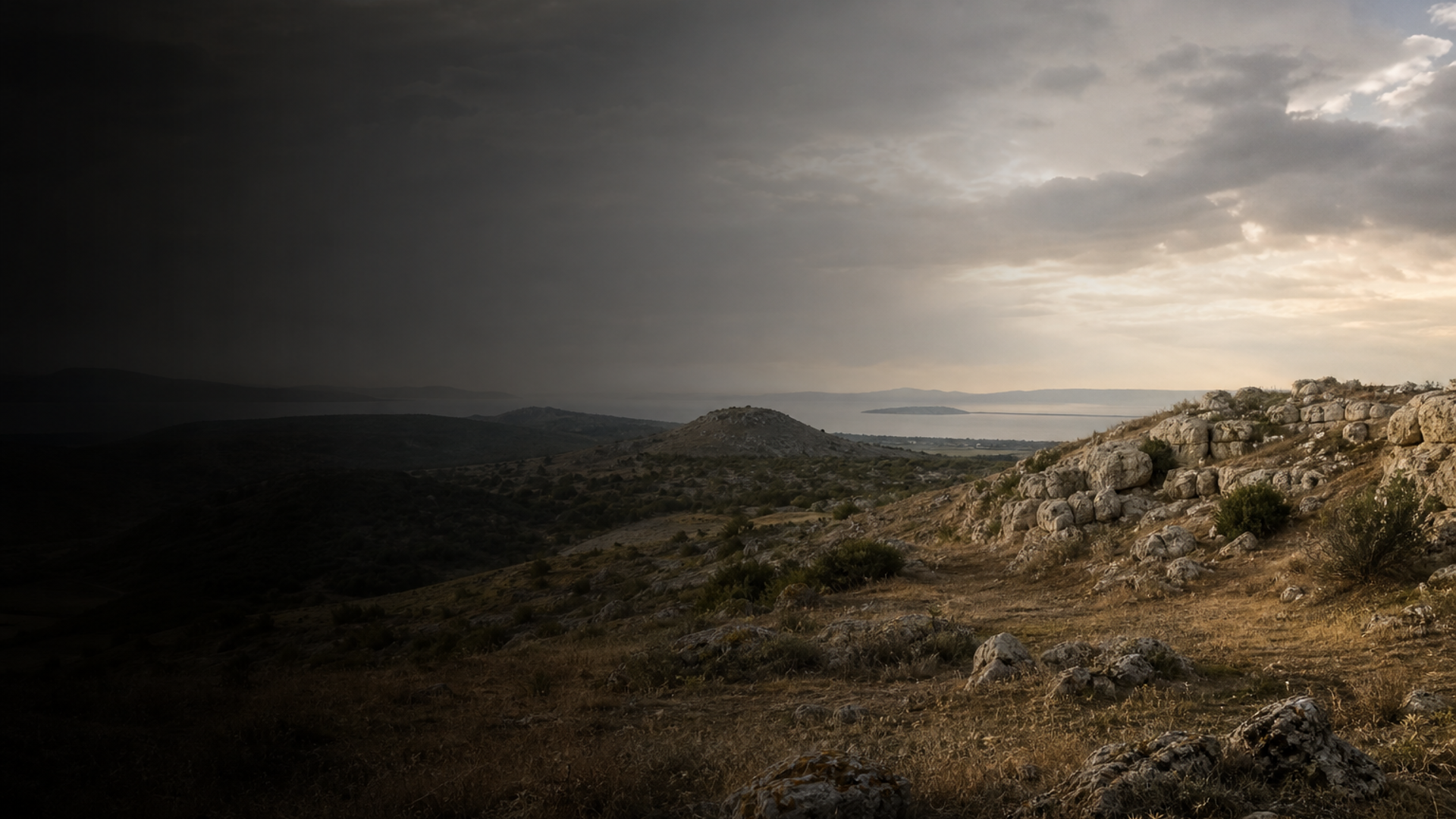
Material culture from these sites shows local expression alongside links to wider Anatolia and the Aegean: pottery styles, ground stone tools, and curated personal ornaments speak of networks of exchange. The cinematic image is of tide-swept shores and smoke rising from clustered hearths, but the archaeological record is also fragmentary. Limited evidence suggests these settlements played a role in the westward movement of farming populations that carried Anatolian Neolithic culture into southeastern Europe. Ongoing excavations and new samples continue to refine whether these villages were nodes of demographic dispersal, local innovation, or both.

  • Primary sites: Barcın, Ilıpınar, Menteşe (Northwest Anatolia)
  • Economy: early cereal agriculture, animal husbandry, sedentary villages
  • Role: part of Anatolian Neolithic networks linked to Aegean and Europe
Chapitre IV

Daily Life & Society

Daily life in Marmara Neolithic settlements combined labor, craft and ritual in compact village landscapes. Archaeobotanical remains and residues indicate diets centered on domesticated wheat and barley with pulses and the secondary products of sheep and goats. Hearths, grinding stones and storage pits attest to food processing and seasonal provisioning. Pottery—often decorated with simple impressions—served both practical and symbolic roles, while beads and personal ornaments imply social identity and long-distance contacts.

Buildings were places of work and memory: floors preserved use-wear from daily tasks, and the occasional inhumation near house floors suggests intimate ties between domestic spaces and ancestors. Flint and polished stone tools reveal patterns of production and repair, implying craft knowledge transmitted within households or village workshops. Archaeological data indicates mobility was not absent—raw materials and stylistic traits show ties beyond the immediate valley—but the dominant pattern is one of settled agricultural life that could support growing populations and social complexity.

  • Diet: cereals (wheat, barley), pulses, caprine herding
  • Crafts: pottery, lithics, personal ornaments, household storage
Chapitre V

Genetic Profile

Ancient DNA from 31 individuals dated to 6500–5600 BCE paints a nuanced genetic portrait of Northwest Anatolian Neolithic communities. Y-chromosome assignments are available for a subset (16 males): haplogroup G is the most frequent (9 mentions), accompanied by H (3), I (2), C (1) and J (1). Mitochondrial DNA calls for 22 individuals show predominance of K (9) and N (7), with smaller counts of T2b (2), J (2) and X (2). These numbers indicate that the Neolithic villages in the Marmara carried the genetic hallmarks often associated with early farmers in Anatolia and adjacent regions.

Interpretation is cautious: Y- and mtDNA counts derive from subsets of the 31 samples, so frequencies reflect the sequenced individuals rather than an absolute census. The prominence of Y-haplogroup G and mtDNA lineages such as K and N is consistent with broader Anatolian farmer ancestry documented elsewhere, supporting archaeological models of demographic expansion of farming groups. The presence of haplogroup I (often seen in European hunter-gatherer contexts) in a small number of samples hints at low-level admixture with local foragers or complex regional ancestries—limited evidence suggests further study is needed. Singleton Y types (C, J) and modest counts of mtDNA variants emphasize that genetic diversity existed and that conclusions about population-level continuity should remain probabilistic rather than definitive.

  • Y-chromosomes (subset): predominance of G; presence of H, I, C, J
  • mtDNA (subset): K and N dominate; diversity suggests mixed maternal ancestries
Chapitre VI

Legacy & Modern Connections

The legacy of the Marmara Neolithic is both cultural and genetic. Archaeologically, their farming techniques, settlement patterns and material traditions contributed to a web of interactions that helped seed Neolithic lifeways across the Aegean and into southeastern Europe. Genetically, the Anatolian farmer ancestry represented in these samples is a major component of the genetic ancestry of early European farmers; however, millennia of later migrations and population shifts mean modern populations are the product of many layers.

Caution is essential: while certain haplogroups and maternal lineages from these sites resonate with broader Anatolian Neolithic signatures, direct lines of descent to present-day groups cannot be assumed without acknowledging later movements, admixture and genetic drift. Still, these communities offer a tangible connection to the first large-scale transformation of human subsistence in the region and provide a genetic window into how farming populations spread, interacted and adapted in northwest Anatolia.

  • Contributed to the Anatolian Neolithic signal found in early European farmers
  • Modern genetic continuity is complex; later migrations reshaped ancestry profiles
Propulsé par l'IA

Assistant IA

Posez des questions sur la culture Marmara Neolithic Echoes

Assistant IA par DNAGENICS

Débloquer cette fonction
Posez des questions sur la culture Marmara Neolithic Echoes. L'assistant IA peut expliquer les résultats génétiques, le contexte historique, les preuves archéologiques et les liens génétiques avec les populations actuelles, dans les limites de l'interprétation.
Exemple d'analyse IA

La culture Marmara Neolithic Echoes représente un chapitre fascinant de l'histoire humaine…

L'analyse génétique met en évidence des similarités avec des populations antérieures et des signes d'adaptations propres. Les échantillons d'ADN ancien éclairent les schémas migratoires et les liens entre populations, avec des limites qui dépendent de l'étude et du contexte archéologique.

Il s'agit d'un aperçu de l'analyse IA. Accédez à l'assistant complet pour explorer :

  • Composition et similarité génétique
  • Schémas migratoires et origines
  • Vie quotidienne et pratiques culturelles
  • Contexte génétique actuel

Explorez d'autres cultures antiques

Découvrez les récits de civilisations issues du monde antique