Préparation du rapport

Chargement des informations et références disponibles

Connexion au corpus archéologique…

Collecte des archives antiques

Aller au contenu principal
Miraflores: Echoes on the Altiplano
Profil culturel

Miraflores: Echoes on the Altiplano

A Middle Horizon presence in the Titicaca Basin seen through pottery, fields, and DNA

765 CE - 965 CE
Titicaca Basin, Bolivia
2 échantillons d'ADN antique
Faites défiler pour commencer
Chapitre I

Le récit

Comprendre la culture Miraflores: Echoes on the Altiplano

Archaeological and genetic glimpses from two Miraflores-era individuals (765–965 CE) in the Titicaca Basin suggest continuity with Andean lineages (Y-DNA Q; mtDNA B2/B2b). Limited samples make conclusions preliminary, but material culture and aDNA hint at local lifeways within the Middle Horizon sphere.

Time Period

765–965 CE (Middle Horizon)

Region

Titicaca Basin, Bolivia

Common Y-DNA

Q (found in 1 sample)

Common mtDNA

B2b (1), B2 (1)

Chapitre II

Chronologie

Moments clés de l'histoire de cette culture

765 CE

Earliest dated Miraflores sample

One of the two ancient genomes assigned to this group dates to c. 765 CE, anchoring Miraflores presence in the Middle Horizon.

965 CE

Latest dated Miraflores sample

The later sample dates to c. 965 CE, situating these individuals near the end of the Middle Horizon period in the Titicaca Basin.

1000 CE

Regional transition after Middle Horizon

Around 1000 CE the Tiwanaku-centered networks in the highlands undergo reorganization; Miraflores material signatures are part of this broader Middle Horizon milieu.

Chapitre III

Origins & Emergence

Rising from the salt-stung wind of the Altiplano, the Miraflores expression—placed within the Middle Horizon horizon—appears in the heart of the Titicaca Basin between the 8th and 10th centuries CE. Archaeological data indicates Miraflores occupations share ceramic motifs and architectural traits with broader Middle Horizon traditions, suggesting participation in regional networks of style, ritual, and exchange centered on the highland polities of the era. Limited evidence suggests local adaptation: communities mastered high-altitude agriculture and pastoralism while adopting symbolic forms circulated across the basin.

The two surviving ancient genomes assigned to Bolivia_MH_Miraflores give us an intimate but tentative anchor in time (samples dated 765–965 CE). These genetic snapshots should be read alongside stratigraphic layers, pottery chronologies, and landscape modifications. When material and molecular threads are woven together, a picture emerges of a people embedded in long-standing Andean lifeways yet responsive to the social currents of the Middle Horizon. Because the genetic sample count is extremely small (n=2), any model of origin, migration, or demographic shift remains preliminary and requires larger sampling to confirm patterns hinted at here.

  • Miraflores appears within the Middle Horizon (c. 600–1000 CE) in the Titicaca Basin
  • Shared ceramic/architectural traits link Miraflores to regional exchange networks
  • Genetic anchor comprises only two samples — conclusions are provisional
Chapitre IV

Daily Life & Society

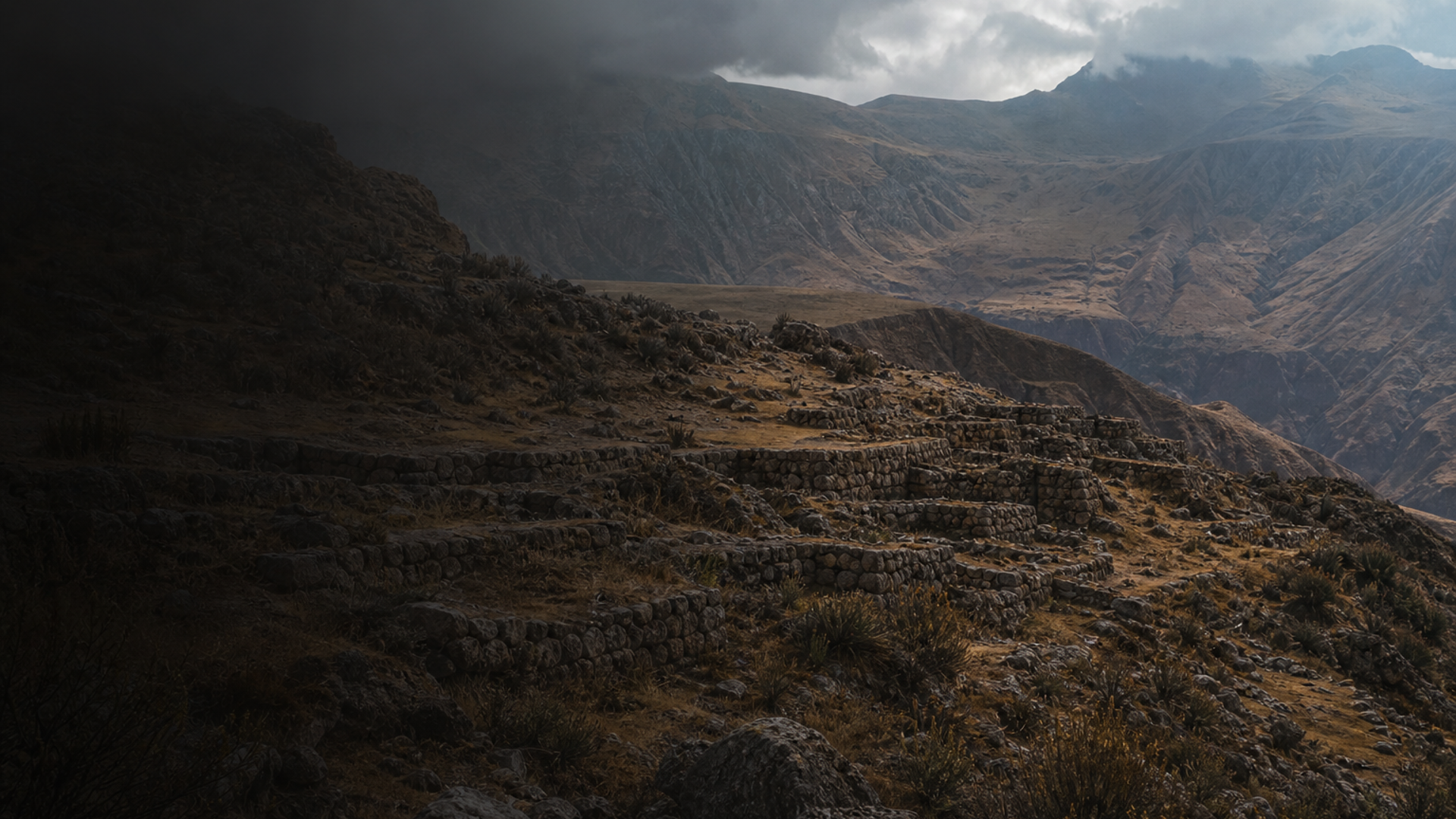
Cinematic scenes of Miraflores life unfold on the altiplano: herders tending camelids across bristling puna grasslands, farmers coaxing tubers and quinoa from raised fields, and potters shaping vessels painted with motifs that echo across plazas and shrines. Archaeological remains attributed to Miraflores contexts in the Titicaca Basin include distinctive ceramics, textile fragments, and evidence for terraced or raised-field agriculture—technologies adapted to cold, hypoxic highlands.

Social organization likely revolved around household units and community labor for irrigation and field maintenance, with ritual spaces articulating collective identity. Archaeological data indicates craft specialization in ceramics and weaving, with styles that mark social alliances and possibly ritual roles. Limited organic preservation makes details of diet and disease harder to reconstruct, but isotopic and macrobotanical studies from Middle Horizon contexts nearby point to mixed reliance on tubers, maize, quinoa, and camelid protein.

Material culture suggests Miraflores communities participated in wider networks that included Tiwanaku-affiliated polities, exchanging goods and ritual forms while retaining local adaptations to the Titicaca Basin's severe environment.

  • Economy: high-altitude agriculture (raised fields), camelid herding, craft production
  • Material culture: distinctive Miraflores-influenced ceramics and textiles within Middle Horizon spheres
Chapitre V

Genetic Profile

The ancient DNA recovered from the Bolivia_MH_Miraflores dataset comprises two individuals dated between 765 and 965 CE and sampled from the Titicaca Basin. Both maternal haplogroups are branches of haplogroup B2 (B2 and B2b), and the single observed paternal lineage is haplogroup Q—lineages commonly found among Indigenous populations of the Americas. This pattern aligns with expectations for Andean populations where Q is a frequent paternal lineage and B2 is one of the founding maternal lineages.

Genetic affinities inferred from such small numbers must be treated cautiously. With only two genomes, population-level statistics (e.g., admixture proportions, effective population size) are highly uncertain. Nevertheless, the presence of Q and B2-lineages is consistent with archaeological interpretations of cultural continuity in the highlands and suggests limited evidence for large-scale incoming paternal or maternal lineages during the sampled interval. Archaeogenetic integration with broader Middle Horizon and Tiwanaku-era datasets will be necessary to resolve questions of local continuity versus mobility and the scale of gene flow across the Altiplano.

In short: these DNA data provide promising concordance with archaeological expectations but are preliminary; increased sampling across sites in the Titicaca Basin is required to move from suggestive to robust demographic models.

  • Observed Y-DNA: Q (1 sample) — typical of Native American paternal lineages
  • Observed mtDNA: B2 and B2b (1 each) — maternal lineages linked to Native American founding diversity
Chapitre VI

Legacy & Modern Connections

Archaeological motifs and highland lifeways associated with Miraflores reverberate in the living cultures of the Titicaca Basin. Textile patterns, ceramic forms, and agroecological strategies—especially raised-field agriculture—have analogues in later Andean traditions and in some modern practices. Genetically, the Miraflores samples display lineages that survive among contemporary Andean groups, suggesting threads of biological continuity.

Caveats are essential: with only two ancient genomes, scientists cannot claim a direct, unbroken genetic line from Miraflores people to any particular modern population. Instead, these samples provide a tantalizing glimpse of ancestry that, combined with expanding ancient DNA datasets and careful archaeological comparison, will refine our understanding of how Middle Horizon communities contributed to the region’s demographic and cultural tapestry.

  • Material traditions persist in regional pottery and textile motifs
  • Genetic signals are consistent with continuity but remain inconclusive given low sample size
Chapitre VII

Catalogue d'échantillons

2 échantillons d'ADN antique associés à la culture Miraflores: Echoes on the Altiplano offrent des repères génétiques sur les populations de cette période.

2 / 2 échantillons
Portrait Échantillon Pays Époque Date Culture Sexe Y-ADN ADNmt
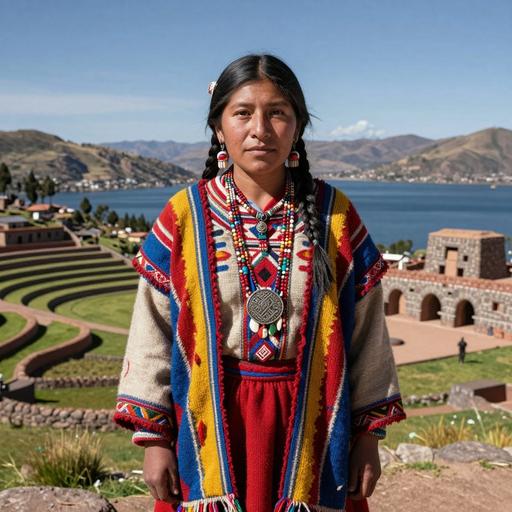
Reconstruction artistique de Miraflores Titicaca Basin MHorizon individual, Bolivia
Miraflores Titicaca Basin MHorizon individual, Bolivia
Bolivia Bolivia_MH_Miraflores 765-940 calCE (1190±25, PSUAMS-2141) Andean Civilizations U Q-M3 B2b
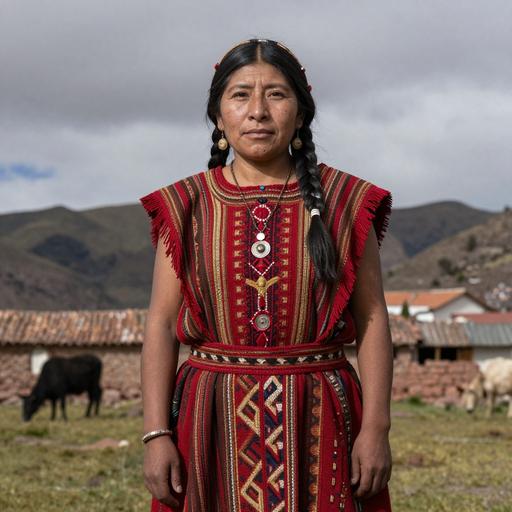
Reconstruction artistique de Miraflores Titicaca Basin MHorizon individual, Bolivia
Miraflores Titicaca Basin MHorizon individual, Bolivia
Bolivia Bolivia_MH_Miraflores 770-965 calCE (1165±25, PSUAMS-2142) Andean Civilizations U - B2
Propulsé par l'IA

Assistant IA

Posez des questions sur la culture Miraflores: Echoes on the Altiplano

Assistant IA par DNAGENICS

Débloquer cette fonction
Posez des questions sur la culture Miraflores: Echoes on the Altiplano. L'assistant IA peut expliquer les résultats génétiques, le contexte historique, les preuves archéologiques et les liens génétiques avec les populations actuelles, dans les limites de l'interprétation.
Exemple d'analyse IA

La culture Miraflores: Echoes on the Altiplano représente un chapitre fascinant de l'histoire humaine…

L'analyse génétique met en évidence des similarités avec des populations antérieures et des signes d'adaptations propres. Les échantillons d'ADN ancien éclairent les schémas migratoires et les liens entre populations, avec des limites qui dépendent de l'étude et du contexte archéologique.

Il s'agit d'un aperçu de l'analyse IA. Accédez à l'assistant complet pour explorer :

  • Composition et similarité génétique
  • Schémas migratoires et origines
  • Vie quotidienne et pratiques culturelles
  • Contexte génétique actuel

Explorez d'autres cultures antiques

Découvrez les récits de civilisations issues du monde antique