Préparation du rapport

Chargement des informations et références disponibles

Connexion au corpus archéologique…

Collecte des archives antiques

Aller au contenu principal
Netherlands Bell Beaker Echoes
Profil culturel

Netherlands Bell Beaker Echoes

Oostwoud burials where Beaker pottery and ancient genomes meet

2600 CE - 1600 BCE
Noord-Holland, Netherlands (Oostwoud, De Tuithoorn)
Faites défiler pour commencer
Chapitre I

Le récit

Comprendre la culture Netherlands Bell Beaker Echoes

Archaeological and genetic snapshot of Bell Beaker-era individuals from De Tuithoorn (Oostwoud, Noord-Holland), 2600–1600 BCE. Small sample (9) shows a predominance of Y-DNA R and diverse maternal lineages, offering preliminary evidence of migration and local integration.

Time Period

2600–1600 BCE

Region

Noord-Holland, Netherlands (Oostwoud, De Tuithoorn)

Common Y-DNA

R (6 of 9 samples)

Common mtDNA

U (3), H (2), K1d (1), X (1), K (1)

Chapitre II

Chronologie

Moments clés de l'histoire de cette culture

2500 BCE

Bell Beaker influences in Noord-Holland

Archaeological markers and early radiocarbon dates place Bell Beaker-style burials and material culture in the De Tuithoorn/Oostwoud area around 2500 BCE.

Chapitre III

Origins & Emergence

The Netherlands_BellBeaker group occupies a liminal moment at the edge of the third millennium BCE, when the characteristic bell-shaped pottery and new metalworking traditions of the Bell Beaker phenomenon reached the low countries. Archaeological data from De Tuithoorn, a burial locus near Oostwoud in Noord-Holland, indicate funerary practices and material culture that align with broader Bell Beaker networks in northwestern Europe between roughly 2600 and 1600 BCE.

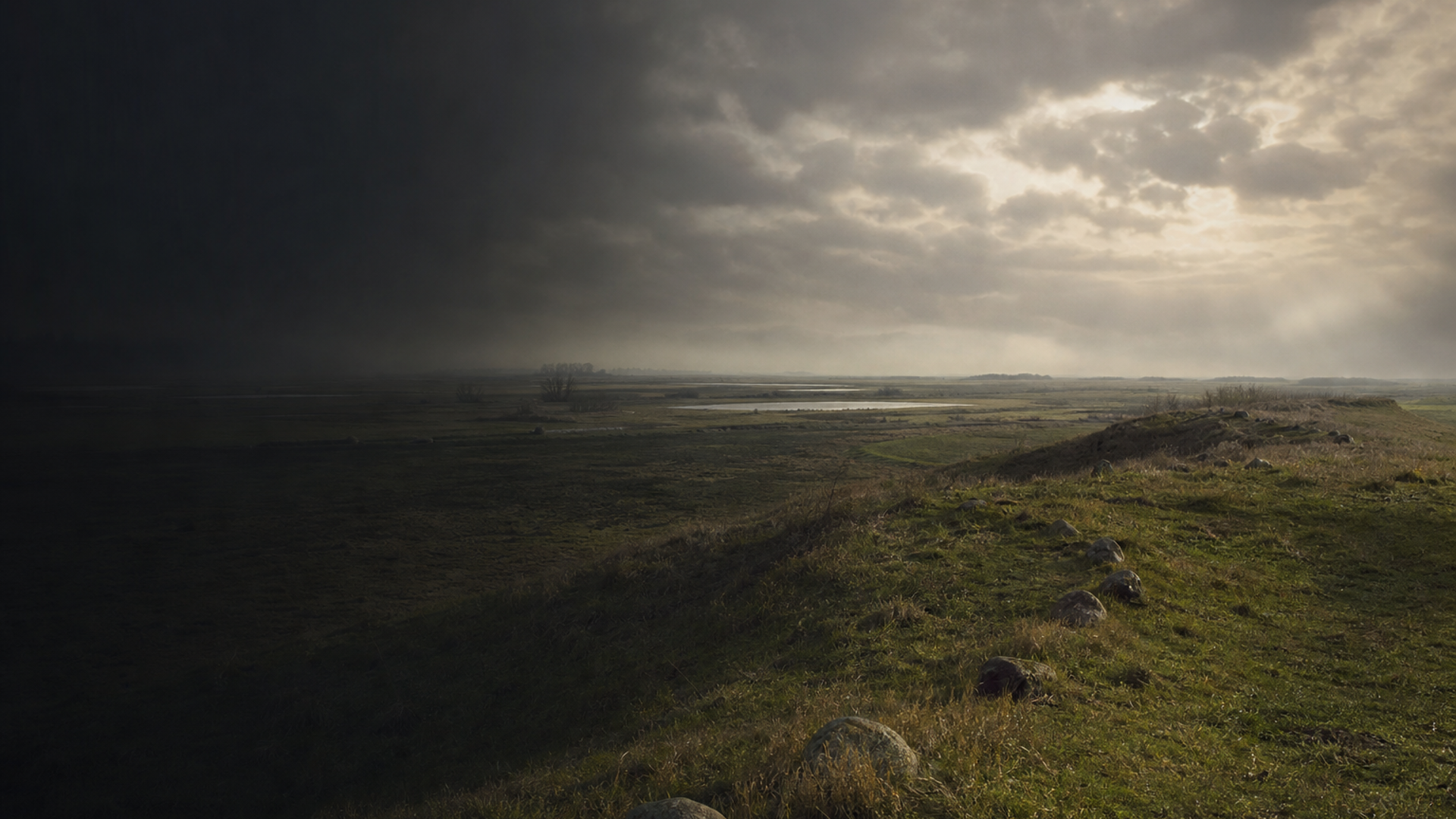
Cinematic in its landscape—windswept peatlands and reclaimed coastal plains—the region preserved graves that yield both ceramics and human remains. The material assemblage suggests connections to long-distance exchange: Beaker pottery styles and raw materials are consistent with maritime and overland routes linking the North Sea fringe to inland Europe. Limited evidence suggests these communities were neither wholly new colonists nor entirely continuous with preceding local Neolithic populations; rather, archaeological markers imply a mixture of incoming cultural elements and long-standing local traditions.

Archaeological data indicates regional variability: some graves show pronounced Bell Beaker features while others retain older burial gestures. This patchwork points to a complex process of cultural adoption, mobility, and local adaptation rather than a single sweeping replacement. Radiocarbon dates from the site fall within the stated range, but precise demographic models require more samples and wider geographic coverage.

  • Bell Beaker material culture present at De Tuithoorn (Oostwoud)
  • Dates span approx. 2600–1600 BCE; local variation visible
  • Evidence suggests cultural mixing rather than simple replacement
Chapitre IV

Daily Life & Society

Life in Bell Beaker-era Noord-Holland played out in a palette of marshes, canals, and fertile riverine plains. Ceramic styles, personal ornaments, and burial goods recovered from De Tuithoorn hint at communities skilled in pottery, textile working, and possibly bronze-age metallurgy practices that increase in importance toward the later part of the range. Archaeological assemblages—pottery sherds, flint tools, and occasionally metal fragments—suggest households engaged in mixed farming, animal herding, fishing, and coastal foraging.

Grave goods vary in richness; some burials include elaborate beakers and copper-alloy items while others are modest, which may reflect social differentiation or varying access to exchange networks. Spatial patterns in cemeteries and the recurrence of male-associated grave goods in some contexts have been interpreted elsewhere as evidence for patrilocal residence or male mobility, but in the Netherlands dataset these patterns are tentative. Plant and faunal remains from regional sites indicate seasonal resource use and a diet combining domesticated cereals and wild riverine species.

Archaeological preservation in peatland environments can be excellent for organic artefacts, but preservation is uneven across sites. Consequently, reconstructions of everyday life remain partial; continued fieldwork and stable isotope studies would help illuminate diet, mobility, and social organization more clearly.

  • Mixed farming, herding, fishing on coastal and riverine landscapes
  • Varied grave goods hint at social differentiation and exchange
Chapitre V

Genetic Profile

Genetic data from nine individuals at De Tuithoorn provide a preliminary window into population dynamics. A majority (6 of 9) carry Y-DNA of haplogroup R, a lineage frequently associated with Bell Beaker and later Bronze Age male lineages across western Europe. Mitochondrial diversity is higher: U (3), H (2), K1d (1), X (1), and K (1), reflecting a mix of maternal ancestries.

This pattern—predominant R Y-chromosomes alongside a range of mtDNA lineages—is consistent with scenarios observed in other Bell Beaker contexts, where male-biased gene flow from steppe-associated or western European source populations may have accompanied cultural expansion. At the same time, the variety of maternal haplogroups suggests incorporation of local or diverse women into the emerging social networks, a dynamic compatible with exogamy and community integration models. However, with only nine samples, any demographic inference is tentative: limited sample size (fewer than 10) means these observations should be treated as preliminary trends rather than definitive population histories.

Archaeogenetic approaches—combining genome-wide data, isotopes, and archaeology—can clarify whether the R-bearing males represent incoming lineages associated with long-distance migration or reflect local continuity of male lines. Future sampling across more sites and radiocarbon-dated genomes will be crucial to resolve timing, sex-biased mobility, and the relationship between cultural change and biological ancestry in the Dutch Bell Beaker horizon.

  • Majority Y-DNA R (6/9) suggests male-linked influx or continuity
  • Diverse mtDNA lineages imply maternal heterogeneity and integration
Chapitre VI

Legacy & Modern Connections

The echoes of Bell Beaker lifeways in the Netherlands are visible in both material culture and genetic heritage. Elements of pottery style, metalwork techniques, and burial traditions contributed to the cultural tapestry that preceded the Bronze Age. Genetically, the prevalence of Y-DNA R in this small sample resonates with broader patterns across western Europe where R-lineages become common in later prehistoric periods.

Caution is essential: with a modest sample set the connections to modern populations remain indirect. Nevertheless, these graves at De Tuithoorn offer a cinematic portrait of dynamic interactions—mobile groups crossing seas and plains, intermarriage with local communities, and the gradual formation of new regional identities. Ongoing ancient DNA sampling, combined with archaeological fieldwork, will sharpen our understanding of how these people relate to subsequent populations in the Netherlands and beyond.

  • Contributes to the regional story of Bell Beaker influence preceding the Bronze Age
  • Preliminary genetic links to broader western European R-lineage expansions
Propulsé par l'IA

Assistant IA

Posez des questions sur la culture Netherlands Bell Beaker Echoes

Assistant IA par DNAGENICS

Débloquer cette fonction
Posez des questions sur la culture Netherlands Bell Beaker Echoes. L'assistant IA peut expliquer les résultats génétiques, le contexte historique, les preuves archéologiques et les liens génétiques avec les populations actuelles, dans les limites de l'interprétation.
Exemple d'analyse IA

La culture Netherlands Bell Beaker Echoes représente un chapitre fascinant de l'histoire humaine…

L'analyse génétique met en évidence des similarités avec des populations antérieures et des signes d'adaptations propres. Les échantillons d'ADN ancien éclairent les schémas migratoires et les liens entre populations, avec des limites qui dépendent de l'étude et du contexte archéologique.

Il s'agit d'un aperçu de l'analyse IA. Accédez à l'assistant complet pour explorer :

  • Composition et similarité génétique
  • Schémas migratoires et origines
  • Vie quotidienne et pratiques culturelles
  • Contexte génétique actuel

Explorez d'autres cultures antiques

Découvrez les récits de civilisations issues du monde antique