Préparation du rapport

Chargement des informations et références disponibles

Connexion au corpus archéologique…

Collecte des archives antiques

Aller au contenu principal
North Queensland Pre‑European Peoples
Profil culturel

North Queensland Pre‑European Peoples

A glimpse of coastal Queensland lives before 1788, seen through archaeology and ancient DNA

410 CE - 1788 CE
North Queensland, Australia
Faites défiler pour commencer
Chapitre I

Le récit

Comprendre la culture North Queensland Pre‑European Peoples

Archaeological and genetic glimpses from three individuals (410–1788 CE) in North Queensland (Cairns, Mulgrave District; Weipa). Limited samples hint at deep Indigenous maternal lineages (mtDNA P, M) and an ancestral Y lineage (F), but conclusions remain preliminary.

Time Period

410–1788 CE

Region

North Queensland, Australia

Common Y-DNA

F (observed in 1 sample; limited data)

Common mtDNA

P (2), M (1) — small sample set

Chapitre II

Chronologie

Moments clés de l'histoire de cette culture

410 CE

Earliest dated sample in dataset

An individual dated to ~410 CE from the Mulgrave District (Cairns) provides a direct window into late Holocene coastal occupation.

1600 CE

Indigenous maritime exchange (regional, uncertain)

Limited evidence suggests increasing maritime contacts across northern Australia and the Torres Strait by the early modern period; extent in North Queensland remains uncertain.

1770 CE

European charting of the east coast

Captain James Cook charts parts of Australia's east coast, increasing European knowledge of Queensland prior to colonization in 1788.

Chapitre III

Origins & Emergence

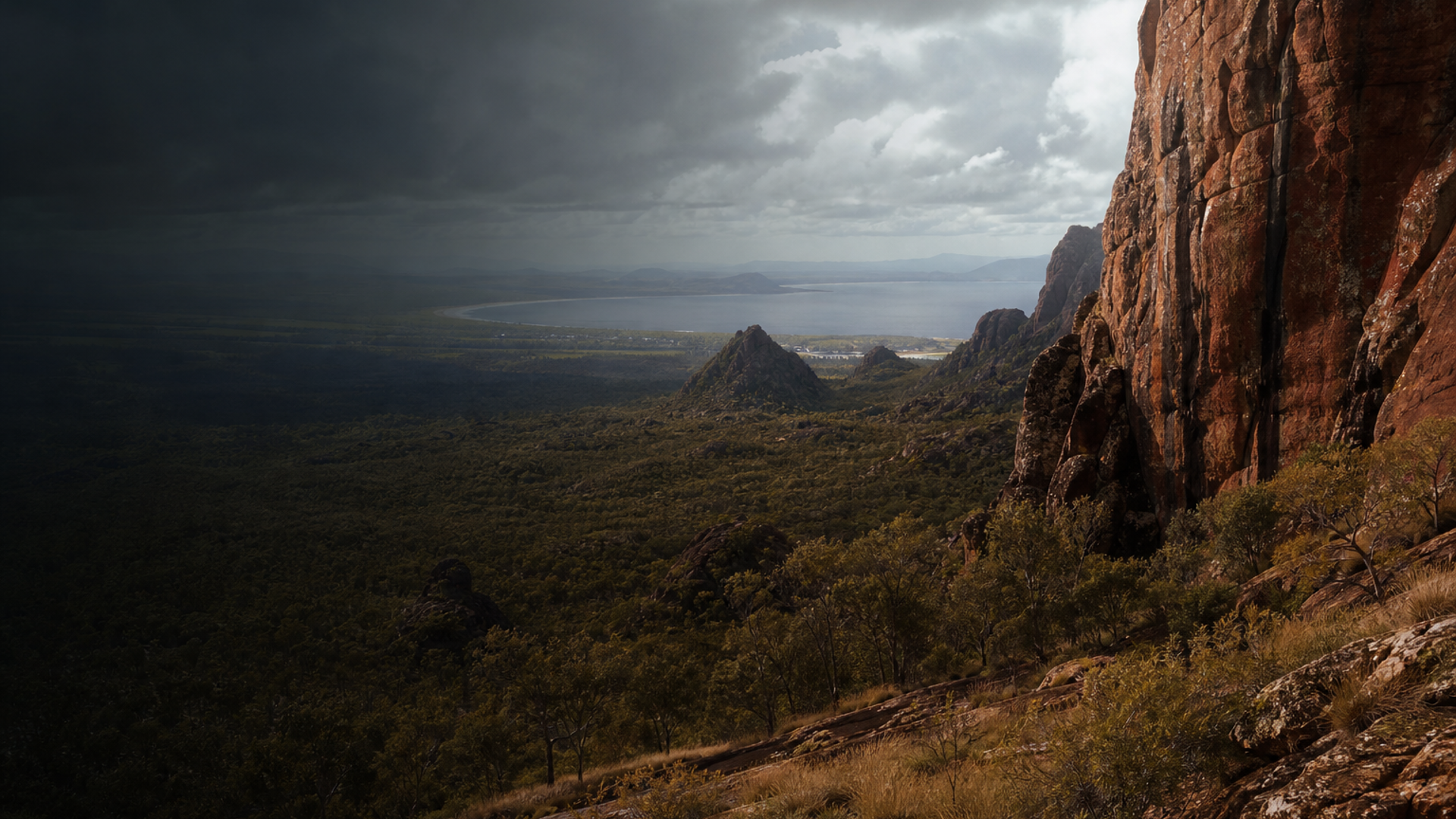
Beneath the mangroves and coastal plains of North Queensland lies a long human story shaped by monsoon seasons, reef edges and river mouths. Archaeological data from the Mulgrave District near Cairns and from the Weipa region document persistent occupation of coastal and near‑coastal landscapes during the late first and second millennia CE. The dated materials in this dataset span roughly 410 to 1788 CE, a window within a much longer Aboriginal presence on the continent.

Limited evidence suggests continuity with broader Aboriginal North Queensland traditions: shell middens, stone tool scatters and rock art traditions in the region point to enduring land‑use patterns and landscape knowledge. These archaeological signals align with the idea of long‑term local communities maintaining place, resources and cultural practice across centuries.

Because this dataset includes only three sequenced individuals, any model of migration or demographic change must be provisional. Archaeological indicators emphasize connectivity — seasonal movements between riverine, coastal and inland zones — but do not yet allow firm conclusions about population turnover or large‑scale migrations in the last millennium. Future excavations and additional ancient genomes will be essential to resolve how regional cultural trajectories map onto biological ancestry.

  • Sites: Cairns (Mulgrave District) and Weipa in North Queensland
  • Dates: 410–1788 CE — within a much deeper Aboriginal occupation of Australia
  • Caution: small sample count limits broad demographic inferences
Chapitre IV

Daily Life & Society

Archaeological remains evoke a coastal lifeway tuned to tides, reefs and riverine abundance. Shell middens and fishbone assemblages indicate heavy reliance on marine resources; stone artefacts and grinding stones suggest plant processing and hunting of terrestrial fauna. Seasonal calendars — informed by fish runs, plant ripening and monsoon cycles — structured movement between camps, estuaries and inland hunting grounds.

Material traces are often subtle: hearth lenses, flaked stone scatters and midden deposits that accumulate near freshwater sources and sheltered beaches. Ethnographic and archaeological parallels from neighboring North Queensland communities show complex knowledge systems for navigation, resource management and ceremonial life. Rock art panels in the broader region (for example, the Quinkan area inland of Cooktown) attest to rich symbolic traditions that likely intersected with daily subsistence and social identity.

Trade and exchange networks connected coastal Queenslanders to Torres Strait and Papuan worlds, especially for items like mother-of-pearl and other marine products; the archaeological footprint of these networks varies spatially and temporally. Overall, the material record paints a picture of resilient, adaptive peoples whose practices were intimately tied to place and season.

  • Coastal subsistence dominated by fishing, shellfish and riverine resources
  • Seasonal mobility between estuaries, reefs and inland camps
Chapitre V

Genetic Profile

The genetic dataset for Australia_NQueensland_PreEuropean includes three ancient individuals dated between 410 and 1788 CE, recovered from Cairns (Mulgrave District) and Weipa. Mitochondrial lineages in the sample are dominated by haplogroup P (two individuals) with one individual carrying an M lineage. Y‑chromosome evidence is represented by haplogroup F in a single male sample. These results are consistent at a high level with expectations for Indigenous Australian ancestry, where maternal lineages such as P are known to be deep, regionally structured clades within Sahul.

Haplogroup P is widely recognized as an old Aboriginal maternal lineage that carries signals of long regional persistence. Haplogroup M in Australia represents another long‑standing mitochondrial branch with broad geographic distribution. The single Y‑haplogroup F observation reflects an early, ancestral paternal lineage common across parts of Eurasia and Oceania; however, F is a broad category and subclade resolution is critical for interpreting local paternal histories.

Crucially, with only three samples (n=3) the genetic picture is preliminary. Observed haplogroups suggest continuity with deeper Indigenous Australian ancestries, but they cannot, on their own, prove local population continuity, migration events, or fine‑scale relatedness. More ancient genomes, broader geographic sampling, and higher resolution Y‑ and mtDNA subclade assignments are required to connect these archaeological communities to specific modern language groups or clan‑level affiliations.

  • mtDNA: P (2 samples), M (1 sample) — signals of deep Sahul maternal ancestry
  • Y‑DNA: F (1 sample) — ancestral paternal lineage; subclade resolution needed
Chapitre VI

Legacy & Modern Connections

These ancient individuals offer a fragile but evocative bridge between past lifeways in North Queensland and the living cultures of the region. Archaeological continuities in material practice — coastal resource use, seasonal mobility and regional exchange — resonate with documented traditions upheld by many Aboriginal communities today.

Genetic signals in the small sample set align with patterns of deep Indigenous Australian ancestry but must be interpreted with respect for descendant communities and with careful consultation. Ancient DNA can illuminate aspects of population history, yet ethical engagement, repatriation protocols and collaboration with Indigenous custodians are essential to ensure research respects living knowledge and rights. As more data accumulates, these threads may help reveal local histories of continuity, contact and adaptation across the centuries before and up to the early period of European presence.

  • Suggests long‑term biological and cultural continuity in North Queensland (preliminary)
  • Genetic research should proceed with Indigenous partnership and ethical safeguards
Propulsé par l'IA

Assistant IA

Posez des questions sur la culture North Queensland Pre‑European Peoples

Assistant IA par DNAGENICS

Débloquer cette fonction
Posez des questions sur la culture North Queensland Pre‑European Peoples. L'assistant IA peut expliquer les résultats génétiques, le contexte historique, les preuves archéologiques et les liens génétiques avec les populations actuelles, dans les limites de l'interprétation.
Exemple d'analyse IA

La culture North Queensland Pre‑European Peoples représente un chapitre fascinant de l'histoire humaine…

L'analyse génétique met en évidence des similarités avec des populations antérieures et des signes d'adaptations propres. Les échantillons d'ADN ancien éclairent les schémas migratoires et les liens entre populations, avec des limites qui dépendent de l'étude et du contexte archéologique.

Il s'agit d'un aperçu de l'analyse IA. Accédez à l'assistant complet pour explorer :

  • Composition et similarité génétique
  • Schémas migratoires et origines
  • Vie quotidienne et pratiques culturelles
  • Contexte génétique actuel

Explorez d'autres cultures antiques

Découvrez les récits de civilisations issues du monde antique