Préparation du rapport

Chargement des informations et références disponibles

Connexion au corpus archéologique…

Collecte des archives antiques

Aller au contenu principal
Ob River Foragers
Profil culturel

Ob River Foragers

Northern Siberian hunter–gatherers at Vengerovo-2, 5479–3980 BCE

5479 CE - 3980 BCE
Vengerovo-2, Novosibirsk Oblast, Russia
Faites défiler pour commencer
Chapitre I

Le récit

Comprendre la culture Ob River Foragers

Archaeological remains from Vengerovo-2 (Novosibirsk Oblast) reflect Ob River foragers between 5479–3980 BCE. Eight ancient genomes reveal mainly Siberian paternal lineages (Q, C) and diverse maternal haplogroups, suggesting deep northern Eurasian ancestry with cautious, preliminary signals.

Time Period

5479–3980 BCE

Region

Vengerovo-2, Novosibirsk Oblast, Russia

Common Y-DNA

Q (3), C (1), BT (1)

Common mtDNA

C (2), A8a (1), C5c (1), H (1), C4 (1)

Chapitre II

Chronologie

Moments clés de l'histoire de cette culture

5479 BCE

Earliest dated individual at Vengerovo-2

One of the oldest sampled genomes from the Russia_Ob_N series is dated to c. 5479 BCE, marking mid-6th millennium occupation of the Ob River corridor.

Chapitre III

Origins & Emergence

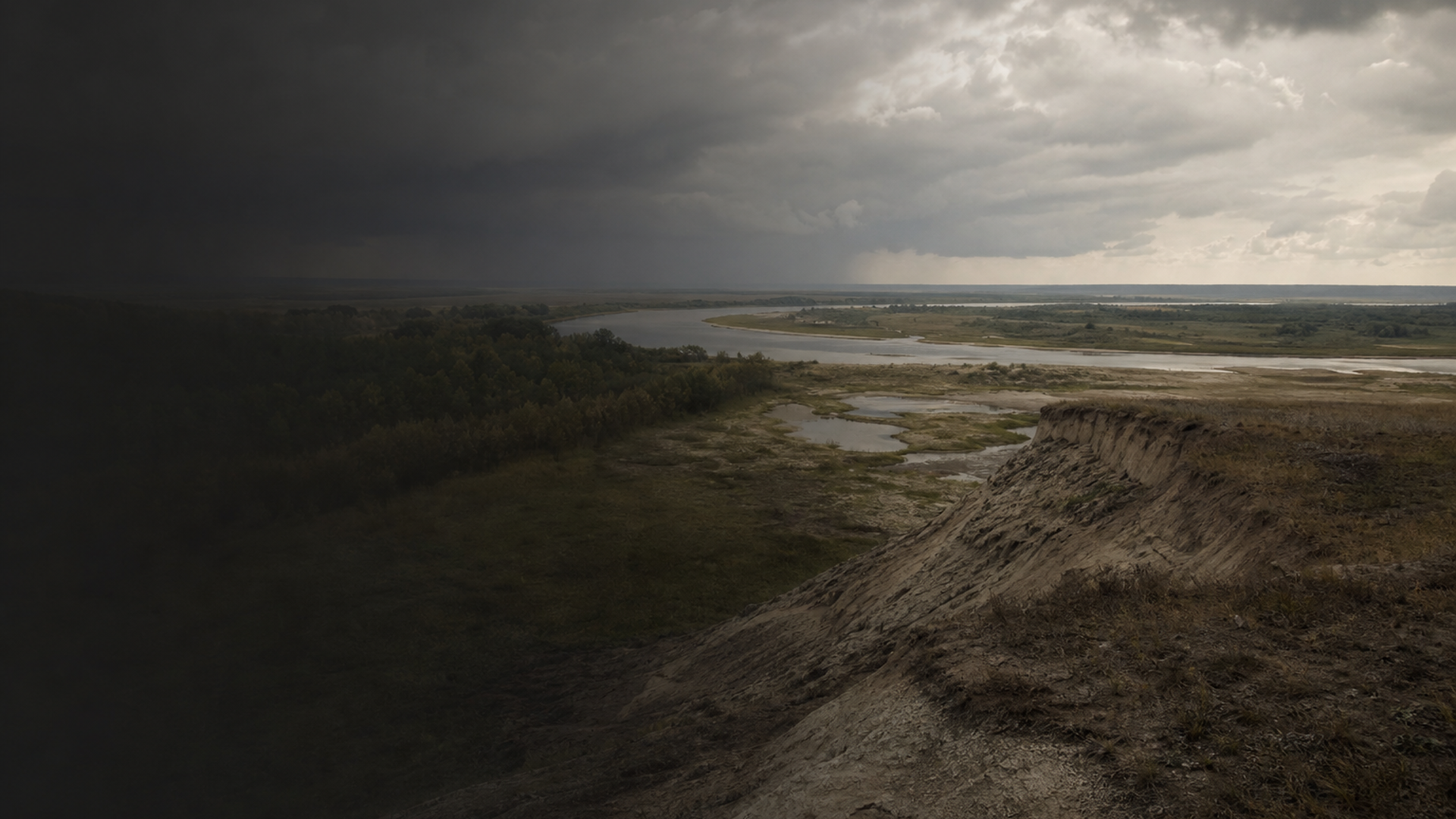
Along the braided channels of the Ob River, the people represented by the Russia_Ob_N assemblage inhabited a landscape of tundra and forest-steppe between roughly 5479 and 3980 BCE. At Vengerovo-2 (Vengerovsky District, Novosibirsk Oblast) archaeologists have exposed hearths, lithic scatters and organic traces that evoke seasonal camps tied to riverine resources. Archaeological data indicates continuity with broader Ob River cultural traditions of northern Russia, but the chronology spans millennia of environmental change — the earliest dated individuals come from the mid-6th millennium BCE, while the youngest approach the early 4th millennium BCE.

The material record suggests mobile bands exploiting fish, large mammals and wild plants; stone tools show northern adaptations rather than heavy reliance on agriculture. Limited evidence suggests connections — through shared tool types and settlement patterns — to neighboring Siberian forager groups, but the archaeological record alone cannot resolve population movements. The genetic data from eight ancient genomes begins to illuminate ancestries, though the small sample size means any model of emergence remains provisional. Together, the bones and genomes create a cinematic portrait: rivers as highways, seasonal descents to ice-edge fisheries, and a living tapestry of northern Eurasian lifeways whose broader origins require more data to fully trace.

  • Occupied Vengerovo-2 across 5479–3980 BCE
  • Material culture consistent with Ob River cultural traditions
  • Evidence suggests mobile, riverine hunter–gatherer lifeways
Chapitre IV

Daily Life & Society

Life for Ob River communities at Vengerovo-2 would have been tightly bound to seasonal rhythms. Archaeological features — hearths, bone fragments and toolkits — indicate camps oriented to fishing, waterfowl hunting and the processing of large mammals. Stone and bone tools reflect a pragmatic toolkit for cutting, scraping and fishing; organic preservation at the site occasionally reveals personal items and modified bone implements that imply fine craft skills.

Social groups were likely small and flexible, forming networks for sharing resources and information along the river corridor. Burials at Vengerovo-2 are few and variable; grave goods are sparse, which is typical for foraging groups and complicates efforts to reconstruct social hierarchy. Archaeological indicators point toward strong local ecological knowledge: buried caches, seasonal hearths and clustered tool-making areas speak to repeated occupation and territorial familiarity. Limited evidence may also hint at long-distance contacts — exotic raw materials or stylistic echoes in tool morphology — but these signals are subtle and require more sampling to confirm. In short, the archaeological record paints an image of nimble communities, rich in riverine skills and embedded in a challenging northern environment.

  • Seasonal camps focused on fishing and hunting
  • Small, flexible social groups with specialized toolkits
Chapitre V

Genetic Profile

Eight ancient genomes from Vengerovo-2 provide a preliminary genetic window into Ob River populations. On the paternal side, haplogroup Q is most frequent (3 of 8), with single instances of haplogroup C and a basal BT lineage. These Y-chromosome markers are consistent with Siberian and North Eurasian paternal ancestries: Q and C are widely observed among ancient and modern northern Eurasian groups. The maternal picture is diverse: multiple lineages of mtDNA C (including C4 and C5c), A8a, and a single H lineage appear among the eight samples. Haplogroup H is common in western Eurasia, so its presence here may reflect ancient gene flow or local lineage diversity; however, with only eight genomes this could also be stochastic sampling.

Archaeogenetic signals suggest that these individuals carried deep northern Eurasian ancestry components that link them to broader Siberian hunter–gatherer variation. Limited sample size (<10) means statistical models are fragile: observed haplogroups hint at continuity with Siberian forager populations but cannot robustly resolve migration timing or precise affinities. Future sampling across more sites and time slices along the Ob and neighboring basins will be essential to test whether Vengerovo-2 represents a local continuity, admixture zone, or a snapshot of shifting northern populations during the late Holocene.

  • Paternal lineages dominated by Q, with C and BT present
  • Maternal diversity includes C, A8a, C5c, H and C4; conclusions are preliminary
Chapitre VI

Legacy & Modern Connections

The genetic and archaeological traces from Vengerovo-2 resonate with modern northern Eurasian population histories. Haplogroups like Q and C persist today across Siberia and into the Americas, reflecting deep transcontinental threads. Maternal haplogroups such as C and A sublineages remain common in northern Eurasian and some circumpolar peoples, suggesting enduring maternal ancestries in the region. Nevertheless, the presence of an H lineage cautions against simple narratives: ancient northern landscapes were dynamic, and low sample counts can capture rare lineages that may or may not persist regionally.

For descendant communities and scientists alike, Vengerovo-2 is a provocation to deeper inquiry: it offers evocative glimpses of riverbound lifeways and genetic continuity, but also underscores the need for broader sampling and collaboration with Indigenous knowledge-holders. The enduring legacy is both genetic and cultural — a story of resilience along the Ob that modern genomes can help illuminate when interpreted alongside careful archaeology and respectful community engagement.

  • Some paternal and maternal lineages align with broader Siberian ancestries
  • Small sample size means links to modern groups remain tentative
Propulsé par l'IA

Assistant IA

Posez des questions sur la culture Ob River Foragers

Assistant IA par DNAGENICS

Débloquer cette fonction
Posez des questions sur la culture Ob River Foragers. L'assistant IA peut expliquer les résultats génétiques, le contexte historique, les preuves archéologiques et les liens génétiques avec les populations actuelles, dans les limites de l'interprétation.
Exemple d'analyse IA

La culture Ob River Foragers représente un chapitre fascinant de l'histoire humaine…

L'analyse génétique met en évidence des similarités avec des populations antérieures et des signes d'adaptations propres. Les échantillons d'ADN ancien éclairent les schémas migratoires et les liens entre populations, avec des limites qui dépendent de l'étude et du contexte archéologique.

Il s'agit d'un aperçu de l'analyse IA. Accédez à l'assistant complet pour explorer :

  • Composition et similarité génétique
  • Schémas migratoires et origines
  • Vie quotidienne et pratiques culturelles
  • Contexte génétique actuel

Explorez d'autres cultures antiques

Découvrez les récits de civilisations issues du monde antique