Préparation du rapport

Chargement des informations et références disponibles

Connexion au corpus archéologique…

Collecte des archives antiques

Aller au contenu principal
Plains Echoes: Hungary MN (ALBK)
Profil culturel

Plains Echoes: Hungary MN (ALBK)

Neolithic farmers of the Great Hungarian Plain, seen through pots, houses and four ancient genomes

5400 CE - 4900 BCE
Great Hungarian Plain, Hungary
Faites défiler pour commencer
Chapitre I

Le récit

Comprendre la culture Plains Echoes: Hungary MN (ALBK)

Archaeological traces from 5400–4900 BCE in eastern Hungary (ALBK) reveal a local Alföld Linear Pottery expression. Four genomes offer preliminary genetic clues linking farmer ancestry (mtDNA J/H) with a mix of Y-lineages; conclusions remain tentative because of small sample size.

Time Period

5400–4900 BCE

Region

Great Hungarian Plain, Hungary

Common Y-DNA

I, H, G (each observed; small sample)

Common mtDNA

J (2), H (1), H+ (1)

Chapitre II

Chronologie

Moments clés de l'histoire de cette culture

5400 BCE

Early ALBK settlement on the plain

Initial expressions of Alföld Linear Pottery appear at Hencida and Arnót sites, marking local Neolithic settlement and farming on the Great Hungarian Plain (preliminary dating by pottery and stratigraphy).

Chapitre III

Origins & Emergence

The Hungary_MN_ALBK designation marks a regional expression of the Alföld Linear Pottery tradition on the Great Hungarian Plain between about 5400 and 4900 BCE. Archaeological data indicates settlements and pottery styles at sites such as Hencida-Csörszárak-2 and the Arnót localities (Arnót-Nagy-bugyik; Arnót-Arnóti-oldal Dél) that reflect the ceramic vocabulary of LBK communities newly adapted to the lowland steppe and riverine environments. Lithic scatters, ceramic assemblages and house plans (where preserved) point to sedentary farming lifeways centered on cereals and domesticated animals, with a visual language of painted and incised ware typical of the Alföld variant.

Limited evidence suggests the ALBK communities were both inheritors of incoming early farming traditions and participants in local interactions with Mesolithic descendants. The archaeological picture is one of a culture negotiating mobility and place: longhouses and storage features indicate investment in landscape, while regional stylistic variation hints at vibrant local identities. Because the genetic dataset for Hungary_MN_ALBK currently comprises only four individuals, models of population movement and cultural transmission remain provisional; further excavation and sampling will be required to refine the origins story.

  • Regional Alföld branch of Linear Pottery, 5400–4900 BCE
  • Key sites: Hencida-Csörszárak-2; Arnót-Nagy-bugyik; Arnót-Arnóti-oldal Dél
  • Evidence of sedentary farming with local stylistic variation
Chapitre IV

Daily Life & Society

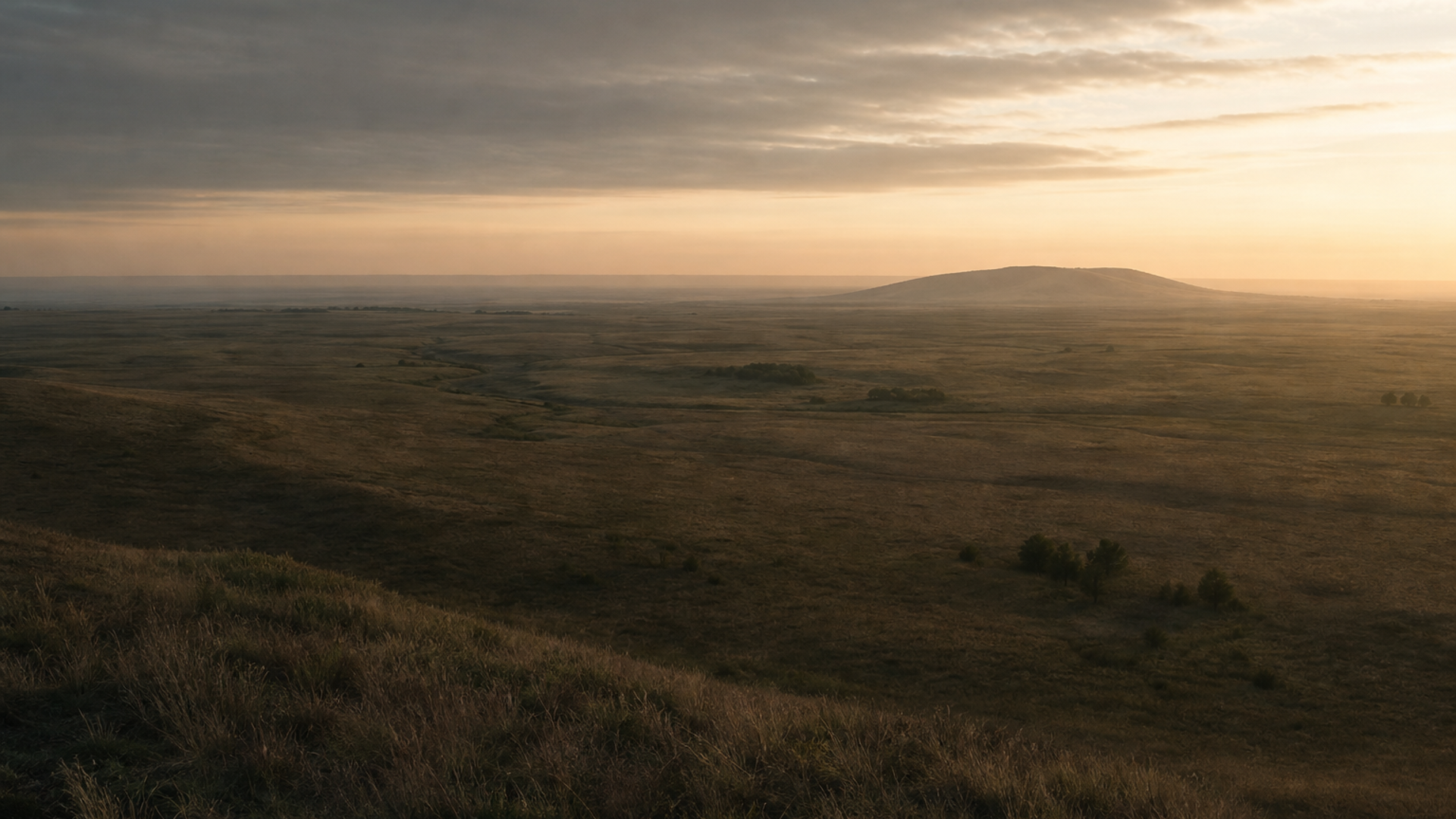
Archaeological traces evoke daily scenes across the plain: sunlit yards around timber longhouses, hearths where barley and emmer were processed, and pottery vessels shaped for storage, cooking and ritual. The material world of ALBK people combined practical innovations—storage pits, polished stone tools—and symbolic shaping of community life through decorated ceramics. Animal bones recovered at similar Alföld LBK sites indicate cattle, sheep and pigs as economic staples, and botanical remains point to mixed cereal cultivation adapted to loess soils and floodplain niches.

Socially, longhouse architecture and clustered sites suggest extended family units and cooperative agriculture, while burial practices in the wider LBK horizon vary regionally; specific mortuary data from the three Arnót and Hencida sites remain sparse. Craft specialization probably existed at a household level: potters, flintknappers and herders interacting within seasonal rhythms. The cinematic tableau—fields, floodplain reeds, smoke from ovens—must be balanced with scientific caution: preservation biases and the small genetic sample mean many aspects of daily life are still reconstructed from partial evidence.

  • Longhouses, hearths and storage indicate sedentary, household-based farming
  • Mixed agriculture with domesticated animals; craft activity at household scale
Chapitre V

Genetic Profile

Four published genomes from Hungary_MN_ALBK (5400–4900 BCE) provide a tantalizing but preliminary glimpse into the biological heritage of these communities. Mitochondrial diversity among the four individuals is dominated by J lineages (2 individuals) and H/H+ (2 individuals). mtDNA J is frequently associated with early Neolithic farming populations across Europe, consistent with an agricultural ancestry entering the Carpathian Basin. The presence of H-lineages indicates either continuity with local Mesolithic-descended maternal lineages or rapid incorporation of diverse maternal ancestries as farming groups spread.

On the paternal side, the observed Y-haplogroups are I, H and G (one individual each). Haplogroup G (particularly G2a in broader LBK contexts) is commonly linked to early farmers; I lineages are more often found among Mesolithic and some later European groups. A Y-haplogroup labeled H is uncommon in European Mesolithic/Neolithic contexts and may reflect either rare local variation, unresolved phylogenetic assignment in low-coverage data, or migration from less-sampled source populations. Because the sample count is very small (n=4), any population-level inference must be framed as tentative. Future sampling from more burials and settlements across the Alföld will be essential to test whether these haplogroup observations reflect local diversity, migration pulses, or sampling noise.

  • mtDNA: J (2), H/H+ (2) — consistent with farmer-associated maternal lineages
  • Y-DNA: I, H, G observed; small sample necessitates cautious interpretation
Chapitre VI

Legacy & Modern Connections

The material and genetic echoes of Hungary_MN_ALBK contribute to the deep prehistory of the Carpathian Basin. Ceramic styles and settlement patterns link these communities to the broader LBK network that reshaped European landscapes through farming. Genetically, the mixture of farmer-associated mtDNA J and diverse Y-lineages suggests that the early Neolithic of the plains was a mosaic—biologically and culturally—rather than a uniform wave.

For modern populations, direct ancestry links are complex and mediated by millennia of migrations and admixture. The preliminary genomes from ALBK help build the baseline for later population transformations in Central Europe. As more ancient DNA comes online from the Alföld and neighboring regions, researchers will better resolve how these early farmers contributed to the genetic tapestry of later European peoples. Until then, interpretations must remain humble and provisional, framed around the promise of expanding datasets.

  • Contributes to LBK-era genetic and cultural baselines in the Carpathian Basin
  • Direct modern links are complex; additional sampling required for clarity
Propulsé par l'IA

Assistant IA

Posez des questions sur la culture Plains Echoes: Hungary MN (ALBK)

Assistant IA par DNAGENICS

Débloquer cette fonction
Posez des questions sur la culture Plains Echoes: Hungary MN (ALBK). L'assistant IA peut expliquer les résultats génétiques, le contexte historique, les preuves archéologiques et les liens génétiques avec les populations actuelles, dans les limites de l'interprétation.
Exemple d'analyse IA

La culture Plains Echoes: Hungary MN (ALBK) représente un chapitre fascinant de l'histoire humaine…

L'analyse génétique met en évidence des similarités avec des populations antérieures et des signes d'adaptations propres. Les échantillons d'ADN ancien éclairent les schémas migratoires et les liens entre populations, avec des limites qui dépendent de l'étude et du contexte archéologique.

Il s'agit d'un aperçu de l'analyse IA. Accédez à l'assistant complet pour explorer :

  • Composition et similarité génétique
  • Schémas migratoires et origines
  • Vie quotidienne et pratiques culturelles
  • Contexte génétique actuel

Explorez d'autres cultures antiques

Découvrez les récits de civilisations issues du monde antique