Préparation du rapport

Chargement des informations et références disponibles

Connexion au corpus archéologique…

Collecte des archives antiques

Aller au contenu principal
Putuni Tiwanaku: Maternal Echoes
Profil culturel

Putuni Tiwanaku: Maternal Echoes

A single 7th–9th century CE burial from Putuni (Bolivia) links Tiwanaku archaeology with mtDNA C1c

675 CE - 831 CE
Putuni, Lake Titicaca basin, Bolivia
Faites défiler pour commencer
Chapitre I

Le récit

Comprendre la culture Putuni Tiwanaku: Maternal Echoes

Archaeological evidence from Putuni, Bolivia (675–831 CE) situates a Tiwanaku-period burial whose mitochondrial DNA (C1c) offers a cautious glimpse into maternal ancestry on the southern altiplano. Limited sample size makes conclusions preliminary.

Time Period

675–831 CE (radiocarbon range)

Region

Putuni, Lake Titicaca basin, Bolivia

Common Y-DNA

Unknown (no Y‑DNA reported)

Common mtDNA

C1c (1 sample)

Chapitre II

Chronologie

Moments clés de l'histoire de cette culture

700 CE

Putuni individual dated

Single ancient DNA sample from a Putuni burial dated to 675–831 CE provides a maternal haplogroup C1c.

Chapitre III

Origins & Emergence

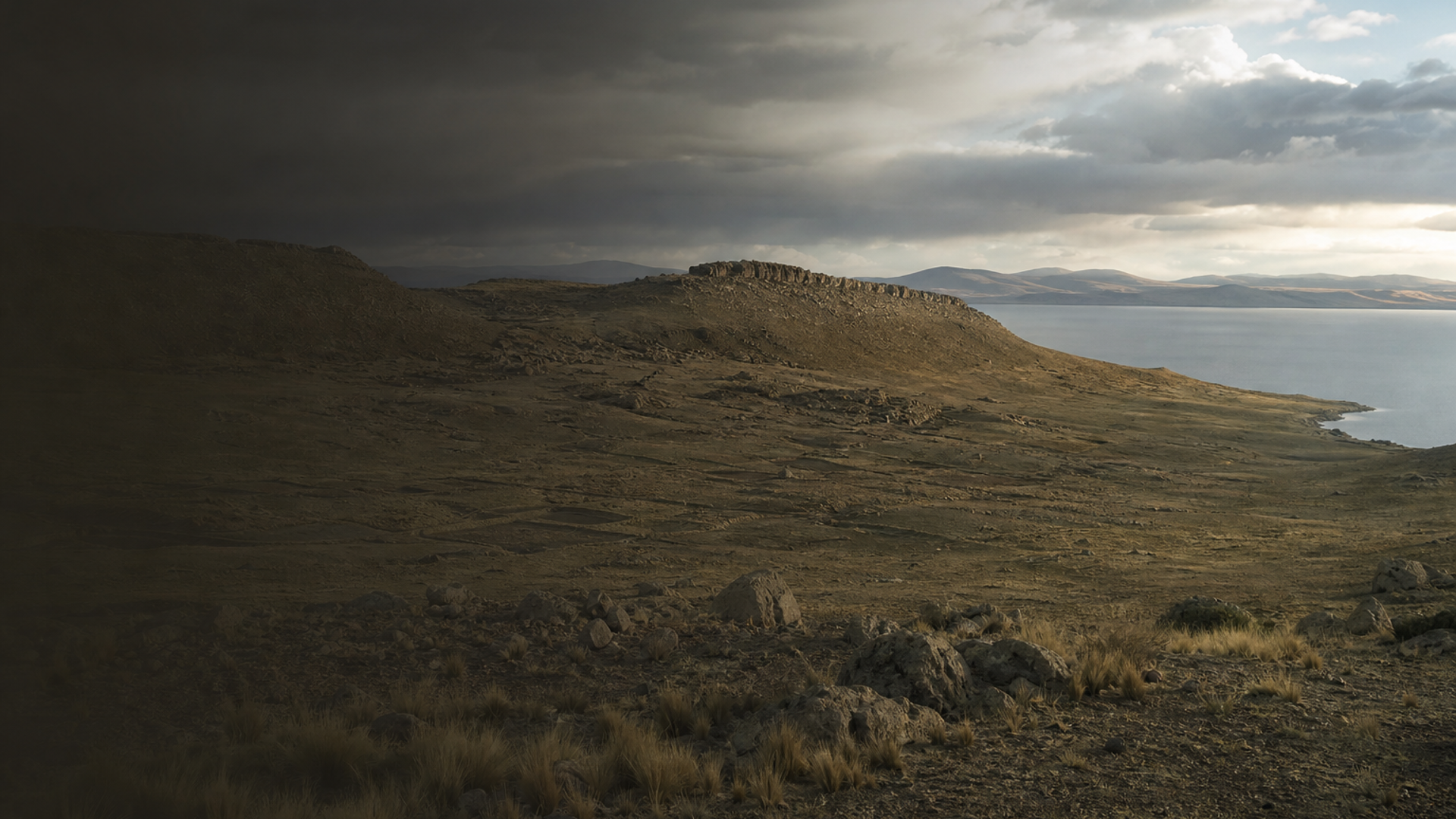
The Putuni burial lies within the broader sweep of the Tiwanaku cultural horizon that dominated the southern Andean altiplano from roughly 500 to 1000 CE. Archaeological data indicates Putuni functioned as part of the Tiwanaku network surrounding Lake Titicaca — a landscape of raised fields, stone architecture and ritual plazas. Monumental centers at Tiwanaku (near present-day Tiwanaku site, La Paz Department) projected economic and religious influence across the highlands and into adjacent valleys.

Material culture at Putuni aligns with late Tiwanaku ceramic styles and architectural fragments found across contemporary sites; however, local variation suggests a mosaic of community roles rather than a single centralized identity. Limited evidence suggests that communities here combined intensive alpine agriculture with long-distance exchange, including obsidian and nonlocal pigments.

Genetic data from the single Putuni individual sits within this archaeological frame, offering a maternal lineage snapshot during a time of sociopolitical complexity. While the Tiwanaku phenomenon transformed the highlands, the people who inhabited Putuni negotiated local lifeways and regional connections, leaving behind burials that can now be paired with ancient DNA to illuminate patterns of ancestry, migration and continuity across the altiplano.

  • Putuni associated with Tiwanaku cultural sphere (Lake Titicaca basin)
  • Late Tiwanaku period context (approx. 7th–9th century CE)
  • Local communities integrated agriculture, ritual, and exchange
Chapitre IV

Daily Life & Society

Archaeological traces from the Putuni area evoke a highland world of terraces, herded camelids and fields sculpted to hold heat and water through cold nights. Everyday life would have revolved around cyclical agriculture—potatoes, quinoa and pastoralism—supplemented by regional exchange networks that brought exotic goods and ideas to upland communities.

Burial practices in the Tiwanaku sphere often reflect social complexity: interments range from simple inhumations to richly furnished tombs, sometimes associated with ritual architecture. At Putuni, the contextual record around the dated individual shows a burial consistent with communal mortuary traditions rather than an extraordinary elite deposit. This suggests social differentiation existed but did not always result in ostentatious grave assemblages.

Craft production—ceramics, textiles, and stoneworking—would have shaped identity and daily routine. Ritual performance in plazas and atop platform mounds tied households into larger cosmological and economic systems. Archaeological data indicates that Putuni’s inhabitants participated in these shared practices, creating a lifeworld where local knowledge and regional affiliations coexisted.

  • Agriculture and camelid pastoralism structured daily subsistence
  • Mortuary evidence suggests communal burial practices within Tiwanaku norms
Chapitre V

Genetic Profile

The genetic evidence from Putuni is limited but evocative: one sampled individual (dated 675–831 CE) yielded mitochondrial haplogroup C1c. Haplogroup C1c is part of a Native American maternal lineage cluster found across the Americas and has been observed in Andean contexts; its presence at Putuni is consistent with longstanding maternal continuity on the highlands.

Because no Y‑chromosome data are reported for this individual and only a single mitochondrial genome is available, interpretations must remain cautious. A single mtDNA match cannot resolve population-level structure, migration directionality, or interaction with lowland groups. Nevertheless, this maternal marker supports archaeological models that emphasize local continuity among Tiwanaku-associated populations while leaving open the possibility of gene flow from neighboring regions.

Comparative ancient DNA from other Tiwanaku and adjacent populations has, in broader studies, revealed mixtures of highland Andean ancestries with periodic contributions from lower-elevation groups. The Putuni mtDNA result is compatible with such a picture but, given the sample count of one, should be treated as a preliminary data point. Future sampling at Putuni and surrounding sites would be needed to test hypotheses about maternal lineage diversity, sex-biased migration, and kinship patterns within Tiwanaku communities.

  • mtDNA: C1c observed in the single Putuni individual
  • Sample count = 1 — conclusions are preliminary and require more data
Chapitre VI

Legacy & Modern Connections

Putuni’s single ancient genome provides a poetic, if tentative, thread connecting past and present. Maternal lineages like C1c persist among modern Andean populations, suggesting pockets of genetic continuity across more than a millennium on the altiplano. Archaeological continuity in agricultural practice and ritual landscapes further supports cultural persistence.

At the same time, Tiwanaku-era dynamics—trade, mobility, and social networks—remind us that ancient Andean lifeways were not static. The genetic snapshot from Putuni invites collaboration between archaeology, genetics and descendant communities: targeted, ethically guided sampling could refine our understanding of ancestry, kinship and the lived experiences of Tiwanaku peoples. For now, Putuni stands as a luminous, provisional testament to maternal heritage in the high Andes.


  • mtDNA C1c links Putuni to broader Andean maternal lineages
  • Modern continuity is plausible, but additional sampling and community engagement are needed
Propulsé par l'IA

Assistant IA

Posez des questions sur la culture Putuni Tiwanaku: Maternal Echoes

Assistant IA par DNAGENICS

Débloquer cette fonction
Posez des questions sur la culture Putuni Tiwanaku: Maternal Echoes. L'assistant IA peut expliquer les résultats génétiques, le contexte historique, les preuves archéologiques et les liens génétiques avec les populations actuelles, dans les limites de l'interprétation.
Exemple d'analyse IA

La culture Putuni Tiwanaku: Maternal Echoes représente un chapitre fascinant de l'histoire humaine…

L'analyse génétique met en évidence des similarités avec des populations antérieures et des signes d'adaptations propres. Les échantillons d'ADN ancien éclairent les schémas migratoires et les liens entre populations, avec des limites qui dépendent de l'étude et du contexte archéologique.

Il s'agit d'un aperçu de l'analyse IA. Accédez à l'assistant complet pour explorer :

  • Composition et similarité génétique
  • Schémas migratoires et origines
  • Vie quotidienne et pratiques culturelles
  • Contexte génétique actuel

Explorez d'autres cultures antiques

Découvrez les récits de civilisations issues du monde antique