Préparation du rapport

Chargement des informations et références disponibles

Connexion au corpus archéologique…

Collecte des archives antiques

Aller au contenu principal
Qihe Epipaleolithic of Fujian
Profil culturel

Qihe Epipaleolithic of Fujian

A solitary ancient genome from Qihe Cave illuminates early coastal foragers in southern China

9798 CE - 9407 BCE
Fujian (Zhangping), China
Faites défiler pour commencer
Chapitre I

Le récit

Comprendre la culture Qihe Epipaleolithic of Fujian

Archaeological and genetic evidence from Qihe Cave (Zhangping, Fujian) dated to 9798–9407 BCE offers a rare window into Epipaleolithic coastal hunter-gatherers. With one mtDNA R sample, conclusions are preliminary but suggest deep, complex human presence in southern China.

Time Period

9798–9407 BCE

Region

Fujian (Zhangping), China

Common Y-DNA

Not reported / Unknown

Common mtDNA

R (1 sample)

Chapitre II

Chronologie

Moments clés de l'histoire de cette culture

9798 BCE

Early occupation at Qihe Cave

Human presence at Qihe Cave (Zhangping, Fujian) dated to the late Epipaleolithic; site yields a single ancient mtDNA R genome, offering a preliminary genetic snapshot.

Chapitre III

Origins & Emergence

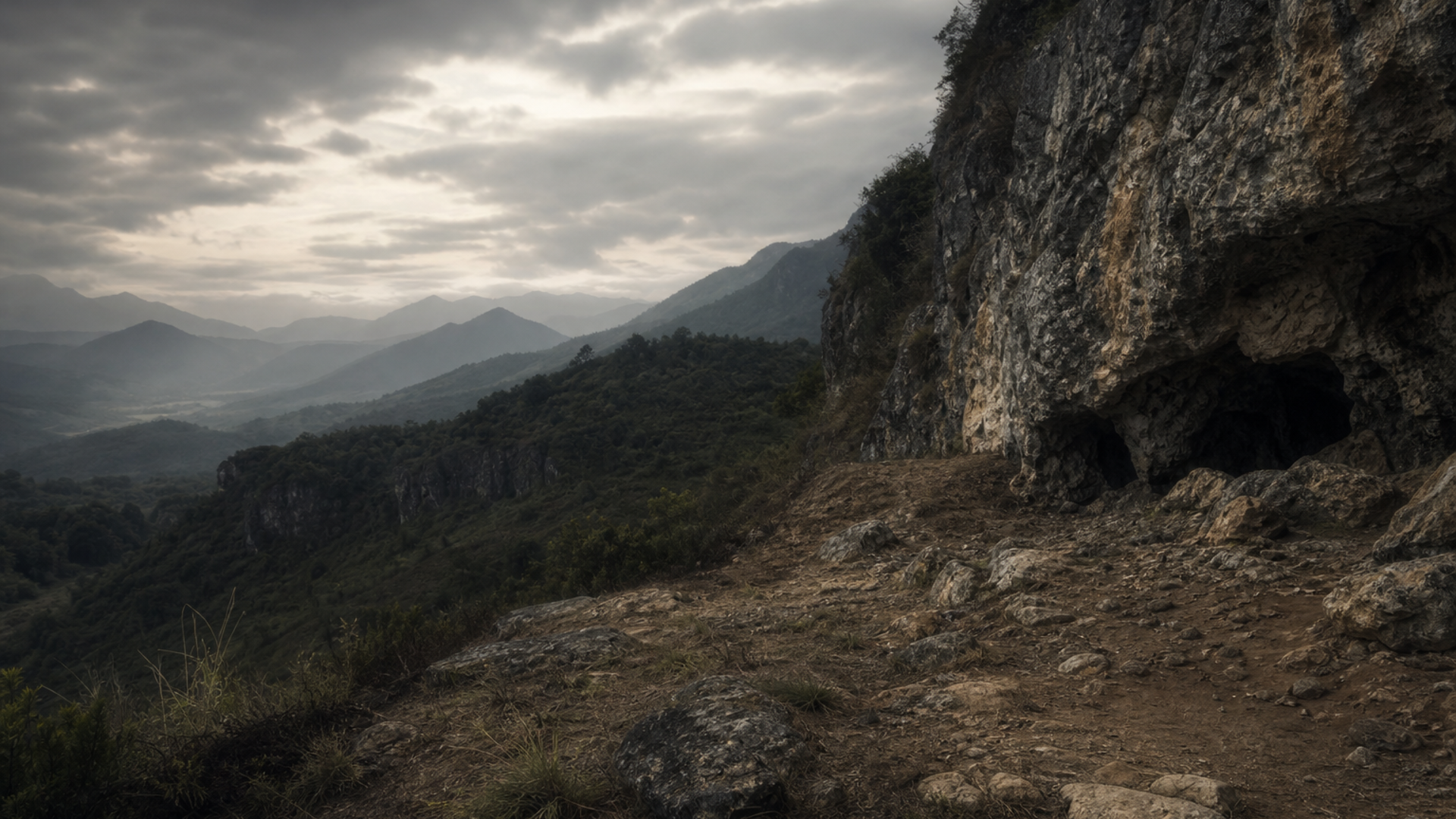
Perched within the rugged subtropical landscape of southern Fujian, Qihe Cave (Zhangping) preserves a whisper of human activity from the late Pleistocene to the early Holocene. Radiocarbon-calibrated material associated with the Epipaleolithic layer falls between 9798 and 9407 BCE, placing this site among the earliest documented occupations in this coastal-shelf zone of southeast China. Archaeological data indicates episodic occupation by small, mobile forager groups who exploited a mosaic of riverine, forest, and nearshore resources.

The singular ancient genome recovered from Qihe provides a genetic snapshot rather than a full portrait. While material culture from Epipaleolithic China often shows regional variability in stone-tool traditions and site-use, Qihe's deposits contribute to a broader pattern of early human settlement along China’s southeastern margins. Limited evidence suggests these groups adapted to shifting sea levels and seasonal resource pulses during the transition from the Pleistocene into the Holocene.

Because the genetic dataset from Qihe consists of one individual, archaeological and environmental context carries heightened importance: stratigraphy, faunal remains, and lithic assemblages remain essential to interpret how this person lived and moved across the landscape. Together, material and molecular traces hint at a deep-time presence of human groups who would ultimately contribute to the genetic tapestry of later East Asian populations, but the picture is necessarily incomplete and provisional.

  • Occupation dated to 9798–9407 BCE in Qihe Cave, Zhangping, Fujian
  • Epipaleolithic context: mobile coastal/riverine foragers
  • Single individual's genome provides a preliminary, local snapshot
Chapitre IV

Daily Life & Society

The people who frequented Qihe Cave lived in a landscape of steep hills, rivers, and a warming post-glacial climate. Archaeological indicators from regional Epipaleolithic sites suggest lifeways organized around small social units, high mobility, and a flexible subsistence strategy that married inland hunting with the exploitation of freshwater and coastal resources. Seasonality likely structured movement patterns: estuaries and river mouths would draw groups when fish and shellfish were abundant, while upland forests provided game and plant foods at other times of year.

Caves and rock shelters such as Qihe offered shelter, processing locations, and focal points in a shifting landscape. Social life was probably centered on kin networks and reciprocal ties; material culture—lightweight flaked stone tools, occasional ground stone, and ephemeral hearths—reflects a life tuned to rapid response and resource patchiness. Evidence across southern China points to diverse strategies rather than a single uniform adaptation, and Qihe fits within this mosaic.

Because direct archaeological detail from Qihe is limited in the genetic dataset, it is important to combine careful excavation reports, regional surveys, and paleoenvironmental reconstructions to imagine daily rhythms: seasonal camps, shared tasks of foraging and tool maintenance, and intimate knowledge of a changing coastline.

  • Seasonal, mobile subsistence blending riverine and terrestrial resources
  • Cave use for shelter and processing; small social groups and kin networks
Chapitre V

Genetic Profile

Genetic data from Qihe currently derive from a single individual dated to between 9798 and 9407 BCE. The mitochondrial genome is assigned to macro-haplogroup R. Haplogroup R is a widespread maternal lineage with deep roots across Eurasia and known subclades in East Asia; however, the detection of R in one ancient individual cannot by itself resolve population history or affinity. No Y-chromosome data are reported for this sample.

Because the sample count is one, all genetic interpretations must be treated as preliminary. The presence of mtDNA R at Qihe is compatible with multiple scenarios: local continuity of maternal lineages, gene flow along coastal corridors, or retention of an older regional maternal lineage. Ancient DNA from neighboring sites and later periods will be essential to test whether the Qihe individual reflects a persistent local population or an episode of movement and admixture.

Genomic comparisons—when more data are available—can place Qihe within broader patterns observed in East Asia, such as differentiation between inland and coastal groups, and the complex interplay of hunter-gatherer and incoming farmer ancestries in later millennia. For now, the genetic signal at Qihe is a single, evocative thread that underscores the need for further sampling and cautious synthesis of archaeology and DNA.

  • mtDNA haplogroup R identified in one sampled individual
  • Sample count = 1; interpretations are highly preliminary and uncertain
Chapitre VI

Legacy & Modern Connections

The solitary genome from Qihe Cave acts like a single brushstroke in a vast prehistoric canvas. It confirms human presence in Fujian's Epipaleolithic and hints that maternal lineages found there were part of broad Eurasian maternal diversity. However, connecting this lone individual directly to modern populations of Fujian or broader East Asia would be premature. Genetic continuity can occur, but it requires multiple, temporally spaced samples to demonstrate persistence or replacement.

Archaeologically, Qihe contributes to the narrative of early coastal settlement and adaptation in southern China. Genetically, it motivates targeted sampling in Fujian and adjacent regions to map how lineages such as mtDNA R spread, diversified, or were replaced through the Holocene transitions—especially as agriculture and new social networks emerged. Ultimately, Qihe reminds us that each ancient genome is both a discovery and an invitation: a call for more data to weave local stories into continental histories.

  • Suggests early maternal lineages present in southern China but not definitive
  • Highlights need for more ancient DNA from Fujian to test continuity
Propulsé par l'IA

Assistant IA

Posez des questions sur la culture Qihe Epipaleolithic of Fujian

Assistant IA par DNAGENICS

Débloquer cette fonction
Posez des questions sur la culture Qihe Epipaleolithic of Fujian. L'assistant IA peut expliquer les résultats génétiques, le contexte historique, les preuves archéologiques et les liens génétiques avec les populations actuelles, dans les limites de l'interprétation.
Exemple d'analyse IA

La culture Qihe Epipaleolithic of Fujian représente un chapitre fascinant de l'histoire humaine…

L'analyse génétique met en évidence des similarités avec des populations antérieures et des signes d'adaptations propres. Les échantillons d'ADN ancien éclairent les schémas migratoires et les liens entre populations, avec des limites qui dépendent de l'étude et du contexte archéologique.

Il s'agit d'un aperçu de l'analyse IA. Accédez à l'assistant complet pour explorer :

  • Composition et similarité génétique
  • Schémas migratoires et origines
  • Vie quotidienne et pratiques culturelles
  • Contexte génétique actuel

Explorez d'autres cultures antiques

Découvrez les récits de civilisations issues du monde antique