Préparation du rapport

Chargement des informations et références disponibles

Connexion au corpus archéologique…

Collecte des archives antiques

Aller au contenu principal
Saki Tzul Ancients — Belize 7,400 BP
Profil culturel

Saki Tzul Ancients — Belize 7,400 BP

Early Archaic occupants of Belize linked by Y‑DNA Q and mtDNA D1

5513 CE - 5360 BCE
Belize (Saki Tzul)
2 échantillons d'ADN antique
Faites défiler pour commencer
Chapitre I

Le récit

Comprendre la culture Saki Tzul Ancients — Belize 7,400 BP

Human remains from Saki Tzul (5513–5360 BCE) yield Y haplogroup Q and mtDNA D1 in two individuals. Archaeology and ancient DNA together hint at deep American lineages in southern Belize, but conclusions remain preliminary.

Time Period

5513–5360 BCE

Region

Belize (Saki Tzul)

Common Y-DNA

Q (2)

Common mtDNA

D1 (2)

Chapitre II

Chronologie

Moments clés de l'histoire de cette culture

5500 BCE

Saki Tzul burials date to the mid-Holocene

Human remains at Saki Tzul are radiocarbon-dated to c. 5513–5360 BCE, marking an early Archaic presence in southern Belize.

Chapitre III

Origins & Emergence

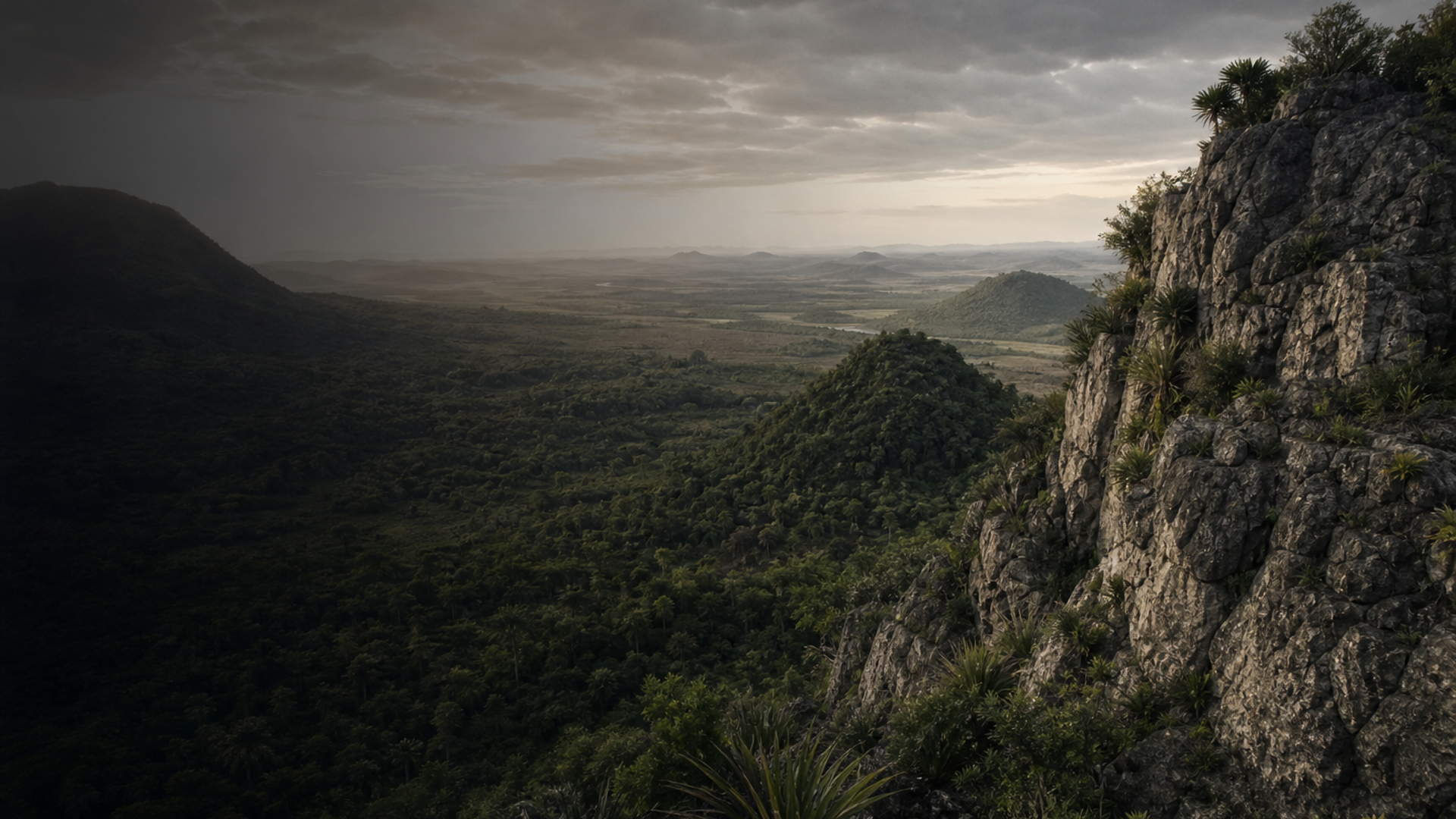
The Saki Tzul assemblage sits in the heart of Belize’s early Holocene landscape. Radiocarbon-calibrated dates on human remains place occupation between 5513 and 5360 BCE, about 7,400 years ago. Archaeological data indicates an Archaic-era presence at Saki Tzul, and the recovered burials provide a rare time-capsule into lifeways shortly after the initial peopling of the Americas.

The cinematic sweep of rising forests and shifting coastlines frames these people: a mosaic of rivers, wetlands, and coastal plains that would have supported foraging, fishing, and seasonal mobility. While the skeletal sample is small, the context suggests long-term local use rather than a transient stop. Limited evidence suggests cultural continuity in the region during the mid-Holocene, but broader connections to contemporaneous groups across Mesoamerica remain tentative.

Because only two well-preserved individuals have yielded genomic data, any reconstruction of population dynamics must be cautious. Archaeology at Saki Tzul provides the spatial and temporal anchor; genetics offers the lineage signals. Together they create a plausible, but preliminary, narrative of early Belizean emergence.

  • Radiocarbon dates: 5513–5360 BCE (mid-Holocene)
  • Site: Saki Tzul, Belize — early Archaic context
  • Conclusions are preliminary due to small sample size
Chapitre IV

Daily Life & Society

Reconstructing daily life at Saki Tzul requires combining environmental inference with careful restraint. The mid-Holocene tropical setting of Belize would have offered abundant freshwater resources, terrestrial game, and coastal foodways within seasonal rounds. People likely moved across riverine corridors and floodplain forests, exploiting shellfish, fish, and forest plants when available.

Material traces from this period in southern Belize are often ephemeral: stone tools, hearths, and discard concentrations reflect highly mobile economies rather than dense sedentary villages. Social groups were probably small and flexible, organized around kin networks with seasonal aggregation for resource-rich periods. Mortuary treatment preserved at Saki Tzul indicates the intentional burial of individuals, which signals social recognition and potentially place-based identities.

Archaeological data indicates adaptations tuned to a changing climate and landscape. However, because direct cultural assemblage details from Saki Tzul are limited, many specifics of craft, ritual, and social hierarchy remain unknown. Comparative study with other Archaic sites in Belize and neighboring regions helps fill interpretive gaps but cannot replace targeted excavation and community-engaged research at Saki Tzul itself.

  • Likely mobile, riverine and coastal foraging economy
  • Small kin-based groups with seasonal movements
Chapitre V

Genetic Profile

Ancient DNA retrieved from two individuals at Saki Tzul reveals a genetic snapshot: both males carry Y‑chromosome haplogroup Q, and both individuals possess mitochondrial haplogroup D1. These lineages are among the founding Native American clades observed across North and South America, suggesting that the Saki Tzul people carried deep pan-American ancestry components.

The concurrence of Y‑Q and mtDNA D1 in both samples can be read cautiously. Haplogroup Q on the paternal line is widespread in ancient and modern Indigenous American populations, and D1 similarly represents a major maternal founding lineage. This pattern is consistent with early dispersals into Central America, but with only two samples the signal cannot resolve fine-scale population structure, sex-biased migration, or local continuity versus later admixture.

Genomic autosomal data (when available) would provide stronger inference about affinity to other ancient groups and modern Indigenous communities. For now, the genetic data from Saki Tzul complements the archaeological record by confirming presence of canonical Native American lineage markers deep in Belize’s Archaic past. Limited sample count (<10) requires that all genetic conclusions be framed as preliminary and awaiting confirmation through additional sampling and collaboration with descendant communities.

  • Both individuals: Y haplogroup Q and mtDNA D1
  • Findings consistent with founding Native American lineages; preliminary
Chapitre VI

Legacy & Modern Connections

The genetic and archaeological traces at Saki Tzul form a bridge between deep prehistory and contemporary Indigenous presence in Belize. Haplogroups Q and D1 persist, in varying frequencies, among many modern Native American communities—linking ancient lineages to descendants across the Americas. This continuity helps frame Belize as part of the mosaic of early human settlement in Mesoamerica.

Importantly, the narrative must emphasize ethical research: further study requires partnership with Belizean and Indigenous stakeholders, repatriation dialogue where appropriate, and transparent communication about what DNA can and cannot resolve. Future excavations and genomic sampling, undertaken with community consent, will refine the picture of population dynamics, migration, and cultural continuity that Saki Tzul begins to reveal.

In short, Saki Tzul offers a cinematic, but tentative, glimpse of people living in a lush mid-Holocene Belize whose genetic echoes may still be traced today.

  • Lineages at Saki Tzul connect to broader Native American genetic heritage
  • Further sampling and community collaboration are essential
Chapitre VII

Catalogue d'échantillons

2 échantillons d'ADN antique associés à la culture Saki Tzul Ancients — Belize 7,400 BP offrent des repères génétiques sur les populations de cette période.

2 / 2 échantillons
Portrait Échantillon Pays Époque Date Culture Sexe Y-ADN ADNmt
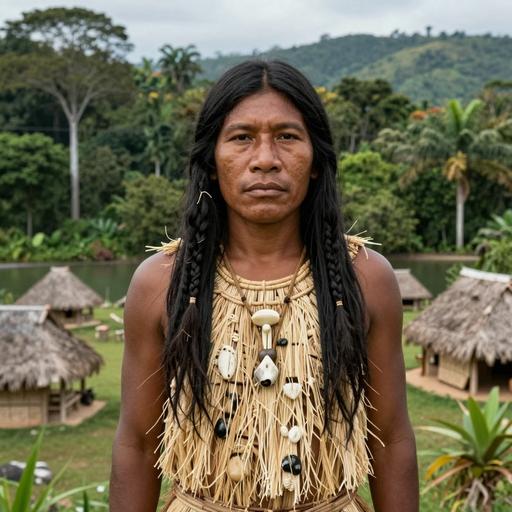
Reconstruction artistique de Archaic Maya individual, Belize
Archaic Maya individual, Belize
Belize Belize_SakiTzul_7400BP 5479-5419 calBCE (6455±30 BP, PSUAMS-3205) Maya Civilization M Q-M3 D1
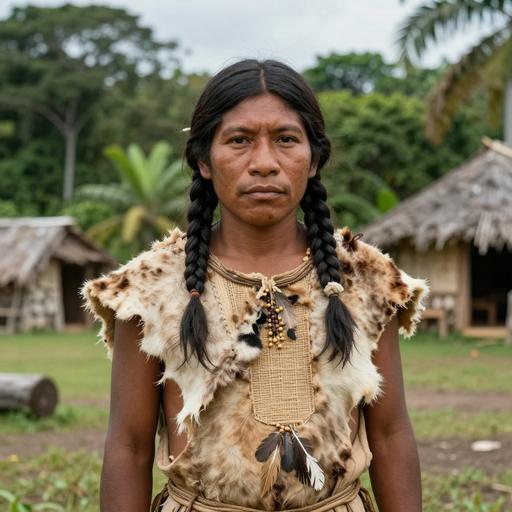
Reconstruction artistique de Archaic Maya individual, Belize
Archaic Maya individual, Belize
Belize Belize_SakiTzul_7400BP 5513-5372 calBCE (6485±30 BP, PSUAMS-3206) Maya Civilization M Q-M3 D1
Propulsé par l'IA

Assistant IA

Posez des questions sur la culture Saki Tzul Ancients — Belize 7,400 BP

Assistant IA par DNAGENICS

Débloquer cette fonction
Posez des questions sur la culture Saki Tzul Ancients — Belize 7,400 BP. L'assistant IA peut expliquer les résultats génétiques, le contexte historique, les preuves archéologiques et les liens génétiques avec les populations actuelles, dans les limites de l'interprétation.
Exemple d'analyse IA

La culture Saki Tzul Ancients — Belize 7,400 BP représente un chapitre fascinant de l'histoire humaine…

L'analyse génétique met en évidence des similarités avec des populations antérieures et des signes d'adaptations propres. Les échantillons d'ADN ancien éclairent les schémas migratoires et les liens entre populations, avec des limites qui dépendent de l'étude et du contexte archéologique.

Il s'agit d'un aperçu de l'analyse IA. Accédez à l'assistant complet pour explorer :

  • Composition et similarité génétique
  • Schémas migratoires et origines
  • Vie quotidienne et pratiques culturelles
  • Contexte génétique actuel

Explorez d'autres cultures antiques

Découvrez les récits de civilisations issues du monde antique