Aller au contenu principal
Profil culturel

Samara Yamnaya: Voices of the Steppe

Early Bronze Age pastoralists from the Volga steppe, 3339–2500 BCE

3339 CE - 2500 BCE
Samara Oblast, Volga River Valley, Russia

Le récit

Archaeological and genetic evidence from 10 individuals in Samara Oblast (3339–2500 BCE) reveals a mobile pastoral society with dominant male R lineages and diverse maternal haplogroups. Findings illuminate steppe ancestry and early Bronze Age social dynamics while remaining preliminary.

Time Period

c. 3339–2500 BCE

Region

Samara Oblast, Volga River Valley, Russia

Common Y-DNA

R (7 of 10 males)

Common mtDNA

H (3), U (3), H2b, W6c, T

Chronologie

2500 BCE

Consolidation of Steppe Networks

By c. 2500 BCE, Yamnaya groups on the Samara steppe show strong steppe ancestry and regional cultural ties, marking a phase of mobile pastoral consolidation and long-distance connections.

Origins & Emergence

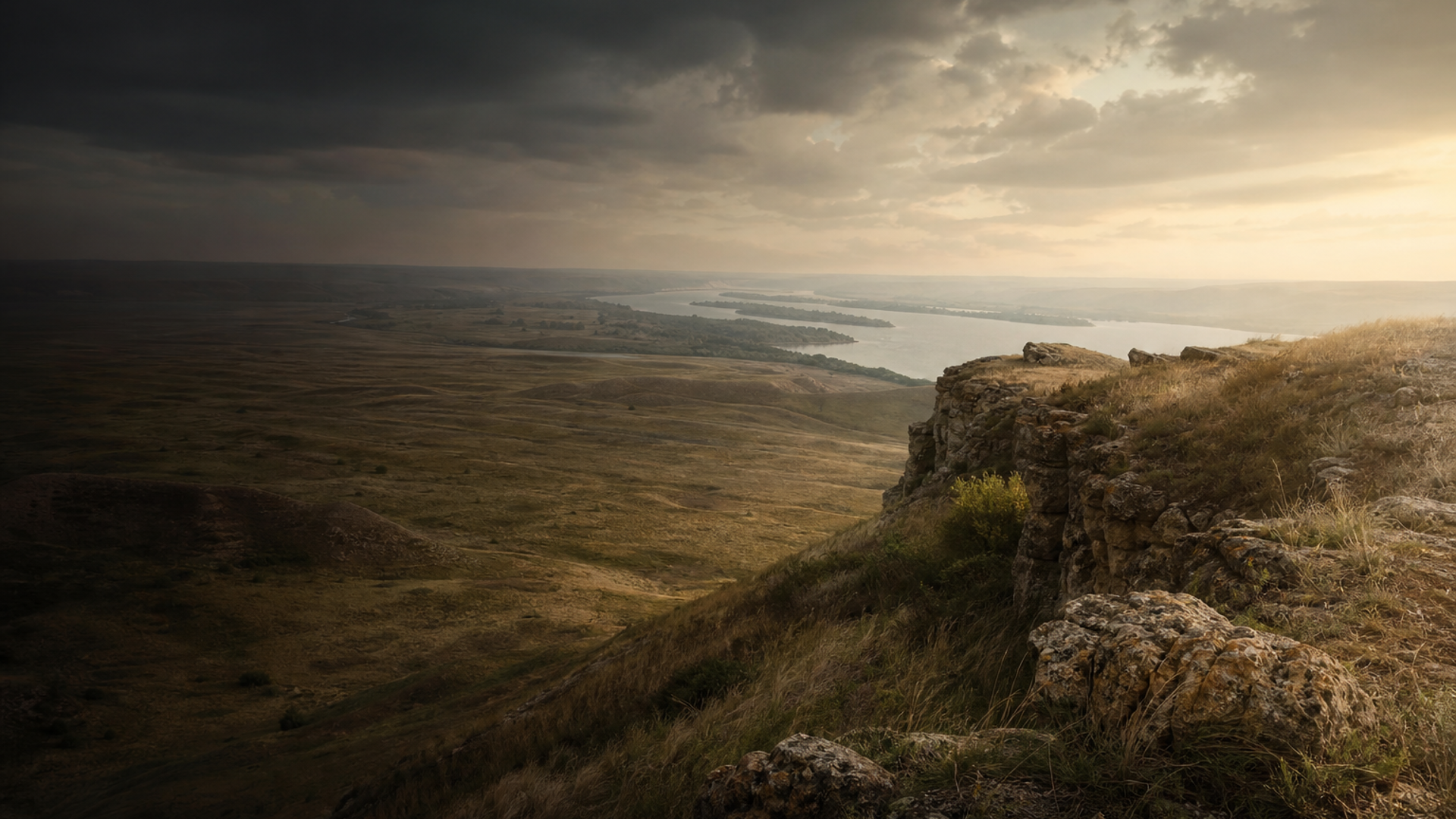
Across the exposed horizon of the Pre-Ural steppe, the Samara Yamnaya emerge in the early Bronze Age as a striking fusion of landscape and lifeway. Radiocarbon-dated remains from sites such as Ishkinovka I, Kurmanaevka III, Kutuluk, the Lopatino series, Utyevka V, Ekaterinovka and Luzkhi I span roughly 3339–2500 BCE. Archaeological data indicates a culture organized around mobile pastoralism: ephemeral settlements, seasonal camps, and burials often placed beneath low mounds or within kurgans. Grave inventories sometimes include copper items, bone and antler tools, and the imprints of wagons or cart parts, suggesting early wagon technology and high mobility.

Culturally, the Samara Yamnaya sit within a broader steppe horizon characterized by shared mortuary practices (extended supine burials, ochre application) and long-distance material ties. Limited evidence suggests interactions with neighboring forest-steppe and Caucasus groups, visible in traded raw materials and stylistic elements. The archaeological record is evocative — a wind-swept plain dotted with burial mounds, horse tack fragments, and the echoes of seasonal herding. However, interpretation must remain cautious: ten genetic samples provide a valuable but still limited window onto population structure and social organization. Future discoveries may refine or alter current reconstructions.

  • Burials from 3339–2500 BCE across Samara Oblast
  • Mobile pastoral economy with wagon use and kurgan burials
  • Material links suggest interaction with neighboring regions

Daily Life & Society

Life on the Volga steppe for the Samara Yamnaya would have been cinematic in its rhythms: seasonal rounds of pastures, herds moving across grasslands, and temporary camps clustered near rivers and streams. Archaeobotanical and faunal remains from the broader Yamnaya horizon indicate a mixed economy: sheep, cattle, and horses were central, with secondary cereal cultivation possible in sheltered river valleys. Organic preservation is uneven, yet stable isotope data from comparable steppe burials point to a diet heavily reliant on ruminant protein.

Mortuary practice is a key social mirror. Burials are often formalized — individuals placed supine, sometimes accompanied by ochre, weapons, beads, or copper items. The predominance of male R lineages in genetic samples suggests patrilineal descent groups may have been socially salient, though sex-biased burial wealth and preservation biases complicate simple readings. Mobility likely structured social life: kin groups, alliances formed through exchange and marriage, and the control of pasture corridors would all shape status and identity. Archaeological evidence hints at differentiated roles — herders, metalworkers, and wagon specialists — but the material record cannot yet specify fine-grained social hierarchies with certainty.

  • Pastoral mobility with seasonal camps along rivers
  • Formal burials with ochre and varied grave goods

Genetic Profile

Genetic data from 10 Samara Yamnaya individuals provides a powerful but cautious lens on population history. Y-chromosome results are dominated by haplogroup R in 7 of the sampled males, indicating strong continuity of steppe-associated paternal lines in this assemblage. Mitochondrial diversity is broader — mtDNA haplogroups include H (3), U (3), H2b (1), W6c (1), and T (1) — reflecting multiple maternal origins and suggesting exogamy or wide female mobility across networks.

Genome-wide signals align with the broader Yamnaya genetic profile: a characteristic mixture of Eastern Hunter-Gatherer (EHG) and Caucasus Hunter-Gatherer (CHG)-related ancestry that forms the steppe genetic signature. This ancestry component is a plausible vector for later demographic events that reshaped Eurasian populations in the third millennium BCE. That said, caveats are important: with only ten samples the picture is preliminary. Small sample size can overemphasize common haplogroups and underrepresent rarer lineages. Nevertheless, the pattern of dominant R Y-lineages alongside diverse mtDNA supports models of male-biased migrations or patrilineal social structures coupled with broader maternal networks. Ongoing ancient DNA sampling across more burials and neighboring regions will refine estimates of diversity, kinship patterns, and the tempo of migration.

  • Predominant Y haplogroup R (7/10 males)
  • Diverse maternal mtDNA (H, U, H2b, W6c, T) suggests mobility

Legacy & Modern Connections

The Samara Yamnaya left a resonant legacy across Eurasia. Archaeologically and genetically, they are central to narratives of steppe expansions that redistributed people, languages, and technologies during the early Bronze Age. The EHG–CHG-derived steppe ancestry they bear became an influential component in many later European and South Asian populations.

Modern populations retain echoes of this past in shared components of ancestry and in some Y-chromosome lineages, but connections are complex and mediated by millennia of admixture. Because the current dataset from Samara comprises only ten genomes, any direct line from these specific individuals to modern groups must be framed as provisional. Still, these samples help anchor broader patterns: the emergence of mobile pastoralist lifeways, the spread of steppe genetic signatures, and the social dynamics that shaped early Bronze Age Eurasia.

  • Key contributor to the steppe ancestry shared across Eurasia
  • Genetic links to modern populations are complex and mediated by later admixture

Assistant IA

Assistant IA par DNAGENICS

Débloquer cette fonction
Posez des questions sur la culture Samara Yamnaya: Voices of the Steppe. L'assistant IA peut expliquer les résultats génétiques, le contexte historique, les preuves archéologiques et les liens génétiques avec les populations actuelles, dans les limites de l'interprétation.
Exemple d'analyse IA

La culture Samara Yamnaya: Voices of the Steppe représente un chapitre fascinant de l'histoire humaine…

L'analyse génétique met en évidence des similarités avec des populations antérieures et des signes d'adaptations propres. Les échantillons d'ADN ancien éclairent les schémas migratoires et les liens entre populations, avec des limites qui dépendent de l'étude et du contexte archéologique.

Il s'agit d'un aperçu de l'analyse IA. Accédez à l'assistant complet pour explorer :

  • Composition et similarité génétique
  • Schémas migratoires et origines
  • Vie quotidienne et pratiques culturelles
  • Contexte génétique actuel