Préparation du rapport

Chargement des informations et références disponibles

Connexion au corpus archéologique…

Collecte des archives antiques

Aller au contenu principal
Sappali Tepe: Bronze Age Crossroads
Profil culturel

Sappali Tepe: Bronze Age Crossroads

A Bronze Age community in Uzbekistan where burials and DNA reveal threads of steppe and south Asian ancestry

2031 CE - 1600 BCE
Sappali Tepe, Uzbekistan (Central Asia)
Faites défiler pour commencer
Chapitre I

Le récit

Comprendre la culture Sappali Tepe: Bronze Age Crossroads

Archaeological and aDNA data from Sappali Tepe (2031–1600 BCE) reveal a Bronze Age Uzbek community marked by diverse male lineages (R, J, G, Q, L) and maternal haplogroups (U, W, HV). Excavations and genetics suggest regional mixing between steppe and southern/inner Asian networks.

Time Period

2031–1600 BCE

Region

Sappali Tepe, Uzbekistan (Central Asia)

Common Y-DNA

R (2), J (2), G (1), Q (1), L (1)

Common mtDNA

U (4), W (2), HV (2), HV3 (1), J1b (1)

Chapitre II

Chronologie

Moments clés de l'histoire de cette culture

2031 BCE

Earliest dated burials at Sappali Tepe

Radiocarbon dates place initial burials at Sappali Tepe around 2031 BCE, marking Bronze Age occupation and the start of the site's genetic record.

Chapitre III

Origins & Emergence

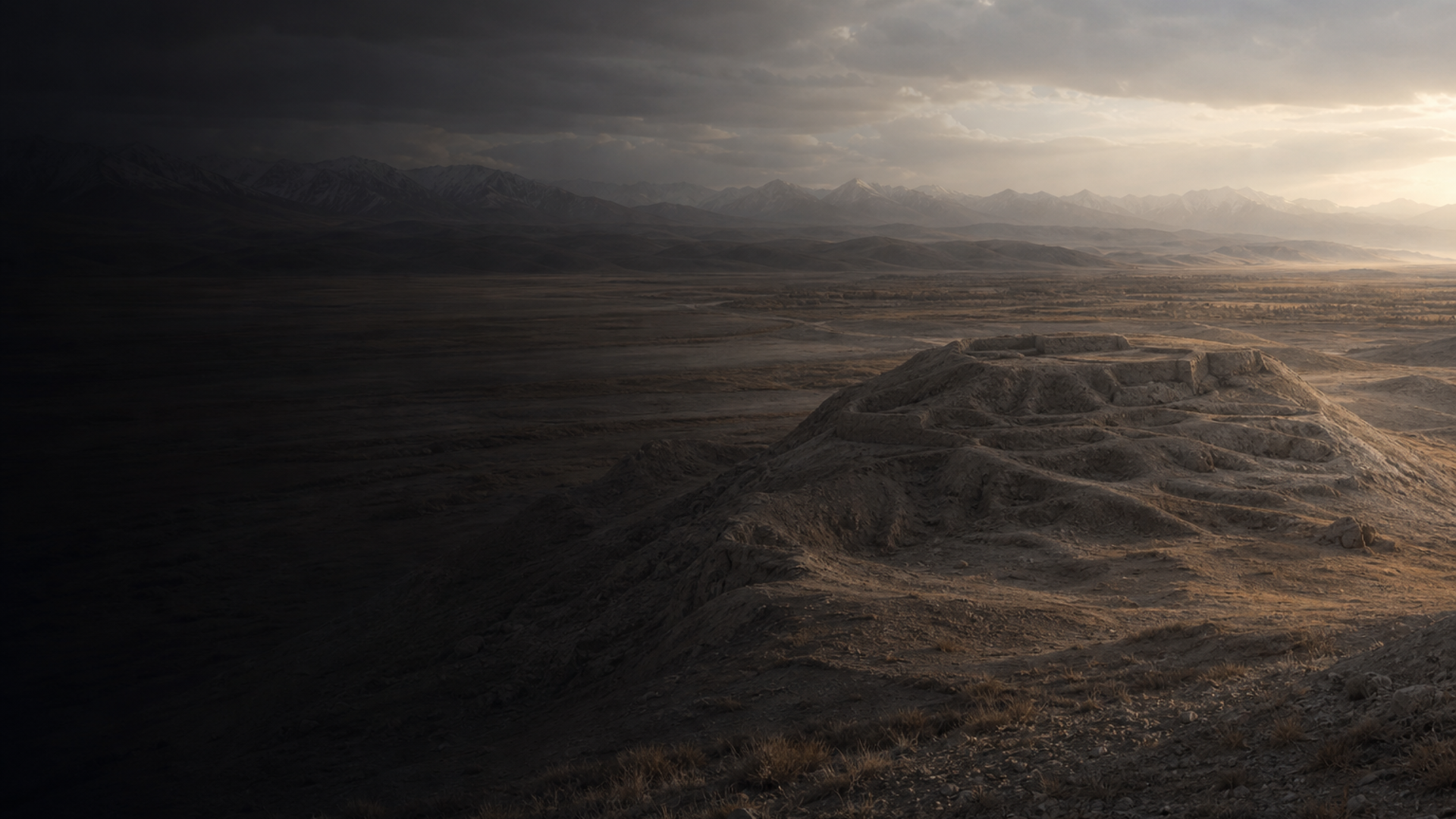
Sappali Tepe stands on the arid plains of present-day Uzbekistan, visible to the modern traveler as low mounds where Bronze Age lives once clustered. Radiocarbon dates from human remains and associated contexts place the occupation between roughly 2031 and 1600 BCE, a period of shifting alliances and mobile networks across Central Asia. Archaeological data indicate a community engaged with both local traditions and broader Bronze Age currents — trade in raw materials, shared ceramic forms, and funerary practices that reflect contact with neighboring lowland and steppe groups.

Genetically, the site marks an intersection: male lineages include haplogroup R, commonly associated with steppe ancestry, alongside J, G, Q and L, which hint at influences from south and inner Asia or long-distance exchanges. Mitochondrial diversity (notably haplogroups U and W) suggests continuity with regional maternal lineages and female-mediated connections across ecologies. While these signals evoke a tapestry of movement and mixture, caution is necessary: the sample set is moderate (n=14), and population-level conclusions remain provisional. Limited evidence suggests Sappali Tepe was neither an isolated enclave nor a single-origin colony, but rather a local hub where incoming lineages assimilated into established social landscapes.

  • Dated burials and contexts: 2031–1600 BCE
  • Located at Sappali Tepe, Uzbekistan — a Bronze Age local center
  • Evidence points to regional contact between steppe and southern/inner Asian networks
Chapitre IV

Daily Life & Society

The lived world of Sappali Tepe would have been shaped by seasonal rhythms, pastoral mobility, and exchange. Archaeological indicators — burial assemblages, fragmented ceramics, and landscape position — suggest a mixed economy in which herding, small-scale farming and long-distance exchange all played roles. Graves imply social differentiation: some individuals were interred with more goods or distinct treatments, while others received simpler rites, hinting at household or lineage-based status differences.

Material culture and burial orientation can reflect both local tradition and external influence. Archaeological data indicates that Sappali Tepe participated in networks that carried metals, crafted goods, and perhaps ideas about social display and ancestry. Gendered divisions of labor likely existed, as in many Bronze Age communities, but genetic evidence (diverse maternal lineages combined with heterogeneous Y-DNA) also suggests that mobility and marriage networks brought people into the community from varying directions. The interplay of settled life and movement across landscapes created a dynamic social fabric in which identities were negotiated through kinship, ritual, and exchange.

  • Mixed economy likely: herding, cultivation, and exchange
  • Burial variation hints at social differentiation and external influences
Chapitre V

Genetic Profile

Ancient DNA from 14 individuals recovered at Sappali Tepe provides a window into the biological ancestry of this Bronze Age community. The Y-chromosome pool is heterogeneous: two individuals carry haplogroup R (a lineage common in steppe groups), two carry J (often associated with Near Eastern and South Asian connections), and single occurrences of G, Q and L point to additional, more diverse ancestries — Q can reflect northern or eastern inputs, while L is more frequently observed in South and Southwest Asian contexts.

On the maternal side, haplogroups U (4 individuals) and W (2) dominate, with HV and J1b also present. Haplogroup U is widespread across Eurasia and can indicate deep regional continuity; W and HV are less common but attested in West and Central Asian Bronze Age populations. Together the Y and mtDNA patterns suggest admixture between steppe-related males and a broader set of maternal lineages, or alternatively multiple waves of incoming males from different source regions.

These interpretations are scientifically cautious: with n=14, this is a moderate dataset that reveals diversity but cannot fully resolve population history or demographic processes. Genome-wide autosomal data would better estimate admixture proportions and directionality; existing haplogroup counts are a first, evocative map of biological connections.

  • Mixed Y-DNA: R and J predominate, with G, Q, L also present
  • Maternal diversity: U, W, HV dominate, indicating regional continuity and connections
Chapitre VI

Legacy & Modern Connections

Sappali Tepe's legacy is not a single lineage but a story of convergence. The genetic mosaic preserved in burials reflects long-standing Central Asian patterns of movement, marriage, and cultural exchange. Modern populations of Uzbekistan and surrounding regions inherit threads of this Bronze Age tapestry, though millennia of further migrations, empire-building and local change mean that direct one-to-one continuity is complex.

For descendants who seek ancestral links, the site offers a narrative of connectivity: steppe-derived paternal markers, southern/inner Asian inputs, and maternal lineages rooted in the broader Eurasian landscape. Archaeological and genetic research at sites like Sappali Tepe helps anchor those narratives with dates, places, and scientific context, while reminding us that conclusions must remain provisional until larger, genome-wide datasets clarify the patterns hinted at by these 14 individuals.

  • Genetic diversity at Sappali Tepe reflects long-term connectivity in Central Asia
  • Modern regional ancestry likely includes but is not exclusively derived from these Bronze Age populations
Propulsé par l'IA

Assistant IA

Posez des questions sur la culture Sappali Tepe: Bronze Age Crossroads

Assistant IA par DNAGENICS

Débloquer cette fonction
Posez des questions sur la culture Sappali Tepe: Bronze Age Crossroads. L'assistant IA peut expliquer les résultats génétiques, le contexte historique, les preuves archéologiques et les liens génétiques avec les populations actuelles, dans les limites de l'interprétation.
Exemple d'analyse IA

La culture Sappali Tepe: Bronze Age Crossroads représente un chapitre fascinant de l'histoire humaine…

L'analyse génétique met en évidence des similarités avec des populations antérieures et des signes d'adaptations propres. Les échantillons d'ADN ancien éclairent les schémas migratoires et les liens entre populations, avec des limites qui dépendent de l'étude et du contexte archéologique.

Il s'agit d'un aperçu de l'analyse IA. Accédez à l'assistant complet pour explorer :

  • Composition et similarité génétique
  • Schémas migratoires et origines
  • Vie quotidienne et pratiques culturelles
  • Contexte génétique actuel

Explorez d'autres cultures antiques

Découvrez les récits de civilisations issues du monde antique