Préparation du rapport

Chargement des informations et références disponibles

Connexion au corpus archéologique…

Collecte des archives antiques

Aller au contenu principal
Sarmatian Echoes of Kazakhstan
Profil culturel

Sarmatian Echoes of Kazakhstan

Iron Age graves on the Kazakh steppe linking archaeology and DNA

773 BCE - 220 CE
Western & Central Kazakhstan
Faites défiler pour commencer
Chapitre I

Le récit

Comprendre la culture Sarmatian Echoes of Kazakhstan

Archaeological and genetic evidence from 17 Iron Age burials (773 BCE–220 CE) across western Kazakhstan reveals a Sarmatian-era population with predominant R paternal lineages and diverse maternal ancestries, reflecting steppe mobility and eastern connections.

Time Period

773 BCE – 220 CE

Region

Western & Central Kazakhstan

Common Y-DNA

R (6), P (1), C (1)

Common mtDNA

U (6), K (2), T (2), A (2), I4a (2)

Étiquettes
Chapitre II

Chronologie

Moments clés de l'histoire de cette culture

400 BCE

Sarmatian presence expands across the steppe

By the 5th–4th centuries BCE Sarmatian groups are archaeologically prominent across the Pontic–Caspian and Central Asian steppe, a context for the Kazakhstan burials.

Chapitre III

Origins & Emergence

The Kazakhstan_Sarmatian_IA individuals come from a tapestry of burial grounds and mounded cemeteries—Chelkar Burial Ground (Western Kazakhstan), Kaynbulak II (Petropavlovka), Bisoba mounds (Martuk District), Sapibulak, Segizsay and the Aigirly sanctuary near Taushyk in Mangistau. Dated between 773 BCE and 220 CE, these sites fall within the broader arc of Sarmatian presence on the Pontic–Caspian–Central Asian steppe.

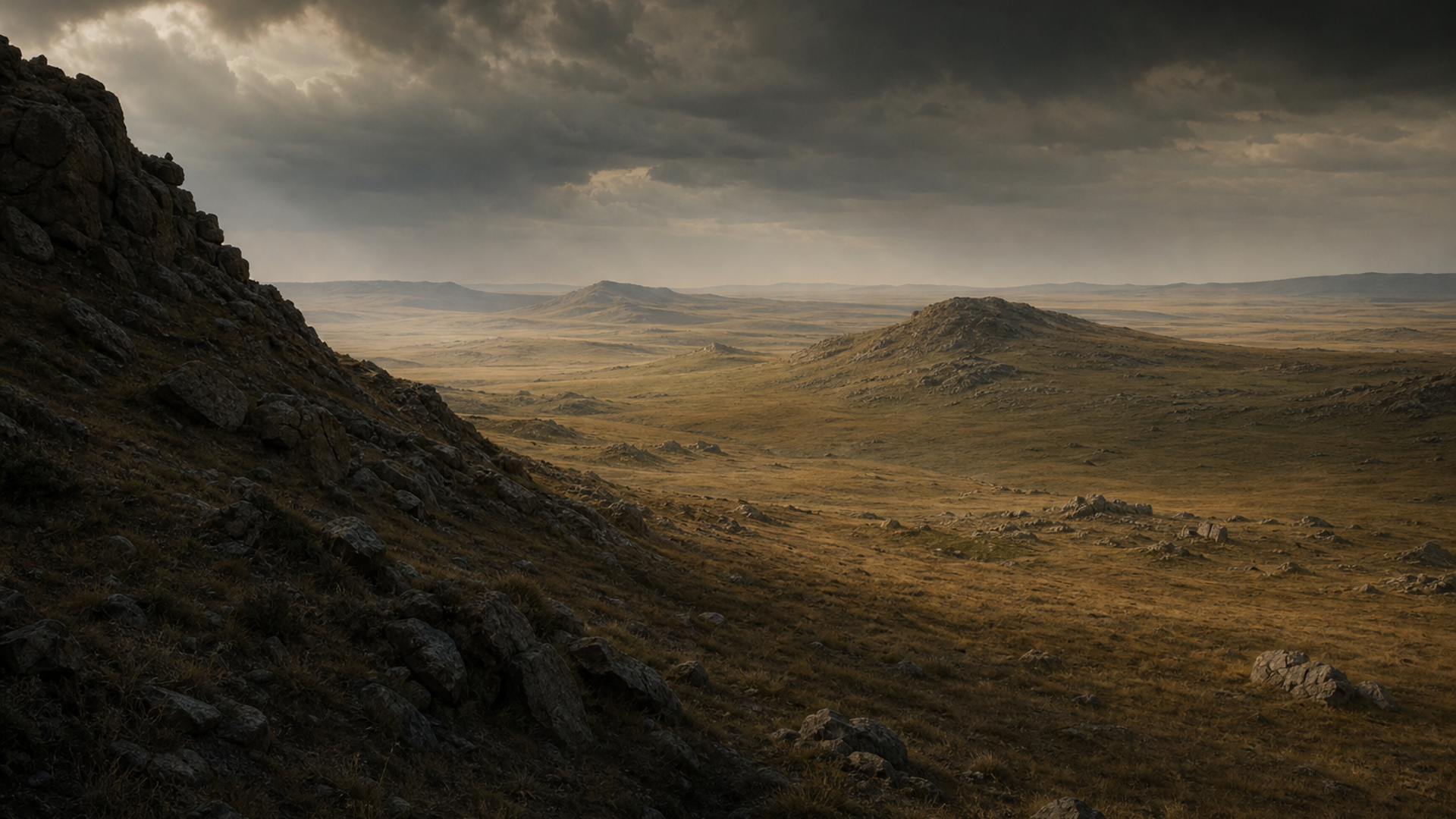
Archaeological data indicates a cultural horizon marked by kurgan and mound interment traditions, durable ties to horseback pastoralism, and material links with contemporaneous steppe groups. The mosaic of funerary locations—riverbank mounds along the Wil and Ilek, lakeside graves at Chelkar—speaks to mobile lifeways shaped by water sources and grazing corridors.

Limited evidence suggests regional diversity in burial rite and probably in social role: some mounds contain multi-phase interments while others appear more isolated. The chronology overlaps classical descriptions of Sarmatian tribal movements across the steppe and archaeological parallels to Iron Age Sarmatian assemblages in neighboring regions. Genetic and osteological data together help anchor these sites in a narrative of migration, assimilation, and local continuity rather than a single homogeneous population.

  • Sites span Mangistau to Aqmola, including Chelkar and Kaynbulak II
  • Dates: 773 BCE–220 CE, within Iron Age Sarmatian horizon
  • Burials occur in mounds and sanctuaries linked to nomadic pastoralism
Chapitre IV

Daily Life & Society

The human story encoded in these burial places is one of wind-swept horizons, seasonal movement, and social networks woven by herds and horses. Archaeological traces at mound cemeteries suggest communities organized around transhumant pastoralism: seasonal pastures, riverine camps, and temporary settlements that left ephemeral footprints compared with their enduring burial monuments.

Material remains from analogous Sarmatian contexts indicate horse gear, metalwork, and ritualized grave architecture; while not every Kazakhstan_Sarmatian_IA burial is richly furnished, the placement of graves—on river banks, near lakes, and in sanctified hollows—reflects landscape knowledge and ritual investment. Osteological profiles often show activity markers consistent with riding and long-distance mobility, though preservation varies between sites.

Social life likely included tribal kinship units with fluid alliances. Funerary variation may reflect age, sex, status, or differing local traditions imported during episodes of movement. Archaeological data indicates both continuity with earlier steppe lifeways and adaptations to local ecological niches across western Kazakhstan.

  • Economy centered on pastoralism and horse husbandry
  • Burial placement reflects ritualized landscape use and mobility
Chapitre V

Genetic Profile

Seventeen individuals enable a cautious genetic portrait of Kazakhstan_Sarmatian_IA. On the paternal side, R-lineages dominate (6/17), consistent with broader steppe-associated Y-chromosome profiles seen across Indo-European pastoralist groups. The presence of P (1) and C (1) haplogroups, though rare in this sample, hints at occasional eastern or pan-steppe connections: haplogroup C is more frequently reported in Central and East Asian contexts.

Maternally, mtDNA is diverse: U (6) is the most common, a lineage often linked to West Eurasian hunter-gatherer and steppe ancestries; K (2), T (2), and I4a (2) further reflect West Eurasian maternal inputs. Notably, A appears twice—an East Eurasian marker—indicating gene flow from eastern steppe or Central Asian populations. This mix of maternal and paternal signals portrays a population shaped by west–east admixture typical of long-distance mobility on the steppe.

Interpretation must remain careful: with 17 samples the dataset is moderate in size. Some haplogroups (P and C) are singletons here, so their broader significance is preliminary. Combined archaeological and genetic evidence supports a picture of Sarmatian-era communities in Kazakhstan as genetically heterogeneous, rooted in steppe ancestry but open to eastern connections.

  • Predominant Y-lineages: R (6); rare P and C suggest eastern links
  • mtDNA mix (U, K, T, A, I4a) shows West Eurasian core with eastern maternal inputs
Chapitre VI

Legacy & Modern Connections

The Kazakhstan_Sarmatian_IA assemblage contributes to our understanding of how Iron Age steppe polities shaped the genetic landscapes of Central Eurasia. Elements of the genetic signature—steppe-associated R paternal lineages and mixed maternal ancestries—reappear in later populations across the region, reflecting enduring demographic imprinting by mobile pastoralists.

For modern populations of Kazakhstan and neighboring areas, these ancient genomes are threads in a long weave of migrations, trade, and cultural exchange. While continuity is detectable in some lineages, the presence of eastern mtDNA markers also reminds us that the steppe has long been a conduit between Europe and Asia. These findings are best read as part of a dynamic tapestry: archaeological context anchors the lifeways, and DNA reveals the biological echoes of those journeys.

  • Genetic echoes persist in modern Central Asian ancestry
  • Findings highlight long-term west–east connectivity on the steppe
Propulsé par l'IA

Assistant IA

Posez des questions sur la culture Sarmatian Echoes of Kazakhstan

Assistant IA par DNAGENICS

Débloquer cette fonction
Posez des questions sur la culture Sarmatian Echoes of Kazakhstan. L'assistant IA peut expliquer les résultats génétiques, le contexte historique, les preuves archéologiques et les liens génétiques avec les populations actuelles, dans les limites de l'interprétation.

Exemple d'analyse IA

La culture Sarmatian Echoes of Kazakhstan représente un chapitre fascinant de l'histoire humaine…

L'analyse génétique met en évidence des similarités avec des populations antérieures et des signes d'adaptations propres. Les échantillons d'ADN ancien éclairent les schémas migratoires et les liens entre populations, avec des limites qui dépendent de l'étude et du contexte archéologique.

Il s'agit d'un aperçu de l'analyse IA. Accédez à l'assistant complet pour explorer :

  • Composition et similarité génétique
  • Schémas migratoires et origines
  • Vie quotidienne et pratiques culturelles
  • Contexte génétique actuel

Explorez d'autres cultures antiques

Découvrez les récits de civilisations issues du monde antique