Préparation du rapport

Chargement des informations et références disponibles

Connexion au corpus archéologique…

Collecte des archives antiques

Aller au contenu principal
Sea‑Rim Foragers of Hummervikholmen
Profil culturel

Sea‑Rim Foragers of Hummervikholmen

Early Mesolithic coastal foragers from southern Norway, revealed by archaeology and ancient DNA

7589 CE - 7325 BCE
Southern Norway (Agder, Søgne)
Faites défiler pour commencer
Chapitre I

Le récit

Comprendre la culture Sea‑Rim Foragers of Hummervikholmen

Mesolithic individuals from Hummervikholmen (Agder, Søgne), dated 7589–7325 BCE, offer a glimpse of Norway's postglacial coastal foragers. Limited archaeological and genomic evidence (3 samples) links them to broader Scandinavian hunter‑gatherer ancestry and highlights paternal haplogroup I and maternal U lineages.

Time Period

7589–7325 BCE

Region

Southern Norway (Agder, Søgne)

Common Y-DNA

I (2 of 3 samples)

Common mtDNA

U (2), U4 (1)

Chapitre II

Chronologie

Moments clés de l'histoire de cette culture

7589 BCE

Earliest dated individual from Hummervikholmen

Radiocarbon evidence places human remains at Hummervikholmen to ca. 7589 BCE, marking Early Mesolithic coastal occupation in southern Norway.

Chapitre III

Origins & Emergence

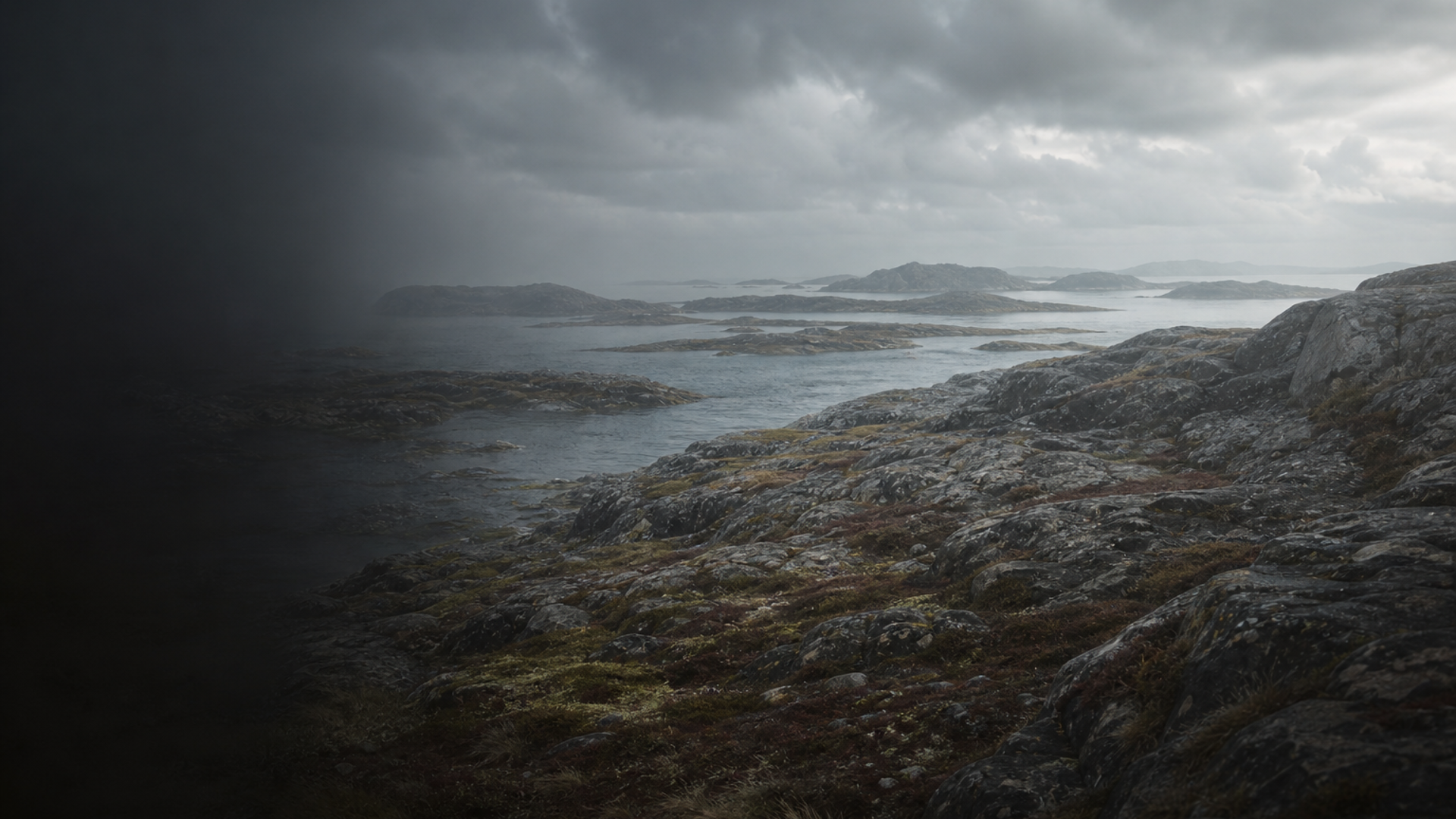
Along the drowned shores of southern Norway, the tiny island site of Hummervikholmen preserves traces of people who walked newly exposed coastline after the last Ice Age. Radiocarbon dates from human remains place activity between about 7589 and 7325 BCE, a century in which rising seas and rebounding landscapes redrew the edge of habitable land. Archaeological data indicates these were maritime foragers exploiting rich fjord and shelf environments; submerged finds at Hummervikholmen speak to a coastline now lost beneath the waves.

Limited evidence suggests these individuals belonged to the wider ensemble of Scandinavian hunter‑gatherers who occupied northern Europe in the Early Mesolithic. The material imprint is fragmentary: human bone recovered from peat and marine sediments, few preserved organic artifacts, and scant intact settlement deposits. Nonetheless, the context at Hummervikholmen—its coastal position near Søgne in Agder—shows how groups tracked shifting resources as sea levels rose and habitats transformed.

Cinematic in their setting yet careful in interpretation, these origins point to small mobile bands adapting to a rapidly changing postglacial world. With only three genome samples available, archaeological and genetic inferences are necessarily provisional; they nevertheless connect Hummervikholmen to broader processes of recolonization and coastal specialization along Norway's shores.

  • Site: Hummervikholmen (Søgne, Agder), submerged coastal context
  • Dates: ca. 7589–7325 BCE (Early Mesolithic)
  • Small, mobile foraging groups adapting to rapid sea‑level changes
Chapitre IV

Daily Life & Society

Archaeological evidence paints a picture of daily life organized around the sea and the margins where forest met fjord. Coastal foragers likely focused on fish, shellfish, seabirds, and marine mammals, supplemented by inland hunting and seasonal plant resources. The landscape was a mosaic of rocky skerries, sheltered bays, and newly emerging coastal plains—an environment that rewarded mobility, intimate knowledge of tides, and seasonal scheduling.

Social groups were probably small and flexible. Ethnographic analogies and stone‑tool distributions suggest networks of exchange and intermittent aggregation at rich resource patches. Material culture at many Mesolithic Norwegian sites emphasizes flaked stone tools, organic implements (often poorly preserved in submerged contexts), and occasional bone or antler artefacts. Hummervikholmen itself offers sparse but telling traces: human remains found within marine sediments that imply shoreline burial or loss to rising waters.

Daily life was shaped by unpredictability—storms, sea‑level rise, and shifting fish runs—so resilience likely depended on diverse foraging strategies and social ties spanning coastal and inland landscapes. Archaeological data indicates a people deeply attuned to the sea, moving with its seasons and rhythms rather than imposing fixed settlement patterns.

  • Economy centered on marine resources and seasonal mobility
  • Small social groups with exchange networks and flexible camps
Chapitre V

Genetic Profile

Ancient DNA from three individuals at Hummervikholmen provides a slender but valuable genetic window into Norway's earliest postglacial inhabitants. Two of the three male samples carry Y‑DNA haplogroup I, a lineage widely documented among Mesolithic European hunter‑gatherers. On the maternal side, mitochondrial haplogroups in the assemblage include U (two individuals) and specifically U4 (one individual) — lineages characteristic of Upper Paleolithic and Mesolithic populations across northern and central Europe.

Genomic affinities are consistent with placement within the broader Scandinavian hunter‑gatherer (SHG) constellation: a genetic profile formed by admixture between Western Hunter‑Gatherer (WHG) and Eastern Hunter‑Gatherer (EHG) ancestries in earlier millennia. Archaeogenetic patterns suggest these coastal Norwegians shared ancestry with contemporaneous groups along the Scandinavian coast, reflecting migrations and local continuity following deglaciation.

Important caveats apply. With only three samples, statistical resolution is limited; patterns such as the predominance of Y‑haplogroup I or the presence of mtDNA U may reflect local founder effects or chance. Archaeological context, radiocarbon dating, and comparisons with larger regional datasets are essential to place these genomes within longer‑term demographic trends. Still, the concordance between typical Mesolithic haplogroups and Hummervikholmen's archaeological setting strengthens the interpretation of these individuals as part of northern Europe's maritime hunter‑gatherer mosaic.

  • Y‑DNA: Haplogroup I in 2 of 3 samples — common in European Mesolithic males
  • mtDNA: U (2), including U4 (1) — typical Mesolithic maternal lineages
Chapitre VI

Legacy & Modern Connections

Hummervikholmen's whispering bones link modern Norway to a dramatic postglacial past. Genetic signals typical of Mesolithic northern Europe—Y‑haplogroup I and mtDNA U lineages—appear in later populations, suggesting threads of continuity amid waves of migration and cultural change. Coastal lifeways pioneered by these early foragers set long‑lasting economic and social templates for adaptation to northern seascapes.

Yet continuity is complex. Subsequent Neolithic farming expansions and later Bronze and Iron Age transformations reshaped genetic and cultural landscapes. The Hummervikholmen genomes are a snapshot of one adaptive strategy at a particular time and place. For modern descendants, these ancestral signatures are part of a layered heritage that includes Mesolithic foragers, incoming farmers, and later northern European populations. Ongoing ancient DNA sampling across Norway will refine how much of this Mesolithic legacy persisted locally versus being diluted or absorbed by later demographic events.


  • Contributes to understanding of long‑term northern European genetic heritage
  • Highlights coastal adaptations that influence later regional cultures
Propulsé par l'IA

Assistant IA

Posez des questions sur la culture Sea‑Rim Foragers of Hummervikholmen

Assistant IA par DNAGENICS

Débloquer cette fonction
Posez des questions sur la culture Sea‑Rim Foragers of Hummervikholmen. L'assistant IA peut expliquer les résultats génétiques, le contexte historique, les preuves archéologiques et les liens génétiques avec les populations actuelles, dans les limites de l'interprétation.
Exemple d'analyse IA

La culture Sea‑Rim Foragers of Hummervikholmen représente un chapitre fascinant de l'histoire humaine…

L'analyse génétique met en évidence des similarités avec des populations antérieures et des signes d'adaptations propres. Les échantillons d'ADN ancien éclairent les schémas migratoires et les liens entre populations, avec des limites qui dépendent de l'étude et du contexte archéologique.

Il s'agit d'un aperçu de l'analyse IA. Accédez à l'assistant complet pour explorer :

  • Composition et similarité génétique
  • Schémas migratoires et origines
  • Vie quotidienne et pratiques culturelles
  • Contexte génétique actuel

Explorez d'autres cultures antiques

Découvrez les récits de civilisations issues du monde antique