Préparation du rapport

Chargement des informations et références disponibles

Connexion au corpus archéologique…

Collecte des archives antiques

Aller au contenu principal
Sopot of the Pannonian Plains
Profil culturel

Sopot of the Pannonian Plains

Middle Neolithic communities in eastern Croatia, seen through archaeology and ancient DNA

5834 CE - 4538 BCE
Eastern Croatia (Pannonian Basin)
Faites défiler pour commencer
Chapitre I

Le récit

Comprendre la culture Sopot of the Pannonian Plains

Archaeological and genetic data from eight Middle Neolithic Sopot individuals (5834–4538 BCE) at sites in eastern Croatia reveal a mosaic of farming lifeways and mixed ancestries. Limited samples suggest Anatolian-farmer and hunter‑gatherer signals with diverse maternal and rare paternal lineages.

Time Period

5834–4538 BCE

Region

Eastern Croatia (Pannonian Basin)

Common Y-DNA

C, G, J (each observed in 1 sample)

Common mtDNA

U (2), V1 (2), N, H, T2b

Chapitre II

Chronologie

Moments clés de l'histoire de cette culture

5500 BCE

Middle Neolithic Sopot activity in eastern Croatia

Occupation and material culture of Sopot villages along the Pannonian floodplains flourish; archaeological horizons at Vinkovci and Osijek show intensive farming and pottery production.

Chapitre III

Origins & Emergence

The Sopot cultural horizon emerged in the middle of the 6th–5th millennia BCE across the Pannonian and northwestern Balkan plains. At sites such as Beli Manastir–Popova zemlja, Osijek–Hermanov Vinograd and Vinkovci (Vinka), archaeologists recover wheel-made and incised pottery, longhouse traces and settled agrarian assemblages that mark a firmly Neolithic lifeway. Archaeological data indicate adaptations to riverine and lowland environments: wetland exploitation, domesticated cereals and livestock, and long-distance exchange in polished stone and shell ornaments.

Material culture evokes a society negotiating continuity and change—local Mesolithic traditions overlaid by the arrival and diffusion of farming practices linked to the broader Sopot tradition across the Danube corridor. Ceramic styles and settlement layouts suggest regional networks rather than isolated farmsteads: households cluster near fertile floodplains, producing the repetitive silhouettes of Neolithic villages.

Limited radiocarbon dates (5834–4538 BCE for the analyzed samples) show an extended occupation span; however, preservation biases and site-specific taphonomy complicate fine-grained chronologies. Archaeological evidence therefore supports a picture of community-based farming lifeways with regional variability, while leaving open questions about migration pace and cultural transmission routes.

  • Sites: Beli Manastir–Popova zemlja; Osijek–Hermanov Vinograd; Vinkovci (Vinka)
  • Material culture: incised pottery, house plans, agricultural tools
  • Environment: riverine floodplains and wetland resources
Chapitre IV

Daily Life & Society

Sopot villages felt both domestic and ceremonial rhythms. Houses—often rectangular and arranged in clusters—contained hearths, grinding stones and storage pits, implying cereal processing and seasonal food storage. Faunal remains point to mixed husbandry: sheep, goat and cattle bones appear alongside wild species exploited from nearby wetlands and forests, indicating a versatile diet. Pottery shapes and wear patterns suggest communal cooking, specialized serving forms and possibly feasting episodes that reinforced social ties.

Personal artefacts—beads, polished stone tools, and decorated ceramics—evoke bodily display and identity within small communities. Spatial patterns of burials (where preserved) and artifact concentrations suggest kin-based households with craft specialization, but the archaeological record is uneven: settlement abandonment, reoccupation, and site disturbance mean interpretations often rely on fragmentary contexts.

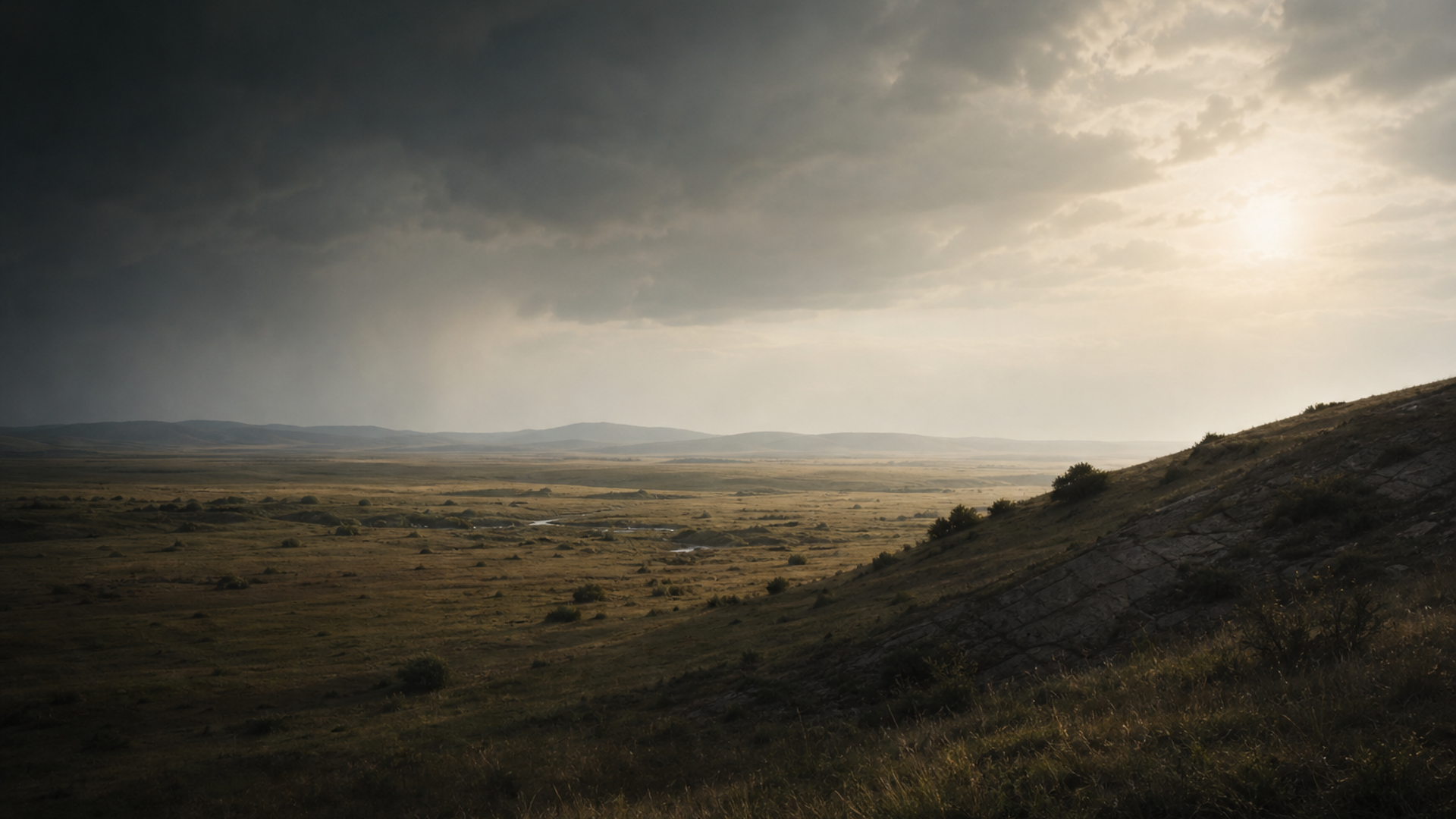
Seasonality probably structured labor: spring sowing and autumn harvest cycles, winter craft production and mobile resource gathering in other seasons. The cinematic image of lowland Sopot life is of clustered dwellings beside broad rivers, the slow rhythms of crop growth underpinned by the intimate labour of family groups and communal exchange networks that linked villages across the plain.

  • Settlement: clustered rectangular houses with storage pits
  • Economy: mixed farming with hunting, fishing and herding
Chapitre V

Genetic Profile

Ancient DNA from eight Sopot-associated individuals (dated 5834–4538 BCE) offers a glimpse into the biological makeup of Middle Neolithic communities in eastern Croatia. Because sample count is small (n=8), conclusions are preliminary and should be treated cautiously. Nevertheless, the combined genetic and archaeological picture fits broader Neolithic patterns in southeastern Europe: a dominant Anatolian-farmer-related ancestry blended with locally derived hunter‑gatherer admixture.

Uniparental markers in this small set are diverse. Maternal lineages include U (2 samples), V1 (2 samples), and single occurrences of N, H and T2b. The presence of U and V1 echoes persistent maternal lineages often associated with Mesolithic hunter‑gatherers in Europe or with complex postglacial histories, while H and T2b are commonly found among Neolithic farmers—indicating maternal admixture. Paternal markers are rarer but notable: single observations of Y-DNA haplogroups C, G and J. G is frequently linked to early European farmers (G2 sublineages), while J has Near Eastern associations; haplogroup C is uncommon in Neolithic Europe and may reflect either drift, a rare incoming lineage, or unresolved local diversity.

Genome-wide patterns (where available) align with mixed farmer–hunter ancestry seen elsewhere in the region, but with variability between individuals. Future sampling and broader regional comparisons are essential to move from evocative snapshots to robust demographic narratives.

  • Small sample size (n=8): interpretations are preliminary
  • Mixed ancestry: Anatolian-farmer signals with hunter‑gatherer admixture
Chapitre VI

Legacy & Modern Connections

The Sopot communities of eastern Croatia contributed threads to the genetic and cultural tapestry of southeastern Europe. Elements of their material culture and genetic signals persisted, blended and transformed in later Neolithic and Bronze Age populations. Some maternal haplogroups observed—H and T2b—become widespread in later European populations, while others like U and V1 preserve deep regional continuities that link Mesolithic and Neolithic gene pools.

Genetic continuity is not uniform: demographic pulses, migrations and cultural shifts in subsequent millennia reshaped ancestry landscapes. Nevertheless, the Sopot dataset—small but informative—helps anchor models of how farmer and forager groups interacted along the Danube corridor. As ancient DNA sampling increases across the Balkans and Pannonian Basin, these early snapshots will clarify how local communities contributed to the ancestries of later European populations and to the mosaic genomes of people living today.

  • Some maternal lineages feed into broader European Neolithic ancestry
  • Regional continuity and later admixture reshaped genetic legacies
Propulsé par l'IA

Assistant IA

Posez des questions sur la culture Sopot of the Pannonian Plains

Assistant IA par DNAGENICS

Débloquer cette fonction
Posez des questions sur la culture Sopot of the Pannonian Plains. L'assistant IA peut expliquer les résultats génétiques, le contexte historique, les preuves archéologiques et les liens génétiques avec les populations actuelles, dans les limites de l'interprétation.

Exemple d'analyse IA

La culture Sopot of the Pannonian Plains représente un chapitre fascinant de l'histoire humaine…

L'analyse génétique met en évidence des similarités avec des populations antérieures et des signes d'adaptations propres. Les échantillons d'ADN ancien éclairent les schémas migratoires et les liens entre populations, avec des limites qui dépendent de l'étude et du contexte archéologique.

Il s'agit d'un aperçu de l'analyse IA. Accédez à l'assistant complet pour explorer :

  • Composition et similarité génétique
  • Schémas migratoires et origines
  • Vie quotidienne et pratiques culturelles
  • Contexte génétique actuel

Explorez d'autres cultures antiques

Découvrez les récits de civilisations issues du monde antique