Préparation du rapport

Chargement des informations et références disponibles

Connexion au corpus archéologique…

Collecte des archives antiques

Aller au contenu principal
South Andros Ceramic Voices
Profil culturel

South Andros Ceramic Voices

Lucayan-era islanders revealed through pottery, blue holes, and DNA

900 CE - 1500 CE
South Andros, Bahamas
Faites défiler pour commencer
Chapitre I

Le récit

Comprendre la culture South Andros Ceramic Voices

Archaeological and genetic glimpses from South Andros (900–1500 CE) link Ceramic-period Lucayan islanders to broader Caribbean Arawakan expansions. Eight ancient genomes from Sanctuary Blue Hole and Stargate Blue 166 show predominantly Y-DNA Q and diverse Native American mtDNA lineages, offering preliminary insights.

Time Period

900–1500 CE

Region

South Andros, Bahamas

Common Y-DNA

Q (6/8 samples)

Common mtDNA

A2 (3), B2e (2), C (1), C1b (1), A2h (1)

Chapitre II

Chronologie

Moments clés de l'histoire de cette culture

900 CE

Emergence of Ceramic contexts in South Andros

First Ceramic-period deposits appear in South Andros, marking island occupation tied to Greater Antilles dispersals.

1200 CE

Established maritime lifeways

Shell middens and coastal sites indicate sustained marine-focused economies and inter-island connections.

1492 CE

Era of European contact begins

Contact initiates major demographic and cultural changes that alter indigenous population trajectories.

Chapitre III

Origins & Emergence

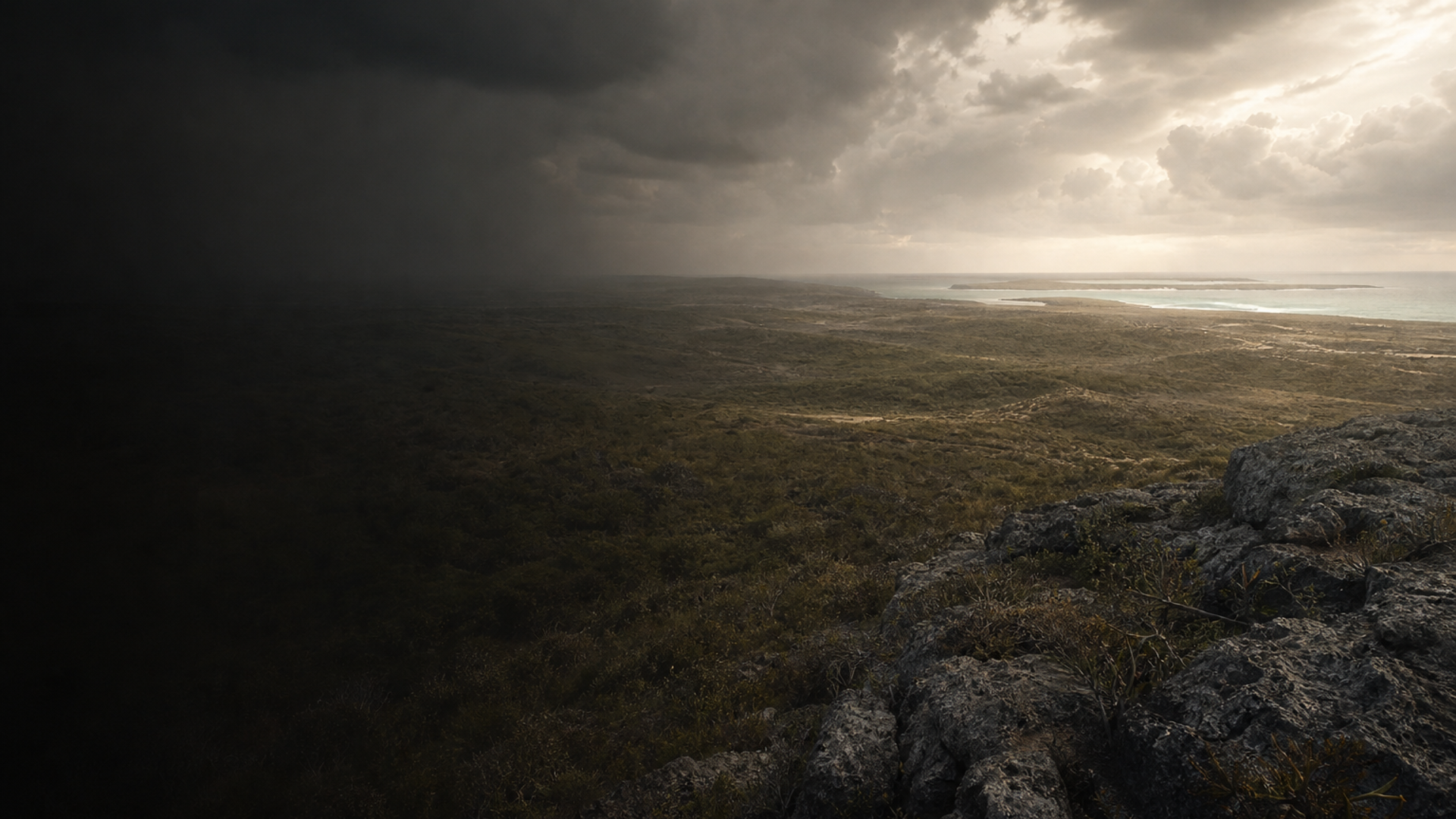
The South Andros Ceramic assemblage sits in the cinematic liminal zone where ocean, wind and human craft meet. Archaeological data indicates that by ca. 900 CE small, ceramic-using communities occupied pockets of the Bahamian archipelago; these communities are conventionally placed within the Ceramic Period and are often associated with Lucayan cultural expressions in historic records. Excavations and survey work in South Andros — notably contexts tied to Sanctuary Blue Hole and the Stargate Blue 166 locality — reveal ceramic sherds, shell-rich midden deposits, and ephemeral habitation features that reflect a maritime-focused lifeway.

Material culture and settlement patterns are consistent with a broader wave of Ceramic-age dispersals across the Greater Antilles and into the Bahamas, linked by canoe routes and island-hopping networks. Linguistic and archaeological models commonly associate these movements with Arawakan-speaking groups. However, direct archaeological indicators (such as extensive field systems or large, permanent villages) are limited in the Bahamian record; much of what we understand comes from small sites and coastal deposits that preserve shells and pottery better than plant remains.

Limited evidence suggests these communities adapted specialized subsistence strategies to coral island environments, and regional diversity likely existed between islands and even between adjacent cays. The picture that emerges is of mobile, sea-savvy people whose arrival and persistence through the Ceramic Period reshaped the human geography of the Bahamas.

  • Ceramic-period presence in South Andros dated ca. 900–1500 CE
  • Evidence from Sanctuary Blue Hole and Stargate Blue 166
  • Associated with wider Arawakan/Ceramic dispersals in the Caribbean
Chapitre IV

Daily Life & Society

Life in South Andros during the Ceramic era unfolded along shorelines, in tidal flats and around freshwater sinks such as blue holes that punctuate the island. Archaeological deposits emphasize marine resources — shellfish, fish, and turtle remain common in middens — and tools for netting, spearing and shell-working are implied by the faunal and artifact remains that survive. The coastal setting fostered canoe-based mobility, seasonal visiting of resource patches, and trade or exchange across the shallow Bahamian banks.

Archaeobotanical remains in the Bahamas are sparse, but regional comparisons with the Greater Antilles and other Ceramic contexts suggest a mixed economy: coastal foraging augmented by introduced cultigens (for example, manioc/cassava and other root crops) and small-scale garden plots where soils and freshwater allowed. Household assemblages were likely small and flexible rather than nucleated urban centers; social life probably combined kin-based networks with ritual practices tied to sea and landscape features.

Settlement traces in South Andros are often discontinuous and fragmentary, so reconstructions emphasize behavior seen in the material record — cooking loci, shell middens, and isolated artifact scatters. These traces, when read alongside oral historic analogies and regional archaeology, suggest resilient adaptations to island life.

  • Marine-focused subsistence with complementary horticulture suggested
  • Small, mobile households with shoreline occupation and canoe travel
Chapitre V

Genetic Profile

Genomic data from eight individuals recovered from South Andros contexts (Sanctuary Blue Hole and Stargate Blue 166) provide a rare molecular window into Bahamian Ceramic communities. A clear pattern emerges on the paternal side: six of eight males carry haplogroup Q, a lineage widely observed among Indigenous peoples across the Americas and frequently reported in ancient and present-day Caribbean-associated genomes. On the maternal side, the mitochondrial diversity includes A2 (three samples, including one sublineage labeled A2h), B2e (two samples), C (one sample), and C1b (one sample), all lineages that fall within the spectrum of Native American mtDNA diversity.

These results are consistent with an interpretation that South Andros inhabitants were part of the broader Ceramic-associated population movements that peopled the Greater Antilles and adjacent islands. However, caution is essential: the sample count is small (n=8). When sample counts are below 10, population-level inferences remain preliminary and sensitive to sampling location, chronology, and preservation biases. Genetic continuity with other Caribbean genomes appears plausible, but more genomes from multiple Bahamian islands, stratified chronologically, are necessary to resolve questions about sex-biased migration, local continuity versus replacement, and fine-scale affinity to mainland source populations.

Archaeogenetics here complements archaeology: the DNA signal supports longstanding models of Arawakan-associated dispersals while highlighting the need for broader sampling to move from suggestive patterns to robust demographic histories.

  • Paternal lineage dominated by haplogroup Q (6/8 samples)
  • Maternal lineages include A2, B2e, C, C1b — typical Native American mtDNA diversity
Chapitre VI

Legacy & Modern Connections

The lives preserved in South Andros deposits are echoes of Lucayan communities whose cultural imprint was profound yet heavily disrupted after European contact. Archaeological and genetic evidence together indicate that the people of Ceramic-period South Andros were connected to wider Caribbean networks by kinship, craft and sea routes. In modern terms, genetic traces of these Indigenous lineages persist in Caribbean and some Bahamian genomes, but centuries of demographic upheaval, forced migrations, and admixture since 1492 complicate direct lines of descent.

For descendants and scholars alike, the link between archaeological deposits (potsherds, middens, blue-hole contexts) and ancient DNA provides a tangible way to reconnect islandscapes to people. These small datasets are invitations: they urge further excavation, respectful engagement with descendant communities, and expanded sampling to clarify how South Andros fit into the archipelago’s long human story.

  • Genetic signals align with broader Caribbean Indigenous ancestry but are complicated by post-contact history
  • Small sample size highlights need for more research and community engagement
Propulsé par l'IA

Assistant IA

Posez des questions sur la culture South Andros Ceramic Voices

Assistant IA par DNAGENICS

Débloquer cette fonction
Posez des questions sur la culture South Andros Ceramic Voices. L'assistant IA peut expliquer les résultats génétiques, le contexte historique, les preuves archéologiques et les liens génétiques avec les populations actuelles, dans les limites de l'interprétation.

Exemple d'analyse IA

La culture South Andros Ceramic Voices représente un chapitre fascinant de l'histoire humaine…

L'analyse génétique met en évidence des similarités avec des populations antérieures et des signes d'adaptations propres. Les échantillons d'ADN ancien éclairent les schémas migratoires et les liens entre populations, avec des limites qui dépendent de l'étude et du contexte archéologique.

Il s'agit d'un aperçu de l'analyse IA. Accédez à l'assistant complet pour explorer :

  • Composition et similarité génétique
  • Schémas migratoires et origines
  • Vie quotidienne et pratiques culturelles
  • Contexte génétique actuel

Explorez d'autres cultures antiques

Découvrez les récits de civilisations issues du monde antique