Préparation du rapport

Chargement des informations et références disponibles

Connexion au corpus archéologique…

Collecte des archives antiques

Aller au contenu principal
Teouma: Early Islanders of Efate
Profil culturel

Teouma: Early Islanders of Efate

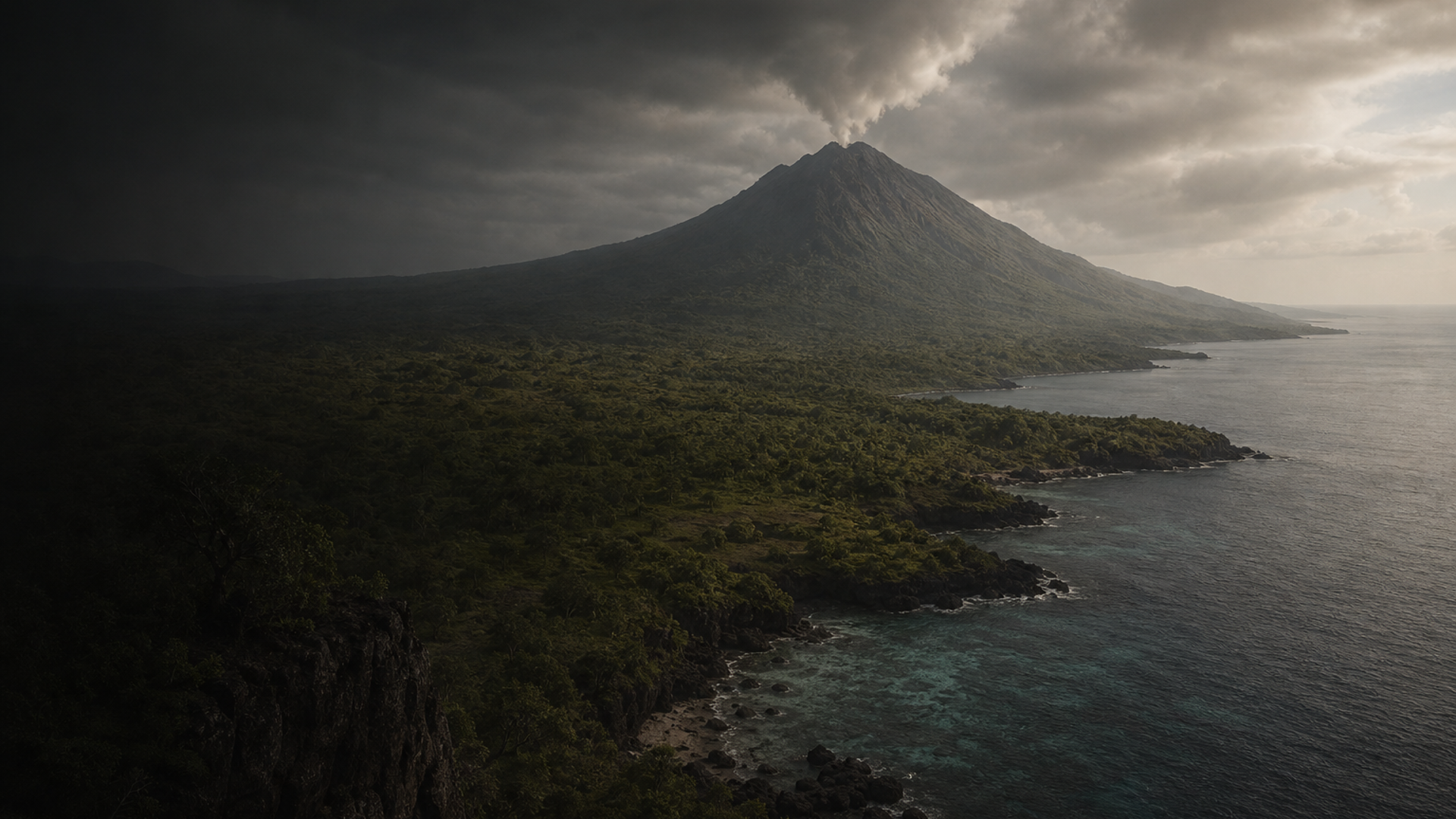
A cinematic glimpse of Vanuatu's people 1250–750 BCE where excavation and ancient DNA converge

1250 CE - 750 BCE
Vanuatu (Efate — Teouma)
Faites défiler pour commencer
Chapitre I

Le récit

Comprendre la culture Teouma: Early Islanders of Efate

Archaeological and genetic data from the Teouma cemetery (Efate, Vanuatu), dated 1250–750 BCE, reveal early island settlers with Austronesian-linked genetic markers (Y-DNA O; mtDNA B). With only four genomes, interpretations remain preliminary but illuminate migration and local interaction in Remote Oceania.

Time Period

1250–750 BCE

Region

Vanuatu (Efate — Teouma)

Common Y-DNA

O (observed in 2/4 ancient samples)

Common mtDNA

B (observed in 1/4 ancient samples)

Chapitre II

Chronologie

Moments clés de l'histoire de cette culture

1200 BCE

Teouma cemetery in use on Efate

Radiocarbon-dated burials at Teouma indicate sustained interment activity on Efate between about 1250 and 750 BCE, marking established settlement and social memory.

Chapitre III

Origins & Emergence

Beneath the sun-scorched palms of Efate, the Teouma cemetery opens like a cinematic ledger of movement across the Pacific. Archaeological excavation at Teouma (Efate, Vanuatu) recovered inhumations, decorated pottery fragments, and personal ornaments dated by radiocarbon to roughly 1250–750 BCE. The material culture carries echoes of the wider Lapita horizon — punctuated dentate-stamped ceramics and seafaring technologies — suggesting these islanders were part of long-distance maritime networks.

Archaeological data indicates communities at Teouma were establishing persistent settlement patterns rather than ephemeral camps; burial architecture and repeated depositional practices point to place-based identity emerging on Efate. At the same time, stylistic continuities and changes in grave goods show local adaptation of ideas arriving by sea. Limited evidence suggests interaction with neighboring islands and potential admixture with preexisting Papuan-related populations in the region, but the exact sequence of arrivals and local integrations remains debated.

The cinematic image is of voyagers landing on reef-fringed shores, carrying pottery styles, crops, and kinship ties, then evolving distinct island lifeways as they rooted themselves in Vanuatu's volcanic landscapes. Archaeology sketches the frame; genetic data helps color the faces within it.

  • Teouma cemetery on Efate dated to 1250–750 BCE
  • Material culture shows Lapita-related affinities and local adaptations
  • Archaeology suggests sustained settlement and regional exchange
Chapitre IV

Daily Life & Society

From the soil and burials of Teouma emerges an intimate portrait of island life: subsistence tied to canoe-borne horizons, gardens of taro and yams, and reef fisheries that shaped diet and ritual. Skeletal evidence from the cemetery indicates physically active lives — repetitive strain markers consistent with paddling, carrying, and craft production — while grave goods suggest social differentiation and the significance of personal adornment.

Archaeological data indicates that community life revolved around kin networks and maritime calendars. Pottery fragments with decorative motifs imply shared aesthetic systems and possibly social signaling across islands. The cemetery itself is a social statement: collective commemoration in a defined place, indicating territory, memory, and identity on Efate.

Yet many details remain elusive. Preservation biases and a small number of excavated burials limit our ability to reconstruct household organization, gender roles, or the full scope of trade connections. Future excavations and integrated isotope and genetic studies could illuminate childhood mobility, diet, and the life histories that underpinned these island societies.

  • Evidence of maritime subsistence and intense physical activity
  • Cemetery use reflects community memory, identity, and social differentiation
Chapitre V

Genetic Profile

Ancient DNA from four individuals recovered at Teouma offers a rare, direct window into the biological ancestry of Efate's early inhabitants. Two of the four male-line markers were assigned to Y-DNA haplogroup O, a lineage widely associated with Austronesian-speaking populations across Island Southeast Asia and Remote Oceania. One mitochondrial lineage belongs to haplogroup B, a maternal marker commonly observed in Pacific populations. These signals are consistent with an incoming Austronesian-related component bringing seafaring communities into Vanuatu.

Crucially, the sample size is very small (n = 4). With just four genomes, statistical power is limited and patterns such as Papuan-related admixture, fine-scale substructure, and temporal change are difficult to resolve confidently. Archaeological inferences of local interaction and possible admixture with Papuan-descended groups remain plausible and are compatible with broader regional studies showing mixed Austronesian–Papuan ancestry in many Pacific populations.

In short: genetic data from Teouma aligns with an Austronesian-linked migration into Efate but is preliminary. Expanded sampling and integration with isotopic, morphological, and archaeological datasets will be needed to clarify migration timing, sex-biased processes, and the demographic formation of Vanuatu's early islanders.

  • Two of four Y-chromosomes are haplogroup O — signals consistent with Austronesian-linked paternal ancestry
  • One mtDNA B lineage observed; small sample size (n=4) makes conclusions preliminary
Chapitre VI

Legacy & Modern Connections

The people buried at Teouma are ancestors in the deep sense: their genes, styles, and seafaring choices feed into the living cultures of Vanuatu. Archaeological continuity in mortuary practice and stylistic echoes in pottery suggest cultural threads that may persist in symbolic forms among modern Ni-Vanuatu communities. Genetic signals that point toward Austronesian ancestry help explain linguistic and cultural affinities across Remote Oceania.

However, legacy is not a simple line of descent. Centuries of interaction, drift, and local innovation have transformed island populations. Given the limited ancient sample set, connecting specific modern groups directly to the Teouma individuals should be done cautiously. What is clear is that Teouma illuminates a formative chapter in Vanuatu’s past: maritime arrival, place-making, and the biological and cultural blends that set the stage for the archipelago’s later diversity.

  • Teouma contributes to understanding ancestral roots of Ni-Vanuatu peoples
  • Connections between ancient genomes and modern populations remain provisional
Propulsé par l'IA

Assistant IA

Posez des questions sur la culture Teouma: Early Islanders of Efate

Assistant IA par DNAGENICS

Débloquer cette fonction
Posez des questions sur la culture Teouma: Early Islanders of Efate. L'assistant IA peut expliquer les résultats génétiques, le contexte historique, les preuves archéologiques et les liens génétiques avec les populations actuelles, dans les limites de l'interprétation.
Exemple d'analyse IA

La culture Teouma: Early Islanders of Efate représente un chapitre fascinant de l'histoire humaine…

L'analyse génétique met en évidence des similarités avec des populations antérieures et des signes d'adaptations propres. Les échantillons d'ADN ancien éclairent les schémas migratoires et les liens entre populations, avec des limites qui dépendent de l'étude et du contexte archéologique.

Il s'agit d'un aperçu de l'analyse IA. Accédez à l'assistant complet pour explorer :

  • Composition et similarité génétique
  • Schémas migratoires et origines
  • Vie quotidienne et pratiques culturelles
  • Contexte génétique actuel

Explorez d'autres cultures antiques

Découvrez les récits de civilisations issues du monde antique