Préparation du rapport

Chargement des informations et références disponibles

Connexion au corpus archéologique…

Collecte des archives antiques

Aller au contenu principal
Transbaikal Mesolithic Echoes
Profil culturel

Transbaikal Mesolithic Echoes

Three early Holocene lives from Zhindo and Pad' Tokui illuminate Siberian hunter–gatherer roots

6396 CE - 5726 BCE
Transbaikal (Zabaykalsky Krai), Russia
Faites défiler pour commencer
Chapitre I

Le récit

Comprendre la culture Transbaikal Mesolithic Echoes

Small Mesolithic assemblage (6396–5726 BCE) from Zhindo and Pad' Tokui in Russia's Transbaikal links archaeological camps to Y-DNA N and mtDNA C/F lineages. Limited samples mean conclusions are preliminary, but patterns point to deep north Eurasian affinities.

Time Period

6396–5726 BCE

Region

Transbaikal (Zabaykalsky Krai), Russia

Common Y-DNA

N (observed in 2 of 3 samples)

Common mtDNA

C (2), F (1)

Chapitre II

Chronologie

Moments clés de l'histoire de cette culture

6396 BCE

Early Transbaikal Mesolithic occupation

Human remains from Zhindo and Pad' Tokui date to this period, marking early Holocene hunter‑gatherer activity in the Transbaikal region.

Chapitre III

Origins & Emergence

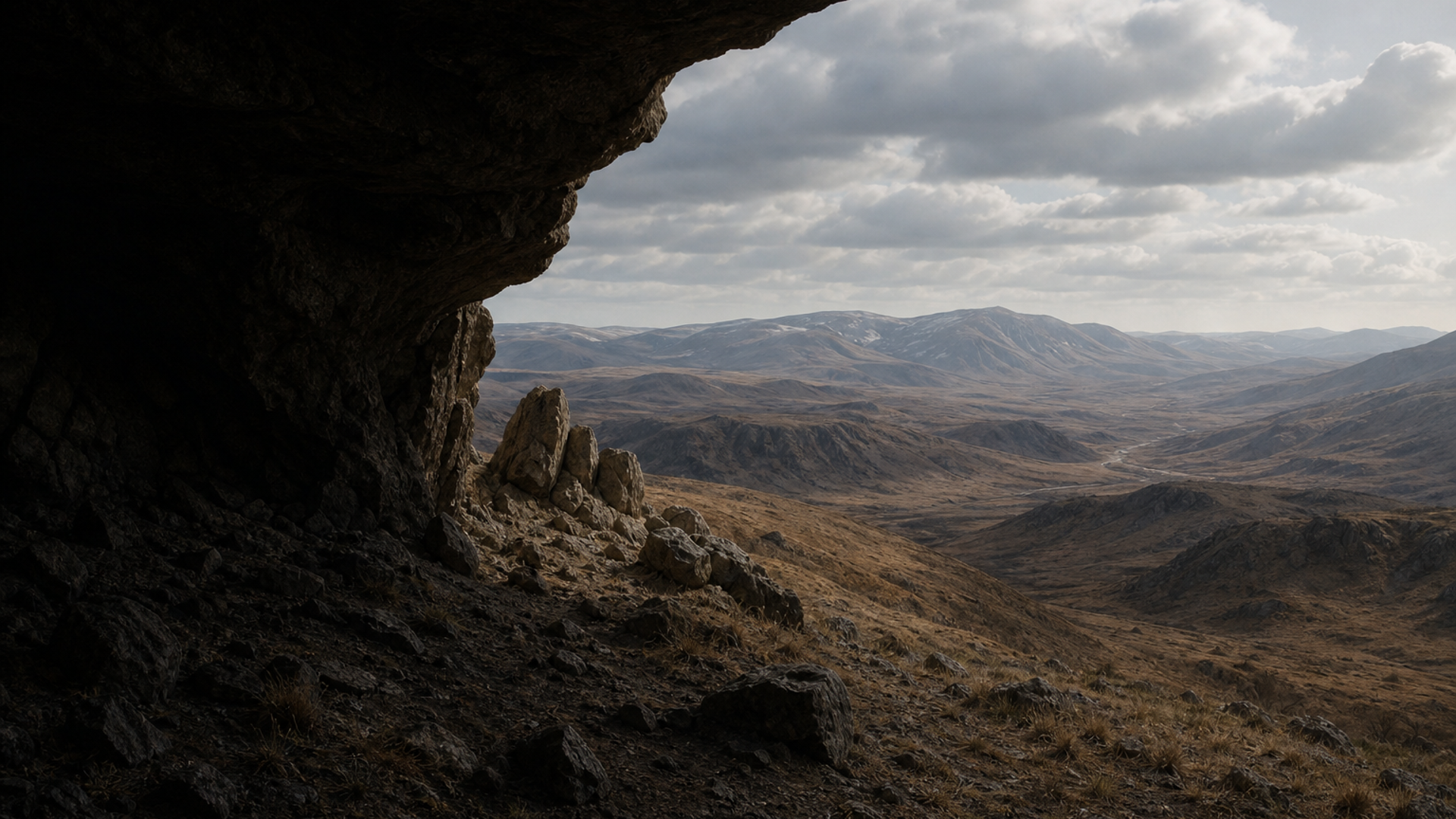
The Transbaikal Mesolithic occupation sits at the edge of Siberia's great forest‑steppe mosaic. Radiocarbon-calibrated material associated with three human remains from Zhindo and Pad' Tokui date to the early Holocene (approximately 6396–5726 BCE). Archaeological data indicates seasonal camps positioned to exploit riverine and forest resources after the Last Glacial Maximum.

Paleoenvironmental shifts — warming, advancing forests, and new wetlands — opened rich ecological niches. These landscapes encouraged mobile hunter–gatherer groups who practiced broad-spectrum foraging: river fish, large and small game, and wild plant foods. The material footprint is light but consistent with open-air, ephemeral settlements: hearth features, concentrations of stone artifacts, and faunal fragments have been reported in the Transbaikal region, suggesting repeated short-term occupations rather than long-lived villages.

Limited evidence suggests cultural continuity with broader Transbaikal Mesolithic traditions, yet the small sample size requires caution. Genetic data (see Genetics section) begins to fill population-level questions by indicating affinities with northern and eastern Eurasian lineages. Taken together, the archaeological and genetic signals portray a resilient, mobile people adapting to dynamic postglacial environments.

  • Early Holocene dates: ~6396–5726 BCE
  • Sites: Zhindo and Pad' Tokui (Zabaykalsky Krai)
  • Mobile, riverine hunter–gatherer lifeways
Chapitre IV

Daily Life & Society

Daily life in the Transbaikal Mesolithic likely unfolded in seasonal rhythms. Groups moved between riverine fishing spots, hunting grounds in forest clearings, and berry‑rich terraces. Archaeological data indicates small activity areas rather than dense, permanent settlements — hearths, butchery loci, and scatters of stone tools point to task‑specific sites.

Toolkits were probably focused on versatility: cutting and scraping implements for carcass processing, and small blades or microliths for composite tools and hunting. Organic technologies — baskets, hides, and wooden implements — are archaeologically ephemeral but would have been central to clothing, storage, and transport in this cold continental climate. Social organization was likely kin-based and flexible, with groups small enough to move efficiently yet connected by exchange networks across valleys and river corridors.

Artistic and ritual expressions are little represented in the current record from Zhindo and Pad' Tokui; this absence may reflect preservation bias rather than cultural lack. Seasonal aggregation events may have supported social ties, marriage exchange, and the transmission of knowledge across the Transbaikal landscape.

  • Seasonal, task‑oriented camps near rivers
  • Stone tool scatters and hearth features indicate short‑term occupations
Chapitre V

Genetic Profile

Three ancient individuals sampled from Zhindo and Pad' Tokui provide a narrow but valuable genetic window into Transbaikal Mesolithic people. Y‑chromosome analysis shows haplogroup N in two of the three males sampled. Haplogroup N today has a broad distribution across northern Eurasia and is often associated with populations in northeastern Europe and Siberia; its presence here suggests deep regional continuity of at least some paternal lineages.

Mitochondrial DNA from the three individuals falls into haplogroups C (two individuals) and F (one individual). Haplogroup C is widespread among ancient and modern populations of northern and eastern Eurasia and is commonly observed in hunter‑gatherer contexts; haplogroup F has a more southern/eastern distribution but is also present in Siberian populations. These maternal markers point to east‑Eurasian affinities and possible gene flow along north–south ecological corridors.

Crucially, sample count is very small (n=3). Any population‑level inference must be treated as provisional. The pattern of Y‑N combined with mtDNA C/F hints at demographic continuity with wider Siberian hunter‑gatherer ancestries and potential sex‑biased processes (e.g., localized patrilines), but further sampling is needed to test these hypotheses. Archaeogenomic comparisons with larger Mesolithic and later Neolithic datasets will clarify whether these signals represent local persistence, migration, or admixture.

  • Y‑DNA N in 2 of 3 samples suggests paternal continuity with northern Eurasia
  • mtDNA C (2) and F (1) indicate east‑Eurasian maternal affinities; conclusions are preliminary
Chapitre VI

Legacy & Modern Connections

The genetic and archaeological impressions left by Transbaikal Mesolithic people resonate into the present, though the signal is faint. Modern populations in Siberia and adjacent regions frequently carry Y‑haplogroup N and mtDNA C lineages, hinting at long‑term persistence of some ancestral lineages in the landscape. However, millennia of population movements — including Neolithic expansions, Bronze Age interactions, and more recent historical migrations — have layered additional genetic and cultural inputs.

Because the current dataset from Zhindo and Pad' Tokui is small, claims of direct ancestry to specific contemporary groups must be measured. What is clear is that the Transbaikal Mesolithic contributes to a mosaic of deep-time northern Eurasian ancestry. Continued excavation, more extensive ancient DNA sampling, and integrated paleoenvironmental study will be needed to trace how these early Holocene foragers link to later peoples and to map the demographic processes that shaped Siberia's genetic landscape.

  • Modern presence of Y‑N and mtDNA C in Siberia hints at continuity
  • Small sample size means links to present populations remain tentative
Propulsé par l'IA

Assistant IA

Posez des questions sur la culture Transbaikal Mesolithic Echoes

Assistant IA par DNAGENICS

Débloquer cette fonction
Posez des questions sur la culture Transbaikal Mesolithic Echoes. L'assistant IA peut expliquer les résultats génétiques, le contexte historique, les preuves archéologiques et les liens génétiques avec les populations actuelles, dans les limites de l'interprétation.
Exemple d'analyse IA

La culture Transbaikal Mesolithic Echoes représente un chapitre fascinant de l'histoire humaine…

L'analyse génétique met en évidence des similarités avec des populations antérieures et des signes d'adaptations propres. Les échantillons d'ADN ancien éclairent les schémas migratoires et les liens entre populations, avec des limites qui dépendent de l'étude et du contexte archéologique.

Il s'agit d'un aperçu de l'analyse IA. Accédez à l'assistant complet pour explorer :

  • Composition et similarité génétique
  • Schémas migratoires et origines
  • Vie quotidienne et pratiques culturelles
  • Contexte génétique actuel

Explorez d'autres cultures antiques

Découvrez les récits de civilisations issues du monde antique