Préparation du rapport

Chargement des informations et références disponibles

Connexion au corpus archéologique…

Collecte des archives antiques

Aller au contenu principal
Upper Yellow River Voices
Profil culturel

Upper Yellow River Voices

Dacaozi burials in Qinghai whisper of Iron Age lifeways and genetic threads

50 CE - 248 CE
Qinghai province, Pingan county (Dacaozi), China
Faites défiler pour commencer
Chapitre I

Le récit

Comprendre la culture Upper Yellow River Voices

Archaeological and ancient DNA data from four burials at Dacaozi (Pingan, Qinghai; 50–248 CE) offer a cautious glimpse into Iron Age Upper Yellow River communities, linking material culture to East Asian maternal lineages and a single Y haplogroup O.

Time Period

50 CE – 248 CE

Region

Qinghai province, Pingan county (Dacaozi), China

Common Y-DNA

O (present in sampled males)

Common mtDNA

F1g, G, D, Z3 (each observed)

Chapitre II

Chronologie

Moments clés de l'histoire de cette culture

50 CE

Earliest dated Dacaozi burial

Earliest radiocarbon-calibrated burial at Dacaozi, marking human activity in the site’s sequence.

200 CE

Han-era regional interactions

Heightened mobility and exchange along the Upper Yellow River during the Han-era context around Dacaozi.

248 CE

Latest dated Dacaozi burial

Most recent burial in the current sampled sequence, closing the sampled span (50–248 CE).

Chapitre III

Origins & Emergence

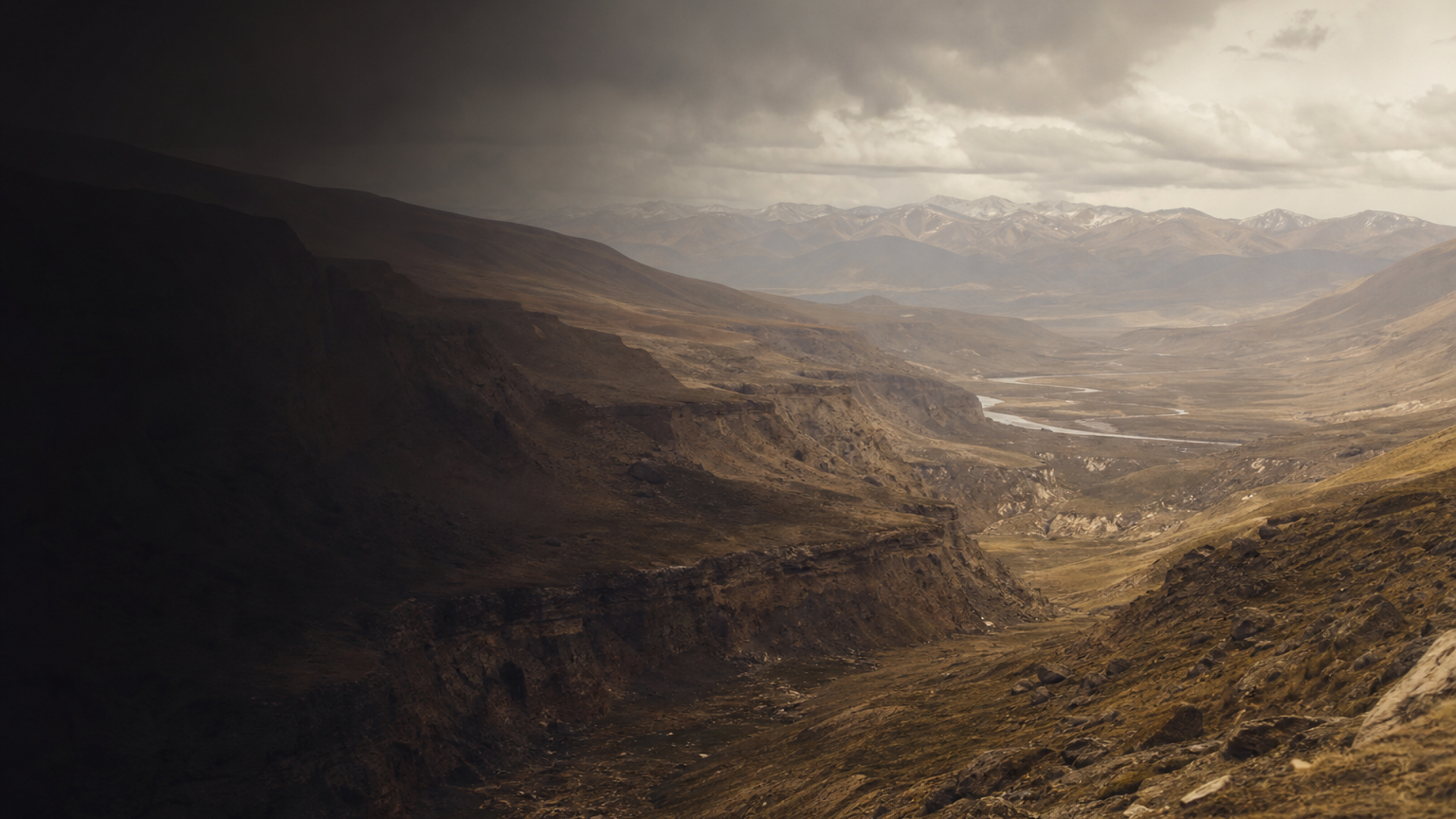
Perched on the upper reaches of the Yellow River, the Dacaozi assemblage (Pingan county, Qinghai) dates to 50–248 CE and sits within the broader Iron Age Upper Yellow River horizon. Archaeological data indicates communities here were woven into regional networks of exchange and innovation: iron tools and local ceramics appear alongside burial customs that reflect both local practice and wider continental influences.

Limited evidence suggests Dacaozi occupants exploited riverine and upland resources, adapting to highland climates and seasonal variability. The site’s mortuary contexts reveal clustered burials rather than large cemeteries, hinting at small, perhaps kin-based household groups. Material traces are fragmentary and excavation samples are small; interpretations must therefore remain cautious.

Contextually, these people lived during the later Han dynasty era in China, a time of shifting political landscapes and intensified mobility. Archaeological indicators point to a culture neither isolated nor monolithic — a patchwork of local tradition and external contacts along the Upper Yellow River.

  • Dacaozi site (Pingan, Qinghai): dated 50–248 CE
  • Fits within Iron Age Upper Yellow River archaeological horizon
  • Evidence of local adaptation with regional exchange
Chapitre IV

Daily Life & Society

The daily rhythm at Dacaozi can be imagined through bones and sherds: animal remains suggest mixed husbandry and hunting, while iron fragments and lithic debris indicate routine tool production and repair. Archaeological remains indicate households managing crops and herds adapted to plateau edges and river valleys, exploiting micro-environments where the Yellow River carved its path.

Burial treatments found at Dacaozi hint at social distinctions: grave goods vary in richness, suggesting differentiated status or role within small communities. Trade conduits along the river likely brought exotic materials and ideas, and travelers or seasonal pastoralists may have passed through.

Archaeological data indicates continuity with broader Upper Yellow River mortuary patterns but also localized practices unique to Qinghai’s upland setting. Because excavation samples are limited, reconstructions of social complexity remain provisional, inviting further fieldwork to illuminate household size, craft specialization, and gendered activities.

  • Mixed pastoralism and agriculture adapted to upland river margins
  • Mortuary variation suggests household differentiation
Chapitre V

Genetic Profile

Four ancient DNA samples from Dacaozi provide an intimate but preliminary genetic snapshot. Y-chromosome data show haplogroup O in the sampled male(s), a lineage widespread across East and Southeast Asia and commonly associated with many historical populations in China. Mitochondrial diversity in the four individuals includes F1g, G, D, and Z3 — maternal lineages that are broadly East Asian in distribution and appear in both northern and northeastern Asian contexts.

These markers together suggest regional affinity with other Upper Yellow River and Han-era populations, but do not imply direct ancestry without broader sampling and temporal coverage. With only four genomes, statistical power is low and patterns may reflect kinship or micro-regional variation rather than population-wide norms.

Archaeogenetic signal complements the archaeology by indicating maternal diversity paired with at least one common paternal lineage; such a contrast can reflect patrilocal residence, exogamy, or simply the vagaries of four samples. Future sampling from neighboring sites and stratified burials will be needed to test hypotheses about mobility, kinship, and demographic change across the Iron Age to Han transition.

  • Y haplogroup O observed — common in East Asia
  • mtDNA lineages F1g, G, D, Z3 suggest diverse maternal ancestries
Chapitre VI

Legacy & Modern Connections

Genetic threads from Dacaozi reach forward as cautious echoes rather than straight lines. Modern communities across the Yellow River basin and Qinghai plateau carry many of the haplogroups seen at Dacaozi, but continuity cannot be asserted from four individuals alone. Limited evidence suggests pockets of genetic and cultural persistence alongside waves of migration and admixture over two millennia.

For visitors and scholars alike, Dacaozi offers a cinematic moment: a handful of burials that, together with broader archaeological and genetic datasets, illuminate human resilience on the high plains. These traces invite more sampling and collaboration between archaeologists, geneticists, and local communities to map the long, complex story of the Upper Yellow River.

  • Modern regional populations share some haplogroups seen at Dacaozi
  • Conclusions are preliminary; further sampling needed
Propulsé par l'IA

Assistant IA

Posez des questions sur la culture Upper Yellow River Voices

Assistant IA par DNAGENICS

Débloquer cette fonction
Posez des questions sur la culture Upper Yellow River Voices. L'assistant IA peut expliquer les résultats génétiques, le contexte historique, les preuves archéologiques et les liens génétiques avec les populations actuelles, dans les limites de l'interprétation.

Exemple d'analyse IA

La culture Upper Yellow River Voices représente un chapitre fascinant de l'histoire humaine…

L'analyse génétique met en évidence des similarités avec des populations antérieures et des signes d'adaptations propres. Les échantillons d'ADN ancien éclairent les schémas migratoires et les liens entre populations, avec des limites qui dépendent de l'étude et du contexte archéologique.

Il s'agit d'un aperçu de l'analyse IA. Accédez à l'assistant complet pour explorer :

  • Composition et similarité génétique
  • Schémas migratoires et origines
  • Vie quotidienne et pratiques culturelles
  • Contexte génétique actuel

Explorez d'autres cultures antiques

Découvrez les récits de civilisations issues du monde antique