Préparation du rapport

Chargement des informations et références disponibles

Connexion au corpus archéologique…

Collecte des archives antiques

Aller au contenu principal
Voices from the Channel Isles
Profil culturel

Voices from the Channel Isles

Late Neolithic lives on Guernsey reconstructed from tombs, pottery and three ancient genomes

3088 CE - 2301 BCE
Channel Islands, Guernsey, United Kingdom
Faites défiler pour commencer
Chapitre I

Le récit

Comprendre la culture Voices from the Channel Isles

Archaeological evidence from Le Déhus and Vale, Guernsey (c. 3088–2301 BCE) illuminates Late Neolithic island life. Three ancient genomes—small but informative—suggest a mix of local male lineages I/I2 and maternal lineages K and J, pointing to farmer–hunter continuity and maritime connections.

Time Period

3088–2301 BCE (Late Neolithic)

Region

Channel Islands, Guernsey, United Kingdom

Common Y-DNA

I2, I

Common mtDNA

K, K1, J

Chapitre II

Chronologie

Moments clés de l'histoire de cette culture

2500 BCE

Use of Le Déhus chamber tombs

Le Déhus and nearby tombs in Vale were active focal points for burial and ritual activity during the Late Neolithic, anchoring community memory on Guernsey's landscape.

Chapitre III

Origins & Emergence

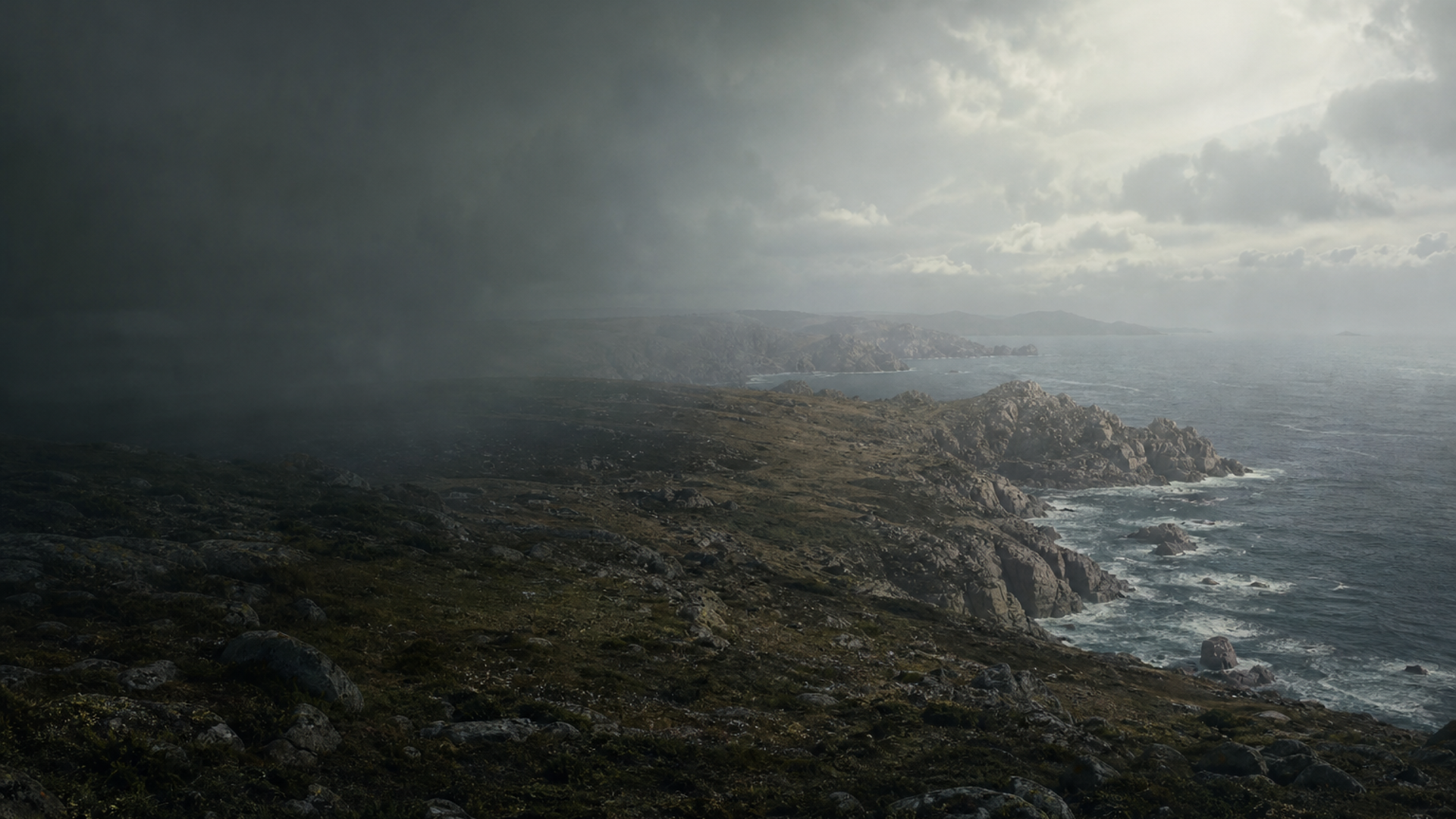
Rising from windswept headlands and carved into living rock, the Late Neolithic communities of the Channel Islands left traces in chambered tombs and scattered lithic debris. Archaeological data indicates activity at Le Déhus in Vale, Guernsey, and surrounding burial sites between roughly 3088 and 2301 BCE. These islanders occupied a maritime frontier where cultural currents from mainland Brittany and southern Britain met local traditions. Limited evidence suggests they continued long-established practices of collective burial and monument use, while engaging with wider networks of exchange for stone, pottery styles and perhaps ideas.

The island landscape shaped social life: constrained arable land encouraged a mixed economy of small-scale farming, animal husbandry and exploitation of rich coastal resources. Architectural remains are fragmentary; chambered tombs like Le Déhus are primarily mortuary statements that preserve ritual choices rather than everyday detail. Radiocarbon dates place these monuments firmly within the Late Neolithic, but the sparse material record means interpretations remain cautious. Archaeological stratigraphy combined with comparative analysis to nearby mainland sites provides the best window into how island communities emerged, adapted and participated in Atlantic Neolithic lifeways.

  • Primary sites: Le Déhus, Vale, Guernsey (Channel Islands)
  • Dates: c. 3088–2301 BCE, Late Neolithic context
  • Evidence indicates maritime links with Britain and Brittany
Chapitre IV

Daily Life & Society

Daily life on the Channel Islands in the Late Neolithic would have been intimate and seasonally attuned. Archaeological finds—fragmentary pottery, stone tools, and faunal remains—suggest households organized around mixed farming: cereals and domesticated animals supplemented by abundant marine foods. Coastal foraging and fishing likely buffered local diets against poor yields and allowed sustained occupation of these small islands.

Socially, monument construction implies coordinated community effort and shared ritual calendars; chambered tombs served as anchors for place-based memory. Craft activities were materially conservative: flint and coarse pottery styles indicate local production with stylistic influences arriving from the nearby mainland. Skeletal remains from burial contexts can show dietary stress, trauma or mobility, but the Channel Islands record remains thin. Archaeological data indicates a world of close kin networks, seasonal travel, and long-distance ties mediated by boats and exchange, creating a distinctive island adaptation within the broader Atlantic Neolithic tapestry.

  • Economy: mixed farming plus marine resources
  • Social organization centered on communal monuments and kin groups
Chapitre V

Genetic Profile

Three ancient genomes from Guernsey (Vale, Le Déhus) dated between 3088 and 2301 BCE provide a preliminary genetic window into Late Neolithic islanders. The Y-chromosome lineages observed—one I2 and one I—are often associated in western Europe with Mesolithic hunter-gatherer ancestry and, in some regions, with later local continuity rather than incoming Steppe-related male expansions. The mitochondrial haplogroups—K, K1 and J—are frequently found among early European farmers and suggest maternal ancestry tied to Neolithic agricultural populations.

Combining archaeology and genetics suggests an island population with a mix of ancestries: maternal signals pointing to Neolithic farmer ancestry, alongside paternal lineages that may reflect local persistence of hunter-derived lineages or complex admixture. Crucially, sample count is very small (n=3). With fewer than ten samples, any population-level inference is provisional: these genomes hint at patterns but cannot define diversity across the islands or through time. Future sampling is necessary to test whether observed haplogroups represent broader continuity, recent migrations, or kin-specific burial practices. For now, genetic and archaeological evidence together weave a cautious story of interaction—maritime connectivity bringing farmer maternal lineages into an island matrix shaped by local male lineages and island ecology.

  • Small sample size (n=3) — interpretations are preliminary
  • mtDNA K/J suggest Neolithic farmer maternal input; Y I/I2 point to local or Mesolithic-derived paternal ancestry
Chapitre VI

Legacy & Modern Connections

The Channel Islands’ Late Neolithic inhabitants contributed to the long palimpsest of Atlantic Britain. Genetic affinities seen in the limited samples reflect strands that later weave into regional populations, but continuity should not be assumed: later Bronze Age movements and historic events reshaped ancestry. Archaeological monuments like Le Déhus remain cultural touchstones, anchoring modern island identity in a deep past of seafaring and communal ritual.

In genetic terms, modern inhabitants of the British Isles carry complex mixtures from Mesolithic hunter-gatherers, Neolithic farmers and later migrations. The Guernsey genomes add island-specific data to this larger mosaic and highlight the need for more sampling to connect ancient islanders to present-day populations. Until then, links between these Late Neolithic individuals and modern groups are suggestive rather than definitive, offering evocative threads that invite further exploration rather than closed narratives.

  • Contributes island-specific data to the wider British Isles ancestry mosaic
  • Modern connections are tentative; more ancient sampling is needed
Propulsé par l'IA

Assistant IA

Posez des questions sur la culture Voices from the Channel Isles

Assistant IA par DNAGENICS

Débloquer cette fonction
Posez des questions sur la culture Voices from the Channel Isles. L'assistant IA peut expliquer les résultats génétiques, le contexte historique, les preuves archéologiques et les liens génétiques avec les populations actuelles, dans les limites de l'interprétation.
Exemple d'analyse IA

La culture Voices from the Channel Isles représente un chapitre fascinant de l'histoire humaine…

L'analyse génétique met en évidence des similarités avec des populations antérieures et des signes d'adaptations propres. Les échantillons d'ADN ancien éclairent les schémas migratoires et les liens entre populations, avec des limites qui dépendent de l'étude et du contexte archéologique.

Il s'agit d'un aperçu de l'analyse IA. Accédez à l'assistant complet pour explorer :

  • Composition et similarité génétique
  • Schémas migratoires et origines
  • Vie quotidienne et pratiques culturelles
  • Contexte génétique actuel

Explorez d'autres cultures antiques

Découvrez les récits de civilisations issues du monde antique