Préparation du rapport

Chargement des informations et références disponibles

Connexion au corpus archéologique…

Collecte des archives antiques

Aller au contenu principal
Voices of Shum Laka
Profil culturel

Voices of Shum Laka

Ancient human stories from Cameroon’s Stone Mound era, told by archaeology and DNA

6058 CE - 1055 BCE
Shum Laka, Cameroon
Faites défiler pour commencer
Chapitre I

Le récit

Comprendre la culture Voices of Shum Laka

Archaeological and genetic data from Shum Laka (6058–1055 BCE) reveal a small but powerful window onto West-Central African lifeways. Four ancient genomes show deep African paternal lineages (A00, B, B2b) and mtDNA L — preliminary but evocative evidence of long-standing regional continuity.

Time Period

6058–1055 BCE

Region

Shum Laka, Cameroon

Common Y-DNA

A00, B, B2b

Common mtDNA

L (all samples)

Chapitre II

Chronologie

Moments clés de l'histoire de cette culture

6058 BCE

Earliest documented occupation at Shum Laka

Stratigraphic and radiocarbon evidence indicate human occupation around 6058 BCE, marking the start of the site's documented sequence.

Chapitre III

Origins & Emergence

A shelter at the edge of time

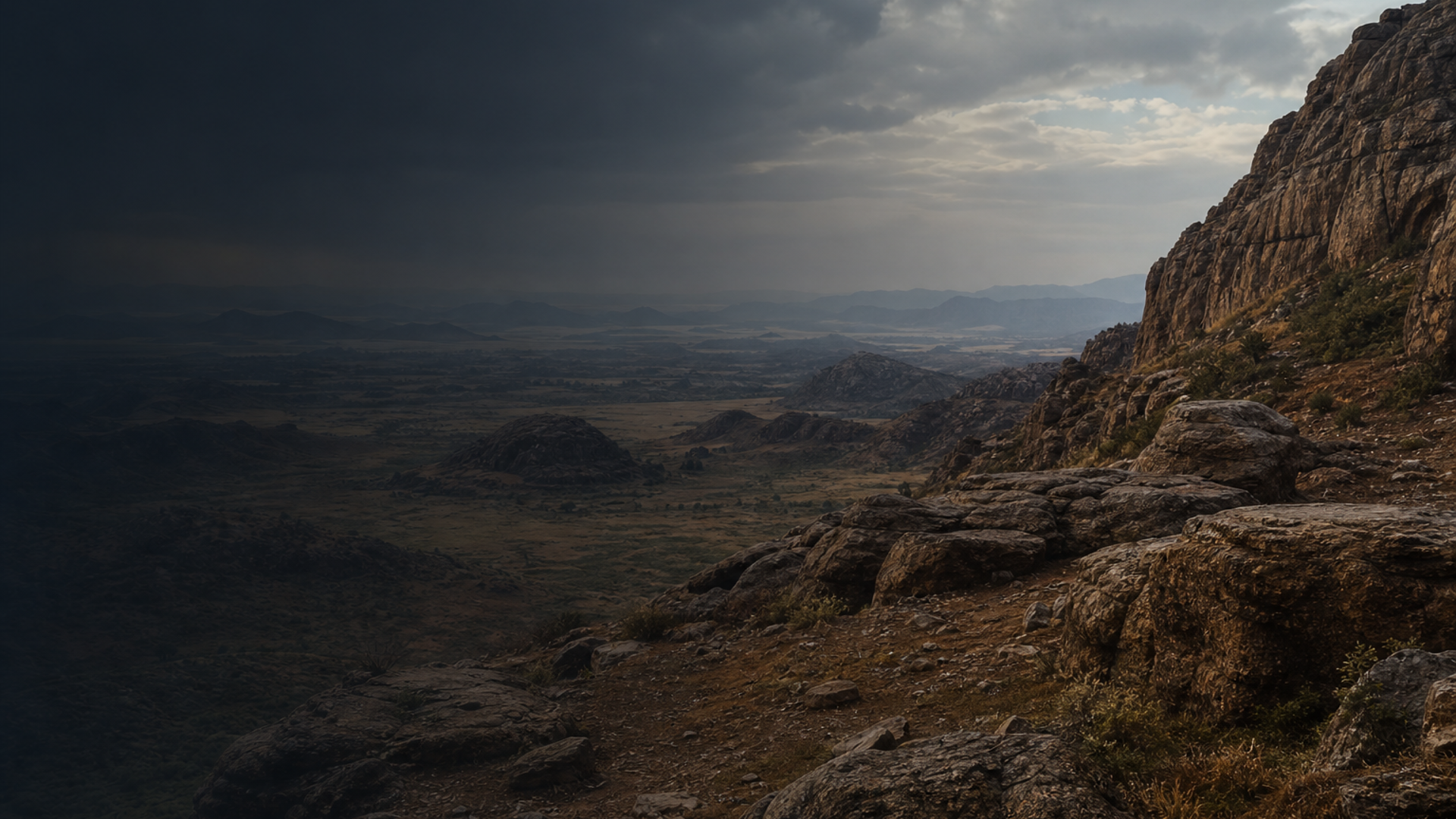
The Shum Laka rock shelter in northwest Cameroon preserves human activity spanning much of the mid- to late Holocene. Radiocarbon and stratigraphic evidence place occupation layers between roughly 6058 BCE and 1055 BCE, a period of climatic fluctuation and ecological transformation across West-Central Africa. Archaeological data indicate episodic use of the shelter: hearths, stone tool debris, and food remains suggest repeated seasons of habitation rather than continuous dense settlement.

Stone Mound Architecture in Cameroon — a related era name tied to earthworks and diagnostic constructions in the region — frames some of these occupations, though the direct architectural association at Shum Laka is subtle. Limited evidence suggests small mobile groups exploiting gallery forests and riverine resources, adapting hunting and foraging strategies to changing landscapes.

Cinematic image: imagine low embers painting rock faces as foragers repaired tools and shared stories. From a scientific vantage, these layers capture a local trajectory of human life that will only be fully understood when more sites and samples are integrated.

  • Long Holocene span: 6058–1055 BCE
  • Occupation at Shum Laka documented in stratified deposits
  • Ties to broader Stone Mound Architecture traditions are suggestive, not conclusive
  • Long Holocene occupation at Shum Laka
  • Evidence for seasonal/episodic habitation
  • Possible links to Stone Mound Architecture traditions
Chapitre IV

Daily Life & Society

Lives in a rock shelter

Archaeological traces at Shum Laka paint scenes of daily resilience. Hearths and food residues imply diets built from wild fauna and flora — fish and small mammals near watercourses, tubers and fruits from nearby forests — combined with mastery of stone tool production. The shelter setting suggests groups used natural refuges for short-term camps, social exchange, and perhaps ritual acts tied to place.

Material culture appears conservative and functional: lithic assemblages emphasize cutting and scraping, consistent with hunting, hide processing, and plant preparation. There is limited evidence for permanent architecture at the site itself; broader Stone Mound Architecture in the region indicates diverse organizational strategies across communities, including mound construction and localized earthworks.

Social scale was likely small-band, with strong local knowledge of seasonal resources and mobility routes. The archaeological record at Shum Laka alone cannot reveal full social complexity, and many interpretations remain tentative until more sites and comparative data are analyzed.

  • Foraging-focused economy with rich forest and river resources
  • Mobile bands using rock shelters for repeated occupation
  • Foraging and hunting economy
  • Use of rock shelter for episodic camps
Chapitre V

Genetic Profile

Deep paternal lines and maternal continuity — cautious signals from four genomes

Ancient DNA from four individuals at Shum Laka provides rare genetic glimpses into this time and place. All four carry mtDNA haplogroups in the broad L lineage, a maternal clade widespread across sub-Saharan Africa today. On the paternal side, reported Y-chromosome lineages include deeply divergent African haplogroups: A00 (notable for its extreme deep-rooting position in the human Y-tree), B, and B2b. These lineages point to long-standing, deeply rooted population structure in West-Central Africa.

Important caveats: the sample size is very small (n=4). With fewer than ten individuals, conclusions about population replacement, continuity, or migration must remain preliminary. Limited evidence suggests a degree of regional continuity in maternal lineages and preservation of archaic paternal diversity, but these patterns require corroboration from additional sites and larger sample sets.

In genetic terms, the presence of A00 and B-class haplogroups underscores how paternal diversity in Africa predates many later demographic events. The mtDNA L results align with broad African maternal continuity but cannot by themselves resolve local demographic processes. Combined with archaeology, these genomes illuminate a mosaic: long-term local ancestries interacting with mobility, resource change, and cultural innovation through the Holocene.

  • Deep-rooting Y-haplogroups (A00, B, B2b) present
  • Universal mtDNA L across the four samples (suggests maternal continuity)
  • Presence of deep African Y lineages (A00, B, B2b)
  • mtDNA L in all four samples; sample size limits firm conclusions
Chapitre VI

Legacy & Modern Connections

Threads into the present

The genetic echoes from Shum Laka contribute to a larger narrative about West-Central African population history. Deep paternal lineages like A00 preserve memories of population splits that extend far back in time, while mtDNA L ties these ancient individuals into a wide maternal ancestry that spans the continent. Archaeological continuity in the region suggests cultural resilience, though precise links to modern ethnic groups in Cameroon remain uncertain.

These findings underscore the importance of integrating archaeology and aDNA: material traces tell us about lifeways and landscape use, while genomes reveal ancestry and deep population structure. Given the very small sample set, this legacy should be seen as an invitation — to expand sampling, to compare multiple Cameroonian sites, and to build a finer-grained picture of how ancient lineages contributed to the genetic mosaic of modern West-Central Africa.

  • Ancient genomes add depth to understanding of regional ancestry
  • Strong caution: modern connections remain tentative pending larger datasets
  • Adds depth to regional ancestry narratives
  • Modern links tentative; more data needed
Propulsé par l'IA

Assistant IA

Posez des questions sur la culture Voices of Shum Laka

Assistant IA par DNAGENICS

Débloquer cette fonction
Posez des questions sur la culture Voices of Shum Laka. L'assistant IA peut expliquer les résultats génétiques, le contexte historique, les preuves archéologiques et les liens génétiques avec les populations actuelles, dans les limites de l'interprétation.
Exemple d'analyse IA

La culture Voices of Shum Laka représente un chapitre fascinant de l'histoire humaine…

L'analyse génétique met en évidence des similarités avec des populations antérieures et des signes d'adaptations propres. Les échantillons d'ADN ancien éclairent les schémas migratoires et les liens entre populations, avec des limites qui dépendent de l'étude et du contexte archéologique.

Il s'agit d'un aperçu de l'analyse IA. Accédez à l'assistant complet pour explorer :

  • Composition et similarité génétique
  • Schémas migratoires et origines
  • Vie quotidienne et pratiques culturelles
  • Contexte génétique actuel

Explorez d'autres cultures antiques

Découvrez les récits de civilisations issues du monde antique