Préparation du rapport

Chargement des informations et références disponibles

Connexion au corpus archéologique…

Collecte des archives antiques

Aller au contenu principal
Wind, Iron, and Shore: Sweden_IA Lives
Profil culturel

Wind, Iron, and Shore: Sweden_IA Lives

Three ancient genomes from Öland and Oxie evoke coastal Iron Age Sweden, 200–639 CE

200 CE - 639 CE
Sweden (Öland; Oxie 7)
Faites défiler pour commencer
Chapitre I

Le récit

Comprendre la culture Wind, Iron, and Shore: Sweden_IA Lives

Archaeological and genetic traces from Öland and Oxie (200–639 CE) suggest mobile coastal communities in Iron Age Sweden. With only three samples, conclusions are preliminary, but Y haplogroups R and N and mtDNA H, W1, H1s point to a mix of local European and northern Eurasian ancestries.

Time Period

200–639 CE

Region

Sweden (Öland; Oxie 7)

Common Y-DNA

R (1), N (1)

Common mtDNA

H, W1, H1s

Chapitre II

Chronologie

Moments clés de l'histoire de cette culture

200 CE

Earliest Sweden_IA horizon

Around 200 CE archaeological horizons mark Iron Age communities in southern Sweden (e.g., Öland, Oxie), with coastal settlement, trade, and evolving material culture.

Chapitre III

Origins & Emergence

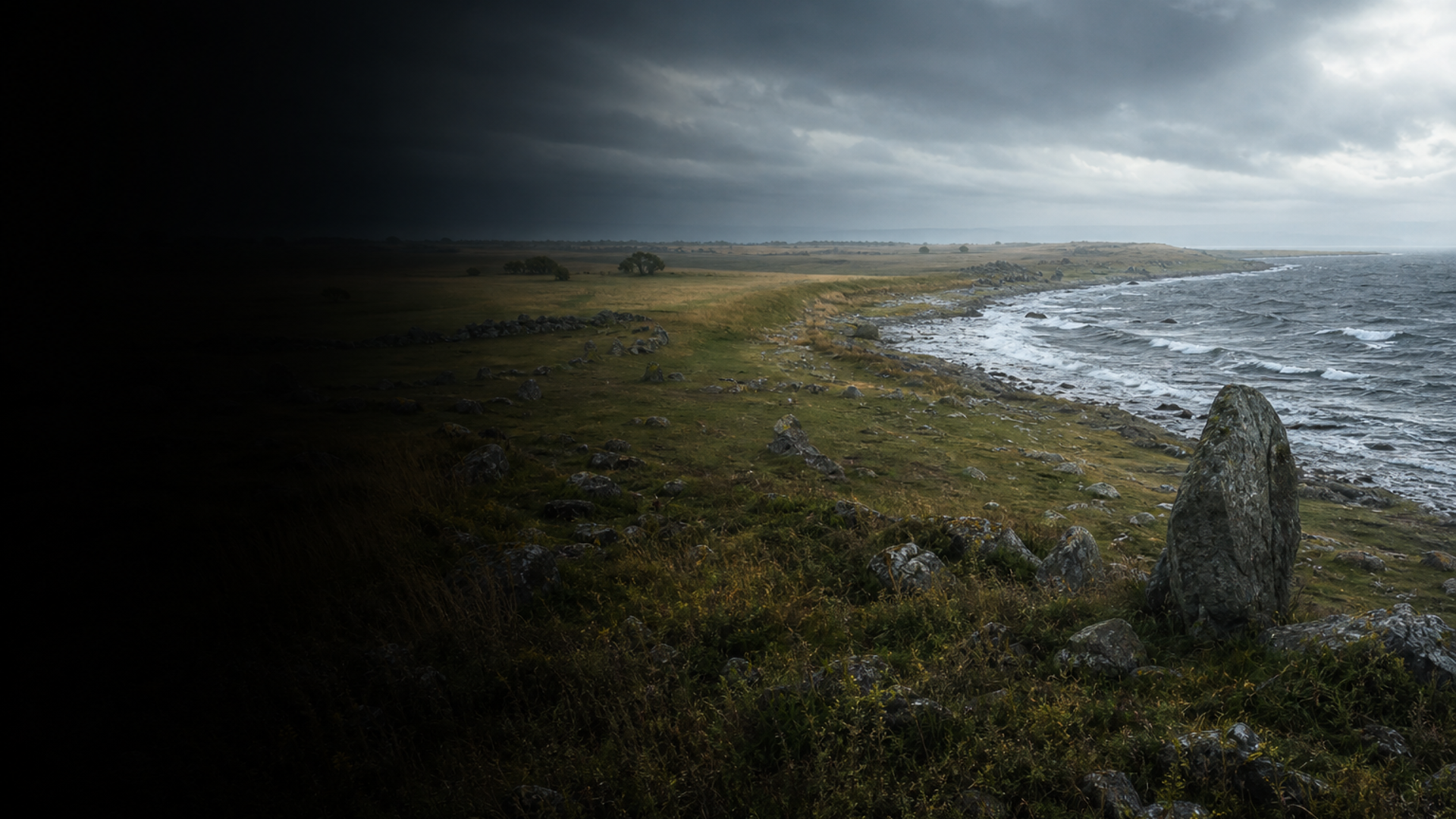
Along the exposed coasts and shallow soundways of southern Sweden, the centuries between 200 and 639 CE form a cinematic chapter of Iron Age life. Archaeological data indicates regional communities anchored to islands such as Öland and to fertile southern districts (Oxie, present-day Skåne). Settlements spread across reed-fringed bays and rocky promontories; longhouses and field systems left subtle traces in soil and stone.

Material culture shows continuity with late Bronze Age traditions while also absorbing new forms — metalworking styles, weapon types, and personal ornaments — that mark the slowly evolving social landscapes of northern Europe. Trade and seasonal seafaring linked these shores to the Baltic and North Sea networks: amber, metalwork, and imported goods appear in coastal graves and hoards. Limited evidence suggests pockets of interaction with continental Germanic groups and with communities farther east, but regional variation was high.

Genetic samples from Öland and Oxie 7 fall within this broader Iron Age tapestry. With just three genomes, interpretations remain tentative; however, the combined archaeological and genetic picture hints at communities shaped by local continuity, maritime exchange, and episodic influxes of people or ideas. Archaeological contexts at the sampled sites provide essential anchors — burials, grave goods, and settlement features — that allow genetic signals to be placed in a lived landscape of wind-swept shores and cultivated fields.

  • Communities anchored on Öland and coastal Skåne (Oxie), 200–639 CE
  • Material culture shows continuity and new external influences
  • Small genetic sample size; archaeological context is key
Chapitre IV

Daily Life & Society

Daily existence in Sweden_IA would have been shaped by the rhythms of sea and season. Archaeological remains — house foundations, storage pits, hearths, animal bone assemblages, and occasional textile fragments — indicate mixed farming, dairying, and fishing as economic mainstays. Coastal sites like Öland exploited rich marine resources and served as waypoints for small-scale coastal trade.

Social life likely centered on extended households and kin groups. Burial practices in the Iron Age of southern Sweden varied between cremation and inhumation and sometimes included grave goods that signal social differentiation: brooches, weapons, and dress accessories that reflect identity and connections. Oxie 7, located in southern Scania (Skåne), lies in a landscape known for fertile soils and early communication routes; artifacts from that region suggest connections across the Baltic and into continental Europe.

Craft specialization — smithing, woodworking, and textile production — would have coexisted with itinerant tradespeople and seasonal mobility. Archaeological evidence indicates long-term use of certain coastal promontories and field systems, suggesting stability punctuated by episodic contacts with wider networks. However, our view of everyday life is partial: preservation biases and the very small genetic sample mean many social details remain invisible.

  • Mixed farming, fishing, and maritime exchange defined livelihoods
  • Burial variability and grave goods indicate social differentiation
Chapitre V

Genetic Profile

The Sweden_IA genetic dataset currently comprises three ancient individuals from Öland and Oxie 7 dated between 200 and 639 CE. Archaeogenetic results show Y-DNA haplogroups R (one individual) and N (one individual), and mitochondrial haplogroups H, W1, and H1s across the sampled individuals. These markers provide preliminary glimpses into ancestry and mobility in Iron Age Sweden but should be treated cautiously given the low sample count.

Y haplogroup R is widespread across Europe and, in the Iron Age context, can signal lineages common in many continental and northern populations; Y haplogroup N has stronger associations with northern Eurasian and Uralic-linked populations and appears in later and contemporary populations of northern Fennoscandia and the Baltic. Mitochondrial haplogroups H, W1, and H1s are mitochondrial lineages found broadly in Europe; their presence here is consistent with continuity of maternal ancestry in the region.

Combined with archaeology, these genetic signals suggest a population mosaic: predominantly European maternal lineages alongside paternal lineages that include both widespread European R-types and a northern-associated N signal. This pattern could reflect localized continuity with episodes of male-mediated or female-mediated mobility, trade-related movement, or small-scale gene flow from the east. Yet with only three genomes, any inference about population structure, sex-biased migration, or demographic shifts is preliminary. Broader comparisons with larger Iron Age and Viking Age datasets are necessary to place Sweden_IA within the full genetic geography of Scandinavia.

  • Y-DNA: R and N present; mtDNA: H, W1, H1s across three samples
  • Limited (n=3) sample size—results are preliminary and require more data
Chapitre VI

Legacy & Modern Connections

The echoes of Sweden_IA reach into the deep weave of Scandinavian history. Archaeologically, the period forms part of the long trajectory that leads into the Viking Age: coastal trade routes, metalworking traditions, and household economies evolve across centuries. Genetically, mitochondrial lineages such as H remain common in modern northern European populations, suggesting continuity of maternal lines in parts of Sweden.

The presence of Y haplogroup N among these few samples hints at connections that prefigure later northern genetic signatures, though the evidence is too sparse to claim direct continuity with specific modern groups. Likewise, Y haplogroup R reflects broader European paternal ancestries that persist in the region. Together, the archaeological and genetic traces of Sweden_IA invite a cinematic portrait of peoples shaped by sea, weather, and exchange: not isolated tribes, but communities woven into a Baltic world whose threads extend into later medieval and modern Scandinavia. Future ancient DNA sampling and careful archaeological study will refine and possibly transform this emerging story.

  • Maternal haplogroups (H types) suggest some continuity with modern northern Europeans
  • Y haplogroup N signals northern Eurasian links, but evidence is preliminary
Propulsé par l'IA

Assistant IA

Posez des questions sur la culture Wind, Iron, and Shore: Sweden_IA Lives

Assistant IA par DNAGENICS

Débloquer cette fonction
Posez des questions sur la culture Wind, Iron, and Shore: Sweden_IA Lives. L'assistant IA peut expliquer les résultats génétiques, le contexte historique, les preuves archéologiques et les liens génétiques avec les populations actuelles, dans les limites de l'interprétation.
Exemple d'analyse IA

La culture Wind, Iron, and Shore: Sweden_IA Lives représente un chapitre fascinant de l'histoire humaine…

L'analyse génétique met en évidence des similarités avec des populations antérieures et des signes d'adaptations propres. Les échantillons d'ADN ancien éclairent les schémas migratoires et les liens entre populations, avec des limites qui dépendent de l'étude et du contexte archéologique.

Il s'agit d'un aperçu de l'analyse IA. Accédez à l'assistant complet pour explorer :

  • Composition et similarité génétique
  • Schémas migratoires et origines
  • Vie quotidienne et pratiques culturelles
  • Contexte génétique actuel

Explorez d'autres cultures antiques

Découvrez les récits de civilisations issues du monde antique