Préparation du rapport

Chargement des informations et références disponibles

Connexion au corpus archéologique…

Collecte des archives antiques

Aller au contenu principal
Wusun (Late Saka) — Tian Shan Profiles
Profil culturel

Wusun (Late Saka) — Tian Shan Profiles

Three Late Saka–era individuals from Turgen-2 reveal maternal links across the Central Steppe.

344 BCE - 5 CE
Tian Shan, Central Steppe (Kazakhstan)
Faites défiler pour commencer
Chapitre I

Le récit

Comprendre la culture Wusun (Late Saka) — Tian Shan Profiles

Three individuals from Turgen-2 (Tian Shan, Kazakhstan), dated 344 BCE–5 CE, connect Late Saka archaeology with mtDNA lineages C and U. Limited samples hint at East–West maternal mixture typical of Iron Age steppe populations; conclusions are preliminary.

Time Period

344 BCE – 5 CE

Region

Tian Shan, Central Steppe (Kazakhstan)

Common Y-DNA

Undetermined (limited or no consistent Y-haplogroup in 3 samples)

Common mtDNA

C (2), U (1)

Chapitre II

Chronologie

Moments clés de l'histoire de cette culture

344 BCE

Earliest radiocarbon date from Turgen-2

One Turgen-2 individual is radiocarbon-dated to 344 BCE, anchoring these remains in the Late Saka period of the Central Steppe.

Chapitre III

Origins & Emergence

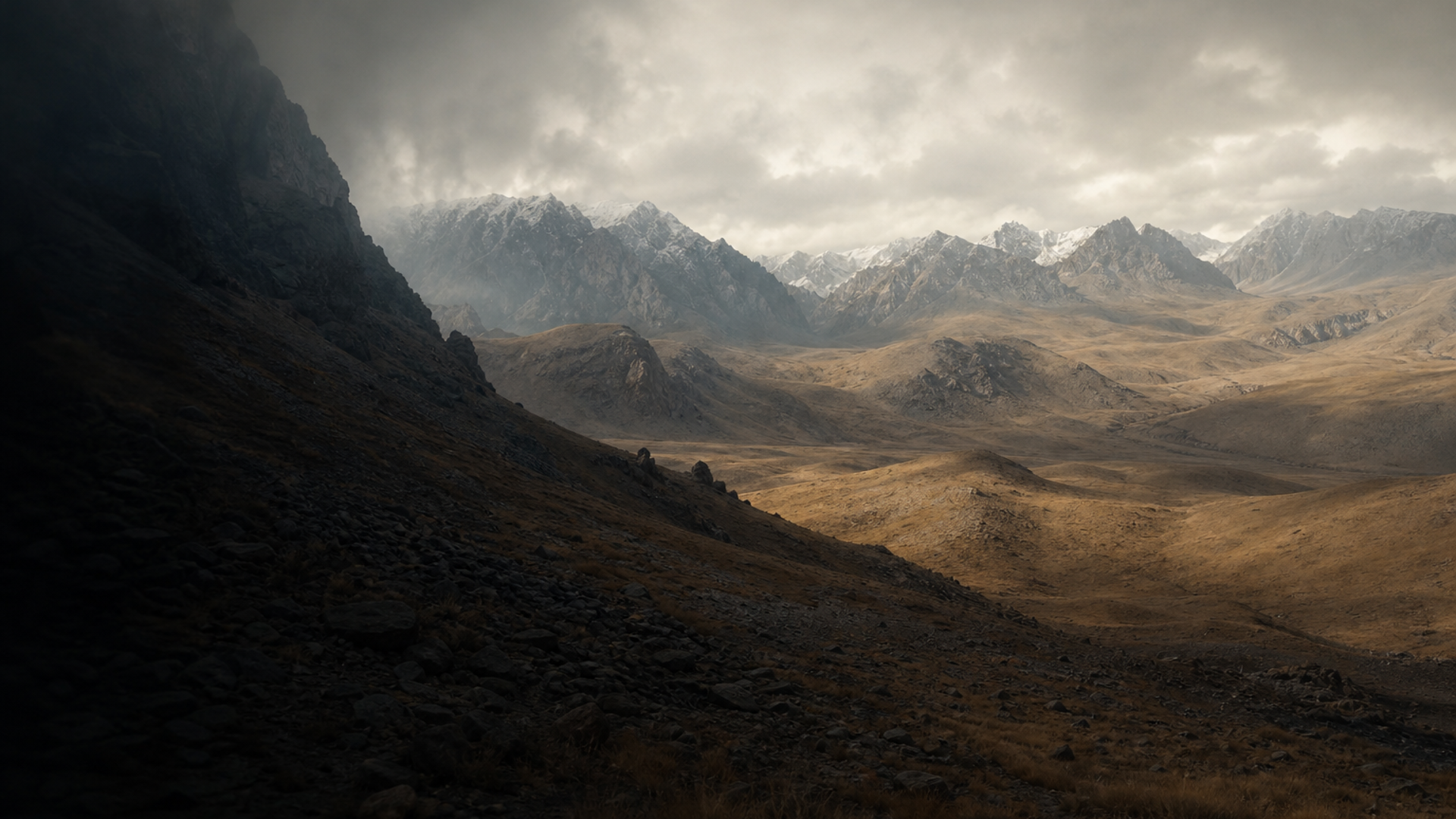
High ridgelines and endless steppe light frame the horizon where the Late Saka horizon unfolds. The three human remains from Turgen-2 (Almaty Region, Enbekshikazakh District) are radiocarbon-dated to a window from 344 BCE to 5 CE, situating them within the turbulent Iron Age centuries when nomadic polities and mobile pastoral economies reshaped the Central Steppe.

Archaeological data indicates that Late Saka cultural expressions across Kazakhstan shared stylistic affinities with wider Scythian-Saka traditions — metalworking, mounted pastoralism, and funerary monuments are recurrent motifs — but local variation was substantial. At Turgen-2, context and material associations are consistent with regional Late Saka patterns, though the small assemblage limits broader generalizations. Limited evidence suggests interactions with both eastern and western steppe groups through trade, marriage, and seasonal mobility.

Genetic and archaeological signals together portray a landscape of contact and admixture rather than isolated origins: these individuals belong to a living tapestry of mobile populations whose cultural labels ("Wusun," "Saka") reflect external observers and archaeologists as much as local identities. Because only three samples are available, interpretations about population emergence remain cautious and provisional.

  • Dated 344 BCE–5 CE, placing individuals in the Late Saka horizon
  • Turgen-2 lies in the Tian Shan foothills of the Central Steppe
  • Evidence points to mobility and regional interactions; conclusions are tentative
Chapitre IV

Daily Life & Society

The lived world of Late Saka communities in the Tian Shan foothills was shaped by seasonality and mobility. Archaeological analogies from across the Central Steppe suggest economies dominated by pastoral herding (horses, sheep, goats), seasonal encampments, and the exchange of metalwork, textiles, and animal products along river corridors and mountain passes. At sites like Turgen-2, funerary contexts offer our clearest windows into social practice: burial arrangement, skeletal pathologies, and associated objects can indicate status differences, mobility-related wear on bones, and dietary tendencies.

Material culture commonly linked to Late Saka groups includes worked bronze and iron, ornamented horse harnesses, and portable wealth used in mobile lifeways. However, it is important to note that specific grave goods and domestic assemblages from Turgen-2 are documented in limited numbers; archaeological interpretations therefore emphasize plausible models rather than firm reconstructions. Osteological data — when preserved — can reveal workloads, childhood stress, and episodes of trauma consistent with a society where mounted pastoralism and intergroup encounters were part of everyday life.

In short, the Turgen-2 individuals likely lived within a matrix of seasonal movement, kin-based herding economies, and long-distance contacts, but the small sample constrains detailed social reconstructions.

  • Pastoral, mobile lifeways likely dominated daily economy
  • Funerary remains provide main insight into social differences; sample size is small
Chapitre V

Genetic Profile

Ancient DNA from Turgen-2 yields a primarily maternal signal: two individuals carry mtDNA haplogroup C and one carries haplogroup U. Haplogroup C is commonly associated with East Eurasian maternal lineages and is widespread across northern and eastern Asia, while haplogroup U represents a deep West Eurasian maternal lineage found across Europe and parts of western Asia. This mix of C and U within three individuals is consistent with broader Iron Age steppe patterns that show increasing east–west admixture across the first millennium BCE.

Crucially, no consistent Y-chromosome pattern is reported for these three samples, so paternal lineages remain undetermined. The small sample count (n = 3) requires that any interpretation remain highly tentative: population-level structure cannot be inferred from so few individuals. Nevertheless, the observed mtDNA diversity suggests that maternal ancestry in this part of the Tian Shan included both eastern and western elements, reflecting gene flow along steppe corridors, intermarriage, and mobility.

When integrated with archaeology, these genetic signals reinforce a portrait of the Late Saka-era Central Steppe as a meeting zone where cultural styles and biological ancestries intersected. Future sampling — especially of Y-DNA and larger sample sets — is necessary to test and refine these preliminary patterns.

  • mtDNA: C (2 individuals) and U (1 individual), indicating East–West maternal diversity
  • Y-DNA: undetermined in this small sample; broader conclusions are preliminary
Chapitre VI

Legacy & Modern Connections

The human threads from Turgen-2 reach forward into a complex legacy: modern populations across Kazakhstan and neighboring regions carry admixture signals that trace back to multiple steppe episodes, including Iron Age movements. The presence of both East Eurasian (C) and West Eurasian (U) maternal lineages in these Late Saka-era individuals is consonant with later genetic landscapes in Central Asia characterized by layered ancestry components.

Archaeologically, the Late Saka contributes to regional memories of mounted pastoralism and transregional exchange — cultural patterns that helped shape later Silk Road dynamics. Genetically, while three samples cannot define continuity, they underscore that the Tian Shan has long been a conduit for people and genes. Ongoing, larger-scale ancient DNA sampling will be needed to clarify how Turgen-2 individuals relate to both earlier Bronze Age populations and to the gene pools of historic and modern Central Asian communities.

In short: the Turgen-2 profiles are evocative signposts pointing toward deep, entangled histories of movement, contact, and change, but the story remains incomplete without broader datasets.

  • mtDNA diversity reflects long-term East–West interactions in the steppe
  • Larger ancient DNA studies are required to assess continuity with modern populations
Propulsé par l'IA

Assistant IA

Posez des questions sur la culture Wusun (Late Saka) — Tian Shan Profiles

Assistant IA par DNAGENICS

Débloquer cette fonction
Posez des questions sur la culture Wusun (Late Saka) — Tian Shan Profiles. L'assistant IA peut expliquer les résultats génétiques, le contexte historique, les preuves archéologiques et les liens génétiques avec les populations actuelles, dans les limites de l'interprétation.
Exemple d'analyse IA

La culture Wusun (Late Saka) — Tian Shan Profiles représente un chapitre fascinant de l'histoire humaine…

L'analyse génétique met en évidence des similarités avec des populations antérieures et des signes d'adaptations propres. Les échantillons d'ADN ancien éclairent les schémas migratoires et les liens entre populations, avec des limites qui dépendent de l'étude et du contexte archéologique.

Il s'agit d'un aperçu de l'analyse IA. Accédez à l'assistant complet pour explorer :

  • Composition et similarité génétique
  • Schémas migratoires et origines
  • Vie quotidienne et pratiques culturelles
  • Contexte génétique actuel

Explorez d'autres cultures antiques

Découvrez les récits de civilisations issues du monde antique