Préparation du rapport

Chargement des informations et références disponibles

Connexion au corpus archéologique…

Collecte des archives antiques

Aller au contenu principal
Zemunica Cardial Neolithic
Profil culturel

Zemunica Cardial Neolithic

Early Cardial-wave farmers on the Dalmatian coast, known from cave deposits and three ancient genomes

6007 CE - 5747 BCE
Croatia (Zemunica Cave)
Faites défiler pour commencer
Chapitre I

Le récit

Comprendre la culture Zemunica Cardial Neolithic

A brief profile of three Cardial Neolithic individuals from Zemunica Cave, Croatia (6007–5747 BCE). Archaeology and ancient DNA hint at early Mediterranean farmer presence with diverse paternal lineages, but small sample size makes conclusions tentative.

Time Period

6007–5747 BCE

Region

Croatia (Zemunica Cave)

Common Y-DNA

C (1), E (1)

Common mtDNA

H1 (1), K (1), N (1)

Chapitre II

Chronologie

Moments clés de l'histoire de cette culture

6000 BCE

Zemunica Cave occupation (radiocarbon dated)

Radiocarbon dates place human activity and burial deposits at Zemunica between 6007 and 5747 BCE, within the Cardial Neolithic horizon.

Chapitre III

Origins & Emergence

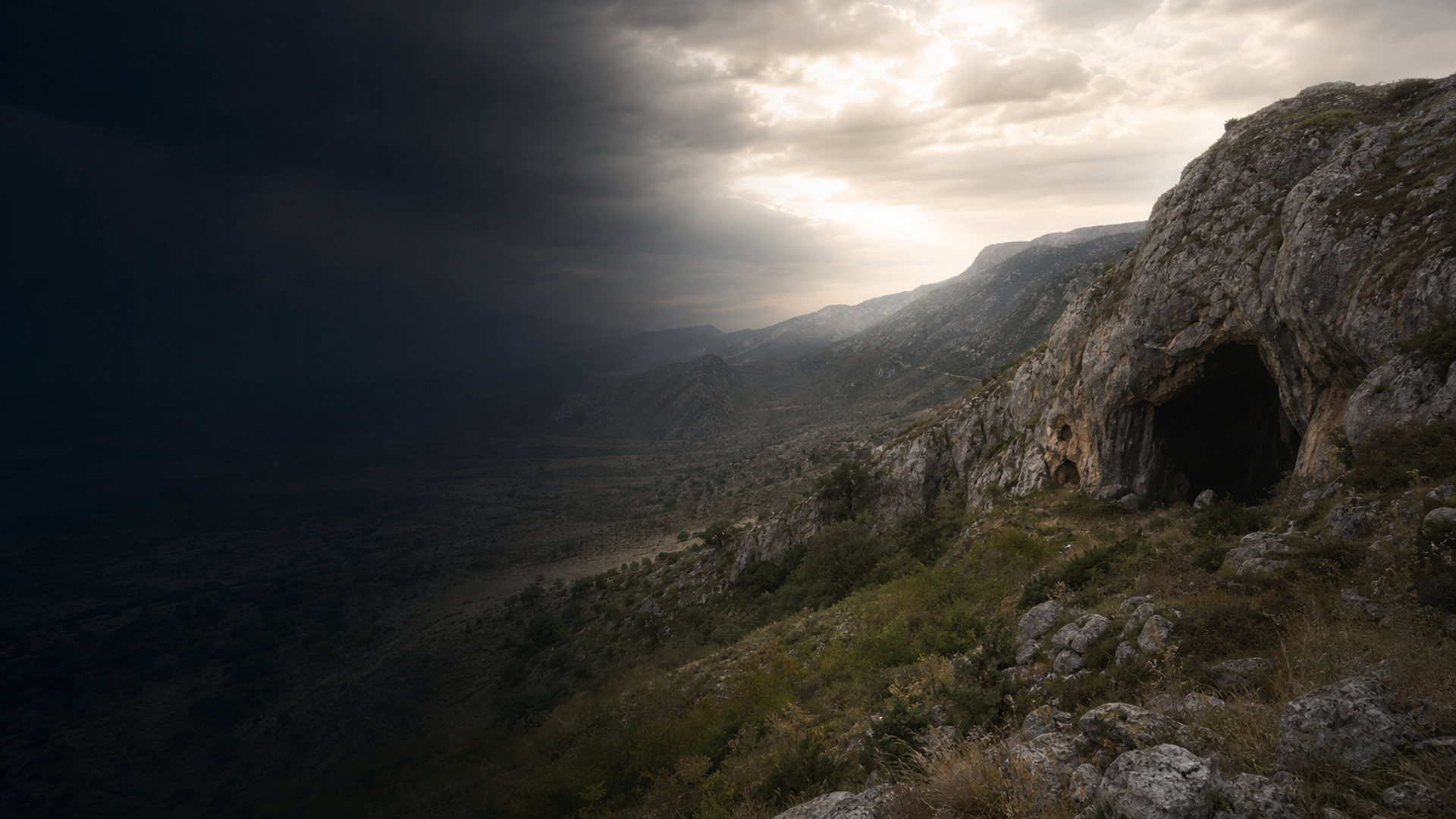
The Cardial phenomenon swept the Mediterranean littoral in the 7th–5th millennia BCE, recognized archaeologically by thin-walled pottery impressed with Cardium (cockle) shell edges. Zemunica Cave, on the Dalmatian coast of present-day Croatia, contains deposits dated between 6007 and 5747 BCE that capture a moment in this maritime mosaic. Archaeological data indicates people here practiced early farming and brought material culture linked to the broader Cardial horizon that stretches from Iberia to the Adriatic.

Radiocarbon-dated contexts at Zemunica place these individuals among some of the earliest Cardial-associated occupants in the eastern Adriatic. Limited evidence suggests occupation of coastal caves and near-shore settlements as farmers adapted to a mixed economy of crops, domesticated animals, and marine resources. The regional pattern supports a model of rapid maritime dispersal of farming groups from western Anatolia and the Aegean along Mediterranean coasts; however, local variability is high.

Because only three genomes are available from Zemunica, interpretations of population movements and cultural transmission remain provisional. Archaeologists combine pottery styles, settlement traces, and subsistence remains to frame hypotheses — genetics provides an extra dimension, but small sample counts mean models must be treated as tentative rather than definitive.

  • Cardial shell-impressed pottery marks a Mediterranean Neolithic expansion
  • Zemunica Cave dates: 6007–5747 BCE; coastal Dalmatia context
  • Limited sample size (3 genomes) makes population-level claims preliminary
Chapitre IV

Daily Life & Society

Archaeological traces associated with Cardial groups across the Adriatic suggest communities blending farming, herding, fishing and foraging. At sites like Zemunica Cave, stratified deposits preserve pottery sherds, lithic tools and food remains that together paint a cinematic picture of daily life: hearth smoke, bowls stamped with shell impressions, and seasonal use of coastal shelters.

Domesticated cereals and legumes, along with sheep, goat and cattle remains in nearby Cardial contexts, indicate an agricultural toolkit brought into the region. Yet the shoreline offered a parallel lifeway: fish, shellfish and coastal plants supplemented diets, especially during seasonal rounds. Social life likely revolved around kin networks living in small hamlets or using caves episodically; craft specialists fashioned decorated pottery and flaked stone tools.

Archaeological data indicates variability in settlement permanence and social complexity across the Cardial zone — some communities show long-term occupation, others ephemeral camps. For Zemunica, current evidence suggests these were small groups integrating maritime resources with introduced farming, but continued excavation and more genetic sampling are needed to refine the picture.

  • Mixed economy: farming, herding, and coastal foraging
  • Cardial pottery and flaked stone tools indicate skilled craft traditions
Chapitre V

Genetic Profile

Three genomes from Zemunica Cave provide a tantalizing, if very limited, genetic window into early Cardial populations on the Adriatic. The mitochondrial (maternal) lineages observed are H1, K and N — haplogroups commonly associated with Neolithic and post-glacial European populations. Paternal (Y) lineages include C and E in this small set. These results indicate a mixture of maternal lineages typical of early farmers and diverse male lineages, but with only three samples firm conclusions about frequency, origin, or sex-biased migration are not possible.

Broadly, ancient DNA from Cardial and other early Mediterranean farmers elsewhere shows strong affinity to Anatolian/Levantine Neolithic ancestry, often admixed with local European hunter-gatherer ancestry to varying degrees. The Zemunica genomes are consistent with an early farmer genetic substrate entering the Adriatic, with possible local hunter-gatherer contribution — a pattern archaeogeneticists see in many coastal Neolithic contexts. The presence of Y haplogroups C and E here is notable because they are less commonly highlighted in later European Neolithic summaries; whether they reflect incoming diversity, local survival of lineages, or later site-specific processes cannot be decided from three samples.

Given the sample count is below ten, all genetic inferences must be framed as provisional. Expanded sampling across sites and time is required to test hypotheses of migration routes, kinship structures, and sex-biased admixture in the Cardial frontier.

  • Maternal lineages: H1, K, N — consistent with Neolithic maternal diversity
  • Paternal lineages: C and E present; low sample count makes patterns tentative
Chapitre VI

Legacy & Modern Connections

The Cardial expansion left an imprint on coastal Europe’s archaeology and genetic landscape. Lineages such as mtDNA H1, K and N persist in later European populations, signaling maternal continuity in some regions, while the overall demographic story includes episodes of continuity, admixture and later population turnover.

In the Dalmatian corridor, Cardial communities contributed material traditions — pottery styles, agricultural practices, and settlement patterns — that shaped subsequent Neolithic lifeways. Genetic continuity is a patchwork: some descendant communities preserve portions of the early farmer genome, while later migrations (Bronze Age movements and historical era processes) reshaped regional ancestry profiles. For modern inhabitants of the Adriatic, echoes of Cardial-era ancestry may survive in small fractions of the genome, but untangling that legacy requires dense sampling through time.

Ultimately, Zemunica’s three genomes open a cinematic, human-scale window into early coastal farmers, but they also underscore how fragmentary the archaeological and genetic record can be. Expanded interdisciplinary work will transform tentative glimpses into robust narratives of ancestry and cultural change.

  • Maternal lineages observed have deep continuity in Europe, though overall ancestry shifts over millennia
  • Zemunica contributes to regional heritage, but larger datasets are needed to map modern connections
Propulsé par l'IA

Assistant IA

Posez des questions sur la culture Zemunica Cardial Neolithic

Assistant IA par DNAGENICS

Débloquer cette fonction
Posez des questions sur la culture Zemunica Cardial Neolithic. L'assistant IA peut expliquer les résultats génétiques, le contexte historique, les preuves archéologiques et les liens génétiques avec les populations actuelles, dans les limites de l'interprétation.
Exemple d'analyse IA

La culture Zemunica Cardial Neolithic représente un chapitre fascinant de l'histoire humaine…

L'analyse génétique met en évidence des similarités avec des populations antérieures et des signes d'adaptations propres. Les échantillons d'ADN ancien éclairent les schémas migratoires et les liens entre populations, avec des limites qui dépendent de l'étude et du contexte archéologique.

Il s'agit d'un aperçu de l'analyse IA. Accédez à l'assistant complet pour explorer :

  • Composition et similarité génétique
  • Schémas migratoires et origines
  • Vie quotidienne et pratiques culturelles
  • Contexte génétique actuel

Explorez d'autres cultures antiques

Découvrez les récits de civilisations issues du monde antique