


Did Stonehenge's Builders Vanish? Ancient DNA Reveals Why
Ancient DNA shows how Beaker migrants reshaped Britain after Stonehenge, but also reveals that some Neolithic lineages survived in genes, graves, and monuments.
Ler o artigoDNA Genics / Revista
Imported from WordPress: DNA>Genetic history
A revista
Mostrando 13-24 de 218
Ancient DNA shows how Beaker migrants reshaped Britain after Stonehenge, but also reveals that some Neolithic lineages survived in genes, graves, and monuments.
Ler o artigo
Ancient DNA from colonial Montreal and modern Quebec genetics reveal why many family stories of Indigenous ancestry can be real, yet remain very small in DNA tests.
Ler o artigo
A viral claim about the Masa and Western Europe’s R1b oversimplifies the science. Here is what Y-DNA, ancient DNA, and migration studies actually show.
Ler o artigo
Explore how an Ancient Sub-Saharan Africa Heritage Report connects your DNA to Stone Age, pastoral, iron-working, and historic African populations.
Ler o artigo
A 2,600-year-old man near Jerusalem links Iron Age Judah to haplogroup J-M92, revealing deep paternal ties across the Levant and Mediterranean.
Ler o artigo
Ancient DNA from 328 Viking Age genomes shows that many people buried as Vikings had British, Baltic, Finnic, or continental ancestry, reshaping Viking history.
Ler o artigo
New ancient DNA reveals the Selk'nam of Tierra del Fuego were part of a deep Patagonia lineage, shaped by migration, isolation, and colonial violence.
Ler o artigo
New ancient DNA and population genetics data trace Roma origins to northwestern India, followed by centuries of migration, admixture, and Balkan history.
Ler o artigo
Ancient DNA shows Japan formed from three ancestry layers, not two, reshaping what we know about the Jomon, Yayoi, Kofun, migration, and modern Japanese DNA.
Ler o artigo
Ancient DNA shows how Steppe migrations reshaped Europe, replacing many local paternal lines. Learn what this means for DNA ancestry, haplogroups, and family history.
Ler o artigo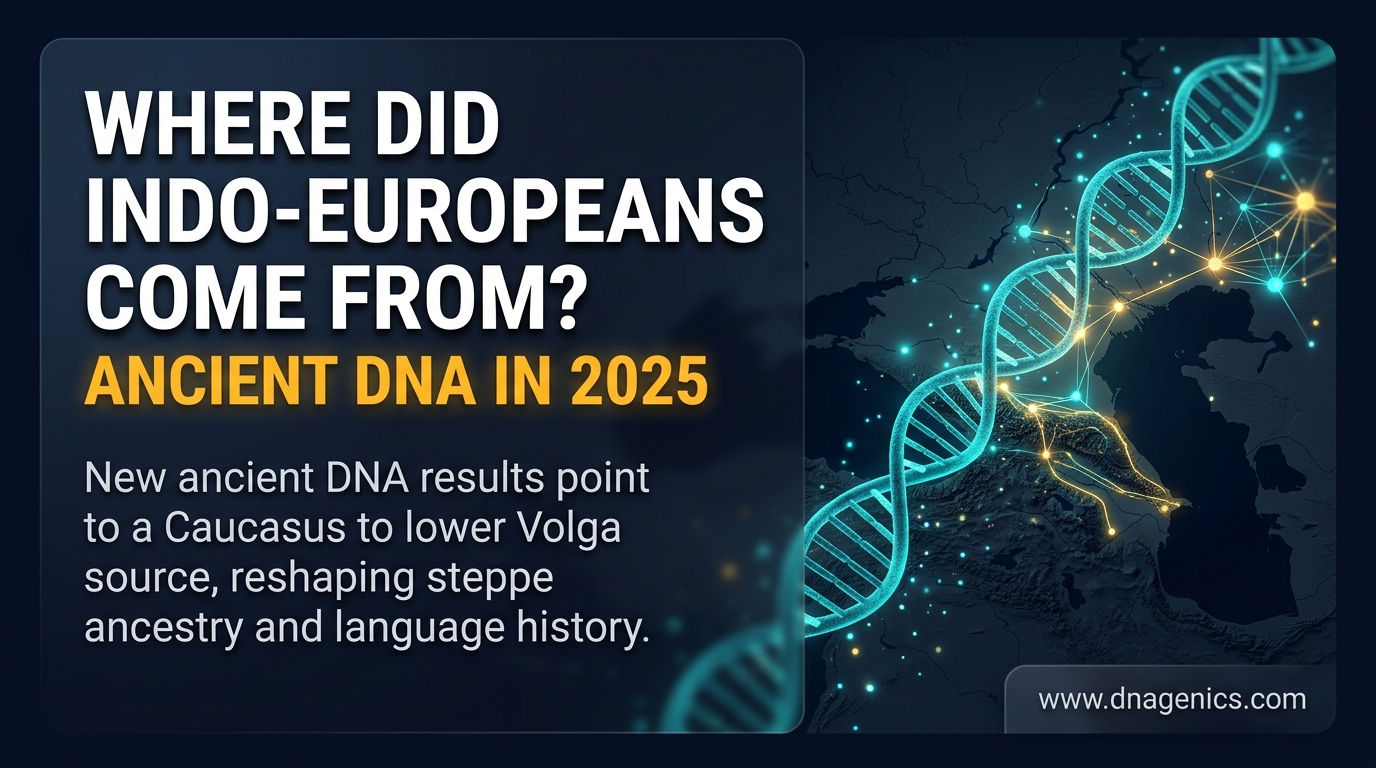
New ancient DNA results point to a Caucasus to lower Volga source for Indo-European origins, reshaping how we read steppe ancestry, migration, and language history.
Ler o artigo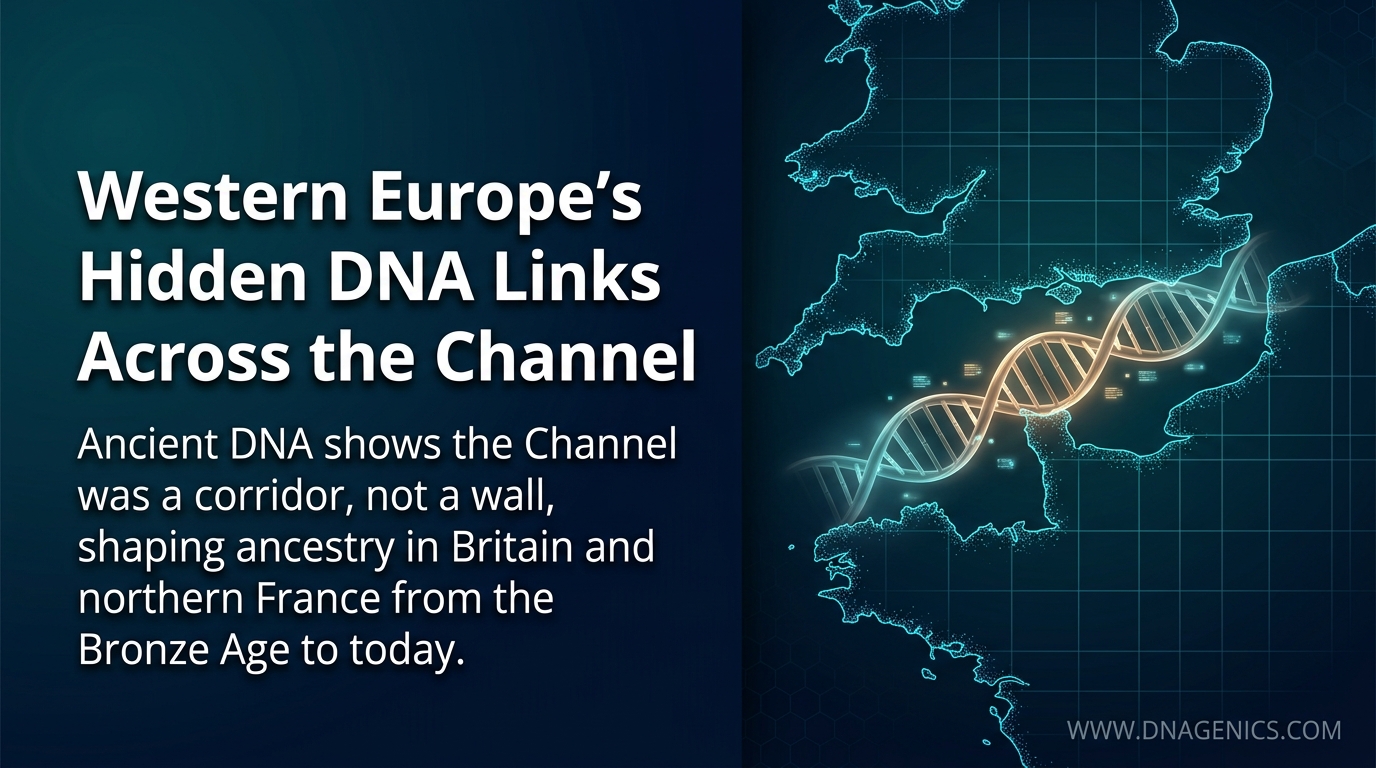
Ancient DNA shows the Channel was a corridor, not a wall, shaping ancestry in Britain and northern France from the Bronze Age to today.
Ler o artigo