Akapana: Heart of Tiwanaku Altiplano

下载的 PDF 是图像副本。如需可选中文本及更好的辅助技术支持,请使用打印功能。

Akapana: Heart of Tiwanaku Altiplano

揭开一个失落的文明

正在加载考古记录……

正在收集古代记录

跳转到主内容
Akapana: Heart of Tiwanaku Altiplano
文明焦点

Akapana: Heart of Tiwanaku Altiplano

Five ancient genomes from Akapana (773–1047 CE) link monumental ritual to Andean genetic lineages.

773 CE - 1047 CE
Akapana, Tiwanaku, Bolivia (Altiplano)
滚动开始
Chapter I

剧情

了解 Akapana: Heart of Tiwanaku Altiplano 文化

Archaeogenetic analysis of five individuals from the Akapana platform in Tiwanaku (Bolivia) dated 773–1047 CE reveals predominantly Indigenous American Y-DNA Q and diverse mtDNA lineages (C1b, B2, D1, B2b, C1c). Limited sample size makes conclusions preliminary.

Time Period

773–1047 CE

Region

Akapana, Tiwanaku, Bolivia (Altiplano)

Common Y-DNA

Q (3/5)

Common mtDNA

C1b, B2, D1, B2b, C1c

Chapter II

时间线

这种文化历史上的关键时刻

800 CE

Intensive use phase at Akapana

Archaeological and radiocarbon evidence place continued construction, ritual deposition, and funerary activity at Akapana around the 8th–9th centuries CE.

1000 CE

Regional transformation and decline

Around the turn of the first millennium CE Tiwanaku’s political and economic prominence waned, reflected in changing settlement and ritual patterns across the Altiplano.

Chapter III

Origins & Emergence

Rising from the windswept Altiplano like a carved memory, the Akapana mound is both a monumental earthwork and a focal point of Tiwanaku ritual landscape. Archaeological data indicates that the Akapana platform was an intensive center of construction, modification, and ceremonial deposition during the Late Holocene centuries that frame the samples (773–1047 CE). Stratigraphic excavation, ceramic seriation, and radiocarbon chronologies place Akapana within the core of Tiwanaku civic-religious activity, a polity that organized irrigation, raised-field agriculture, and long-distance exchange across the southern Andes.

Material culture from the Akapana core—stone sculpture, architectural planning, and offerings—speaks to layered episodes of construction and re-use. Limited osteological and contextual evidence suggests that human remains recovered here are often associated with ritualized interment or secondary deposition rather than ordinary domestic graves. Archaeological interpretations emphasize both local aggrandizement of the mound and regional ties: interaction networks likely connected the Tiwanaku heartland to the Lake Titicaca basin, valleys to the east, and coastal corridors to the west.

Because the present genetic dataset comprises only five dated individuals, any reconstruction of population formation at Akapana must remain cautious. The archaeological record provides the stage—monument, ritual, and mobility—onto which a small set of genomes can begin to be mapped, but broader sampling is needed to narrate full demographic histories.

  • Akapana is a central ceremonial platform at Tiwanaku on the Bolivian Altiplano
  • Samples date to 773–1047 CE, within Tiwanaku's later occupational phases
  • Archaeology shows repeated construction, ritual deposition, and regional exchange
Chapter IV

Daily Life & Society

Life in and around Tiwanaku’s monumental core was knitted to high-altitude strategies and ritual practice. Archaeological evidence from the broader site and surrounding altiplano documents intensive agriculture—raised fields (suka kollu), tuber and quinoa cultivation—and camelid herding that sustained dense populations and supported craft specialists. Pottery styles, textile fragments, and workshop debris indicate organized craft production and long-distance exchange in raw materials and prestige goods.

At Akapana itself, daily life intersected with ceremonial choreography: processional spaces, offering pits, and sculptural programs transformed labor into cosmological display. Burial contexts found in and adjacent to the platform suggest that some interments were ritually placed within a monumental setting; osteological analyses (where available) can indicate diet, workload, and possible life histories, though the current genetic sample set is small. Social organization likely fused household-level production with centralized ritual authority, producing a landscape where subsistence, craft, and cosmology reinforced one another.

Archaeological data indicates mobility and interaction—people, ideas, and goods moved across ecological zones. Such movement left material traces in pottery styles and isotopic signals, and the new genetic data begins to reveal how biological ancestry aligns with these archaeological patterns.

  • Economy: raised-field agriculture, tubers, quinoa, camelid herding
  • Akapana combined everyday production with large-scale ritual activities
Chapter V

Genetic Profile

Five individuals sampled from archaeological contexts at Akapana and directly dated between 773 and 1047 CE provide an initial genetic window into the Tiwanaku core. Three of the five males carry Y-chromosome haplogroup Q, a lineage widespread among Indigenous peoples across the Americas and commonly observed in Andean ancient DNA. The mitochondrial diversity—C1b, B2, D1, B2b, and C1c—reflects multiple founding Native American maternal lineages and suggests maternal heterogeneity within the sampled group.

These genetic signatures are consistent with archaeological expectations of Indigenous Andean ancestry at Tiwanaku, implying broad continuity with pre-contact populations of the highlands. However, two important cautions shape interpretation: first, the sample count is low (n=5). With fewer than ten genomes, conclusions about population structure, sex-biased mobility, or admixture are preliminary. Second, sampling from a monumental, ritual locus may bias the dataset toward individuals selected for particular roles or origins—burial practices can concentrate non-local or high-status individuals.

Genetic affinities to modern Aymara and Quechua-speaking groups are plausible given regional continuity, but formal comparisons require larger ancient and modern reference panels. Future sampling across social contexts, peripheral settlements, and broader chronologies will be essential to test hypotheses about local continuity, regional gene flow, and the biological dimensions of Tiwanaku interaction networks.

  • Predominant Y-DNA: haplogroup Q (3/5), typical of Native American paternal lineages
  • mtDNA diversity (C1b, B2, D1, B2b, C1c) points to multiple Indigenous maternal lineages
Chapter VI

Legacy & Modern Connections

The stones of Akapana and the genomes sampled from its deposits speak to a living legacy. Archaeological continuity in craft, ritual form, and agricultural practice echoes in the cultural traditions of modern highland communities. Genetically, the presence of canonical Native American haplogroups in Akapana individuals supports a picture of enduring Indigenous ancestry in the southern Andes, though direct ancestry links to specific modern groups remain provisional until larger datasets are analyzed.
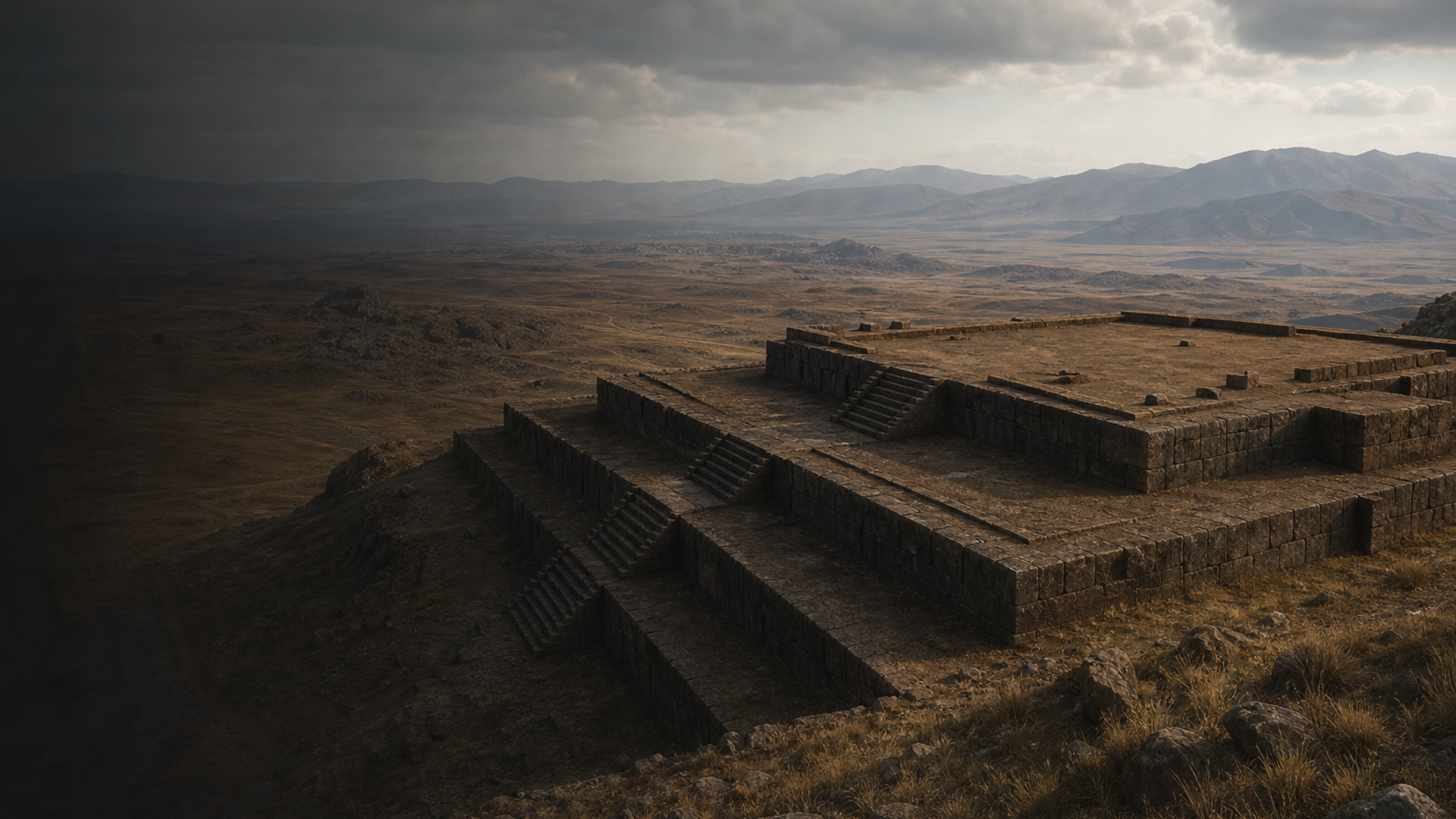

The cinematic silhouette of Tiwanaku—its plazas and platforms against the lake—measures human networks of work, belief, and movement. Ancient DNA provides another material trace on that landscape, one that must be read alongside artifacts, soils, and oral history. Given the small sample size, these results should be understood as an initial probe: evocative, suggestive, and a call for broader, ethically conducted sampling that can illuminate long-term biological and cultural continuities across the Bolivian Altiplano.

  • Genetic signals align with broad Indigenous Andean continuity, but are preliminary
  • Akapana remains a potent symbol linking archaeological ritual to living Andean heritage
AI 电源

AI 助手

就 Akapana: Heart of Tiwanaku Altiplano 文化提问

AI 助手 由DNAGENICS公司制作

解锁此特性
Ask questions about the Akapana: Heart of Tiwanaku Altiplano culture. Our AI assistant can explain genetic findings, historical context, archaeological evidence, and modern connections.
AI 样本分析

Akapana: Heart of Tiwanaku Altiplano 文化是人类历史中值得了解的一章……

遗传分析揭示了与早期种群的联系,同时显示了独特的适应和文化创新的证据。 古代DNA样本提供了对迁徙模式、社会结构以及古代种群之间的生物关系的深刻见解。

这是人工智能分析的预览。 解锁全AI 助手, 以探索关于:

  • 遗传组成和祖先
  • 移徙模式和起源
  • 日常生活和文化习俗
  • 现代遗传遗产

探索更古老的文化

揭开古代世界文明的故事

使用优惠码 可减免 35% • 11月12日 到期




