Armenia, Middle Bronze Echoes

下载的 PDF 是图像副本。如需可选中文本及更好的辅助技术支持,请使用打印功能。

跳转到主内容
文明焦点

Armenia, Middle Bronze Echoes

A glimpse into Bronze Age lives in the Armenian Highlands through bones and genomes

2127 CE - 1211 BCE
Armenia (South Caucasus)

剧情

Armenia_MBA (2127–1211 BCE): nine individuals from six sites reveal maternal line continuity (T, K, U, HV) and mixed paternal signals (E, R). Archaeological and genetic data suggest local Middle Bronze Age lifeways with hints of regional interaction; conclusions are preliminary given small sample size.

Time Period

2127–1211 BCE (Middle Bronze Age)

Region

Armenia (South Caucasus)

Common Y-DNA

E (2), R (1) — limited samples

Common mtDNA

T (4), K (2), U (2), HV (1)

时间线

2127 BCE

Earliest sampled burials

Radiocarbon dates place the oldest sampled individuals at Katnaghbiur 1 and Tavshut around 2127 BCE, anchoring the Armenia_MBA dataset in the early Middle Bronze Age.

Origins & Emergence

The Armenia_MBA assemblage dates between 2127 and 1211 BCE and comes from six archaeological loci across the Armenian Highlands: Katnaghbiur 1, Tavshut, Keti, Karashamb Cemetery, Dzori Gekh, and Nerquin Getashen. Archaeological data indicate the persistence of Middle Bronze Age burial traditions — inhumations with variable grave goods, local pottery styles, and evidence for metalworking — that fit a broader South Caucasus tapestry of developing social complexity.

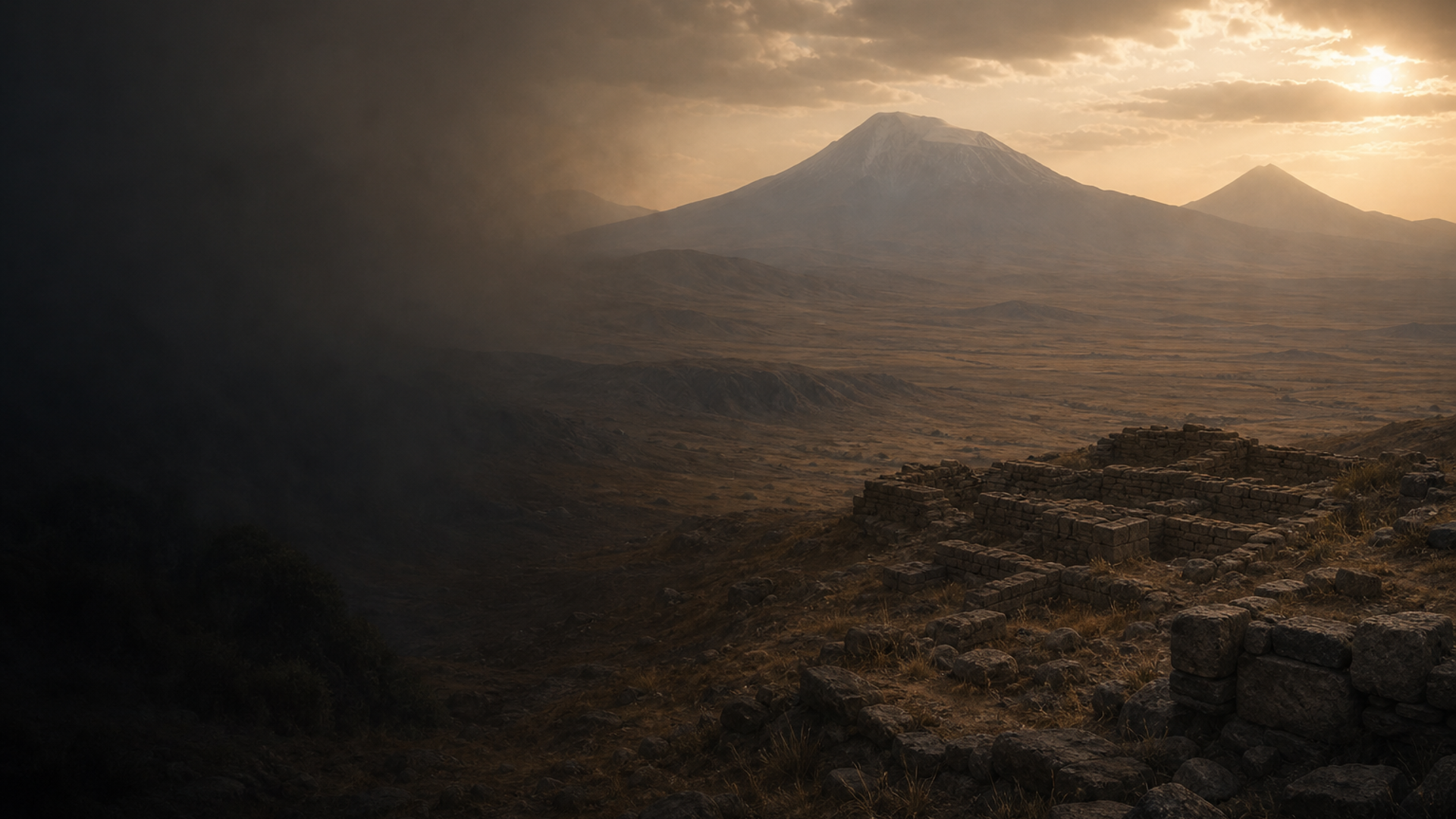
Cinematic landscapes of basalt ridges and highland valleys framed communities tied to terrace farming, pastoral rounds, and interregional exchange. Material parallels with neighboring Anatolia and the Iranian plateau point to communication networks rather than wholesale population replacement. Limited evidence suggests local cultural continuity from earlier Bronze Age phases, punctuated by episodes of contact and mobility.

Because the genetic dataset comprises nine individuals, interpretations of origins and demographic processes remain provisional. The archaeological record provides a spatial and material context: cemeteries like Karashamb and habitation traces at Dzori Gekh anchor these genomes to place-specific lifeways. When read together, bones, artifacts, and landscapes create a layered narrative of emergence: rooted in the Armenian Highlands, open to influence from surrounding regions, and reflective of the nuanced population dynamics of the Middle Bronze Age.

  • Sites: Katnaghbiur 1, Tavshut, Keti, Karashamb, Dzori Gekh, Nerquin Getashen
  • Dates: 2127–1211 BCE, Middle Bronze Age contexts
  • Evidence for local continuity with regional exchange

Daily Life & Society

Archaeological traces from the sampled sites evoke a Middle Bronze Age world of pastoralism, agriculture, and craft specialization. Pottery types recovered from graves and settlement layers show local shaping traditions with painted and incised motifs, used for storage, cooking, and ritual. Metallurgical debris and finished objects attest to copper–bronze working; the distribution of metalwork and ornaments in graves suggests graded social differentiation rather than rigid hierarchies.

Burial practices vary across sites: some interments at Karashamb Cemetery include modest grave goods, while other burials at Katnaghbiur 1 show fewer objects, hinting at diverse mortuary behaviors and perhaps differing access to exchange networks. Stable isotope studies are not included here, but regional parallels suggest mixed diets of cereal agriculture and pastoral herding. Landscapes of the Armenian Highlands—river valleys, irrigated terraces, and upland pastures—shaped seasonal movement and community organization.

Archaeological evidence indicates interaction: exotic raw materials and stylistic affinities with Anatolian and Iranian artifacts point to trade and social ties. These material connections fit with a vision of Middle Bronze Age society as locally grounded yet cosmopolitan in its networks, where kinship, craft, and exchange shaped daily rhythms.

  • Evidence for metallurgy, varied pottery, and graded grave goods
  • Burial diversity indicates social complexity and regional ties

Genetic Profile

The Armenia_MBA dataset comprises nine individuals sampled from six sites, so genetic conclusions are tentative. Y-chromosome haplogroups include E (2 individuals) and R (1 individual); mitochondrial diversity is dominated by haplogroup T (4 individuals), with K (2), U (2), and HV (1) also present. These maternal lineages (T, K, U, HV) are commonly observed across the Near East and neighboring Eurasian regions in Bronze Age contexts and can reflect long-standing female-mediated continuity in the highlands.

The presence of E-lineage Y-DNA in multiple males may indicate connections to Near Eastern male lineages known from Bronze Age Anatolia and the Levant, while a single R-lineage hints at steppe‑associated paternal input or broader west–east contacts; however, subclade resolution is not available here, so geographic assignment remains uncertain. Archaeogenetic patterns in the Caucasus often record a mosaic of ancestries: local Neolithic-derived farmers, older hunter‑gatherer heritage (reflected in some U lineages), and pulses of gene flow from neighboring regions.

Given the small sample count (<10), these patterns should be treated as preliminary. Future sampling and higher-resolution Y‑SNP/mtDNA analyses, combined with genome-wide data and isotope studies, are needed to test hypotheses about sex-biased mobility, continuity, and the relative contributions of Anatolian, Iranian plateau, and steppe sources to Middle Bronze Age Armenia.

  • Maternal skew toward haplogroup T (4/9) with K, U, HV present
  • Paternal signals include E and R but low sample size limits inference

Legacy & Modern Connections

Archaeological continuity in material culture and the mitochondrial signature in these Middle Bronze Age individuals suggest threads of population persistence in the Armenian Highlands. Some maternal lineages observed (T, K, U, HV) continue to appear in later regional datasets and in modern populations of the South Caucasus, hinting at partial genetic continuity across millennia.

At the same time, the mixed paternal signals and archaeological evidence for exchange remind us that the ancestors of modern Armenians were shaped by layered contacts — trade, migration, and cultural transmission. Because the sample set is small, direct links to present-day genetic profiles should be framed as possibilities rather than definitive pathways. These genomes illuminate chapters in a long, dynamic story: local communities adapting to highland environments while engaging in wider Bronze Age networks that helped shape the genetic and cultural heritage of the region.

  • Maternal continuity suggests long-term inheritance of lineages in the Highlands
  • Mixed signals point to interaction; firm connections to modern populations remain tentative

AI 助手

AI 助手 由DNAGENICS公司制作

解锁此特性
Ask questions about the Armenia, Middle Bronze Echoes culture. Our AI assistant can explain genetic findings, historical context, archaeological evidence, and modern connections.
AI 样本分析

Armenia, Middle Bronze Echoes 文化是人类历史中值得了解的一章……

遗传分析揭示了与早期种群的联系,同时显示了独特的适应和文化创新的证据。 古代DNA样本提供了对迁徙模式、社会结构以及古代种群之间的生物关系的深刻见解。

这是人工智能分析的预览。 解锁全AI 助手, 以探索关于:

  • 遗传组成和祖先
  • 移徙模式和起源
  • 日常生活和文化习俗
  • 现代遗传遗产
使用优惠码 可减免 25% • 11月13日 到期