
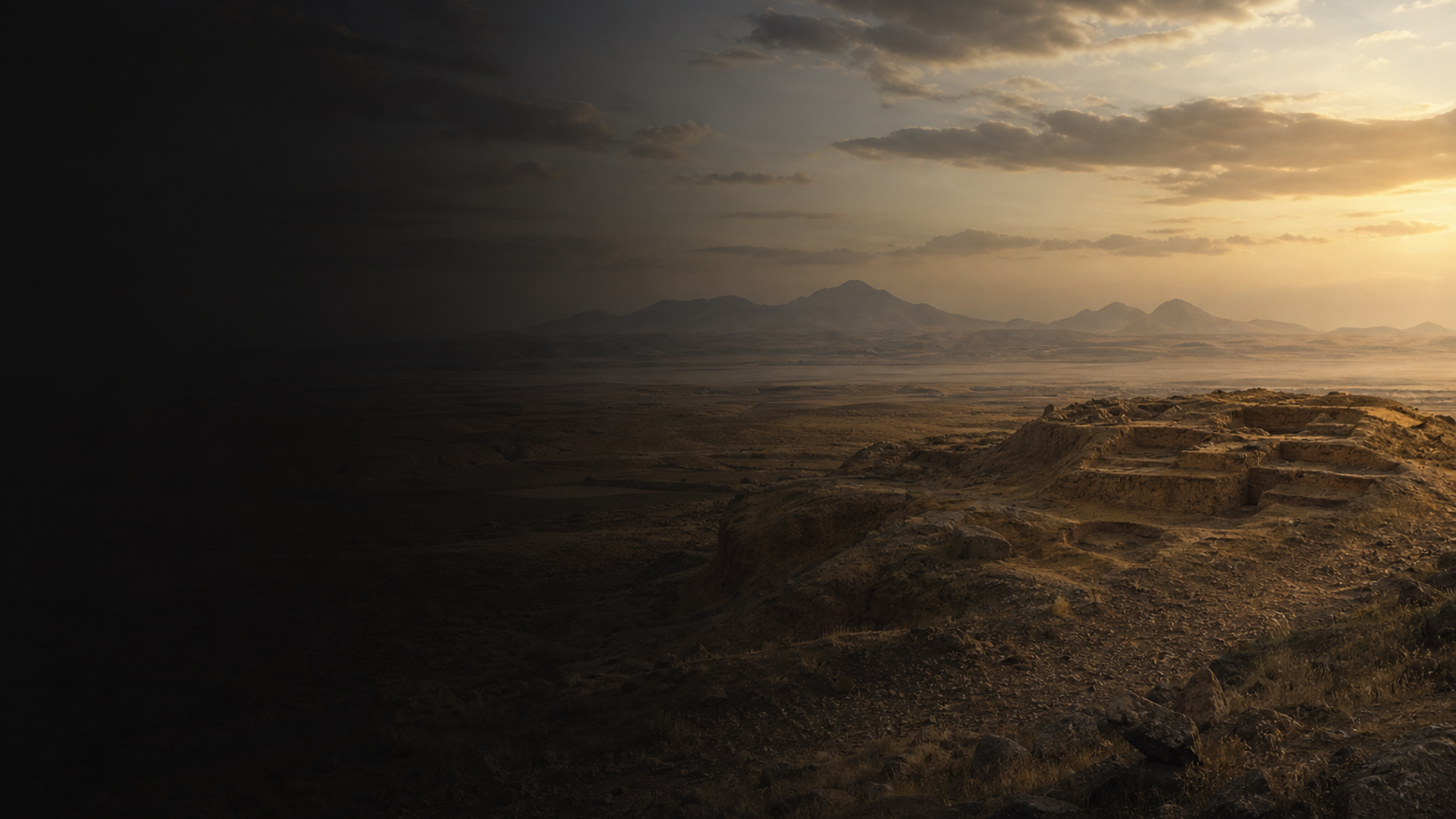
Aşıklı Höyük: Dawn of Anatolian Villages

下载的 PDF 是图像副本。如需可选中文本及更好的辅助技术支持,请使用打印功能。

Aşıklı Höyük: Dawn of Anatolian Villages

揭开一个失落的文明

正在加载考古记录……

正在收集古代记录

跳转到主内容
Aşıklı Höyük: Dawn of Anatolian Villages
文明焦点

Aşıklı Höyük: Dawn of Anatolian Villages

A Preceramic Neolithic settlement in Central Anatolia (8226–7480 BCE) where material life meets maternal DNA

8226 CE - 7480 BCE
Central Anatolia, Turkey (Aksaray)
滚动开始
Chapter I

剧情

了解 Aşıklı Höyük: Dawn of Anatolian Villages 文化

Aşıklı Höyük (Aksaray, Central Anatolia) is a Preceramic Neolithic village (8226–7480 BCE). Archaeology reveals early sedentism, architecture, and long-distance obsidian exchange. Seven ancient genomes show maternal haplogroups K, T, HV, N — preliminary evidence for links with the Near Eastern early-farmer gene pool.

Time Period

8226–7480 BCE

Region

Central Anatolia, Turkey (Aksaray)

Common Y-DNA

Not reported / limited data (no robust Y calls)

Common mtDNA

K (3), T (2), HV (1), N (1) — 7 samples

Chapter II

时间线

这种文化历史上的关键时刻

8226 BCE

Earliest documented occupation begins

Radiocarbon dates mark the start of sustained occupation at Aşıklı Höyük, initiating its role as an Early Preceramic Neolithic village in Central Anatolia.

Chapter III

Origins & Emergence

Aşıklı Höyük sits like an island of life on the volcanic plains south of Cappadocia. Radiocarbon dates place occupation between roughly 8226 and 7480 BCE, in the Early Preceramic Neolithic of Central Anatolia. Archaeological data indicates a gradual shift from mobile bands toward year‑round settlement: houses built of mudbrick and stone, repeated rebuilding on the same floor levels, and structured pits and hearths. The site lies within a landscape of fertile pockets and obsidian-rich volcanoes, and material culture — finely produced flint, chipped stone, and bone tools — evokes a community skilled in craft and exchange.

Limited evidence suggests that Aşıklı’s inhabitants practiced an early form of cultivation and managed wild herds, a transitional economy between hunting–gathering and full agricultural dependence. Burials beneath house floors and curated objects speak to complex social rhythms: memory, ancestry and domestic ritual anchored people to place. Stratigraphy and architectural sequences at Aşıklı provide one of the clearest archaeological narratives for how sedentary village life emerged in Anatolia, a story that will be refined as more data arrive.

  • Occupation dated to 8226–7480 BCE (Early Preceramic Neolithic)
  • Early permanent houses, repeated rebuilding, and underfloor burials
  • Strategic location near obsidian sources enabled long‑distance exchange
Chapter IV

Daily Life & Society

Stepping into Aşıklı Höyük is to imagine a village of packed rooms, hearth-smoke and continuous repair. Archaeological excavations reveal tightly clustered dwellings with work areas for lithic knapping, bone working, and food preparation. Hearths, grinding stones and charred plant remains point to a diet blending wild resources with early cultivated plants; faunal assemblages show intensifying use of caprines and other managed animals, though full domestication trajectories remain debated.

Craft specializations — skilled flint knapping and bone tool production — coexisted with household-based manufacture. Obsidian artifacts suggest exchange networks reaching across central Anatolia, linking Aşıklı to other contemporaneous sites. Social life is visible in mortuary practice: individuals interred beneath floors, sometimes with grave goods, indicate kin-based households and an emphasis on ancestral continuity. The material palette is pragmatic yet vivid: painted ochres on bones, personal adornments, and carefully curated objects that shaped identity within the village’s intimate streetscape.

  • Household-focused economy: hearths, grinding stones, craft areas
  • Evidence for plant processing and increasing animal management
Chapter V

Genetic Profile

Seven individuals from the Aşıklı Höyük Early Preceramic assemblage yield mitochondrial DNA lineages dominated by K (3), T (2), HV (1) and N (1). These maternal haplogroups are part of a broader Near Eastern and Mediterranean mtDNA spectrum that later appears among Early Neolithic farmers in Anatolia and Europe. Archaeological data indicating sedentism and early cultivation aligns with genetic signals commonly interpreted as components of the early‑farmer maternal gene pool.

Crucially, Y‑chromosome information is not reported for these seven samples or is insufficiently resolved in the available dataset, so paternal affiliations remain unclear. With only seven genomes, conclusions must be cautious: the small sample size (<10) makes it inadvisable to generalize population‑level patterns. Nonetheless, the presence of haplogroups K and T is consistent with a regional continuity of maternal lineages between Preceramic Anatolia and subsequent Neolithic movements westward. Future genome-wide and Y‑chromosome data from Aşıklı and neighboring sites like Boncuklu Höyük and sites in the Konya plain will be essential to test models of demography, sex‑biased migration, and local continuity.

  • mtDNA: K, T, HV, N — signatures overlapping with Near Eastern early‑farmer lineages
  • Sample count is small (7); patterns are preliminary and require more genomes
Chapter VI

Legacy & Modern Connections

Aşıklı Höyük occupies a pivotal place in the story of sedentary life. Its architecture, craft, and emerging husbandry practices prefigure the full Neolithic transformations that reshaped West Eurasia. Genetically, maternal lineages observed at Aşıklı form threads that link early Anatolian communities to later Neolithic populations in the Aegean and Europe, although this connection remains provisional given limited samples.

For modern populations in Anatolia and beyond, the site is part of a deep palimpsest: cultural practices, genes and landscapes layered over millennia. Archaeology provides the intimate details of daily life and social form; ancient DNA begins to reveal how those lives were connected biologically across space and time. Continued interdisciplinary study will deepen our understanding of how places like Aşıklı Höyük seeded the demographic and cultural mosaics of the later Neolithic world.

  • Aşıklı Höyük precedes and helps explain later Neolithic village economies in Anatolia
  • Maternal haplogroups suggest links to the broader Near Eastern early‑farmer genetic pool (preliminary)
AI 电源

AI 助手

就 Aşıklı Höyük: Dawn of Anatolian Villages 文化提问

AI 助手 由DNAGENICS公司制作

解锁此特性
Ask questions about the Aşıklı Höyük: Dawn of Anatolian Villages culture. Our AI assistant can explain genetic findings, historical context, archaeological evidence, and modern connections.
AI 样本分析

Aşıklı Höyük: Dawn of Anatolian Villages 文化是人类历史中值得了解的一章……

遗传分析揭示了与早期种群的联系,同时显示了独特的适应和文化创新的证据。 古代DNA样本提供了对迁徙模式、社会结构以及古代种群之间的生物关系的深刻见解。

这是人工智能分析的预览。 解锁全AI 助手, 以探索关于:

  • 遗传组成和祖先
  • 移徙模式和起源
  • 日常生活和文化习俗
  • 现代遗传遗产

探索更古老的文化

揭开古代世界文明的故事

使用优惠码 可减免 35% • 11月12日 到期




