Ashen Tides: Early Neolithic Ireland

下载的 PDF 是图像副本。如需可选中文本及更好的辅助技术支持,请使用打印功能。

Ashen Tides: Early Neolithic Ireland

揭开一个失落的文明

正在加载考古记录……

正在收集古代记录

跳转到主内容
Ashen Tides: Early Neolithic Ireland
文明焦点

Ashen Tides: Early Neolithic Ireland

Five early farmers (c. 3764–3521 BCE) from Ashleypark, Parknabinnia and Poulnabrone — archaeology meets ancient DNA.

3764 CE - 3521 BCE
Ireland (Tipperary, Clare)
滚动开始
Chapter I

剧情

了解 Ashen Tides: Early Neolithic Ireland 文化

A concise portrait of five Early–Middle Neolithic individuals from Ireland (3764–3521 BCE). Archaeological contexts at Ashleypark, Parknabinnia and Poulnabrone combine with genome-wide signals showing predominant Y haplogroup I and maternal lineages U, T and V. Conclusions remain preliminary (n=5).

Time Period

3764–3521 BCE

Region

Ireland (Tipperary, Clare)

Common Y-DNA

I (4 of 5)

Common mtDNA

U (3), T (1), V (1)

Chapter II

时间线

这种文化历史上的关键时刻

3750 BCE

Radiocarbon dates for sampled individuals

Direct dates cluster around 3764–3521 BCE, placing these burials in the Early–Middle Neolithic transition in Ireland.

Chapter III

Origins & Emergence

The individuals grouped as Ireland_EN_MN lived amid the slow spread of farming and monumentality that reshaped Atlantic Europe in the fourth millennium BCE. Radiocarbon dates from the five samples span roughly 3764–3521 BCE, placing them in the transition from the Early to Middle Neolithic on the island. Archaeological contexts include Taylor-era field sites and megalith-associated deposits at Poulnabrone (County Clare), the farmers’ settlement at Ashleypark (County Tipperary) and Parknabinnia (County Clare).

Archaeological data indicates that this was a landscape of emerging enclosed fields, newly domesticated cereals and animals, and the first generations of large stone tomb-building that would define Irish prehistory. Material culture — pottery, polished stone axes, and monument construction — ties these communities into broader northwest European Neolithic networks, though the precise routes of interaction remain debated.

Genetic evidence from these five individuals offers a complementary lens: instead of telling a single migration story, the DNA hints at complex local dynamics during the island’s early farming era. Limited evidence suggests a mixture of incoming farming ancestry and local hunter-gatherer contributions, but small sample size limits how widely we can generalize. Ongoing excavation and sampling at sites like Poulnabrone and Ashleypark will be essential to clarify the full picture of Neolithic emergence in Ireland.

  • Radiocarbon span: 3764–3521 BCE
  • Sites: Ashleypark (Tipperary), Parknabinnia & Poulnabrone (Clare)
  • Archaeology indicates farming, megalith building, and Atlantic networks
Chapter IV

Daily Life & Society

Imagine a cool Atlantic morning at the edge of a newly cleared field: people tending emmer or einkorn, herding sheep and cattle, and shaping polished stone tools. Archaeobotanical and faunal assemblages from contemporary Irish Neolithic sites show domesticated cereals, legumes and managed herds were established by this period; these economic shifts reshaped settlement patterns and social rhythms.

Monuments like the portal tomb at Poulnabrone transformed the landscape into a ritualized terrain. Funerary deposits, human remains and carved orthostats point to complex practices of memory and ancestorhood. Wear patterns on lithics and skeletal markers (where preserved) indicate a mixed economy of farming, woodland management and foraging — seasonal mobility likely remained part of life.

Craftspeople produced pottery and polished stone axes that were transported across the island, implying networks of exchange and shared knowledge. Architectural traces and burial architecture suggest households were embedded in wider kin and ritual groups responsible for communal labor: field clearance, monument construction and coordinated agricultural cycles. While the archaeology provides vivid material detail, it cannot fully recover beliefs or social hierarchies; we rely on careful interpretation of deposits, monument contexts and comparative studies from the broader Atlantic Neolithic.

  • Mixed farming economy with cereals, sheep and cattle
  • Megalithic ritual and burial practices anchored communities
Chapter V

Genetic Profile

Genome-wide data from five individuals (Ireland_EN_MN) dated to 3764–3521 BCE reveal a striking concentration of Y-chromosome haplogroup I in four males and mitochondrial haplogroups dominated by U (three individuals), with single instances of T and V. Haplogroup I is often linked to long-standing male lineages in parts of Europe; its predominance here may reflect local continuity, male-biased survival of Mesolithic lineages, or early admixture patterns.

Mitochondrial U is commonly associated with pre-Neolithic hunter-gatherer maternal lineages in Europe, so its presence in three of the five samples suggests that maternal ancestry from local forager populations persisted into the Neolithic horizon sampled at these sites. Haplogroups T and V are also known from Neolithic and later contexts across Europe, underscoring a mixed maternal landscape.

These genetic signals fit a model of admixture between incoming early farming groups and local hunter-gatherers, but caution is essential: the sample count is very small (n=5). With fewer than ten genomes, statistical power is limited and patterns could change as more samples are analyzed. Archaeogenetic interpretation should therefore be framed as provisional, highlighting plausible scenarios rather than firm demographic reconstructions. Continued sampling from Ashleypark, Parknabinnia, Poulnabrone and other Neolithic sites in Ireland will be needed to test whether the Y-I predominance and mtDNA mix reflect broader population structure or local, temporally restricted events.

  • Predominant Y-DNA: haplogroup I (4/5) — may indicate local male continuity or early admixture
  • mtDNA dominated by U (3), with T and V — suggesting maternal hunter-gatherer persistence
Chapter VI

Legacy & Modern Connections

The material and genetic traces of Ireland_EN_MN are threads in a deep tapestry that ties ancient island communities to later populations. Megalithic monuments like Poulnabrone continued to anchor ritual landscapes for centuries, shaping memory and territorial identity. Genetically, modern Irish populations carry blended ancestry derived from Neolithic farmers, Mesolithic hunter-gatherers and later arrivals; signals observed in these five genomes echo components that persist in the island’s gene pool.
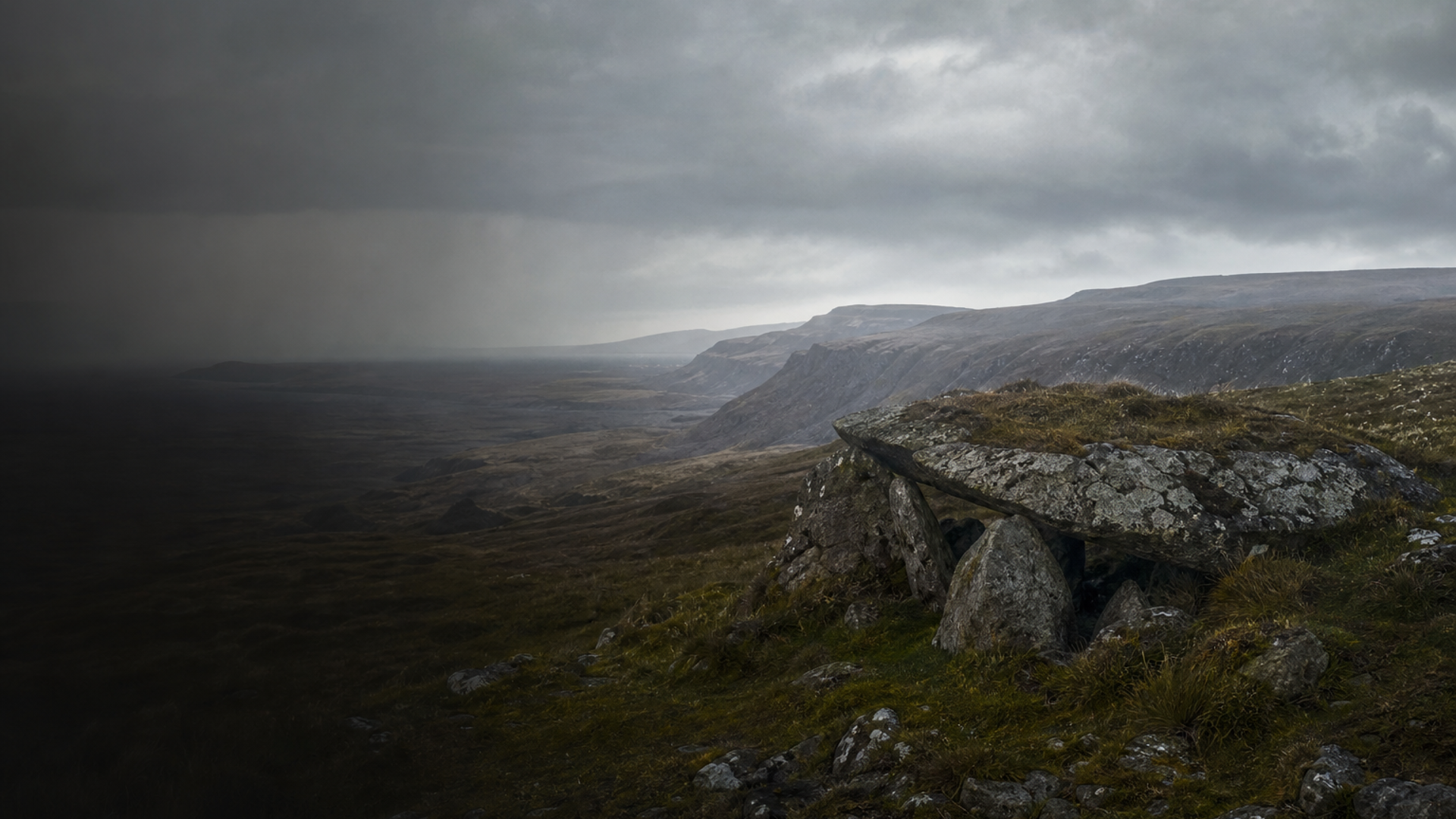

Because the dataset is small, we must avoid overstating direct lines of descent. Instead, view these genomes as snapshots: powerful glimpses into local demographic processes during a formative era. They illuminate how incoming agricultural lifeways and long-established forager communities met, mixed and left material marks — stone tombs, polished axes, and ceramic forms — that would endure in the archaeological record and influence later cultural trajectories.

  • Megalthic and farming traditions contributed to long-term cultural landscapes
  • Genetic signals are part of a mixed ancestral heritage visible in modern Irish populations
AI 电源

AI 助手

就 Ashen Tides: Early Neolithic Ireland 文化提问

AI 助手 由DNAGENICS公司制作

解锁此特性
Ask questions about the Ashen Tides: Early Neolithic Ireland culture. Our AI assistant can explain genetic findings, historical context, archaeological evidence, and modern connections.
AI 样本分析

Ashen Tides: Early Neolithic Ireland 文化是人类历史中值得了解的一章……

遗传分析揭示了与早期种群的联系,同时显示了独特的适应和文化创新的证据。 古代DNA样本提供了对迁徙模式、社会结构以及古代种群之间的生物关系的深刻见解。

这是人工智能分析的预览。 解锁全AI 助手, 以探索关于:

  • 遗传组成和祖先
  • 移徙模式和起源
  • 日常生活和文化习俗
  • 现代遗传遗产

探索更古老的文化

揭开古代世界文明的故事

使用优惠码 可减免 35% • 11月12日 到期




