Atlantic Neolithic France

下载的 PDF 是图像副本。如需可选中文本及更好的辅助技术支持,请使用打印功能。

Atlantic Neolithic France

揭开一个失落的文明

正在加载考古记录……

正在收集古代记录

跳转到主内容
Atlantic Neolithic France
文明焦点

Atlantic Neolithic France

Early farmers on the French Atlantic and Mediterranean coasts revealed by archaeology and DNA

5300 CE - 2100 BCE
France (Morbihan, Languedoc, Yonne)
滚动开始
Chapter I

剧情

了解 Atlantic Neolithic France 文化

France_N (5300–2100 BCE) represents 107 Neolithic individuals from sites including Port Blanc (Quiberon), Grotte du Gazel, and Gurgy Les Noisats. Archaeology and genome-wide data show Anatolian-derived farming ancestry with local hunter‑gatherer admixture; Y haplogroup G and mtDNA K dominate the sample set.

Time Period

5300–2100 BCE

Region

France (Morbihan, Languedoc, Yonne)

Common Y-DNA

G (predominant), H, BT

Common mtDNA

K, H/H1, J, U

Chapter II

时间线

这种文化历史上的关键时刻

5300 BCE

Arrival of farming in western France

Early farming communities appear on the Atlantic coast and river valleys, attested archaeologically at Port Blanc and genetically by Anatolian-derived ancestry in local burials.

Chapter III

Origins & Emergence

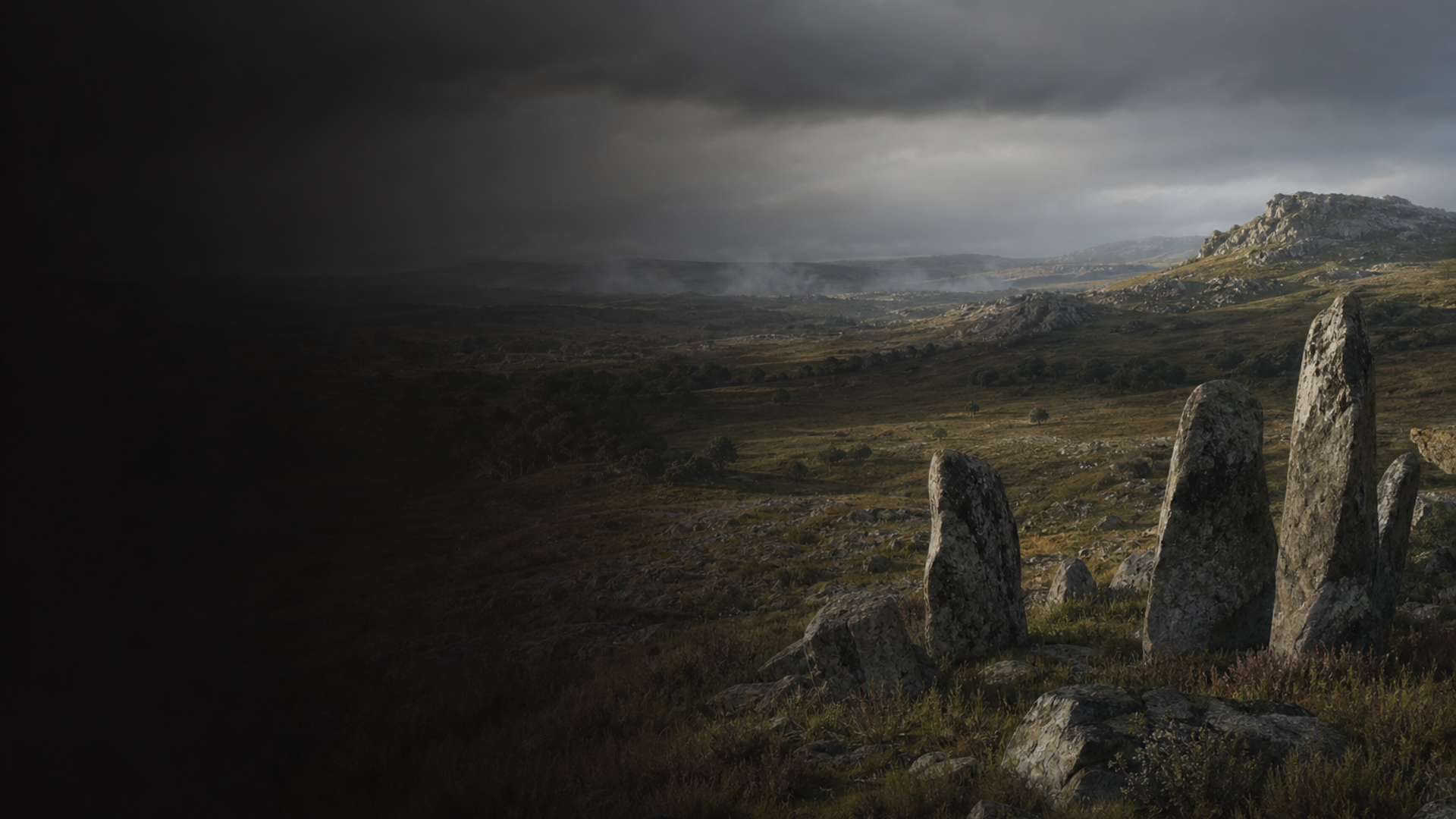
The France_N assemblage spans the heart of the European Neolithic: between roughly 5300 and 2100 BCE, farming communities established permanent settlements along river valleys, coasts, and cave sites. Archaeological contexts include coastal necropolises at Port Blanc (Quiberon, Morbihan), cave burials at Grotte du Gazel (Languedoc), and open‑air cemetery and settlement deposits at Gurgy Les Noisats (Yonne). Material culture—ceramics, polished stone axes, and domestic assemblages—places these groups in the broader wave of early farming that spread from Anatolia into western Europe.

Genomic patterns from 107 individuals link these populations to the Anatolian-derived early farmer genetic package known elsewhere in Neolithic Europe, while archaeological stratigraphy and isotopic data indicate local adaptation to rivers, estuaries, and coastal resources. Limited evidence points to regional variation: coastal sites show marine resource use and distinctive burial arrangements, whereas inland sites like Gurgy record denser settlement and long‑term landscape transformation.

Archaeological data indicates a gradual process of demographic change rather than a single sweeping replacement: the archaeological record and ancient DNA together suggest migration of farming groups followed by varying degrees of integration with indigenous Mesolithic foragers. Chronological resolution across 3,200 years shows continuity in some traditions and innovation in others, reflecting a dynamic cultural horizon rather than monolithic identity.

  • Sites: Port Blanc (Quiberon), Grotte du Gazel, Gurgy Les Noisats
  • Dates: 5300–2100 BCE, covering Early to Late Neolithic phases
  • Material culture indicates Anatolian-influenced farming traditions
Chapter IV

Daily Life & Society

The lives of France_N communities unfolded at the meeting points of cultivated fields, riverine forests, and the sea. Archaeobotanical remains—cereal grains, legumes—and carved grinding stones testify to cereal agriculture and domestic processing, while polished axes and cleared fields transformed local woodlands. Coastal assemblages at Port Blanc reveal shell middens and fishing gear, suggesting a mixed economy in which marine foods complemented domesticated plants and animals.

Burial practices vary: cave interments at Grotte du Gazel include articulated skeletons and grave goods that hint at ritual differentiation, whereas Gurgy Les Noisats shows larger cemetery use that may reflect more permanent, sedentary communities. Craft specialization—ceramics with regional styles, stone tool production, and bone working—points to increasingly complex social organization. Skeletal markers of activity and diet, alongside isotopic studies from comparable Neolithic contexts, suggest diets based mainly on cereals and domesticated meat but supplemented seasonally by fish, shellfish, and wild plants.

Archaeological data indicates household- and community-level organization rather than strong hierarchical elites in most contexts, though variation through time may hint at growing social complexity before 2100 BCE.

  • Mixed farming economy: cereals, livestock, and regional marine resources
  • Varied burial practices: caves, cemeteries, and differentiated grave goods
Chapter V

Genetic Profile

The France_N dataset of 107 genomes offers a robust window into Neolithic population structure in western and southern France. Genome-wide ancestry profiles are consistent with the Anatolian Neolithic farmer signature that spread into Europe during the 6th millennium BCE, combined with variable western hunter‑gatherer (WHG) ancestry that increases in some later individuals. These admixture patterns align with archaeological evidence for migration followed by local interaction.

Uniparental markers provide finer detail: Y‑chromosome haplogroup G is dominant (50 of the male-assigned samples), a lineage frequently associated with early European farmers. Smaller counts of haplogroup H (6) and a single BT reflect additional paternal diversity; BT may represent back‑migrating or unassigned lineages and should be interpreted cautiously. Mitochondrial diversity is high: K is the most common mtDNA clade (29 individuals), with substantial representation of H and its subclade H1 (15 each), J (14), and U (10). These maternal lineages are typical of Neolithic and post‑Neolithic Europe and show continuity with broader continental patterns.

Because the total sample count is 107, population-level inferences are relatively well supported compared with small pilot studies; still, regional substructure and temporal change mean some fine-scale conclusions remain tentative. Archaeogenetic signals here underscore a story of demographic movement, local admixture, and evolving community dynamics across three millennia.

  • Genome-wide ancestry: Anatolian-farmer-derived with variable WHG admixture
  • Uniparental markers: Y-G dominant; mtDNA dominated by K, H/H1, J, U
Chapter VI

Legacy & Modern Connections

The genetic and archaeological legacy of France_N reverberates into later millennia. The Anatolian‑derived farmer ancestry that these communities carried became a foundational component of European gene pools, later layered by Bronze Age and historic migrations. Maternally inherited haplogroups common in this sample (K, H, J, U) persist at varying frequencies in modern European populations, linking present-day genomes to Neolithic roots.

Archaeologically, the practices of land clearance, cereal cultivation, and animal husbandry established during the Neolithic reshaped landscapes and economies—a transformation visible in palynological records and long-term settlement patterns. While later population movements modified genetic landscapes, the France_N dataset helps anchor the chronology of agricultural expansion and local admixture in northwest Europe. Ongoing sampling and higher-resolution temporal sampling will refine these connections and clarify how Neolithic ancestry contributed to regional genetic mosaics.

  • Neolithic farmer ancestry from France_N contributed to modern European gene pools
  • Long-term landscape and economic changes stem from Neolithic agricultural practices
AI 电源

AI 助手

就 Atlantic Neolithic France 文化提问

AI 助手 由DNAGENICS公司制作

解锁此特性
Ask questions about the Atlantic Neolithic France culture. Our AI assistant can explain genetic findings, historical context, archaeological evidence, and modern connections.
AI 样本分析

Atlantic Neolithic France 文化是人类历史中值得了解的一章……

遗传分析揭示了与早期种群的联系,同时显示了独特的适应和文化创新的证据。 古代DNA样本提供了对迁徙模式、社会结构以及古代种群之间的生物关系的深刻见解。

这是人工智能分析的预览。 解锁全AI 助手, 以探索关于:

  • 遗传组成和祖先
  • 移徙模式和起源
  • 日常生活和文化习俗
  • 现代遗传遗产

探索更古老的文化

揭开古代世界文明的故事

使用优惠码 可减免 35% • 11月12日 到期




