Ban Chiang Bronze Echoes

下载的 PDF 是图像副本。如需可选中文本及更好的辅助技术支持,请使用打印功能。

Ban Chiang Bronze Echoes

揭开一个失落的文明

正在加载考古记录……

正在收集古代记录

跳转到主内容
Ban Chiang Bronze Echoes
文明焦点

Ban Chiang Bronze Echoes

A concise portrait of Thailand_BA from Ban Chiang linking archaeology and ancient DNA

1200 CE - 547 BCE
Ban Chiang, Thailand (Southeast Asia)
滚动开始
Chapter I

剧情

了解 Ban Chiang Bronze Echoes 文化

Preliminary genetic and archaeological portrait of Bronze Age communities at Ban Chiang, Thailand (1200–547 BCE). Four ancient genomes reveal East/Southeast Asian maternal lineages (M, R, B) and a single NO Y-lineage—insights are limited but suggest continuity with regional populations.

Time Period

c. 1200–547 BCE

Region

Ban Chiang, Thailand (Southeast Asia)

Common Y-DNA

NO (observed in 1 of 4)

Common mtDNA

M (2), R (1), B (1)

Chapter II

时间线

这种文化历史上的关键时刻

1200 BCE

Early Bronze Age emergence at Ban Chiang

Local adoption of copper-alloy technology and distinctive painted pottery appears at Ban Chiang.

700 BCE

Community complexity increases

Variation in grave goods and household artifacts suggests craft specialization and social differentiation.

547 BCE

Terminal date of sampled sequence

The archaeological sequence sampled for these genomes extends to approximately 547 BCE, marking the end of this dataset's span.

Chapter III

Origins & Emergence

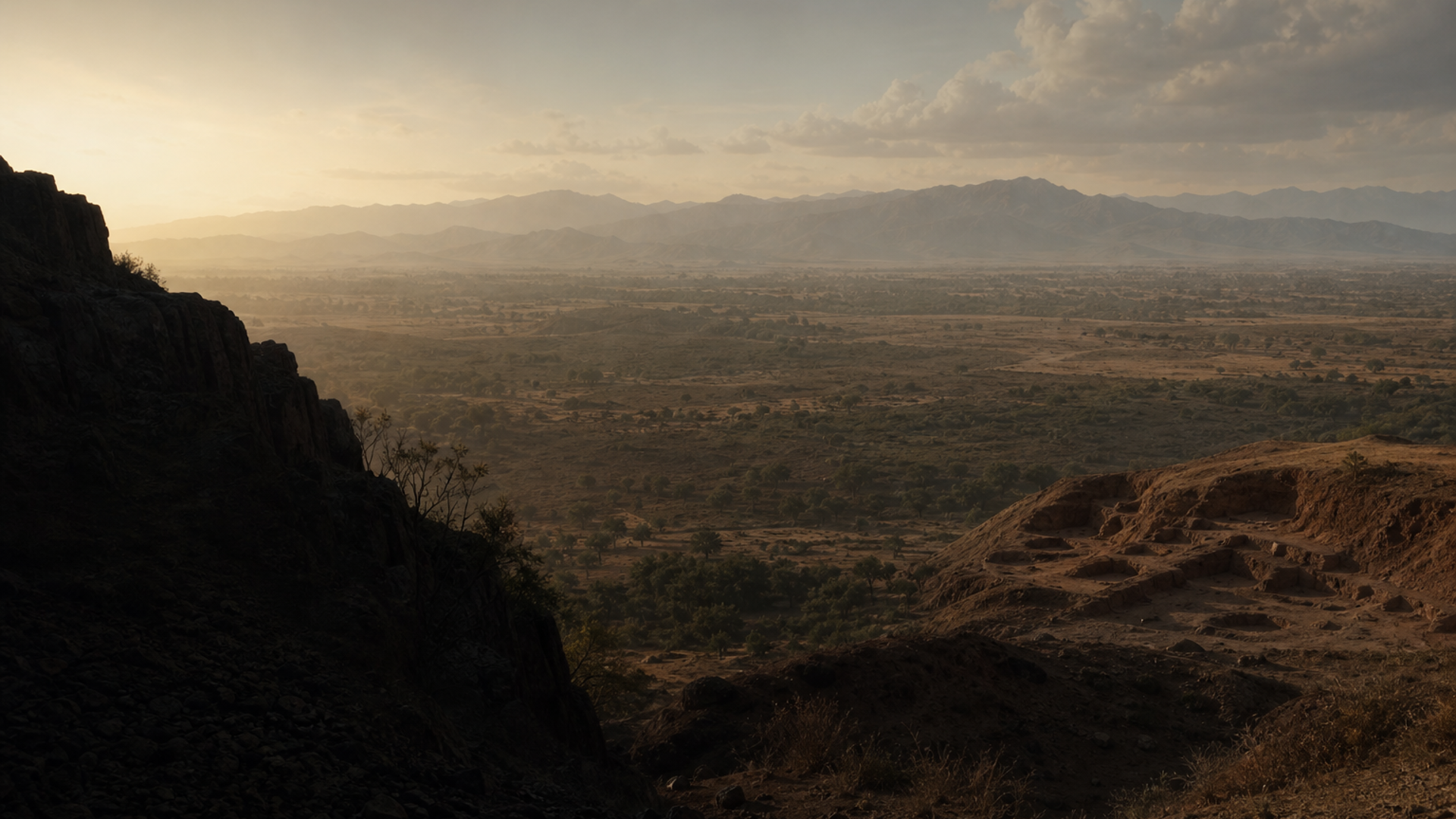
Ban Chiang sits like a bright jewel in the red earth of northeastern Thailand, its stratified mounds whispering the emergence of Bronze Age lifeways between roughly 1200 and 547 BCE. Archaeological data indicates a long sequence of occupation marked by painted pottery, early copper-alloy experimentation, and varied burial treatments at the eponymous site of Ban Chiang (Udon Thani province). Cultural continuity in ceramic styles and metallurgy suggests local innovation rather than wholesale population replacement. The modest set of four ancient genomes from this period provides a first molecular window: maternal lineages (mtDNA haplogroups M, R, and B) align with lineages common across prehistoric Mainland Southeast Asia, while a single observed Y-DNA NO lineage indicates paternal affinity with broader East/Southeast Asian clades. Limited evidence suggests these people were part of a dynamic tapestry of local foragers, incoming agriculturalists, and regional networks of exchange. Because the genetic sample size is very small, any narrative about migration, demographic shifts, or language spread must remain provisional. Still, when bones, bronzes, and genomes are read together, Ban Chiang emerges as a place where technological creativity and deep ancestral ties to Southeast Asian maternal and paternal lineages coalesced into recognizable Bronze Age communities.

  • Ban Chiang (Udon Thani) dates c. 1200–547 BCE, early Bronze Age in Thailand
  • Archaeology shows painted pottery, copper use, and varied burials
  • Genetic signal is preliminary but links to broader Southeast Asian lineages
Chapter IV

Daily Life & Society

Archaeological contexts at Ban Chiang paint evocative scenes: households arranged around activity areas, pottery vessels for storage and cooking, and grave assemblages that include ornaments and copper items. Botanical and zooarchaeological remains indicate mixed farming economies—cultivated rice and domesticated animals—alongside foraging for wild resources. Social differentiation appears subtle; some burials contain richer grave goods and copper objects, suggesting emerging status distinctions, craft specialization, and possibly long-distance networks for raw materials. The material culture shows skilled metalworking that is integrated into domestic and funerary life rather than restricted to elite tombs. Osteological evidence from burials points to varied diet and workload patterns consistent with mixed agricultural subsistence. When the skeletal record is paired with the handful of ancient genomes, a human picture emerges: local family groups practicing agriculture and metallurgy, connected by marriage and exchange to neighboring communities. However, with only four genomes, population-level statements about kinship patterns, residence rules (patrilocality/matrilocality), or social stratification are speculative. Future aDNA sampling across more graves and settlement contexts would be required to resolve these social dynamics with confidence.

  • Mixed farming economy with rice and animal husbandry alongside foraging
  • Copper objects and pottery integrated into daily and funerary practices
Chapter V

Genetic Profile

The genetic dataset for Thailand_BA is modest—four individuals from Ban Chiang—so interpretations must be cautious. Maternal lineages in this set are dominated by haplogroup M (2 samples), with single instances of R and B. These mtDNA clades are widespread in prehistoric and modern populations across South and Southeast Asia and indicate deep maternal continuity in the region. On the paternal side, one individual carries Y-DNA assigned to haplogroup NO. Haplogroup NO is ancestral to the modern N and O lineages common in East and Southeast Asia; its presence here is consistent with regional patterns seen in later populations but cannot alone resolve migration routes. When compared qualitatively to broader ancient DNA datasets from Mainland Southeast Asia, the Ban Chiang profiles fit within the expected diversity of Bronze Age foragers and farmers in the area—no overwhelming signal of far‑flung Steppe or West Eurasian ancestry is detected in these samples. Because the sample count is fewer than ten, statistical analyses (admixture proportions, formal tests) have limited power; observed haplogroups should be treated as initial signals rather than definitive demographic models. The most robust takeaway is that Ban Chiang's people carried maternal and paternal lineages that connect them to the larger genetic landscape of prehistoric Southeast Asia, complementing the archaeological narrative of localized development and regional interaction.

  • mtDNA: M (2), R (1), B (1) — consistent with regional maternal continuity
  • Y-DNA: NO (1) — suggests East/Southeast Asian paternal affinity; preliminary
Chapter VI

Legacy & Modern Connections

Ban Chiang’s bronze-clad past resonates in the genetic continuity that threads through Southeast Asia. The mitochondrial and Y‑chromosome lineages observed—while based on only four individuals—mirror haplogroups present in many modern populations of the region, hinting that aspects of ancestry persisted through millennia of cultural change. Archaeologically, Ban Chiang influenced regional craft traditions and may have contributed technological knowledge to later societies across mainland Southeast Asia. Genetically, the site offers an anchor point: it shows that Bronze Age people in northeast Thailand shared genetic affinities with broader Southeast Asian groups rather than showing strong input from distant western sources. This does not preclude later migrations or language shifts; rather it situates Ban Chiang as part of an enduring local substrate. Continuing aDNA work, expanded sampling, and integration with isotopic and material studies will refine how these ancient people connect to present-day communities and cultural landscapes.

  • Observed haplogroups align with modern Southeast Asian genetic diversity
  • Ban Chiang represents a durable local legacy of technology and ancestry
AI 电源

AI 助手

就 Ban Chiang Bronze Echoes 文化提问

AI 助手 由DNAGENICS公司制作

解锁此特性
Ask questions about the Ban Chiang Bronze Echoes culture. Our AI assistant can explain genetic findings, historical context, archaeological evidence, and modern connections.
AI 样本分析

Ban Chiang Bronze Echoes 文化是人类历史中值得了解的一章……

遗传分析揭示了与早期种群的联系,同时显示了独特的适应和文化创新的证据。 古代DNA样本提供了对迁徙模式、社会结构以及古代种群之间的生物关系的深刻见解。

这是人工智能分析的预览。 解锁全AI 助手, 以探索关于:

  • 遗传组成和祖先
  • 移徙模式和起源
  • 日常生活和文化习俗
  • 现代遗传遗产

探索更古老的文化

揭开古代世界文明的故事

使用优惠码 可减免 35% • 11月12日 到期




