Beniamin — Hellenistic Armenia

下载的 PDF 是图像副本。如需可选中文本及更好的辅助技术支持,请使用打印功能。

Beniamin — Hellenistic Armenia

揭开一个失落的文明

正在加载考古记录……

正在收集古代记录

跳转到主内容
Beniamin — Hellenistic Armenia
文明焦点

Beniamin — Hellenistic Armenia

A single Hellenistic-period burial from Shirak Province that links archaeology and DNA

156 CE - 1 BCE
Shirak Province, Armenia
1 Ancient Samples
滚动开始
Chapter I

剧情

了解 Beniamin — Hellenistic Armenia 文化

A solitary burial from Beniamin (Shirak Province, Armenia) dated 156–1 BCE. Archaeological context offers a rare glimpse into Hellenistic Armenia; DNA data are limited to one individual, so genetic conclusions remain preliminary and suggest continuity with local highland lineages.

Time Period

156–1 BCE

Region

Shirak Province, Armenia

Common Y-DNA

Undetermined (single sample)

Common mtDNA

Undetermined (single sample)

Chapter II

时间线

这种文化历史上的关键时刻

189 BCE

Artaxiad ascendancy in Armenia

The Artaxiad dynasty consolidates power in the Armenian highlands, shaping a political backdrop to Hellenistic-era life.

156 BCE

Beniamin burial dated

Archaeological context places the sampled burial at Beniamin within 156–1 BCE, providing the temporal anchor for genetic analysis.

Chapter III

Origins & Emergence

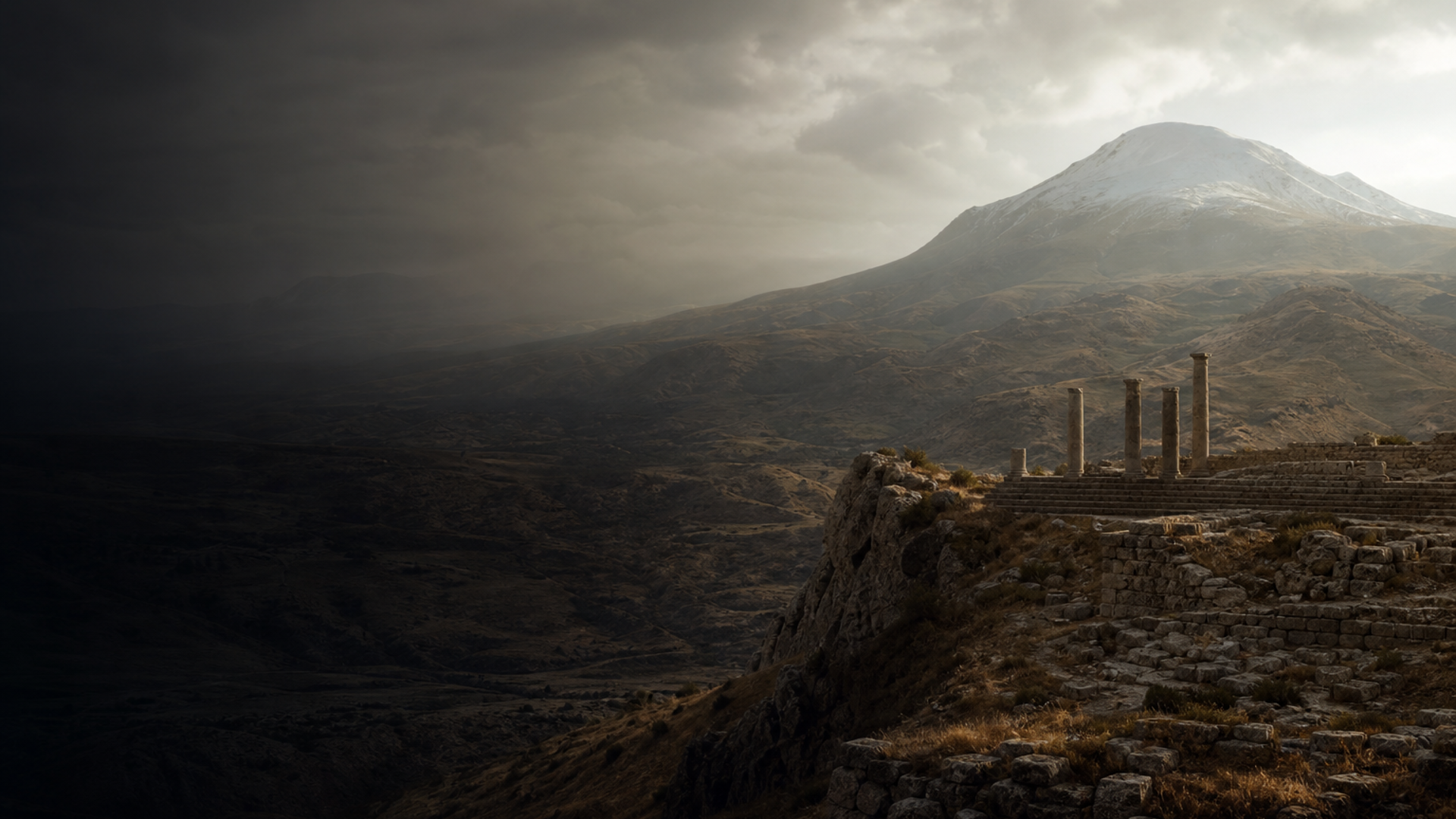
The burial recovered at Beniamin in Shirak Province sits within the continental sweep of the Armenian Highlands during the Hellenistic age — an era when imperial ambitions and local sovereignties braided together. Archaeological data indicate the funerary context dates to 156–1 BCE, placing this individual in the aftermath of the Artaxiad resurgence and amid continuing contact with Seleucid and neighbouring realms.

This landscape was a palimpsest of older Bronze- and Iron-Age traditions layered with Hellenistic motifs introduced through trade, military movement, and elite exchange. Material traces in the region frequently show a mix of local craftsmanship and imported styles, suggesting negotiation between conservative local identities and cosmopolitan influences. Limited evidence from Beniamin itself emphasizes stratigraphic dating and associated finds rather than broad settlement sequences, so we must be cautious extrapolating population dynamics from a single burial.

In cinematic terms: this person occupied a liminal world — geographically anchored in the highlands, yet within a Mediterranean orbit of ideas and objects. Archaeological interpretation therefore frames Beniamin as part of a geographically continuous highland culture that experienced episodic Hellenistic overlay rather than wholesale replacement.

  • Context dated by archaeological association to 156–1 BCE
  • Region shows continuity with Bronze/Iron Age traditions alongside Hellenistic influences
  • Single-site data require cautious, local-scale interpretation
Chapter IV

Daily Life & Society

Archaeological inference about daily life around Beniamin must be careful given the limited dataset. Nonetheless, material culture across the Shirak region in the Hellenistic era implies agrarian livelihoods in upland valleys, pastoral transhumance on surrounding slopes, and village networks connected by trade routes that funneled goods, ideas, and people.

Settlement archaeology in nearby sites records storage architecture, ceramics with both local and imported forms, and metallurgical objects that speak to craft specialization. Social life likely balanced kin-based village organization with emerging elite expressions — public displays, imported goods, or burial distinctions — that reflected Hellenistic social fashions without erasing local customs. Funerary practice at Beniamin, while singular, evokes this tension: individual burial treatments can carry signals of identity, status, and external connection, but one grave cannot map the full spectrum of community life.

Limited burial evidence cautions against broad social reconstruction; instead, Beniamin should be read as a vivid, small-window narrative of how one life sat within a culturally layered landscape.

  • Economy likely mix of agriculture and pastoralism in upland valleys
  • Material culture shows local traditions with selective Hellenistic influences
Chapter V

Genetic Profile

The genetic record for Armenia_Beniamin_Hellenistic consists of a single sampled individual. Archaeogenetic analysis of one genome can yield precise information for that person — mitochondrial lineage, possible Y-chromosome assignment (if male), and genome-wide ancestry — but such a sample cannot represent population-wide diversity. Because only one sample is available, any population-level claims are preliminary and should be framed as hypotheses.

For this individual, published outputs (where available) do not report a common Y- or mtDNA haplogroup in the dataset metadata; therefore haplogroup assignments remain undetermined in the public summary. More informative is the contextual interpretation: broader ancient DNA studies from the Armenian Highlands and neighbouring regions show substantial continuity from Bronze and Iron Age highland populations, coupled in many cases with gene flow from Anatolia, Iran-related groups, and episodic influence from Steppe-derived ancestries. In Hellenistic times, additional contacts with Mediterranean and Anatolian populations — through trade, military, and administrative movements — could have introduced further genetic diversity, but the extent and direction of such gene flow at Beniamin cannot be resolved from a single genome.
In short: the genetic data from Beniamin are scientifically valuable but limited. They best serve as a data point within a growing regional dataset, highlighting the need for more samples to test models of continuity and admixture in Hellenistic Armenia.

  • Genetic conclusions based on a single individual are preliminary
  • Regional ancient DNA suggests highland continuity with episodic external gene flow
Chapter VI

Legacy & Modern Connections

Archaeologically and genetically, the Beniamin individual adds a poignant single-note to the symphony of Armenian history. The Armenian Highlands are characterized in many studies by long-term genetic continuity, which offers one explanation for the strong sense of linguistic and cultural persistence in the region. Yet Hellenistic-era contacts — political, military, and commercial — likely threaded new elements into local gene pools and social fabrics.

Because the dataset here is so small, we must avoid overstating direct links to modern Armenians. Instead, the Beniamin sample contributes to cumulative evidence: when combined with larger datasets, single genomes help refine timelines of continuity and admixture and can illuminate local responses to broader Hellenistic processes. Future sampling from Shirak Province and neighbouring valleys will be essential to transform this solitary voice into a chorus that maps change, resilience, and connection across two millennia.

  • Contributes a data point toward understanding long-term continuity in the Armenian Highlands
  • Highlights need for broader sampling to connect ancient individuals to modern populations
Chapter VII

样本目录

1 份与 Beniamin — Hellenistic Armenia 文化相关的古 DNA 样本,为研究该时期的人群提供遗传线索。

1 / 1 samples
纵向 样本 国家 大纪元 日期 文化 性别 Y-DNA mtDNA
重建的肖像画 Beniamin Antiquity individual, Armenia
Beniamin Antiquity individual, Armenia
Armenia Armenia_Beniamin_Hellenistic 156-1 calBCE (2075±15 BP, UCIAMS-237555) Hellenic Civilization M R-BY184752 -
AI 电源

AI 助手

就 Beniamin — Hellenistic Armenia 文化提问

AI 助手 由DNAGENICS公司制作

解锁此特性
Ask questions about the Beniamin — Hellenistic Armenia culture. Our AI assistant can explain genetic findings, historical context, archaeological evidence, and modern connections.
AI 样本分析

Beniamin — Hellenistic Armenia 文化是人类历史中值得了解的一章……

遗传分析揭示了与早期种群的联系,同时显示了独特的适应和文化创新的证据。 古代DNA样本提供了对迁徙模式、社会结构以及古代种群之间的生物关系的深刻见解。

这是人工智能分析的预览。 解锁全AI 助手, 以探索关于:

  • 遗传组成和祖先
  • 移徙模式和起源
  • 日常生活和文化习俗
  • 现代遗传遗产

探索更古老的文化

揭开古代世界文明的故事

使用优惠码 可减免 35% • 11月12日 到期





