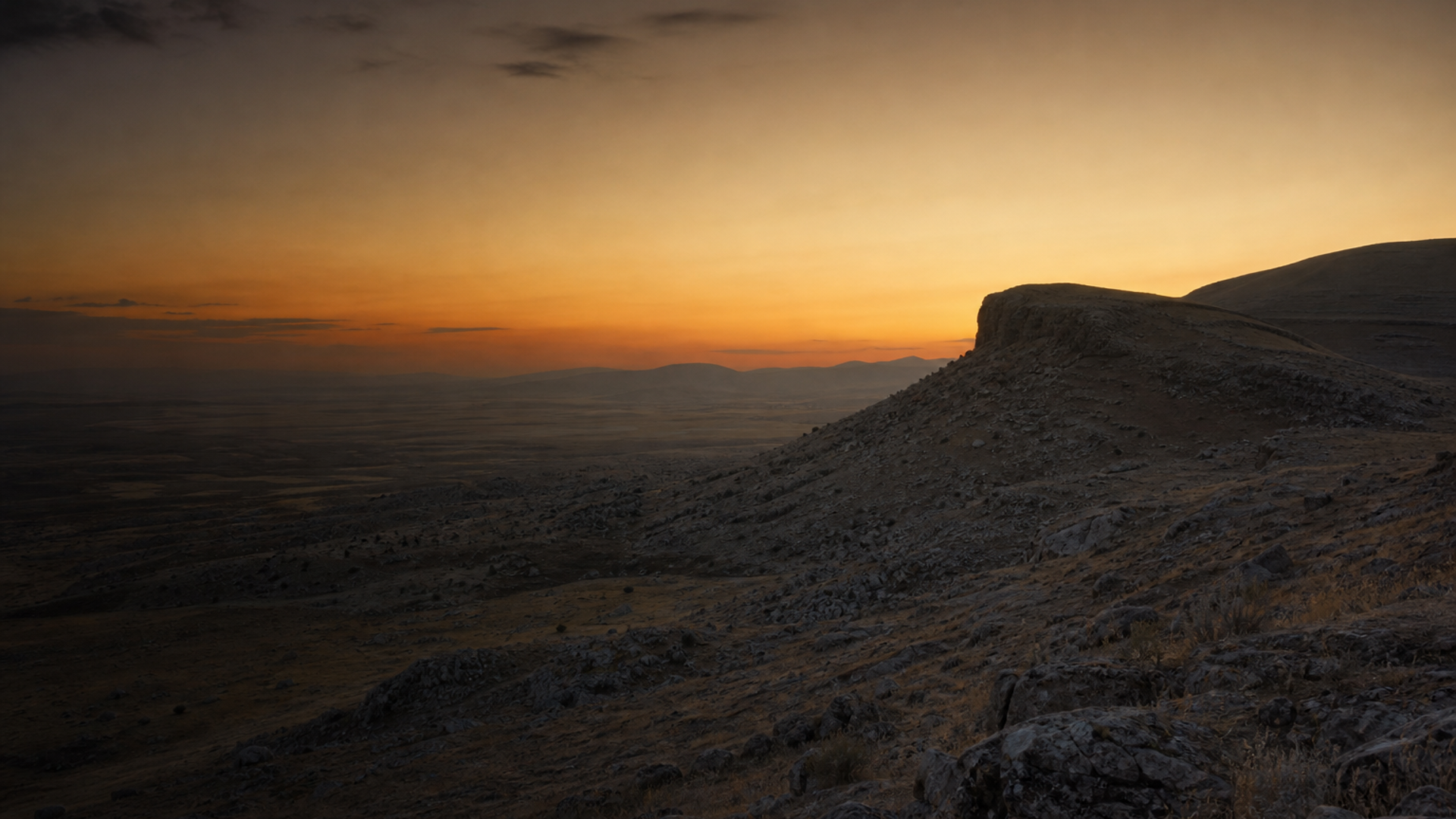
Boncuklu Dawn

下载的 PDF 是图像副本。如需可选中文本及更好的辅助技术支持,请使用打印功能。

跳转到主内容
文明焦点

Boncuklu Dawn

Early PPNA communities in southeastern Anatolia at the threshold of farming

9000 CE - 8500 BCE
Southeastern Turkey (Mardin, Dargeçit)

剧情

Archaeological remains from Boncuklu Tarla (c. 9000–8500 BCE) capture life in the Pre‑Pottery Neolithic A of southeastern Turkey. Limited ancient DNA (3 samples) hints at matrilineal K1a presence; broader genetic links tie early Anatolian groups to later Neolithic expansions.

Time Period

9000–8500 BCE

Region

Southeastern Turkey (Mardin, Dargeçit)

Common Y-DNA

Undetermined (insufficient Y data in 3 samples)

Common mtDNA

K1a (1 of 3)

时间线

9000 BCE

Occupation at Boncuklu Tarla

Radiocarbon‑anchored occupation of Boncuklu Tarla begins, representing PPNA settlement in southeastern Anatolia.

Origins & Emergence

The settlements at Boncuklu Tarla, located in the modern district of Dargeçit (Mardin province), sit within the first waves of sedentism in Anatolia during the Pre‑Pottery Neolithic A (PPNA, ca. 9000–8500 BCE). Archaeological data indicate small, sometimes seasonal hamlets clustered along river valleys and rock outcrops where humans experimented with plant management and complex foraging. The material record—simple rectilinear architecture, hearths, and artifacts such as grinding stones and bone tools—evokes a society shifting from mobile bands to anchored households.

Culturally, PPNA communities in southeastern Turkey are part of a broader mosaic across the Levant and Anatolia: shared symbolic motifs and nascent storage technologies appear alongside regional variation in lithic and bone industries. Limited evidence suggests that this horizon is not a single migration event but a patchwork of local innovations and interregional contact. Boncuklu Tarla illustrates this transitionary phase: the settlement’s stratigraphy preserves early domestic spaces that prefigure the more elaborate villages of the later Pre‑Pottery Neolithic B (PPNB).

The archaeological picture at Boncuklu Tarla is vivid but partial. Radiocarbon dates anchor occupation to the ninth millennium BCE, yet interpretations remain provisional because excavation areas are limited and only a few genetic samples exist. Together, material culture and emerging DNA data offer a cinematic glimpse of communities at the threshold of farming.

  • Located at Boncuklu Tarla, Dargeçit, Mardin (SE Turkey)
  • Occupied ca. 9000–8500 BCE during the PPNA
  • Reflects early sedentarism and plant‑management practices

Daily Life & Society

Life in a PPNA hamlet like Boncuklu Tarla would have been organized around hearths, shared workspaces, and small familial compounds. Archaeological remains—simple rectangular houses built of stone and mud, grinding implements, and butchered animal bones—suggest a mixed subsistence economy: wild cereals and pulses were gathered and perhaps intensively managed, while hunting and fishing supplemented the diet. Communal activities probably revolved around food processing, tool production, and repair of organic containers.

Social bonds were likely cemented by ritual objects and portable art: beads, ochre, and curated bone artifacts imply networks of exchange and shared symbolic language. The skeletal remains recovered at PPNA sites often show varied nutritional and workload markers, hinting at differentiated tasks by age and possibly sex, though direct inference is limited at Boncuklu Tarla due to small sample size.

Built spaces and refuse patterns suggest households maintained storage for seasonal surpluses and engaged in craft specialization at modest scales. The absence of full domestication suites in the earliest layers indicates a slow transition: plants and animals moved gradually from wild resources to managed and eventually domesticated forms across subsequent millennia.

  • Rectangular architecture with hearth-focused interiors
  • Mixed subsistence: gathered wild cereals, hunting, and fishing

Genetic Profile

Ancient DNA from Boncuklu Tarla is extremely limited—three samples in total—so conclusions must be framed as preliminary. Among these, one individual carries mitochondrial haplogroup K1a, a lineage that appears in later Neolithic contexts across Anatolia and Europe. No robust Y‑chromosome pattern emerges from the dataset at the site, leaving paternal lineages undetermined for this small assemblage.

Despite the low sample count, the genetic signal aligns with a broader pattern observed in PPNA and early Neolithic Anatolian datasets: genome‑wide studies of Anatolian early farmers (from multiple sites and later periods) point to ancestry components that subsequently contributed to the Neolithic expansion into Europe. At Boncuklu Tarla, the presence of mtDNA K1a—while only one data point—echoes matrilineal connections seen elsewhere in early farming populations.

It is critical to emphasize uncertainty. With only three genomes, population‑level inferences (e.g., population structure, migration rates, or sex‑biased gene flow) are not resolvable. Future sampling at Boncuklu Tarla and neighboring sites, with higher coverage genome‑wide data, will be necessary to test hypotheses about continuity with local hunter‑gatherers, incoming Levantine inputs, or the role of Anatolia as a source for European Neolithic ancestry.

  • Sample count: 3—interpretations are preliminary
  • mtDNA: K1a detected in 1 individual; Y‑DNA undetermined

Legacy & Modern Connections

Boncuklu Tarla occupies a pivotal place in the story of Near Eastern prehistory: it captures the lived experience of people experimenting with sedentism, plant use, and new social forms. Genetically and culturally, PPNA communities in Anatolia form part of the ancestral tapestry that would shape later Neolithic populations across Anatolia and into Europe.

Modern populations in Anatolia retain complex mixtures of these deep ancestries layered with later movements, so direct lines from Boncuklu Tarla inhabitants to any single present‑day group cannot be assumed. Instead, the site’s true legacy is as an early chapter in a long process of biological and cultural transformation—one that archaeologists and geneticists continue to unravel together. Continued excavation and additional ancient DNA sampling will clarify how these early communities contributed to the broader human story.

  • Early contribution to Anatolian Neolithic cultural trajectories
  • Modern genetic links are complex; direct descent is not simple

AI 助手

AI 助手 由DNAGENICS公司制作

解锁此特性
Ask questions about the Boncuklu Dawn culture. Our AI assistant can explain genetic findings, historical context, archaeological evidence, and modern connections.

AI 样本分析

Boncuklu Dawn 文化是人类历史中值得了解的一章……

遗传分析揭示了与早期种群的联系,同时显示了独特的适应和文化创新的证据。 古代DNA样本提供了对迁徙模式、社会结构以及古代种群之间的生物关系的深刻见解。

这是人工智能分析的预览。 解锁全AI 助手, 以探索关于:

  • 遗传组成和祖先
  • 移徙模式和起源
  • 日常生活和文化习俗
  • 现代遗传遗产
使用优惠码 可减免 30% • 11月15日 到期