Bronze Dawn: Lithuania's Ancient Voices

下载的 PDF 是图像副本。如需可选中文本及更好的辅助技术支持,请使用打印功能。

Bronze Dawn: Lithuania's Ancient Voices

揭开一个失落的文明

正在加载考古记录……

正在收集古代记录

跳转到主内容
Bronze Dawn: Lithuania's Ancient Voices
文明焦点

Bronze Dawn: Lithuania's Ancient Voices

Four individuals from Turlojiškė offer a tentative window into Lithuania's Bronze Age lives and genes.

2100 CE - 600 BCE
Lithuania (Baltic)
滚动开始
Chapter I

剧情

了解 Bronze Dawn: Lithuania's Ancient Voices 文化

Archaeological and genetic data from four Bronze Age individuals (2100–600 BCE) at Turlojiškė, Lithuania, suggest strong male-line R haplogroups alongside diverse maternal lineages. Limited samples mean conclusions are preliminary but align with wider Baltic Bronze Age patterns.

Time Period

2100–600 BCE

Region

Lithuania (Baltic)

Common Y-DNA

R (3 of 4 males sampled)

Common mtDNA

U, T2b, H, H5 (one each)

Chapter II

时间线

这种文化历史上的关键时刻

2100 BCE

Early Bronze Age horizons in the Baltic

Local Bronze Age expressions emerge in Lithuania; metallurgy and long-distance exchange begin to shape material culture (limited direct evidence from Turlojiškė).

Chapter III

Origins & Emergence

Across the lowlands and river valleys of what is now Lithuania, the Bronze Age unfolded as a mosaic of continuity and contact. Archaeological data indicates local Late Neolithic traditions persisted into the early Bronze Age, while new technologies—most visibly bronze metallurgy—arrived via networks that linked the eastern Baltic to central and northern Europe. At sites such as Turlojiškė, stratified deposits and grave goods echo a slow, regionally inflected emergence rather than a sudden cultural replacement.

Limited evidence suggests that these communities engaged in long-distance trade—amber from the Baltic shore, and metalwork circulating along river corridors—creating material links with Scandinavia and the Pontic-Caspian world. Ceramic styles and burial practices show both local variants and elements shared with neighbouring Baltic groups. Genetic data (see Genetics section) hints at continuity of earlier Neolithic ancestry combined with steppe-associated lineages, a pattern increasingly observed across Bronze Age Europe. However, with only four sampled individuals from Turlojiškė, interpretations about population movements, cultural adoption, or demographic turnover remain provisional.

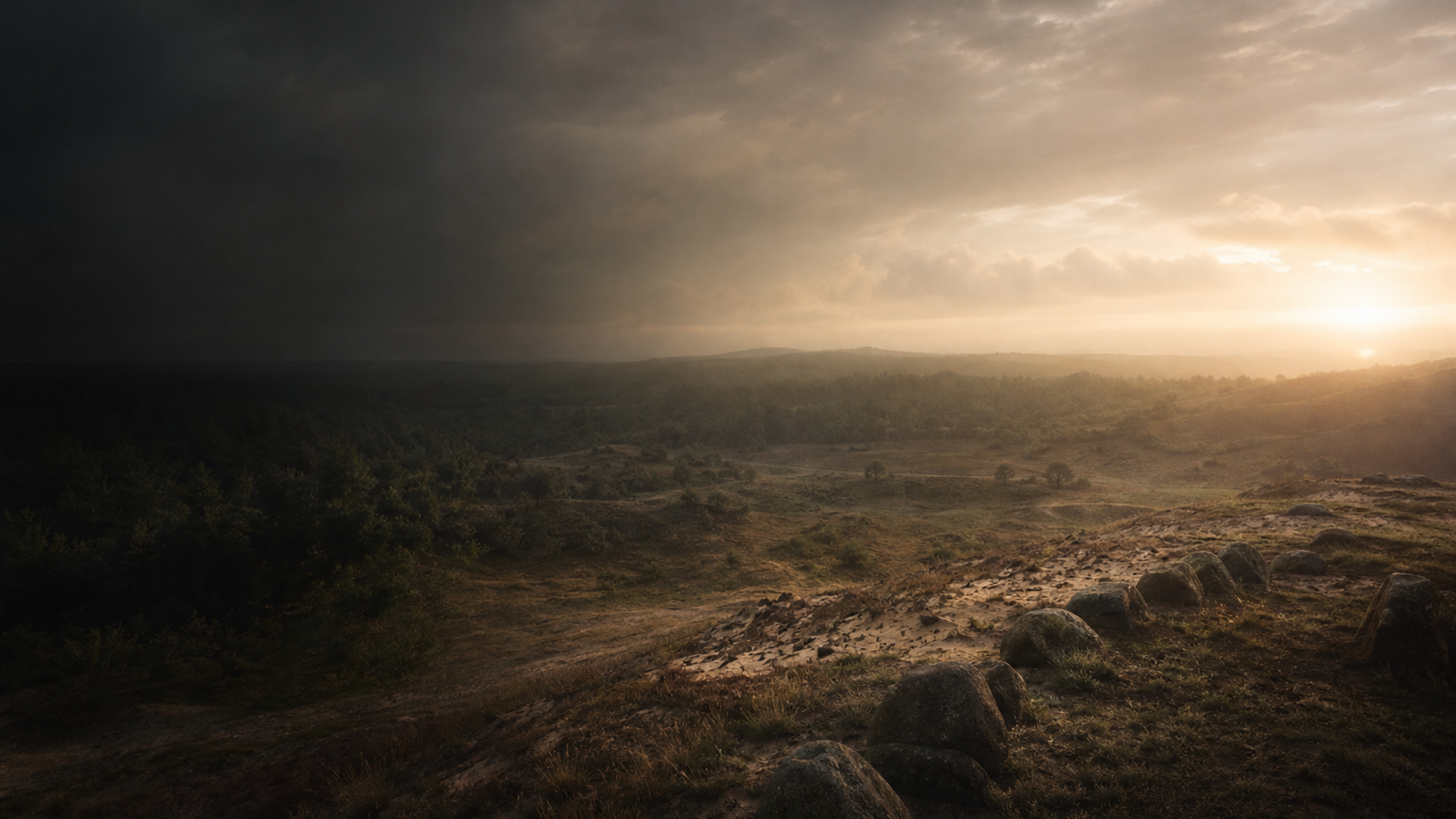
Seen from the present, the emergence of Lithuania's Bronze Age is cinematic: hearth smoke over peatlands, hammered bronze flashing in the sun, and a landscape shaped by both old lifeways and new connections—yet our view is blurred by the small number of ancient genomes and the fragmentary archaeological record.

  • Transition from Late Neolithic to Bronze Age shows continuity and new influences
  • Bronze metallurgy and amber exchange connected Lithuania to wider Europe
  • Small sample sizes mean population-level conclusions are tentative
Chapter IV

Daily Life & Society

Archaeological traces from Bronze Age Lithuania paint scenes of pragmatic ingenuity and ritual presence. Farmsteads near rivers and wetlands exploited mixed economies: cereal cultivation, pastoralism, fishing, and foraging. Bronze objects—tools, ornaments, and occasional weapons—appear alongside durable pottery and organic material seldom preserved, suggesting skilled craft traditions adapted to a cool, wooded environment.

Burial evidence across the Baltic region, including mound burials and flat graves, reveals variation in mortuary practice. Grave goods at sites like Turlojiškė include personal ornaments and metal items that likely signaled identity, status, or networks of exchange. Landscape features—wetlands, rivers, and routes of amber—structured movement and ritual. Limited osteological data suggest physically robust lives: activity markers consistent with heavy labor and seasonal mobility.

Social organization is not directly readable from the few graves sampled genetically, but archaeological patterns hint at communities with strong kin ties and localized leadership. Trade and gift exchange—amber, metal, and crafted goods—would have knitted together households and hamlets into broader webs of affiliation. Every recovered artifact and bone fragment offers a cinematic shard of everyday life: a hammered pin, a stitched garment imagined from wear patterns, the rhythm of seasons shaping subsistence strategies.

  • Mixed economy: farming, herding, fishing, and woodland resources
  • Grave goods and landscape features suggest local identities and exchange networks
Chapter V

Genetic Profile

The genetic snapshot from Turlojiškė comes from four Bronze Age individuals dated between 2100 and 600 BCE. Three of the four male individuals carry Y-chromosome haplogroups classified broadly as R. Maternal lineages are diverse across the four samples: U, T2b, H, and H5 are each represented once. This pattern—dominant R on the paternal side with mixed mitochondrial haplogroups—mirrors broader Eurasian Bronze Age tendencies but must be read with caution.

Modern ancient-DNA research links R-lineages in many parts of Bronze Age Europe to steppe-associated ancestry, while mtDNA haplogroups such as U and H reflect deeper Mesolithic and Neolithic maternal continuities across northern Europe. Archaeological data indicates continued local cultural traits in the Baltic, so the genetic signal may reflect admixture between incoming steppe-descended groups and existing farmer/forager-descended populations.
Crucially, the small sample count (n=4) limits the statistical power to infer demographic processes: claims about patrilineal dominance, inheritance patterns, or population replacement are preliminary. Still, the co-occurrence of paternal R haplogroups with varied maternal lineages at Turlojiškė is consistent with scenarios in which relatively few male-mediated lineages expanded locally while women contributed diverse maternal ancestry, or where social practices and mobility shaped sex-biased gene flow. Future sampling across more sites and individuals in Lithuania will be essential to test these hypotheses and place Turlojiškė in a broader genetic landscape.

  • Three of four males carry Y-DNA haplogroup R; mtDNA shows U, T2b, H, H5
  • Small sample size (n=4) makes demographic conclusions preliminary
Chapter VI

Legacy & Modern Connections

The echoes of Bronze Age lifeways persist faintly in the genetic heritage and cultural memory of the Baltic. Genetic continuity signals seen in broader datasets suggest that elements of the region's Bronze Age population contributed to the ancestry of later Baltic groups, though successive migrations and historical events layered new influences over millennia. Linguistic continuity—ultimately yielding the Baltic languages—may overlay these genetic threads, but direct causality between genes and language remains complex and uncertain.

For modern Lithuanians and neighboring peoples, the Turlojiškė individuals are pieces of a long-lived human story: they attest to local adaptation, exchange across seascapes and riverine corridors, and the shifting balance of continuity and change. Given the preliminary nature of the data, we emphasize cautious framing: these four genomes are intriguing windows, not definitive portraits. As more ancient genomes from Lithuania and the Baltic accumulate, a fuller, more nuanced picture of descent and connection will emerge.

  • Contributes to the genetic substrate that later influenced Baltic populations
  • Current conclusions are tentative; more ancient genomes are needed for clarity
AI 电源

AI 助手

就 Bronze Dawn: Lithuania's Ancient Voices 文化提问

AI 助手 由DNAGENICS公司制作

解锁此特性
Ask questions about the Bronze Dawn: Lithuania's Ancient Voices culture. Our AI assistant can explain genetic findings, historical context, archaeological evidence, and modern connections.
AI 样本分析

Bronze Dawn: Lithuania's Ancient Voices 文化是人类历史中值得了解的一章……

遗传分析揭示了与早期种群的联系,同时显示了独特的适应和文化创新的证据。 古代DNA样本提供了对迁徙模式、社会结构以及古代种群之间的生物关系的深刻见解。

这是人工智能分析的预览。 解锁全AI 助手, 以探索关于:

  • 遗传组成和祖先
  • 移徙模式和起源
  • 日常生活和文化习俗
  • 现代遗传遗产

探索更古老的文化

揭开古代世界文明的故事

使用优惠码 可减免 35% • 11月12日 到期




