Bronze Echoes — Netherlands MBA

下载的 PDF 是图像副本。如需可选中文本及更好的辅助技术支持,请使用打印功能。

Bronze Echoes — Netherlands MBA

揭开一个失落的文明

正在加载考古记录……

正在收集古代记录

跳转到主内容
Bronze Echoes — Netherlands MBA
文明焦点

Bronze Echoes — Netherlands MBA

Twelve Middle Bronze Age individuals from coastal Holland illuminate maternal lineages and landscape ties.

1620 CE - 932 BCE
Netherlands (Noord‑Holland, Zuid‑Holland)
滚动开始
Chapter I

剧情

了解 Bronze Echoes — Netherlands MBA 文化

Human remains dated 1620–932 BCE from five Dutch sites (Noord‑Holland, Zuid‑Holland) show maternal haplogroups dominated by U and H. Archaeological and genetic data together suggest continuity of local maternal lines alongside broader Bronze Age ancestries; Y‑DNA data are limited.

Time Period

1620–932 BCE

Region

Netherlands (Noord‑Holland, Zuid‑Holland)

Common Y-DNA

Not reported / limited data

Common mtDNA

U (4), H (3), K1d (1), T2b (1), T (1) — 10/12 samples

Chapter II

时间线

这种文化历史上的关键时刻

1620 BCE

Earliest dated individuals in dataset

First radiocarbon dates in the series place human remains at c.1620 BCE in Noord‑Holland sites.

1200 BCE

Regional exchange intensifies

Archaeological indicators suggest increased movement of metal and goods along North Sea and riverine routes.

932 BCE

Latest dated individual in dataset

The most recent radiocarbon date in the series falls near 932 BCE, marking the dataset's temporal endpoint.

Chapter III

Origins & Emergence

The Netherlands_MBA assemblage (1620–932 BCE) sits within the Middle Bronze Age landscape of the low countries, a time when coastal wetlands, riverine marshes and reclaimed peatlands framed human life. Archaeological data indicate an intensification of local settlement and long‑distance exchange during this period, with metal objects and raw materials moving along North Sea and inland waterways.

Samples derive from five specific localities in the western Netherlands: Westwoud‑Binnenwijzend and Hoogkarspel‑Houterpolder‑West (Noord‑Holland), Velsen‑Hofgeesterweg and Wervershoof‑Zwaagdijk (Noord‑Holland), and Vlaardingen‑Krabbeplas (Zuid‑Holland). Radiocarbon and contextual dates place these burials and depositions between c.1620 and 932 BCE, a span that overlaps regional shifts in burial practice and craft specialization.

Archaeological evidence suggests these communities were neither isolated nor static: trade routes and occasional migration introduced new material styles and techniques. At the same time, local lifeways adapted to waterlogged landscapes, promoting small, mobile hamlets and specialized economy. Limited sample size and uneven preservation mean that models of origin remain provisional; however, the combined archaeological and genetic picture points to a population rooted in local traditions but open to wider Bronze Age networks.

  • Samples dated 1620–932 BCE from five sites in Noord‑ and Zuid‑Holland
  • Region characterized by coastal, marsh and peatland economies
  • Archaeological signals of regional exchange and craft specialization
Chapter IV

Daily Life & Society

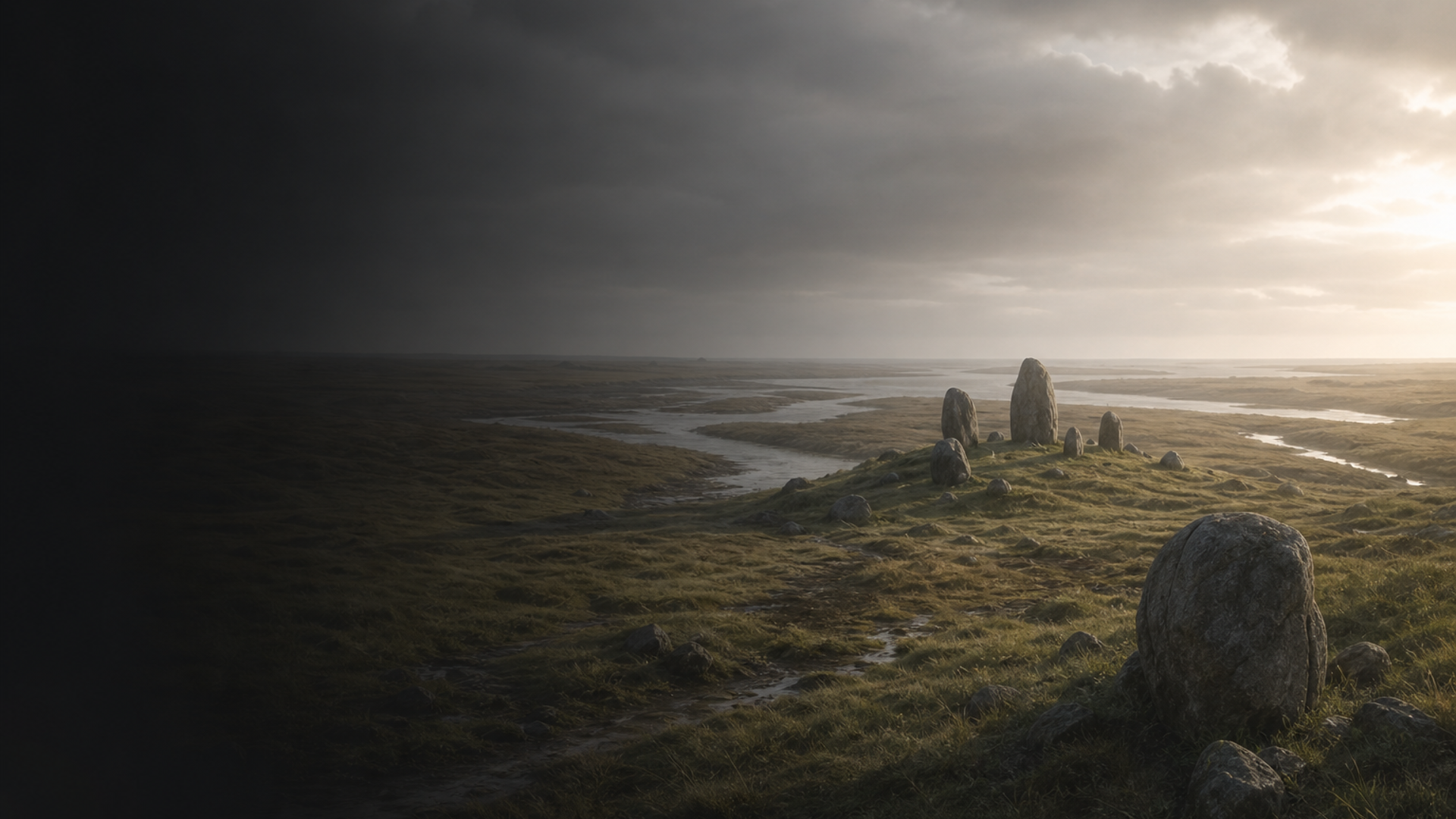
Life in Middle Bronze Age coastal Holland unfolded against a dramatic, water‑framed stage. Archaeological traces—settlement scatters, ditch systems, and isolated burials—paint a picture of small communities adapting to tidal influences, seasonal flooding and rich estuarine resources. Metalwork and imported goods in the broader region indicate participation in exchange networks that connected the North Sea coast with neighbouring inland zones.

Economy likely blended mixed agriculture with pastoralism, supplemented by fishing, fowling and exploitation of wetland resources. Craft specialists—metalworkers, bone and antler artisans—would have been crucial nodes in local exchange, while mobility along rivers and the shoreline enabled the circulation of ideas and objects. Funerary evidence from the Netherlands_MBA context is fragmentary; where preserved, burials suggest varied practices that may reflect social differentiation, age and gender roles.

Archaeological data indicate incremental changes rather than abrupt population replacement: ceramic styles, toolkits and subsistence strategies show continuity with earlier Neolithic and Bronze Age traditions even as external influences appear. Yet preservation biases and limited excavation mean many aspects of daily life remain shadowed and must be inferred cautiously.

  • Economy combined agriculture, herding and wetland resources
  • Participation in North Sea exchange networks with specialized crafts
Chapter V

Genetic Profile

Genetic data from the Netherlands_MBA series comprise 12 individuals sampled across five sites. Mitochondrial haplogroups are reported for 10 individuals: U (4), H (3), K1d (1), T2b (1), and T (1). These maternal lineages are consistent with patterns observed across Bronze Age northwestern Europe: haplogroup U is often associated with long‑standing hunter‑gatherer maternal ancestry in Europe, while H, K and T lineages are frequent among Neolithic farming communities and their descendants.

No consistent Y‑DNA signature is reported in the provided dataset, so paternal-line conclusions must remain open. Without robust Y‑chromosome data and genome‑wide autosomal analyses included here, we rely on cautious comparison: many Bronze Age populations of northwest Europe show admixture between local Neolithic farmer-derived ancestries and earlier Anatolian/Levantine farmer components, combined with varying levels of Steppe‑related ancestry introduced during the 3rd millennium BCE.

Taken together, the mtDNA composition suggests maternal continuity of both hunter‑gatherer‑linked and farmer‑linked lineages in southern coastal Holland during the Middle Bronze Age. With 12 total samples and mtDNA available for 10, the dataset is moderate in size; patterns are informative but preliminary, and additional genome-wide sampling would clarify the balance of ancestries and potential sex‑biased demographic processes.

  • mtDNA (10/12): U (4), H (3), K1d (1), T2b (1), T (1)
  • No common Y‑DNA reported — paternal patterns remain unresolved
Chapter VI

Legacy & Modern Connections

The mitochondrial haplogroups found among Netherlands_MBA individuals—especially H and U—persist in modern European populations, providing a genetic echo across millennia. Archaeological continuity in settlement patterns and material culture suggests that, while Bronze Age communities engaged with broader trade and migratory currents, there was also substantial local inheritance of practices and lineages.

Caution is essential: direct one‑to‑one continuity between these 12 individuals and contemporary Dutch genomes cannot be assumed. Genetic landscapes shift with time, and limited Y‑chromosome data here prevent assessments of paternal continuity or sex‑biased migration. Nevertheless, combining archaeological context with these maternal lineages offers a textured portrait: communities rooted in coastal landscapes, connected by trade, and genetically shaped by both deep European hunter‑gatherer ancestries and millennia of farming and mobility.

Future, larger-scale ancient DNA sampling and genome‑wide analyses will refine connections to modern populations and clarify the demographic processes that produced the genetic mosaic of northwestern Europe.

  • Maternal haplogroups H and U continue into modern Europe but do not prove direct continuity
  • Further genome‑wide sampling needed to link Bronze Age individuals to present-day Dutch populations
AI 电源

AI 助手

就 Bronze Echoes — Netherlands MBA 文化提问

AI 助手 由DNAGENICS公司制作

解锁此特性
Ask questions about the Bronze Echoes — Netherlands MBA culture. Our AI assistant can explain genetic findings, historical context, archaeological evidence, and modern connections.
AI 样本分析

Bronze Echoes — Netherlands MBA 文化是人类历史中值得了解的一章……

遗传分析揭示了与早期种群的联系,同时显示了独特的适应和文化创新的证据。 古代DNA样本提供了对迁徙模式、社会结构以及古代种群之间的生物关系的深刻见解。

这是人工智能分析的预览。 解锁全AI 助手, 以探索关于:

  • 遗传组成和祖先
  • 移徙模式和起源
  • 日常生活和文化习俗
  • 现代遗传遗产

探索更古老的文化

揭开古代世界文明的故事

使用优惠码 可减免 35% • 11月12日 到期





