Casal Bertone: Rome’s Imperial Voices

下载的 PDF 是图像副本。如需可选中文本及更好的辅助技术支持,请使用打印功能。

Casal Bertone: Rome’s Imperial Voices

揭开一个失落的文明

正在加载考古记录……

正在收集古代记录

跳转到主内容
Casal Bertone: Rome’s Imperial Voices
文明焦点

Casal Bertone: Rome’s Imperial Voices

Small ancient-DNA assemblage illuminates everyday lives at Rome (1–300 CE)

1 CE - 300 CE
Rome, Italy
滚动开始
Chapter I

剧情

了解 Casal Bertone: Rome’s Imperial Voices 文化

Ancient DNA from four individuals at Casal Bertone, Rome (1–300 CE) offers a cautious window into the mobility and maternal lineages of the Roman Imperial city. Archaeological context and mitochondrial haplogroups hint at local and Mediterranean connections; conclusions remain preliminary.

Time Period

1–300 CE

Region

Rome, Italy

Common Y-DNA

Not reported / undetermined (small sample)

Common mtDNA

X2n, H, H+

Chapter II

时间线

这种文化历史上的关键时刻

1 CE

Roman Imperial context at Casal Bertone

Archaeological deposits at Casal Bertone date to the Roman Imperial period, reflecting urban funerary and domestic activity in Rome (1–300 CE).

Chapter III

Origins & Emergence

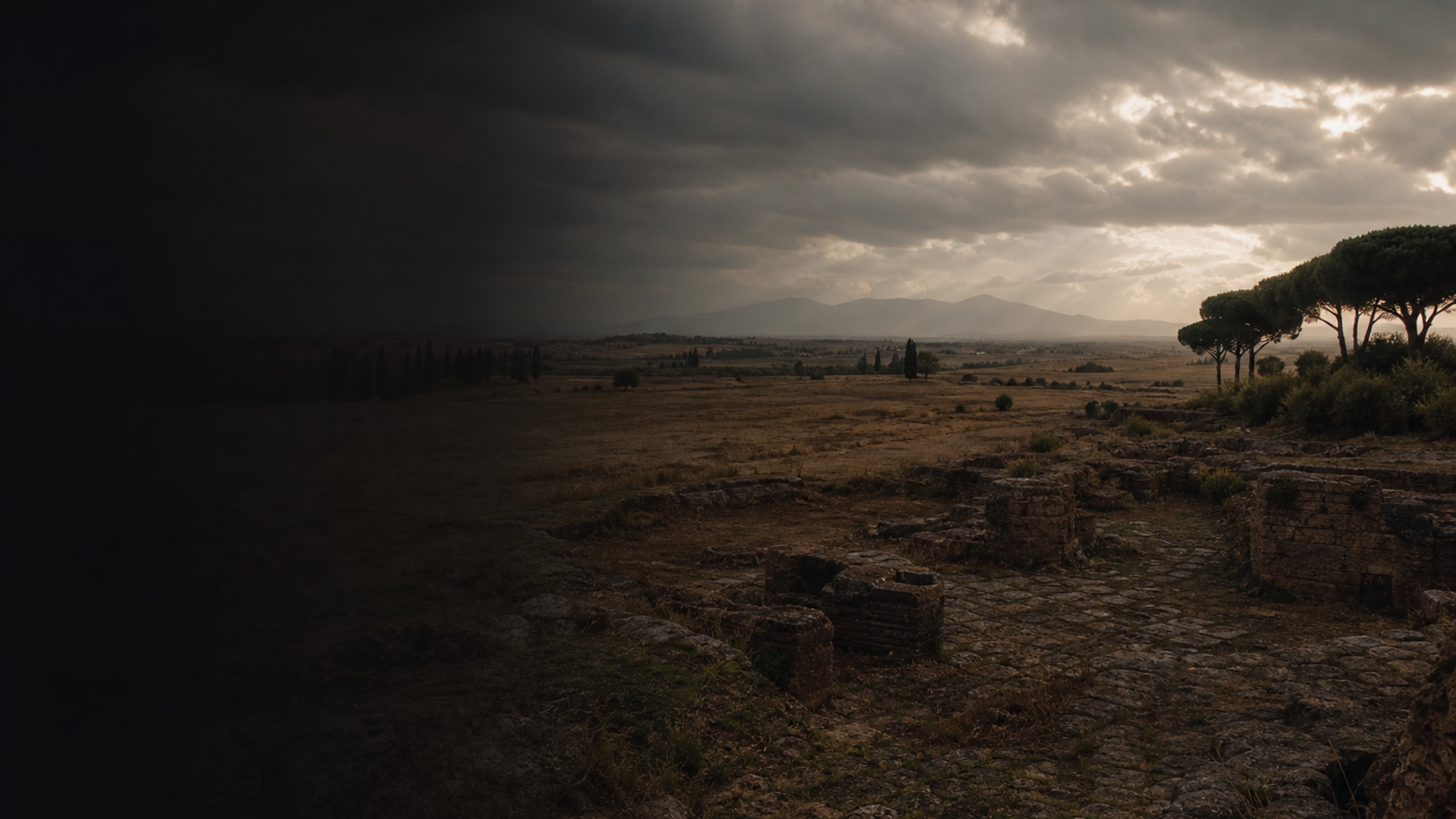
Casal Bertone sits within the living, breathing metropolis of Imperial Rome. Archaeological excavations at the Casal Bertone area, close to the eastern approaches of Rome, have exposed funerary contexts and traces of urban life dated broadly to the Roman Imperial period (1–300 CE). These deposits reflect a city that was by turns cosmopolitan, centrifugal, and constantly replenished by people, goods and ideas drawn from across the Mediterranean and beyond.

Archaeological data indicates that Casal Bertone functioned within the dense urban landscape of Rome: tombs, funerary paraphernalia, and associated features speak to a population engaged in diverse crafts, trade, and ritual practices. The small assemblage of four ancient DNA samples provides a tantalizing, but limited, genetic snapshot of this environment. Limited evidence suggests maternal lineages at Casal Bertone included haplogroups X2n and variants of H, lineages known from both local Italian contexts and the wider Mediterranean.

Because the sample count is very small, any narrative about origins must remain cautious. These remains nevertheless echo a well-attested archaeological pattern: Imperial Rome was a nexus of movement. Genetic signals from places like Casal Bertone are best read as individual threads within a vast, interwoven fabric of people who inhabited the capital and its environs.

  • Casal Bertone: a Roman Imperial-era urban funerary area in Rome
  • Archaeological context dated to 1–300 CE
  • Small genetic sample offers a preliminary view of maternal lineages
Chapter IV

Daily Life & Society

Bones and artefacts from Casal Bertone evoke a tactile city: sunlight on dusty streets, the rhythms of markets, the span of workshops and funerary rites. Archaeological evidence indicates varied social settings — households, artisans, and burial grounds coexisted within the urban fabric. Even where material remains are fragmentary, the placement and treatment of the dead reveal social identities, connections to neighborhood networks, and economic roles.

The Casal Bertone deposits reflect typical Roman urban life: mobility, economic specialization, and close encounter with diverse peoples. Funerary architecture and grave goods, where preserved, imply familiarity with Roman funerary customs while allowing for individual variation. Archaeological data suggests residents may have included both long-settled Italians and newcomers who came to Rome for work, trade, or service.

Because the genetic dataset from this site is small, it cannot by itself reconstruct household composition or social rank. Instead, it must be integrated with pottery, burial types, and stratigraphic evidence to build a fuller picture. When combined, these lines of evidence create a cinematic frame: a city humming with commerce, anchored by local traditions yet open to the pulsing influence of the wider Mediterranean world.

  • Archaeology indicates mixed urban activities: funerary, domestic, and craft-related
  • Material culture suggests interaction between local and incoming populations
Chapter V

Genetic Profile

Four mitochondrial genomes from Casal Bertone were recovered and assigned to haplogroups X2n (1), H (1), and H+ (1); one individual lacked a confidently reported mtDNA call in the available summary. No common Y-DNA was reported for this small cohort. Mitochondrial haplogroup H is widespread across Europe and the Mediterranean during the first centuries CE; its presence at Casal Bertone is archaeogenetically unsurprising and consistent with a broadly European maternal substrate. Haplogroup X2n is less common and can be found in both Mediterranean and Near Eastern contexts, suggesting possible connections that reach beyond immediate local ancestry, though the distribution of X subclades is complex and regionally variable.

It is crucial to emphasize the preliminary nature of these genetic insights. With only four samples, statistical power is minimal and the possibility of sampling bias is high: these individuals may not represent the broader population of Casal Bertone or Rome. Ancient DNA preservation, differential burial sampling, and lab contamination risks also shape interpretation. Still, these data align with broader patterns observed in Imperial Roman contexts: genetic heterogeneity reflecting mobility, trade networks, and population admixture.

Future comparisons with larger databases from contemporaneous Roman cemeteries, port towns, and provincial sites will be necessary to resolve whether the maternal lineages at Casal Bertone reflect local continuity, recent migration, or a mixture of both.

  • mtDNA haplogroups recovered: X2n, H, H+ (preliminary sample of 4)
  • No robust Y-DNA signal reported; conclusions limited by small sample size
Chapter VI

Legacy & Modern Connections

The human stories from Casal Bertone reach forward into the present as hints of how Imperial Rome shaped genetic and cultural landscapes. Archaeologically, Casal Bertone contributes to our understanding of how burial practice and urban life were organized in Rome’s eastern districts. Genetically, the maternal lineages observed are consistent with a city defined by long-range connections and local continuity.

Any direct line from these four individuals to modern populations must be drawn with care. Modern Italians inherit a palimpsest of ancestries accumulated over millennia; the Casal Bertone sample represents a single small chapter. Nevertheless, integrating these ancient mtDNA results into larger regional datasets helps illuminate the ebb and flow of mobility, marriage networks, and maternal ancestry during a formative era for the Mediterranean world.

In short: Casal Bertone’s bones whisper of a Rome both local and cosmopolitan—an imperial city whose genetic and cultural legacies continue to be pieced together by archaeology and ancient DNA.

  • Contributes to broader narratives of Imperial Rome’s mobility and diversity
  • Direct modern links are suggestive but remain tentative due to small sample size
AI 电源

AI 助手

就 Casal Bertone: Rome’s Imperial Voices 文化提问

AI 助手 由DNAGENICS公司制作

解锁此特性
Ask questions about the Casal Bertone: Rome’s Imperial Voices culture. Our AI assistant can explain genetic findings, historical context, archaeological evidence, and modern connections.
AI 样本分析

Casal Bertone: Rome’s Imperial Voices 文化是人类历史中值得了解的一章……

遗传分析揭示了与早期种群的联系,同时显示了独特的适应和文化创新的证据。 古代DNA样本提供了对迁徙模式、社会结构以及古代种群之间的生物关系的深刻见解。

这是人工智能分析的预览。 解锁全AI 助手, 以探索关于:

  • 遗传组成和祖先
  • 移徙模式和起源
  • 日常生活和文化习俗
  • 现代遗传遗产

探索更古老的文化

揭开古代世界文明的故事

使用优惠码 可减免 35% • 11月12日 到期