Chichén Itzá: Voices of the Maya Lowlands

下载的 PDF 是图像副本。如需可选中文本及更好的辅助技术支持,请使用打印功能。

Chichén Itzá: Voices of the Maya Lowlands

揭开一个失落的文明

正在加载考古记录……

正在收集古代记录

跳转到主内容
Chichén Itzá: Voices of the Maya Lowlands
文明焦点

Chichén Itzá: Voices of the Maya Lowlands

Archaeology and ancient DNA illuminate life at a Yucatán metropolis (550–1200 CE)

550 CE - 1200 CE
Chichén Itzá, northern Yucatán Peninsula, Mexico
滚动开始
Chapter I

剧情

了解 Chichén Itzá: Voices of the Maya Lowlands 文化

Archaeogenetic study of 95 individuals from Chichén Itzá (Yucatán, Mexico) shows predominant maternal haplogroup A variants, suggesting long-standing local maternal lineages during 550–1200 CE. Archaeology reveals urban growth, ritual landscapes, and interregional connections; paternal data are limited.

Time Period

550–1200 CE (Classic to Early Postclassic)

Region

Chichén Itzá, northern Yucatán Peninsula, Mexico

Common Y-DNA

Not reported / limited in this dataset

Common mtDNA

A (29), A2 (11), A2r (6), A2g (4), B2l (4); other lineages present (95 samples)

Chapter II

时间线

这种文化历史上的关键时刻

550 CE

Early urban consolidation

Archaeological layers indicate growing settlement and initial monumental construction at Chichén Itzá, marking its emergence as a regional center.

800 CE

Architectural florescence and interaction

Major building phases produce plazas, ballcourts, and sculptural programs reflecting internal growth and external stylistic influences.

1000 CE

Peak urban activity

Chichén Itzá functions as a pilgrimage and commercial hub, drawing people from across the Yucatán and beyond.

1200 CE

Decline and reorganization

Monumental activity decreases and the urban landscape is reorganized as regional power shifts occur across the Maya lowlands.

Chapter III

Origins & Emergence

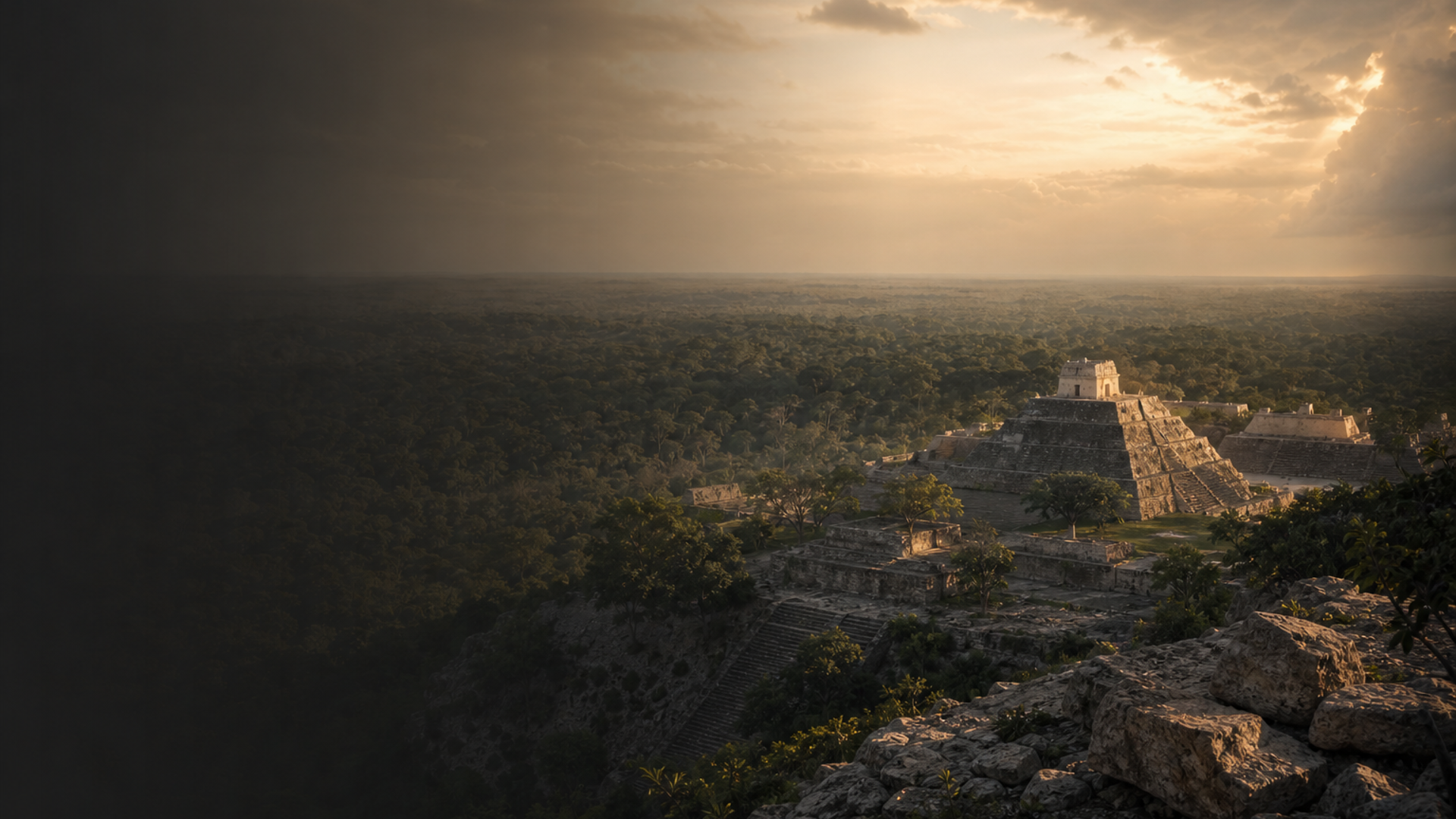
From the low, luminous limestone of the northern Yucatán rose a city that would be both ritual heartland and crossroads. Archaeological stratigraphy at Chichén Itzá (notable monuments include El Castillo, the Great Ballcourt, and the Temple of the Warriors) documents complex growth between roughly 550 and 1200 CE. Early occupation layers suggest a foothold in the Classic period that expanded through successive construction phases. By the later Classic and Terminal Classic centuries, monumental architecture, sculptural programs, and plaza layouts reflect shifting political alliances and stylistic borrowings that hint at long-distance contacts across Mesoamerica.

Archaeological data indicate specialized craft neighborhoods, large public plazas, and the ritual use of the Sacred Cenote, pointing to pilgrimage and water-centered cults as engines of urban magnetism. Material culture—ceramics, obsidian tool distributions, and architectural motifs—reveals networks of exchange, though the directionality and demographic impact of those ties remain debated. Limited evidence suggests episodic influxes of people and ideas rather than a single colonizing event.

Genetic sampling of 95 individuals from Chichén Itzá allows a new angle on these questions: rather than overturning the archaeological narrative, ancient DNA provides a complementary thread, especially for maternal lineages, that helps test models of continuity versus migration. Where the archaeological picture is vivid but complex, the genetic signal offers measurable patterns of ancestry while also highlighting where data remain thin or ambiguous.

  • Urban expansion documented between 550–1200 CE with major monument building phases
  • Material culture shows regional interaction and stylistic mixing across Mesoamerica
  • Cenote rituals and pilgrimage likely shaped demographic aggregation at the site
Chapter IV

Daily Life & Society

Life in Chichén Itzá unfolded between the public theater of plazas and the more intimate spaces of households and workshops. Excavations of residential compounds reveal domestic architecture built from local limestone, with rooms for food preparation, craft production, and social gatherings. Agricultural hinterlands—managed milpa systems and seasonal fields—supported dense urban populations; evidence for reservoirs and water management underscores the centrality of water in an often drought-prone landscape.

Material remains—pottery types, obsidian debitage, and specialized tools—point to artisans working in dedicated areas, while elite compounds and funerary deposits indicate social differentiation. The Great Ballcourt and associated iconography suggest that sporting and ritual performance were integrated into politics and religion. Human remains from different cemetery contexts show a range of burial practices, but osteological data must be interpreted cautiously: preservation varies and population-level inferences depend on careful sampling.

Isotopic and biomechanical analyses conducted at some Maya sites (and increasingly applied to northern Yucatán) can reveal diet, mobility, and labour patterns; for Chichén Itzá, such studies are patchy, so reconstructions of daily life rely on converging archaeological lines rather than a single definitive dataset.

  • Households, workshops, and public plazas reveal craft specialization and social hierarchy
  • Water management and cenote access were central to subsistence, ritual, and urban planning
Chapter V

Genetic Profile

The genetic dataset from Chichén Itzá comprises 95 individuals dated to roughly 550–1200 CE, offering a meaningful window into maternal ancestry at a major northern Maya center. Mitochondrial DNA is strongly represented by haplogroup A and its sublineages (A total 29; A2 11; A2r 6; A2g 4), with smaller counts of other Native American mtDNA types such as B2l (4). This predominance of A-lineages suggests substantial maternal continuity with broader Native American mitochondrial diversity, consistent with long-term local ancestry in the lowlands.

However, interpretation requires caution. mtDNA tracks only maternal lines and represents a small slice of overall ancestry; the absence or limited reporting of Y-chromosome haplogroups in this dataset constrains conclusions about paternal lineages, sex-biased migration, or changes in male-mediated gene flow. Nuclear genome data—when available—can clarify admixture levels, kinship, and population structure, but such analyses are sensitive to sampling strategy, preservation, and contamination controls.

Population structure within the 95 samples may reveal subgroups, kin clusters, or temporal shifts in ancestry; where sample counts per context are low, conclusions must be tentative. Overall, the genetic evidence complements archaeological signals: maternal line continuity appears strong at Chichén Itzá, while questions about incoming groups, elite founders, or regional admixture remain open pending fuller paternal and autosomal analyses.

  • Maternal lineages dominated by mtDNA haplogroup A and subclades (A2, A2r, A2g) in 95 samples
  • Y-DNA is not well represented in the reported dataset, limiting paternal lineage inferences
Chapter VI

Legacy & Modern Connections

Chichén Itzá endures as both a world heritage landscape and a living set of cultural memories for Maya descendant communities. The dominance of ancient maternal haplogroup A variants at the site suggests threads of biological continuity that link past inhabitants with broader Native American maternal diversity. Still, genetic continuity does not equate to direct, unbroken identity: centuries of demographic change, colonial disruptions, and later migrations have reshaped ancestry profiles across the Yucatán.

For descendants and researchers alike, the story is one of interplay—archaeology gives context to ritual, economy, and architecture, while ancient DNA quantifies aspects of lineage and movement. Careful communication is essential: ancient genomes add depth to narratives of the past but do not replace the perspectives of living communities. Ongoing, collaborative research that combines archaeological, genetic, and ethnographic evidence will continue to refine how Chichén Itzá figures in both regional prehistory and modern heritage.

  • Maternal genetic continuity aligns with archaeological evidence for long-term occupation
  • Modern Maya communities share cultural and, in many cases, genetic ties but have experienced complex historical changes
AI 电源

AI 助手

就 Chichén Itzá: Voices of the Maya Lowlands 文化提问

AI 助手 由DNAGENICS公司制作

解锁此特性
Ask questions about the Chichén Itzá: Voices of the Maya Lowlands culture. Our AI assistant can explain genetic findings, historical context, archaeological evidence, and modern connections.
AI 样本分析

Chichén Itzá: Voices of the Maya Lowlands 文化是人类历史中值得了解的一章……

遗传分析揭示了与早期种群的联系,同时显示了独特的适应和文化创新的证据。 古代DNA样本提供了对迁徙模式、社会结构以及古代种群之间的生物关系的深刻见解。

这是人工智能分析的预览。 解锁全AI 助手, 以探索关于:

  • 遗传组成和祖先
  • 移徙模式和起源
  • 日常生活和文化习俗
  • 现代遗传遗产

探索更古老的文化

揭开古代世界文明的故事

使用优惠码 可减免 35% • 11月12日 到期




