Çinamak: A Bronze Age Echo

下载的 PDF 是图像副本。如需可选中文本及更好的辅助技术支持,请使用打印功能。

跳转到主内容
文明焦点

Çinamak: A Bronze Age Echo

A lone Early Bronze Age genome from northeastern Albania, hinting at regional continuity and contact

2663 CE - 2472 BCE
Çinamak, Kukës District, Northeastern Albania

剧情

A single 2663–2472 BCE sample from Çinamak (Kukës District, Albania) offers a preliminary glimpse into Early Bronze Age northern Albania. Archaeological data indicates local lifeways shaped by farming and herding; genetic data (mtDNA H) is limited but consistent with broader Balkan Bronze Age mixtures.

Time Period

2663–2472 BCE

Region

Çinamak, Kukës District, Northeastern Albania

Common Y-DNA

Unknown (no Y samples)

Common mtDNA

H (1)

时间线

2500 BCE

Çinamak Early Bronze Age individual

A single genome dated to 2663–2472 BCE provides a preliminary genetic glimpse into northeastern Albania's Early Bronze Age.

Origins & Emergence

The lone Çinamak individual dates to 2663–2472 BCE, placing it firmly within the Early Bronze Age of the western Balkans. Archaeological data indicates this period in northern Albania was a time of local continuity from late Neolithic and Chalcolithic traditions, overlain by increased regional exchange. Limited evidence suggests people here lived in small, often seasonal settlements that balanced cereal cultivation with animal herding.

Material influences from neighboring Balkan and Adriatic communities—visible in pottery shapes, metallurgical debris, and exchange of raw materials across river valleys—point to networks of contact rather than a single migratory event. Genetically, the Çinamak specimen offers only a slender thread: its mitochondrial haplogroup H belongs to a lineage widespread across Europe since the Neolithic, but by itself it cannot resolve deeper ancestry.

Archaeological contextualization therefore relies on stratigraphy, typology, and comparison with better-sampled sites across the Balkans. Limited sample numbers mean that interpretations of origin and population movement remain provisional: the cinematic picture of hearth-smoke and traded bronze tools is evocative, but the genetic story is still mostly unwritten.

  • Single sample from Çinamak dated 2663–2472 BCE
  • Archaeological data indicates local continuity with growing regional contacts
  • Genetic signal preliminary—mtDNA H alone cannot define population history

Daily Life & Society

Archaeological evidence for Early Bronze Age communities in northern Albania paints a portrait of everyday resilience. Limited excavations and regional surveys suggest households centered on mixed farming: fields of hulled wheats and barley, orchards in sheltered valleys, and flocks of sheep and goats grazing upland slopes. Pastoral mobility likely structured seasonal routines, while villagers curated storage pits and simple hearth-centered houses.

Craft activities—pottery, weaving, and early metallurgy—are visible in the material record of the broader region. Copper objects and casting debris found at contemporary Balkan sites imply that metalworking skills and raw materials circulated through trade routes that threaded mountains and river corridors. Funerary practices vary across the region, and with only one genetic sample from Çinamak the mortuary diversity of this specific locality remains poorly constrained.
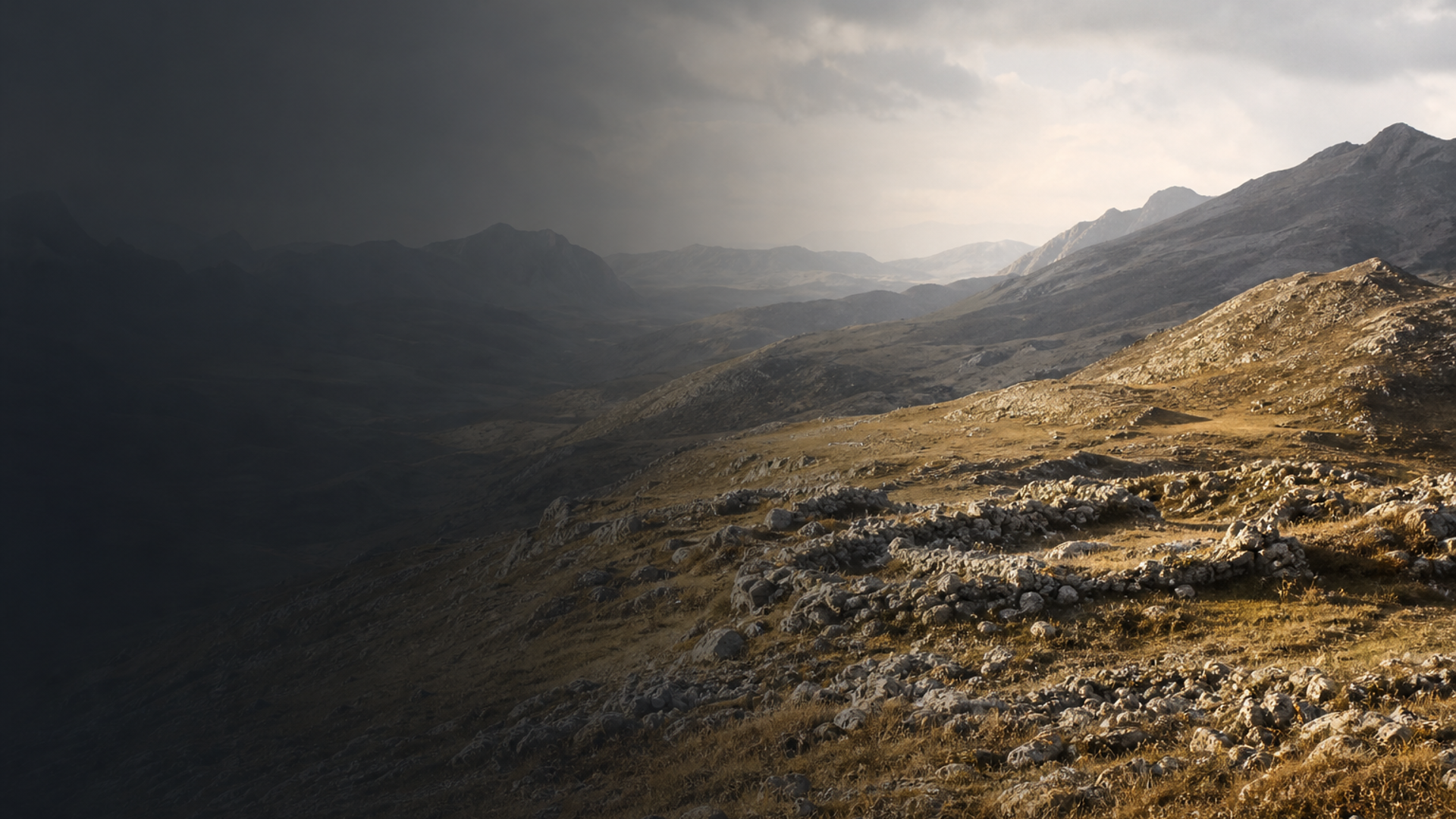

Social life would have been organized around kin groups and household cooperation, with prestige goods and external contacts indicating leaders who managed exchange. Archaeological data indicates a landscape of villages and seasonal camps rather than large urban centers, where daily life combined domestic tasks, craft production, and the maintenance of long-distance ties.

  • Mixed farming and pastoralism formed the economic backbone
  • Crafts and early metallurgy connected Çinamak to regional exchange networks

Genetic Profile

The genetic evidence from Çinamak is sparse but informative in context. The single analyzed individual carries mitochondrial haplogroup H, a lineage widespread across Europe since the Neolithic and common in Bronze Age assemblages. No Y-chromosome data are available from this sample, so male-line inferences for this locality remain unknown.

Broader ancient DNA studies across the Balkans show Bronze Age populations as mixtures of Neolithic farmer ancestry, local Mesolithic elements, and varying amounts of Steppe-related ancestry introduced during the third and second millennia BCE. Archaeological data and regional genetic patterns together suggest the Çinamak individual likely reflects this mosaic—local continuity augmented by gene flow from neighboring populations. However, because the sample count is 1 (well below 10), any genetic conclusions must be treated as highly preliminary.

Future sampling could test hypotheses about the degree of Steppe-derived ancestry, the presence of paternal lineages common in the Bronze Age Balkans, and affinities to contemporaneous communities in the Adriatic and interior Balkans. For now, the genetic voice from Çinamak is a single, evocative note in a much larger composition.

  • mtDNA H identified in the lone Çinamak sample
  • No Y-DNA data; autosomal affinities remain tentative given n=1

Legacy & Modern Connections

Çinamak’s solitary genome offers a delicate bridge to the present: it hints that Early Bronze Age people in northeastern Albania contributed threads to the region’s genetic tapestry, but it does not prove direct continuity to modern populations. Archaeological data indicates cultural connections across the Balkans that could have facilitated gene flow over centuries, yet demographic complexity—population movements, local survival, and later migrations—complicates simple lineage claims.

Genetically, the presence of mtDNA H is consistent with a deep European maternal heritage shared by many modern populations, including those in the western Balkans. Still, with only one sample, any connection between Çinamak and living communities must be couched as possible rather than certain. The true legacy of Early Bronze Age Albania will emerge only as more genomes and archaeological contexts are integrated into a coherent regional narrative.

  • mtDNA H echoes a widespread European maternal lineage
  • Direct links to modern populations remain provisional pending more samples

AI 助手

AI 助手 由DNAGENICS公司制作

解锁此特性
Ask questions about the Çinamak: A Bronze Age Echo culture. Our AI assistant can explain genetic findings, historical context, archaeological evidence, and modern connections.
AI 样本分析

Çinamak: A Bronze Age Echo 文化是人类历史中值得了解的一章……

遗传分析揭示了与早期种群的联系,同时显示了独特的适应和文化创新的证据。 古代DNA样本提供了对迁徙模式、社会结构以及古代种群之间的生物关系的深刻见解。

这是人工智能分析的预览。 解锁全AI 助手, 以探索关于:

  • 遗传组成和祖先
  • 移徙模式和起源
  • 日常生活和文化习俗
  • 现代遗传遗产
使用优惠码 可减免 30% • 11月15日 到期




