Coastal Neolithic Morocco (Morocco_LN)

下载的 PDF 是图像副本。如需可选中文本及更好的辅助技术支持,请使用打印功能。

Coastal Neolithic Morocco (Morocco_LN)

揭开一个失落的文明

正在加载考古记录……

正在收集古代记录

跳转到主内容
Coastal Neolithic Morocco (Morocco_LN)
文明焦点

Coastal Neolithic Morocco (Morocco_LN)

Late Neolithic communities on Morocco’s Atlantic edge — scarce genomes reveal distant ties.

8400 CE - 3600 BCE
Morocco (northern/Atlantic)
滚动开始
Chapter I

剧情

了解 Coastal Neolithic Morocco (Morocco_LN) 文化

Four Late Neolithic Moroccan genomes (8400–3600 BCE), from Kelif el Boroud and an anonymized site, show mtDNA K and X and one Y‑T. Limited samples suggest farmer-related maternal lineages and possible Near Eastern connections; conclusions remain preliminary.

Time Period

8400–3600 BCE

Region

Morocco (northern/Atlantic)

Common Y-DNA

T (observed in 1 sample)

Common mtDNA

K (3), X (1)

Chapter II

时间线

这种文化历史上的关键时刻

3600 BCE

Late Neolithic genomic snapshots

Four genomes attributed to Morocco_LN fall within the Late Neolithic, providing preliminary genetic evidence of maternal K lineages and a paternal T lineage in northern Morocco.

Chapter III

Origins & Emergence

The Morocco_LN cluster evokes a coastal world in motion. Archaeological data indicates Late Neolithic occupation along Morocco’s Atlantic margin, with named material from sites such as Kelif el Boroud and at least one anonymized inland locality. Radiocarbon-bearing contexts and associated ceramics place human activity in a broad interval between roughly 8400 and 3600 BCE, a span that overlaps long-term transitions from hunter‑gatherer lifeways toward more settled, food-producing economies.

Limited evidence suggests these communities lived at the intersection of local continuity and incoming influences. Lithic traditions and pottery styles show regional variation that archaeologists interpret as both indigenous development and cultural borrowing. In genetic terms, the presence of maternal lineages commonly found in Near Eastern and European Neolithic contexts hints at gene flow across the Mediterranean and along coastal corridors. Yet, with only four ancient genomes available, it is important to treat models of migration and replacement as provisional. Small sample sizes can overrepresent particular family groups or funerary practices.

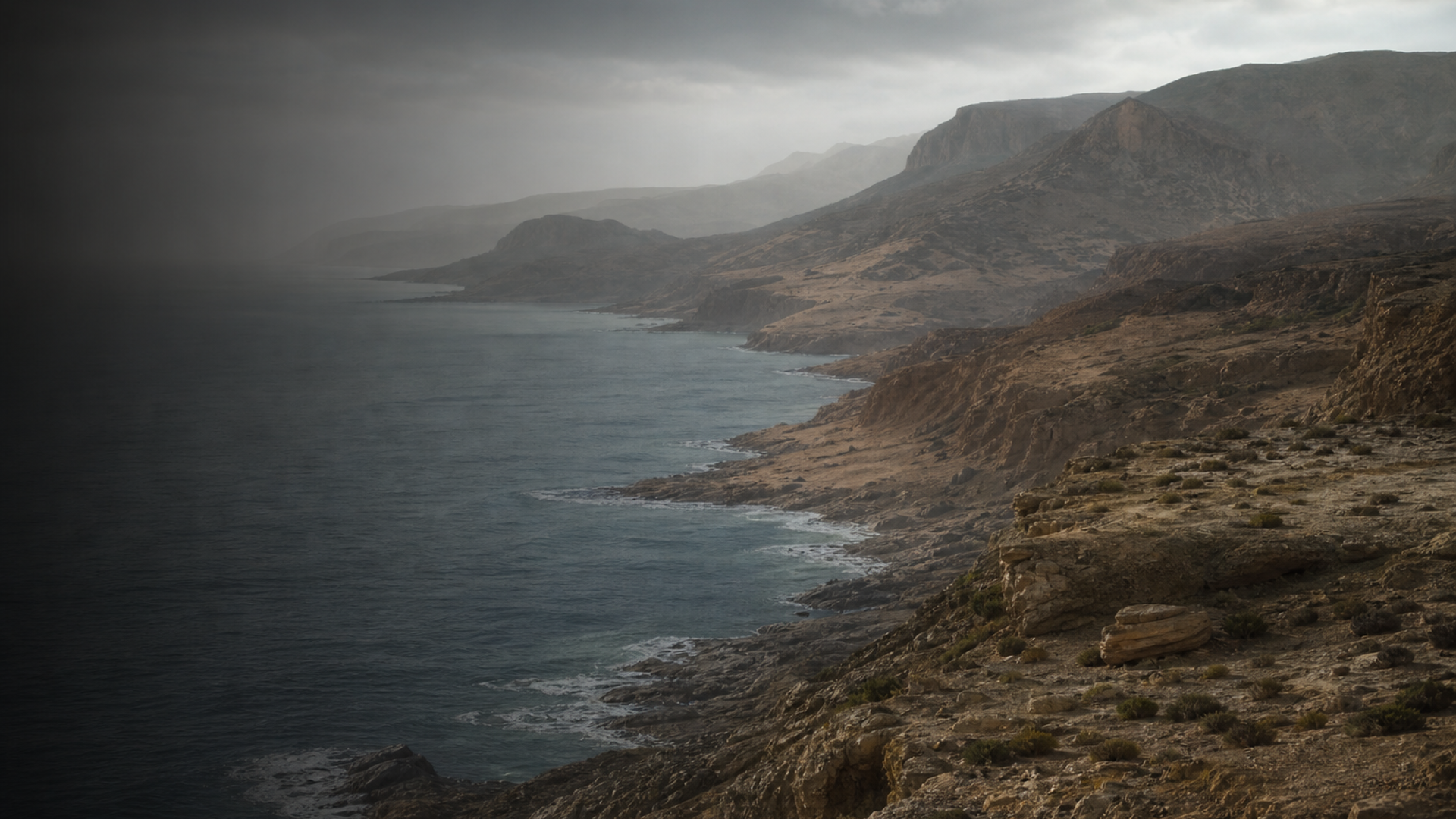
Viewed cinematically, the emergence of Morocco_LN is the slow carving of human lifeways along the Atlantic — nets mended on pebble beaches, hearth smoke rising over damp fields of cereals — while threads of connection to distant populations were woven into local ancestry. Archaeology and genetics together can outline these threads, but the weave remains only partially visible.

  • Late Neolithic context in northern/Atlantic Morocco (8400–3600 BCE)
  • Evidence suggests local continuity with intermittent external contacts
  • Interpretations are preliminary due to very small sample count
Chapter IV

Daily Life & Society

Archaeological reconstructions of Late Neolithic Morocco imagine compact villages and seasonally mobile resource use. Excavations at coastal and near‑coastal sites yield pottery sherds, ground stone for processing plants, and flaked stone tools — the material signs of cereal processing, maritime foraging, and household craft. Archaeological data indicates exploitation of both inland agricultural niches and marine resources: shell middens and fish bones occur alongside domesticated plant remains at some contemporaneous Moroccan sites.

Mortuary practices, where preserved, provide glimpses of social identity. At Kelif el Boroud and nearby localities, burials and associated grave goods suggest kin-based groups with differentiated roles, though the sample is too small to generalize across the region. The presence of decorative elements on pottery and personal ornaments points to aesthetic expression and social signaling.

Economically, these communities balanced cultivation, herding, and coastal foraging. Seasonal rhythms — sowing and reaping, transhumant movement of flocks, and fishing along tidal flats — would have structured daily life. Material culture reflects adaptability: durable stone tools for land tasks, fine ceramics for storage and cooking, and small personal items that speak to identity and exchange networks. Yet archaeology alone cannot fully reconstruct social complexity; ancient genomes contribute crucial new threads by revealing biological relationships that complement artifacts.

  • Mixed subsistence: cultivation, herding, and marine foraging
  • Burials and material culture suggest kin-based communities with social signaling
Chapter V

Genetic Profile

Four ancient genomes represent the Morocco_LN designation. The small sample set (n = 4) requires caution: patterns might reflect local pedigrees rather than population-wide frequencies. Still, the genetic signal is evocative. Maternal lineages are dominated by mtDNA K (observed in three individuals) with a single instance of mtDNA X. On the paternal side, one male carried Y‑DNA haplogroup T.

mtDNA K is widely reported among early farming populations in the Near East and Europe and its presence in multiple Morocco_LN individuals may indicate maternal ancestry components related to Neolithic dispersals or maritime gene flow across the western Mediterranean. Haplogroup X also appears sporadically in ancient and modern populations across Eurasia and North Africa; a single occurrence here is suggestive but not definitive.

Y‑haplogroup T has been associated in other studies with Neolithic and post‑Neolithic movements from the Near East into Mediterranean regions. Its appearance in one Morocco_LN male could reflect a paternal lineage introduced by migrants or long‑distance networks. However, the sample count is below ten, so any inference about population structure or demographic processes is preliminary.

Integrative interpretation: archaeological indicators of Neolithic lifeways combined with mtDNA K and Y‑T presence are consistent with some degree of incoming farmer‑related ancestry mixing with autochthonous North African elements. Yet quantifying proportions and directionality will require far greater ancient DNA sampling across Morocco and neighboring regions.
  • mtDNA dominated by K (3/4), with one X — suggests maternal ties to Neolithic farmer lineages
  • Y‑DNA T observed once — potentially reflects Near Eastern/Mediterranean paternal input; conclusions are tentative
Chapter VI

Legacy & Modern Connections

The Morocco_LN genomes are a quiet mirror reflecting deep threads of continuity and change in North Africa. Modern Moroccan populations carry a mosaic of ancestries — indigenous Maghrebi components alongside Eurasian inputs — and ancient samples like these hint at when and how some of those threads were introduced. The occurrence of mtDNA K and Y‑T among Late Neolithic individuals is consistent with genetic contributions that later diffuse through Mediterranean networks, but their present‑day frequencies have been reshaped by millennia of migrations.

Culturally, pottery types, coastal economies, and mortuary choices from the Late Neolithic help trace traditions that feed into later North African identities. For DNA ancestry platforms, Morocco_LN offers an important but preliminary anchor: it provides direct ancient snapshots for users with North African heritage, clarifying that some maternal and paternal lineages present today may have deep roots stretching back into the Neolithic. Researchers must continue to expand sampling to transform these early glimpses into a robust narrative of population formation.

In short: evocative glimpses, plausible connections, and a clear need for more data.

  • Ancient lineages suggest early Near Eastern contact blended with local ancestry
  • Valuable ancestral snapshots but require more samples for confident modern links
AI 电源

AI 助手

就 Coastal Neolithic Morocco (Morocco_LN) 文化提问

AI 助手 由DNAGENICS公司制作

解锁此特性
Ask questions about the Coastal Neolithic Morocco (Morocco_LN) culture. Our AI assistant can explain genetic findings, historical context, archaeological evidence, and modern connections.
AI 样本分析

Coastal Neolithic Morocco (Morocco_LN) 文化是人类历史中值得了解的一章……

遗传分析揭示了与早期种群的联系,同时显示了独特的适应和文化创新的证据。 古代DNA样本提供了对迁徙模式、社会结构以及古代种群之间的生物关系的深刻见解。

这是人工智能分析的预览。 解锁全AI 助手, 以探索关于:

  • 遗传组成和祖先
  • 移徙模式和起源
  • 日常生活和文化习俗
  • 现代遗传遗产

探索更古老的文化

揭开古代世界文明的故事

使用优惠码 可减免 35% • 11月12日 到期




