Croatia — Early Medieval Echoes

下载的 PDF 是图像副本。如需可选中文本及更好的辅助技术支持,请使用打印功能。

Croatia — Early Medieval Echoes

揭开一个失落的文明

正在加载考古记录……

正在收集古代记录

跳转到主内容
Croatia — Early Medieval Echoes
文明焦点

Croatia — Early Medieval Echoes

Bones, places and genomes trace lives across Croatia, 650–1250 CE

650 CE - 1250 CE
Croatia (Glina; Gornji-Kosinj-Sveta-Ana; Cepinski-Martinci)
滚动开始
Chapter I

剧情

了解 Croatia — Early Medieval Echoes 文化

Archaeological and genetic evidence from nine Early Medieval individuals (650–1250 CE) in Croatia—Glina, Gornji-Kosinj-Sveta-Ana and Cepinski-Martinci—reveals a mosaic of European and near‑eastern lineages tied to regional cultural change. Conclusions are preliminary.

Time Period

650–1250 CE

Region

Croatia (Glina; Gornji-Kosinj-Sveta-Ana; Cepinski-Martinci)

Common Y-DNA

R (4), J (1)

Common mtDNA

U (5), T (2), I (1), W3b (1)

Chapter II

时间线

这种文化历史上的关键时刻

650 CE

Earliest sampled burials

Initial individuals sampled date to ca. 650 CE, marking the start of the dataset that spans early to high medieval transitions in Croatia.

Chapter III

Origins & Emergence

Between the 7th and 13th centuries CE, the region that is now Croatia became a crossroads of mobility, cultural reorganization and evolving identities. Archaeological data from three sampled localities—Glina (Sisak‑Moslavina County, Grad Glina), Gornji‑Kosinj‑Sveta‑Ana (Lika‑Senj County, Općina Perušić) and Cepinski‑Martinci (Osijek‑Baranja County, Općina Čepin)—capture snapshots of communities living in a landscape shaped by migrations, trade routes and shifting political horizons.

Material traces in the Early Medieval period include settlement traces, burial assemblages and artifacts that signal interaction between local traditions and wider Adriatic‑Danubian networks. Limited evidence suggests these populations integrated elements from incoming Slavic groups, Byzantine contacts, and longstanding local practices. Radiocarbon and typological dating place the sampled individuals between ca. 650 CE and 1250 CE, a span that encompasses early post-Roman transformations and the consolidation of regional polities.

Genetically, the samples hint at layered ancestry rather than a single origin: composite signals consistent with longstanding European lineages together with inputs that are more common to southern or eastern Mediterranean populations. Because the dataset includes only nine individuals, these impressions remain provisional and should be read as initial glimpses into a complex formative era.

  • Samples dated ca. 650–1250 CE from three Croatian localities
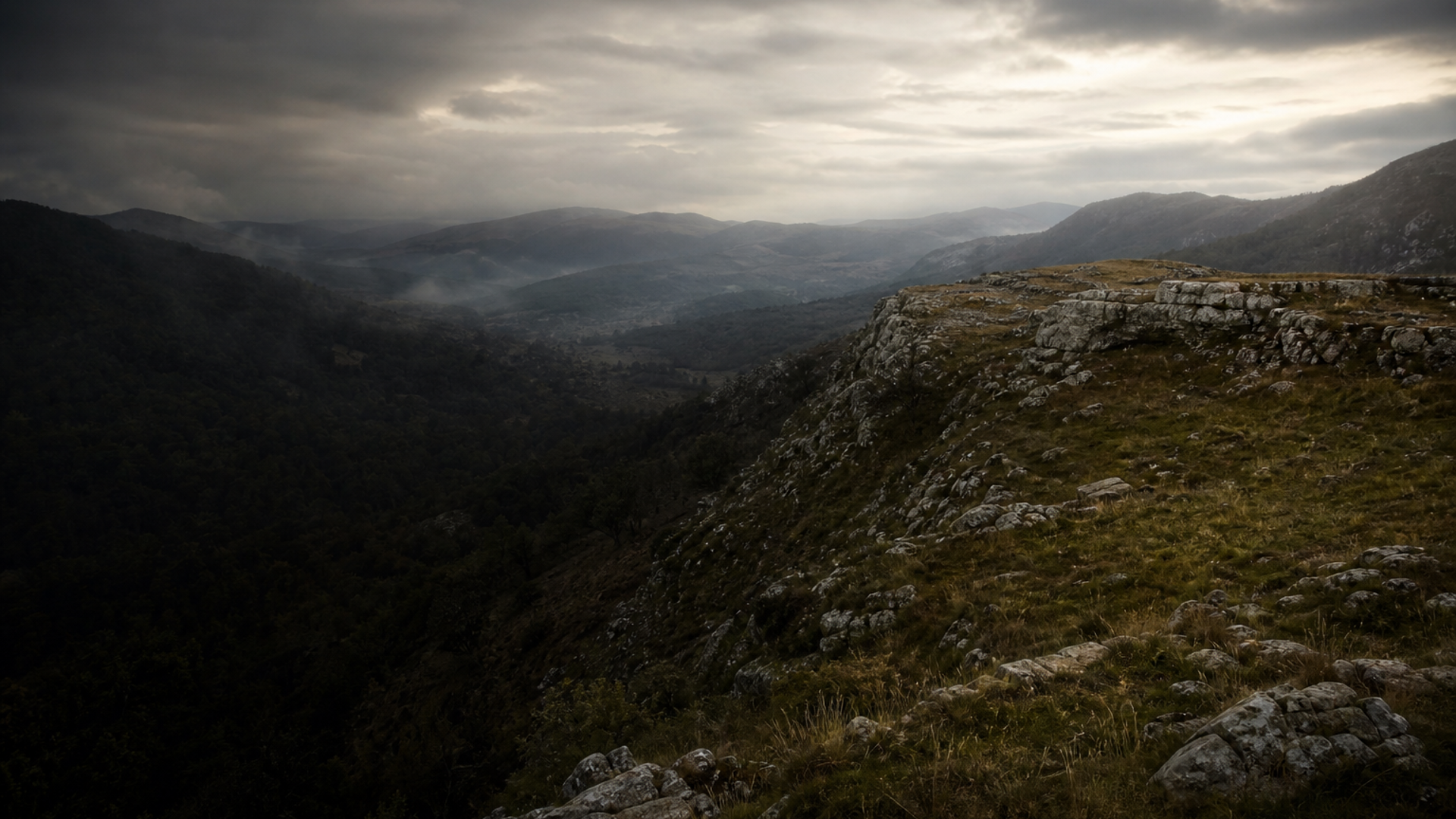
  • Archaeological contexts reflect regional interaction and change
  • Evidence suggests layered origins; conclusions are preliminary
Chapter IV

Daily Life & Society

The Early Medieval world in these parts was textured: villages clustered near rivers and arable land, trade followed river corridors, and communities negotiated identities through burial practice, craft and exchange. Archaeological indicators from the sampled sites point to agrarian lifeways punctuated by long‑distance contacts—imported objects, stylistic affinities and shared technologies testify to connectivity across the Adriatic and inland corridors.

Skeletal remains preserve more intimate signals: diet, health and workload patterns readable through isotopes and osteology. While isotopic and pathological data are not detailed here, comparable Early Medieval assemblages in the region reveal mixed diets with cereals and animal protein and episodes of stress consistent with periodic instability. Craft specializations, local metallurgy and ceramic styles across the region show continuity with late antique traditions while absorbing new influences.

Social organization likely ranged from small kin groups to emergent lordships. Burial variability—where documented—suggests distinctions in age, sex and status, but limited sample sizes and uneven excavation reports mean that strong social reconstructions must remain cautious. These remains are echoes of daily lives shaped by migration, memory and adaptation.

  • Agrarian communities with regional and long‑distance contacts
  • Skeletal evidence hints at mixed diets and episodic stress
Chapter V

Genetic Profile

Nine individuals provide the genetic core of this dataset—small but illuminating. Y‑chromosome haplogroups are dominated by R lineages (4 individuals) with at least one J lineage (1 individual). Mitochondrial lineages are primarily U (5), with T (2), I (1) and W3b (1) represented. These markers together paint a picture of predominantly European maternal ancestry (U, I, W) alongside maternal lineages (T) that have broader Eurasian distributions.

Haplogroup R is widespread across Europe and can reflect continuity with long‑standing continental male lineages; without subclade resolution it is not possible to distinguish R1a versus R1b dynamics here. Haplogroup J, comparatively rarer in this small set, is often associated in broader studies with Mediterranean and Near Eastern connections—its presence may indicate gene flow along trade or migration routes. The high proportion of U mitogenomes echoes signals found across Europe from prehistoric hunter‑gatherers through later populations, suggesting substantial local maternal continuity.

Because the sample count is fewer than ten, genetic inferences are preliminary. Archaeogenetic interpretation benefits from integrating these results with additional genomes, isotopic data and archaeological context. Still, the combination of European‑common maternal lineages and mixed paternal signals aligns with a scenario of local continuity overlaid with episodic incoming ancestry during the Early Medieval centuries.

  • Y-DNA: predominance of R (4) and presence of J (1); paternal picture is mixed
  • mtDNA: dominant U lineages (5) suggesting European maternal continuity
Chapter VI

Legacy & Modern Connections

These early medieval genomes are threads in the longer tapestry of Croatian and Adriatic population history. Contemporary genetic structure in Croatia reflects millennia of continuity and movement; the observed maternal and paternal markers in this small sample resonate with broader regional patterns seen in modern and ancient datasets. Archaeological landscapes—settlements, cemeteries and routes—served as conduits for people, goods and genes.

Importantly, with only nine samples our ability to draw direct lines to modern populations is limited. What emerges instead is a cautious narrative: local maternal continuity punctuated by male‑line diversity and occasional inputs that mirror historical contacts across the Balkans and Mediterranean. Future sampling, especially from underrepresented sites and higher‑coverage genomes, will sharpen these connections and allow us to trace the paleogenomic echoes that shaped later medieval and modern Croatian ancestries.

  • Findings suggest continuity with layered incoming influences into modern Croatian ancestry
  • Small sample size means modern connections are tentative and require more data
AI 电源

AI 助手

就 Croatia — Early Medieval Echoes 文化提问

AI 助手 由DNAGENICS公司制作

解锁此特性
Ask questions about the Croatia — Early Medieval Echoes culture. Our AI assistant can explain genetic findings, historical context, archaeological evidence, and modern connections.
AI 样本分析

Croatia — Early Medieval Echoes 文化是人类历史中值得了解的一章……

遗传分析揭示了与早期种群的联系,同时显示了独特的适应和文化创新的证据。 古代DNA样本提供了对迁徙模式、社会结构以及古代种群之间的生物关系的深刻见解。

这是人工智能分析的预览。 解锁全AI 助手, 以探索关于:

  • 遗传组成和祖先
  • 移徙模式和起源
  • 日常生活和文化习俗
  • 现代遗传遗产

探索更古老的文化

揭开古代世界文明的故事

使用优惠码 可减免 35% • 11月12日 到期




